Alexis’ April Library Haul

Alexis: Happy Friday, everyone!

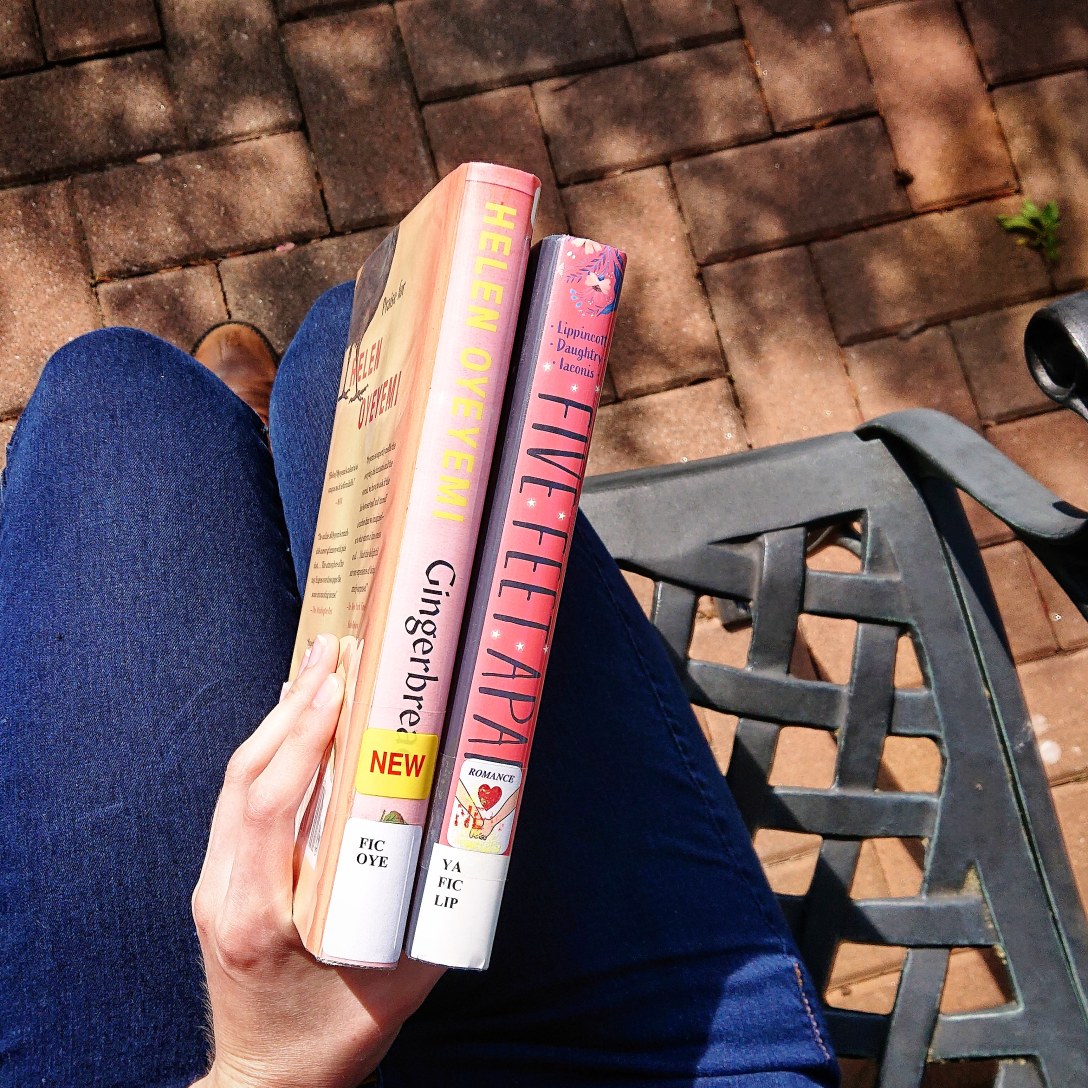
Yesterday, I got an email that two of my requested library book were ready to be picked up: Five Feet Apart by Rachael Lippincott, Mikki Daughtry, and Tobias Iaconis, and Gingerbread by Helen Oyeyemi.

These are two of my most highly-anticipated reads, and I waited over a month for them.

I sat down and binged all of Five Feet Apart yesterday, so look out for a review tomorrow.

I can’t wait to dig into Gingerbread, because I have a feeling I’m going to love it!

AUDIOBOOK REVIEW: Sadie by Courtney Summers

Anna:

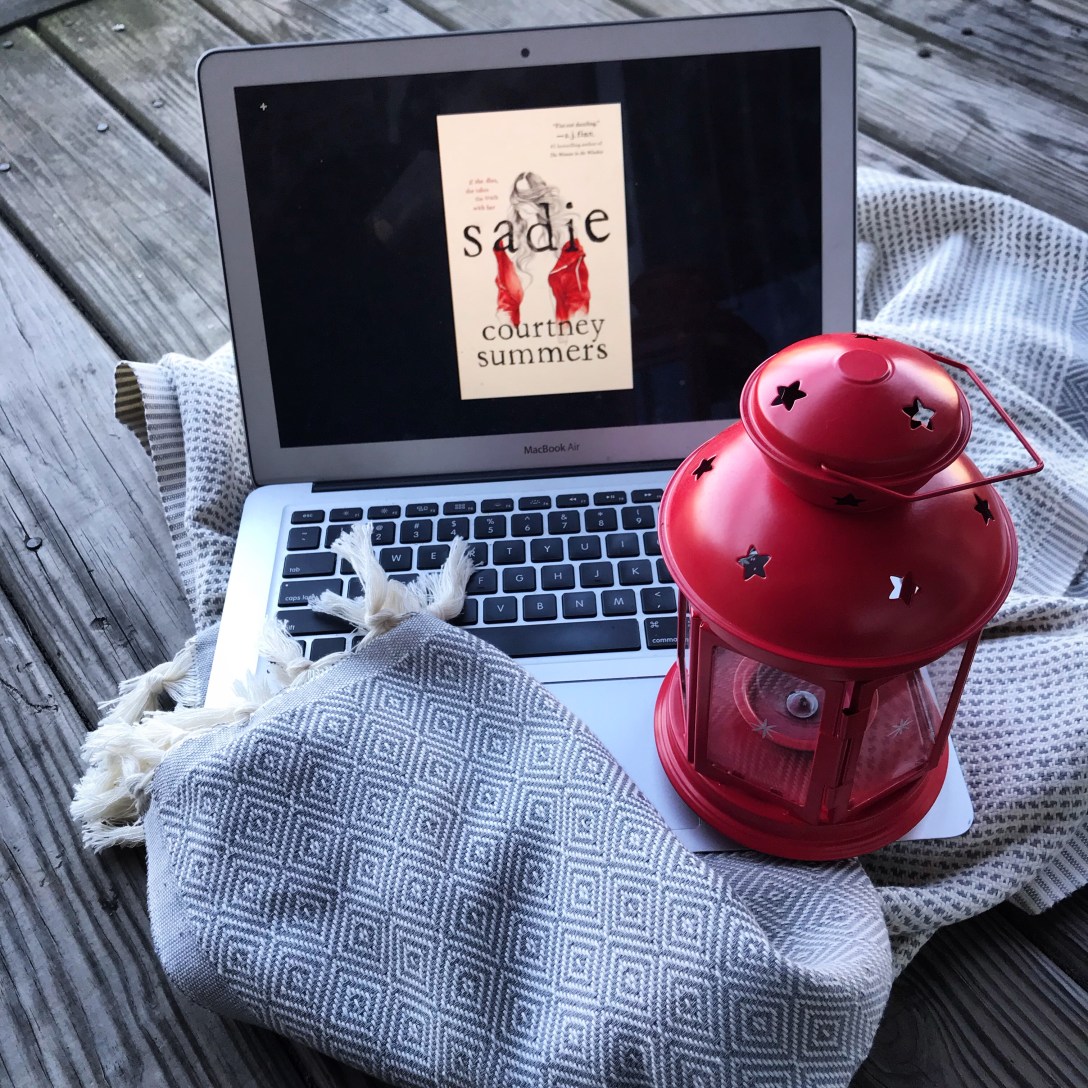
Welcome to my first audiobook review! As I mentioned in my last post, I recently moved. While I haven’t had much time to read physical books, I have been enjoying listening to audiobooks while I unpack.

I’ve heard so much buzz around Sadie by Courtney Summers since it came out last September. This is a YA thriller, and though it definitely deals with some heavy and difficult themes (sexual assault, child abuse, murder, etc.) I didn’t find it very explicit. I’d definitely say it’s genre/age appropriate.

Sadie has had to be a grown up for as long as she can remember. Abandoned by her addict mother, Sadie essentially raised her younger sister, Mattie. But when Mattie was 13, she was murdered. Sadie sets out to kill the man who took her sister away from her. Meanwhile, in a complementary storyline, a podcast called The Girls has been created to retrace Sadie’s path, as Sadie has since gone missing.

First off, I think including a point of view from a podcast is brilliant. Not only is this creative, but it captures the obsession in recent years with serialized murder podcasts. This book exposes society’s fascination with murder podcasts and dead girls while also praising the attention brought to poorly-investigated deaths. (The police are utterly useless in helping with Mattie’s death and Sadie’s disappearance in this story.) Summers criticizes the use of serialized podcasts to exploit murder and sexual assault victims for listener’s entertainment, which I applaud her for.


Sadie is a complicated protagonist. You kind of hate her because of how stubborn she is, and yet you can’t blame her because she’s wicked strong and had a terrible childhood. Her redeeming factor is the fierce and protective love she has for her sister.

Sadie has a stutter, and her relationship with her stutter and, subsequently, her own body, is fascinating. Other people’s reaction to hearing her speak is heartbreaking. I think this is important representation for people with stutters, who I have never before encountered in literature. (Besides Quirrell in Harry Potter, and that’s definitely not a positive representation of stuttering…ouch….)

I enjoyed listening to the audiobook version of this because of the way The Girls sounds like a real podcast. The fact that the podcast has strummy, haunting intro music makes it that much more realistic. The voice of the show’s host is also spot on of what you would expect (and of course a show about two girls disappearing is narrated by a man! This feels like pointed commentary on the author’s part).

However, there are multiple voice actors in this and some of them are REALLY bad. I could have read some character’s lines more convincingly. But for the most part, I think the audiobook is well done.

I love that YA thrillers are becoming more of an established genre, and Sadie did not disappoint!

BOOK VERDICT: 4/5

AUDIOBOOK VERDICT: 4/5

Review: Honeysuckle Holiday by Kathleen M. Jacobs

Alexis: Read 3/11/19

*The author sent me a copy of her book in exchange for an honest review.*

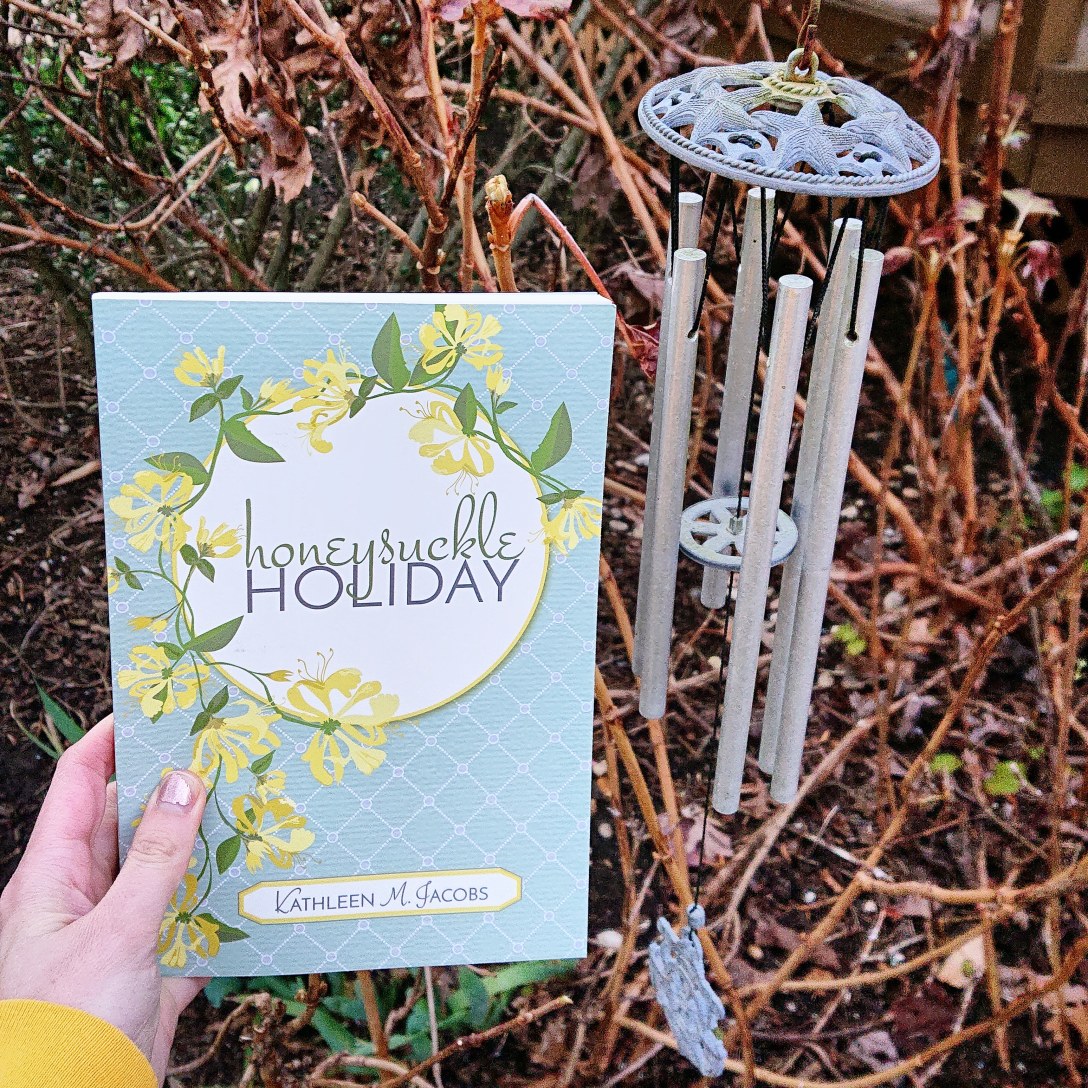
Honeysuckle Holiday was such a poignant read. Don’t let the cover fool you: this short book tackles childhood innocence and racism.

The story follows Lucy in two different time periods: 1965 and 1970, when she was twelve and sixteen-years-old. Though Honeysuckle Holiday is categorized as YA, I would describe it more as a bildungsroman/coming-of-age story. When Lucy’s father leaves, not looking back, on Christmas Day, she and her older sister, Caroline, try not to dwell on it too much. But she knows something has changed when her mother refuses to talk about him and when they have to move into a different house.

In her acknowledgements, Jacobs quotes a woman named Peggy Fox: ‘“You captured the voice of a twelve-year-old girl very well.’” And she’s right. Jacobs’ writing flows beautifully, but I was very aware that I was reading in the perspective of a twelve-year-old.

Lucy notices everything around her. She relates things to her Barbie dolls, which she admits she’s starting to outgrow. She is jealous of some of Caroline’s things but also wants to be like Caroline when she grows up. She partly knows why her dad left but is partly left in the dark. She’s curious about the world around her and asks lots of questions. Jacobs’ detailed descriptions mimic Lucy’s curious mind. I also like how she includes a lot of parenthetical phrases, as Lucy has a lot of afterthoughts.

I love all of the references Jacobs includes in her book. Lucy’s mother wears Chanel No. 5. Lucy uses a Velveeta box to hold her collection of found objects. The characters reference It’s A Wonderful Life, The Beatles, and TV shows of the time. These references cemented the story into its setting and time period, bringing it to life.

Lucy mentions To Kill a Mockingbird multiple times, and even relates herself to Scout. I found this fitting, as the story reminded me a lot of To Kill a Mockingbird. Both are told from a young perspective, but are really told for a more mature audience. Both deal with racial tensions and divides, as well as the horror of the KKK. I loved Jacobs’ inclusion of descriptions of food. The book is set in the South, and I enjoyed reading about Lila’s apple pies, okra, and Lucy’s love of steak.

While I liked how Lucy describes the honeysuckle vines ( as well as the smell) outside of her window, I don’t think the title of the story sums it up very well. Though the story itself was impactful, the title was not. To me, the honeysuckle symbolizes Lucy’s childhood innocence, and the book is about coming-of-age and losing that behind. I’m also not sure why the first couple of chapters are in Caroline’s POV.

Overall, if you’re looking for a quick read that’s packed with vivid details, that will draw you into the 60’s and 70’s, and whose message will stay with you, then I definitely recommend it.

VERDICT: 4 out of 5 books

Review: Caraval by Stephanie Garber

Alexis: Read 3/2/19

Unfortunately, I found Caraval so much worse than The Night Circus. I know a lot of comparisons have been drawn between the two books, so I thought I would give you my own.

The Night Circus is beautifully written, with lush and lyrical descriptions, but is very slow moving and has a sparse plot. I can’t say the same thing about Caraval’s writing. It felt middle-grade (and not in a creative way) and cliché. However, it is fast-paced and there is a layered plot. Both books have insta-love, though I have to say the relationship in Caraval actually felt more convincing.

So let’s delve more into Garber’s writing. Throughout the book, she relies on one particular, peculiar type of metaphor: the insert color was insert emotion. Here’s an example: “…a blaze of shimmery gold, the color of magic and wishes and promises of things to come” (14). Here’s another: “A ruby welt bloomed across his cheek. The color of rage and punishment” (45). Here’s a third: “…a rich cerise—the color of seduction and secrets” (660).

I usually love repetition, whether in motifs, anaphora, etc. But the repetition of these metaphors drove me crazy. They’re cliché and terrible and made me say “really??” out loud too many times. And none of them even made sense!

Another thing that drove me crazy was that half of the plot was predictable. You know from the beginning that Scarlett is going to get together with Julian. There was only one plot point towards the end that I didn’t see coming.

As for the characters, I only liked Julian, but only because he’s the only character with somewhat of an interesting personality. He’s your classic “dark and handsome but is he good or bad?” type of guy with Edward-Twilight caramel eyes: “light brown, the color of caramel and liquid amber lust” (172). The descriptions of him were super cringey.

I found Scarlett to be too whiny and annoying, and Donatella wasn’t much better. Even their names seemed to get in the way of the story; it was as if their names drew too much attention from it. It doesn’t help that Scarlett’s name is also a color, so her name is thrown around with all of the cringey color metaphors. One of the characters even says of Scarlett, “You’re so dramatic, you would’ve made a fantastic performer” (308). And god, was he right.

The dialogue doesn’t have any subtext. I absolutely hated that Governor Dragna is described as dragon-like. And I could’ve cared less about the plot of this book.

I think the one word that sums up this book is cringeworthy. I really wanted to like it, I enjoyed how the book opened up with letters, and I initially though Garber’s worldbuilding was good (in the first 10 pages). But this obviously wasn’t the book for me.

VERDICT: 1 and ½ out of 5 books

Review: Ruin and Rising by Leigh Bardugo

Alexis: Read 2/20/19

Ruin and Rising was certainly the best book of the Shadow and Bone Trilogy. I disliked Alina’s character in the first two books, and I felt like she became a more complex character in this one. Additionally, Mal had zero personality in the first two books, and he felt more real to me in Ruin and Rising, as well.

Everyone can agree with me here: Nikolai is still the most vibrant character. He has a sparkling personality and he knows what he wants. He echoes the beginning of Bardugo’s masterfully crafted characters in the Six of Crows series.

As for the plot, I feel like the first half of the book meanders. There’s a whole host of secondary characters that I didn’t really care about, except for Genya.

And time for an unpopular opinion: I don’t like the Darkling. He’s creepy, manipulative, and honestly rapey. His beauty doesn’t make up for that.

SPOILERS BELOW:

Okay, so I really enjoyed the plot twists in the second half of the book. Mal being the third amplifier? Nikolai getting turned into a monster? I didn’t see either of those coming, and it made the book more exciting!

The ending felt very Hunger Games to me: boy and girl get together and live a nice, normal life together, where they can grieve together forever. I honestly didn’t mind the ending, as I think it was the happiest ending for Alina and Mal. But Alina losing her power was anticlimactic and confusing. It felt unnecessary. Plus, she had such a good character arc by Ruin and Rising that I felt it was unfair for her to return to how she was in the beginning of the series.

Despite some of my issues with this book, I really enjoy the Grishaverse and I couldn’t put this book down. I enjoyed seeing Bardugo’s writing style evolve!

VERDICT: 4 out of 5 books

Review: The Gilded Wolves by Roshani Chokshi

Alexis: Read 1/25/19

I couldn’t help but compare The Gilded Wolves to Six of Crows by Leigh Bardugo. The heist plotline and the similarities in the gang of characters made it impossible. Prepare for a long review; I have a lot to say about this book!

Pros:

The Gilded Wolves is packed with detailed information. The story is set in an alternative 1889 Paris in which certain people can Forge, or magically manipulate objects, metals, and/or plants, etc. I have to admit Paris is not one of my favorite cities, but I really enjoyed the setting for the book. Chokshi did a great job of exploring the city’s history, both the good and the bad, and I thought she described the city well. Her descriptions of the Eiffel Tower, mostly from Zofia’s point of view, were unique and interesting.

I enjoyed reading the snippets of Séverin’s past. Overall, Zofia was my favorite character because of her uniqueness. Plus, it was refreshing to read about a woman scientist and mathematician.

This book is an interesting mix of history, science, and mythology. I really enjoyed the mythology, as the book explored Greek, Roman, and Egyptian mythology. I loved the diversity of the characters; it painted a more accurate portrayal of Paris in 1889 and helped give the characters unique backgrounds and perspectives. I also enjoyed Chokshi’s descriptions and appreciated that she tackled themes of racism, prejudice, and identity.

Cons:

Though the voices of the characters were each distinct, I only really started caring about Zofia and Enrique once I reached the halfway point of the book. They felt the most real to me. There was a death at the end of the book, and, unfortunately, I didn’t find myself caring about it as much as I wanted to.

I wasn’t really a fan of Hypnos. Though I appreciated the diversity his character brought, he felt like a stereotypical gay character to me, and I had a hard time understanding his motives and his character.

Though I loved the blend of topics, sometimes this book felt more sci-fi to me than historical fantasy. I also felt like the book wasn’t as deep as I wanted it to be. I almost wish Chokshi will write a prequel to this; a lot of events happened before the start of this book.

I have to mention that it took me a while to get into the story. The beginning was a little too chaotic, and I found myself having to re-read paragraphs to make sure I understood what was happening. The Order confused me. I also felt like the climax of the book was a bit rushed. Though I enjoyed Chokshi’s writing style, the overabundance of adverbs irritated me (that’s my English major coming out!) “‘You lied to me,’ she said loudly.” “‘Ready?’ she said brightly.” “‘I know,’ said Hypnos solemnly.”

Despite my issues with the book, I did enjoy reading it, so. . .  

VERDICT: 4 out of 5 books
Flashback Friday: YA Chick Lit

Alexis:

Happy Friday!

Anyone looking for some good YA chick lit? These were our favorites when we were teens!

  • Prada & Prejudice by Mandy Hubbard
  • How to Be Popular by Meg Cabot
  • Sweethearts by Sara Zarr
  • Just Listen by Sarah Dessen
  • The Truth About Forever by Sarah Dessen
  • The Opposite of Me by Sarah Pekkanen
  • The Statistical Probability of Love at First Sight by Jennifer Smith

If you’re looking for a good Pride & Prejudice retelling that includes time travel, Prada & Prejudice is for you. Sarah Dessen books are teen classics, though these two are our personal favorites; How to Be Popular is witty; Sweethearts is deep and, well, sweet.

 The Statistical Probability of Love at First Sight is a fun and lighthearted read that’s perfect to read on a flight. The Opposite of Me is about twins, and though we read it as teens, it’s the only book on this list that isn’t technically YA.

I plan on getting some writing done today and then finishing The Gilded Wolves, so keep an eye out for a review. What are your Friday plans?


Review: Children of Blood and Bone by Tomi Adeyemi

Alexis: Read 1/9/19

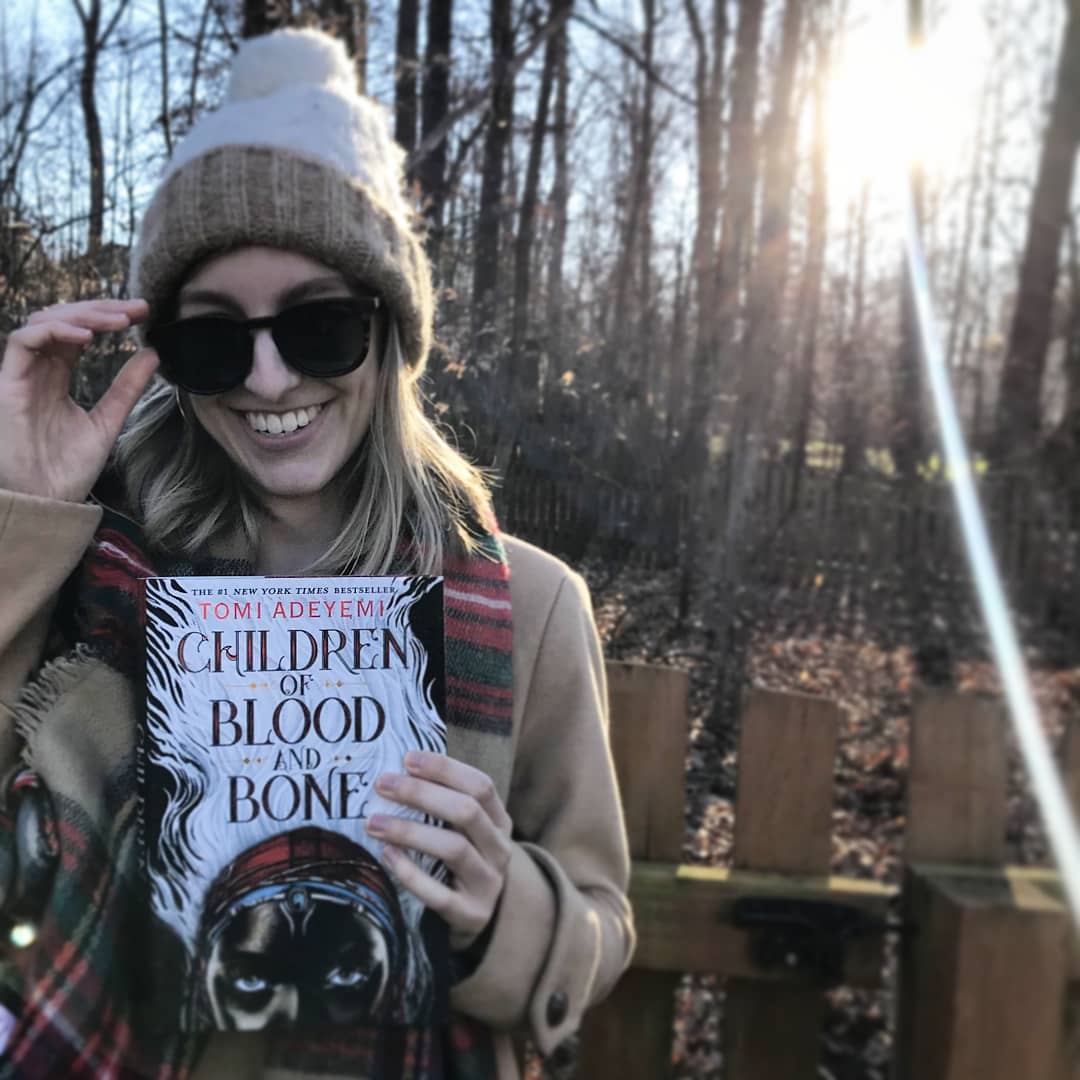
Children of Blood and Bone, despite being a thick book, is super fast-paced. The plot is always moving, which I appreciated as I read. Adeyemi does a good job of explaining how the magic system works, and I enjoyed learning about all the gods and the maji’s connections to them. Sometimes multiple perspectives can be hard to pull off, but I really enjoyed reading from all the different perspectives, and the shifts never pulled me out of the book.

As for the characters, I’ll be honest: I’m not a huge fan of Zélie. She sometimes felt like a Katniss Everdeen character. However, I connected more with her as the book went on. I enjoyed Inan’s character until about halfway through the book. As for Amari and Tzain, I always enjoyed reading from their points of view. At times, the plot was a bit predictable, but not enough that I didn’t continue to enjoy reading the story. There was a love-at-first-sight storyline, and though I normally hate this YA trope, I thought Adeyemi used it to her advantage.

About a quarter way through this book, I realized something: parts of this book mirror Avatar: The Last Airbender.

Zélie is very similar to Katara. When she is young, her mother is killed in a raid because she possessed magical powers. Zélie possesses these same powers and she grows up wanting revenge. She has an older, non-magical brother, Tzain, who just wants to protect her. Zélie meets an Aang-like character, Amari: a girl who was trained how to fight from an early age, but who needs to learn to get past her peaceful side.

Amari’s older brother, Inan, the prince, has a good heart but is misguided. He wants his father’s approval but he has to betray those he loves in order to achieve it, just like Zuko. The father is definitely a Fire Lord Ozai type of character.

There is a temple “made of air” which connects maji to their gods. This temple was mostly destroyed in a raid in which a genocide happened.   

Despite these similarities, Children of Blood and Bone is an original book. I I loved the diversity and the magic based on Nigerian mythology. I also admired Adeyemi’s creativity—the characters ride on giant, horned lions and leopards, called lionaires and snow leoponaires.

Overall, this book was wholly engrossing and I had a hard time putting it down. And for that reason I can’t rate it any less than 5 books. I’m excited for the sequel!

VERDICT: 5 books