Alexis’ Library Haul: Part 2

Alexis: The little snow that we got turned into mush and then rain, so I was able to get my library books! Here’s a library haul part 2.

  • Ruin and Rising by Leigh Bardugo
  • The Afterlife by Thomas Pierce
  • Caraval by Stephanie Garber
  • The River of Doubt by Candice Millard

For a change of pace, I’m intersecting my fantasy reads with some different genres! Even though I love fantasy and YA fantasy, I’m tired of the same tropes being recycled (I’m looking at you, love triangle). Sometimes I need to take a break and read something different. 

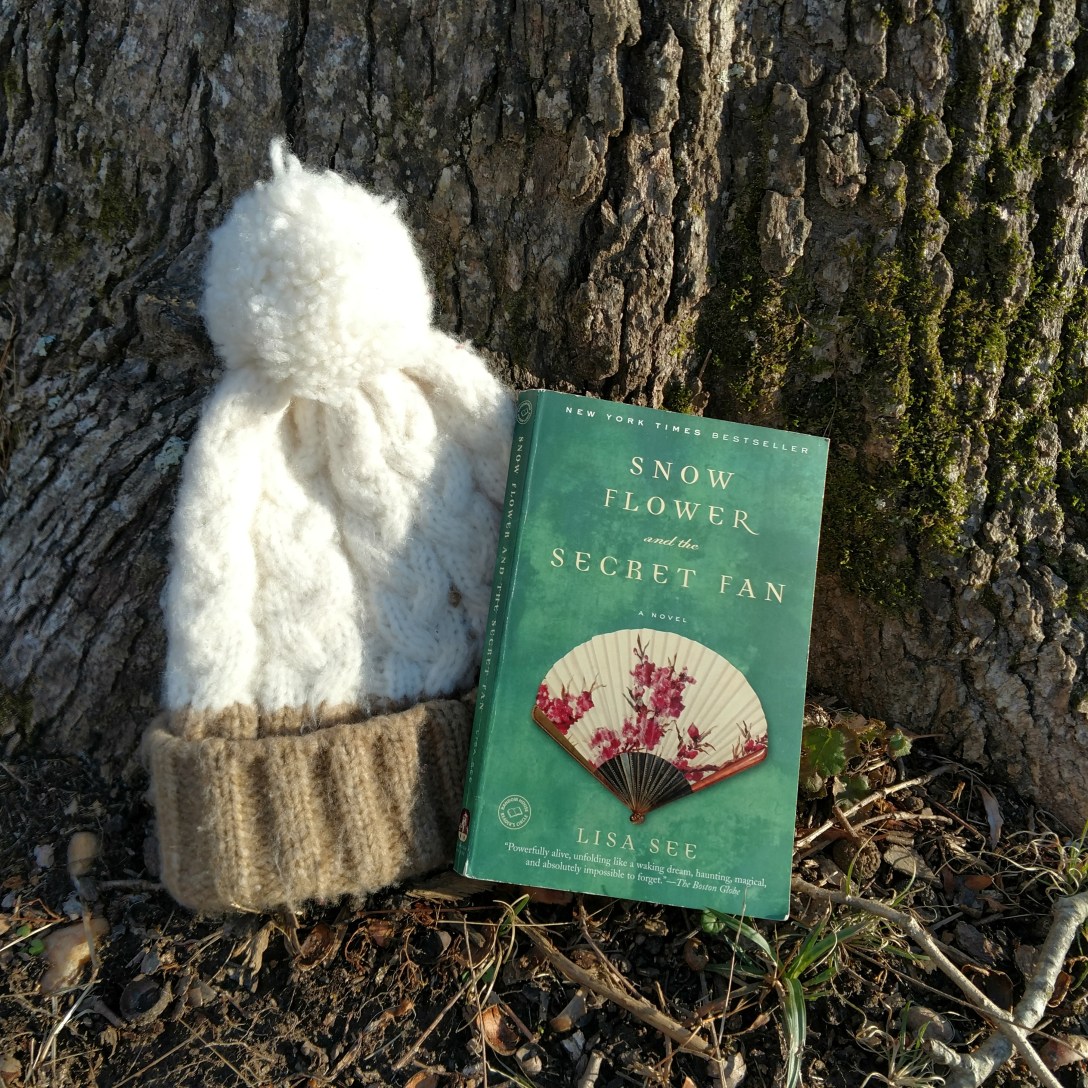
Review: Snow Flower and the Secret Fan

Alexis: Read 1/28/19

“For my entire life I longed for love. I knew it was not right for me — as a girl and later as a woman — to want or expect it, but I did, and this unjustified desire has been at the root of every problem I have experienced in my life.”

Snow Flower and the Secret Fan is a beautifully written historical fiction novel. Lisa See’s writing always flows well, and her writing did not disappoint.

This is a novel about women in 19th century China. I, who usually reads a book in one to three sittings, found myself having to take multiple mental breaks from this book. This was also the case when I read The Tea Girl of Hummingbird Lane, which turned out to be one of my favorite books.

The reason for the needed breaks was the heavy topics that this book addresses. I had to push my 21st century Western ideals to the back of my mind while reading this (See even discusses this in the afterword). She addresses some beautiful and fascinating ideas, such as embroidery, nu shu, the secret woman’s language, and friendship. But this book also addresses foot binding in detail, as well as death, starvation, and miscarriages. It deals with the extreme sexism of the time, including abuse and acceptance of the low societal positions from the main characters, Lily and Snow Flower.

If I had held onto my modern viewpoint while reading this, I would have intensely disliked the characters and the storyline. Who wants to read about two women who believe they are utterly worthless unless they have three inch feet, marry, and have all sons?

But I learned so much from reading this book, and I enjoyed learning about Chinese society during this era. You can tell that See did her research. See writes well-rounded characters and doesn’t shy away from giving them flaws, and this is one of the greatest aspects of the book. I loved Lily and Snow Flower in the first half of the book, and I was frustrated with them in the second half. However, Lily hints at this in the very first page, so it wasn’t unexpected.

Overall, if you’re interested in learning about a remote, 19th century Chinese society, and you’re not afraid of a sad story, pick this up. If you’re interested in a woman-centered story, and the complicated love between two women, then pick this up.

VERDICT: 4 out of 5 books

Review: The Gilded Wolves by Roshani Chokshi

Alexis: Read 1/25/19

I couldn’t help but compare The Gilded Wolves to Six of Crows by Leigh Bardugo. The heist plotline and the similarities in the gang of characters made it impossible. Prepare for a long review; I have a lot to say about this book!

Pros:

The Gilded Wolves is packed with detailed information. The story is set in an alternative 1889 Paris in which certain people can Forge, or magically manipulate objects, metals, and/or plants, etc. I have to admit Paris is not one of my favorite cities, but I really enjoyed the setting for the book. Chokshi did a great job of exploring the city’s history, both the good and the bad, and I thought she described the city well. Her descriptions of the Eiffel Tower, mostly from Zofia’s point of view, were unique and interesting.

I enjoyed reading the snippets of Séverin’s past. Overall, Zofia was my favorite character because of her uniqueness. Plus, it was refreshing to read about a woman scientist and mathematician.

This book is an interesting mix of history, science, and mythology. I really enjoyed the mythology, as the book explored Greek, Roman, and Egyptian mythology. I loved the diversity of the characters; it painted a more accurate portrayal of Paris in 1889 and helped give the characters unique backgrounds and perspectives. I also enjoyed Chokshi’s descriptions and appreciated that she tackled themes of racism, prejudice, and identity.

Cons:

Though the voices of the characters were each distinct, I only really started caring about Zofia and Enrique once I reached the halfway point of the book. They felt the most real to me. There was a death at the end of the book, and, unfortunately, I didn’t find myself caring about it as much as I wanted to.

I wasn’t really a fan of Hypnos. Though I appreciated the diversity his character brought, he felt like a stereotypical gay character to me, and I had a hard time understanding his motives and his character.

Though I loved the blend of topics, sometimes this book felt more sci-fi to me than historical fantasy. I also felt like the book wasn’t as deep as I wanted it to be. I almost wish Chokshi will write a prequel to this; a lot of events happened before the start of this book.

I have to mention that it took me a while to get into the story. The beginning was a little too chaotic, and I found myself having to re-read paragraphs to make sure I understood what was happening. The Order confused me. I also felt like the climax of the book was a bit rushed. Though I enjoyed Chokshi’s writing style, the overabundance of adverbs irritated me (that’s my English major coming out!) “‘You lied to me,’ she said loudly.” “‘Ready?’ she said brightly.” “‘I know,’ said Hypnos solemnly.”

Despite my issues with the book, I did enjoy reading it, so. . .  

VERDICT: 4 out of 5 books
Review: The Tea Girl of Hummingbird Lane by Lisa See

Alexis: Read 5/11/18

“‘Tea reminds us to slow down and escape the pressures of modern life,’ he says. ”

There are some rare books out there that I just know I’ll love, and this was one of them. Okay, maybe I read it because I love tea and the reviews were good. But what other reasons do I need?

The Tea Girl of Hummingbird Lane ended up being my top book of 2018!

The section part of the book is a fascinating, and sometimes disturbing (let’s just say I’m a twin) detailed exploration of the Akha people and their way of life. The middle is a little slower paced, but it masterfully meshes Li-yan’s Akha culture with the modern way of life in China. The last section explores Li-yan’s new life and Haley’s life in California. Haley’s life is revealed through documents, letters, and essays.

See manages to weave an epic story while also exploring China’s history, the history of tea, and what it means to be Chinese and Chinese American. She handles each of her characters with care (in their characterization, that is; they all go through some incredibly tough situations). The only character that felt out of place was Ci-teh later in the book, though I understand why she turned out the way she did.

Overall, The Tea Girl of Hummingbird Lane is a beautifully written story, the core of which focuses on the relationship between mother and daughter, and the promise of finding one another again.

Review: Warlight by Michael Ondaatje

Anna: Read 12/13/18

I have mixed feelings about this book. I really enjoyed the beginning, which follows siblings Rachel and Nathaniel after their parents mysteriously leave them in the care of a guardian. I love a good coming-of-age story. The beginning is also when the relationship between the characters had the most tension and intrigue.

I then struggled through the second half of the book, which focuses on Nathaniel uncovering his mother Rose’s backstory. This is where I lost interest, as the narrative completely lacked the suspense of the first half. The complete lack of characterization of Rose, coupled with the lack of empathy we feel for her as a reader in the first half when she leaves her children without explanation, made me uninterested in her life and career.

Something that surprised me about this book, and something that I liked, is the fact that it is set in the near-immediate aftermath of World War II. Going into reading this, I had assumed it was set during the war. I enjoy World War II fiction, but feel that this is an important and overlooked time period, especially since none of the characters were soldiers so it featured no war scenes.

Perhaps I would have enjoyed this more if the second half mimicked the dark and atmospheric half of the first. I just didn’t connect with any of the characters, besides Nathaniel. I just couldn’t, no matter how hard I tried, feel any connection to their lives. And I particularly disliked the twist about the Darter near the end. The story also left a couple loose ends, which felt like an attempt at depth; however, it just further highlighted how undeveloped the characters felt to me.

VERDICT: 3 out of 5 books

Review: The Tattooist of Auschwitz by Heather Morris

Alexis: Read 12/10/18

This is a hard book for me to rate. The story, as are all Holocaust stories, is dark, harrowing, and resonant. This is a story of survival and love. It focuses on Lale and Gita, who manage to fall in love amidst the horrors of Auschwitz.

Parts of the novel hit me hard. It’s impossible to read a book about the Holocaust and not come away emotionally affected by it. The knowledge that this was not only based on a real historical event but also on the lives of two very real people played in the back of my mind as I read. I liked that it was written in present tense, which propels you into the story.

But how do you rate a book like this? The perspective is one of the most interesting parts of the book. Lale, as the Tattooist, has a higher position than most of his fellow prisoners. I was wholly involved in his storyline of using his position in order to barter jewelry for food, help feed other prisoners, and help save other prisoners’ lives. His feelings of revulsion at tattooing his own people conflict with his instinct to do what he must to survive.

Yet chunks of this book still fall flat. The writing style is awkward in places. Half of Lale and Gita’s relationship feels real and raw, and half feels stitled. In the “about the author” section of the book, it’s mentioned that Morris originally wrote this story as a screenplay, and this seems to fit with the style of some sections of the book. Near the end, it’s mentioned that Lale’s way of dealing with the horrors of his imprisonment is emotional detachment. This could be the reason for the stiltedness, as the writing could reflect Lale’s repressed emotions. However, I don’t think this was a purposeful choice on Morris’ part.  

VERDICT: 4 out of 5 stars


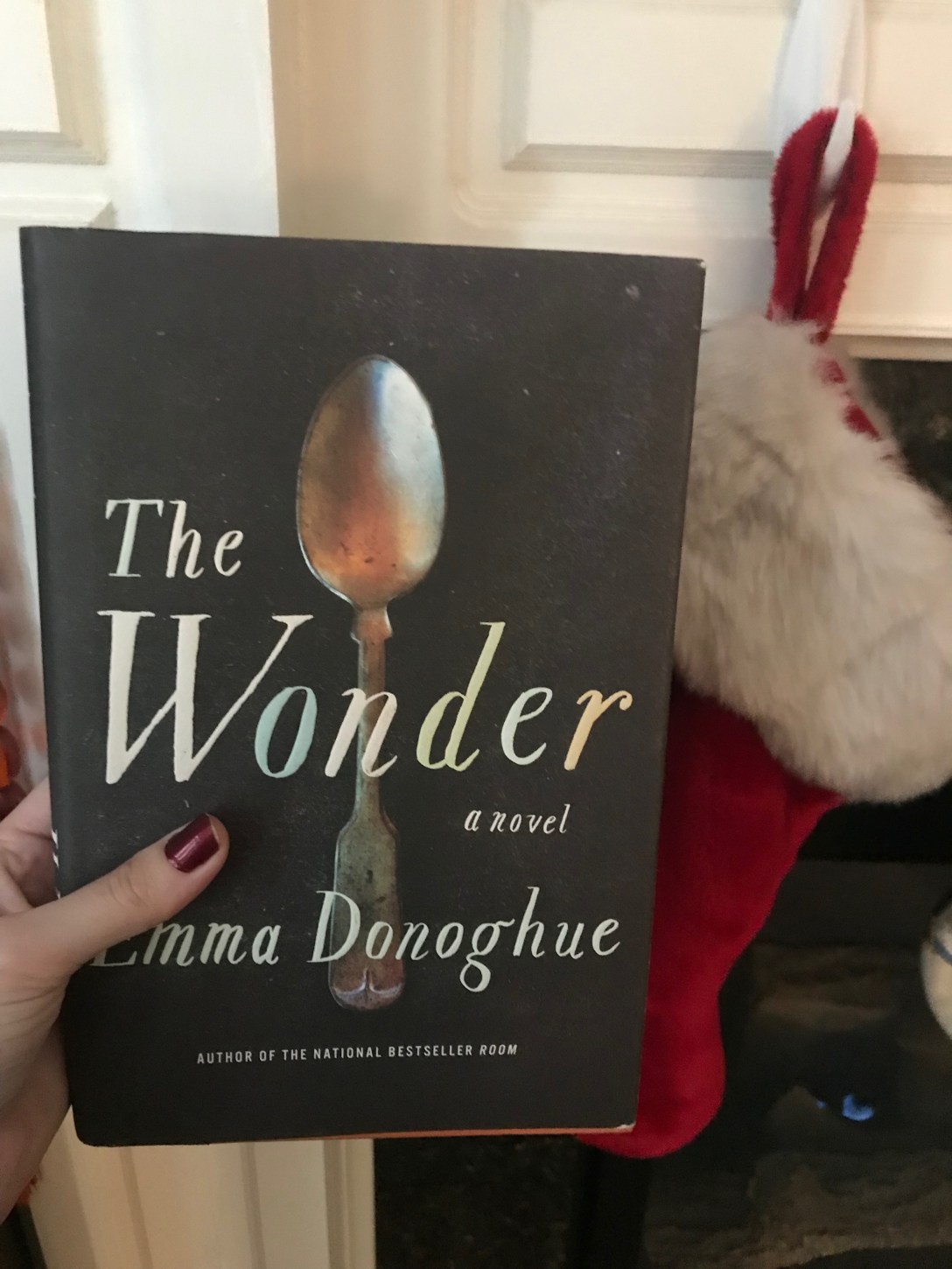
Review: The Wonder by Emma Donoghue

Anna:

This is a spoiler free review!

It’s 1859, and English nurse Lib Wright takes on a mysterious case in rural Ireland. She’s assigned a devout little girl, Anna, who claims to be living without food, under God’s will. Lib’s job is to watch the girl at all hours and report to a committee if she is sneaking food or not. Lib arrives expecting to catch the girl sneaking food within a matter of hours. But as Lib becomes more involved in the girl’s life she begins to see that this religious family is far from what it seems.

I picked this book up in the $1 section of the Strand when I was living in New York. I haven’t read Donoghue’s wildly successful book, Room, but I both love and am horrified by the movie. I found myself picking up the British edition of The Wonder when I was studying publishing in Oxford, England after college. It has one of those semi-vague descriptions that somehow is totally intriguing. I’ve had this book on my radar for a while. I was excited to also read an Irish author for the first time.

I think good historical novels are such an accomplishment, and this one captures religious tension between Catholics and Protestants, as well as the cultural differences and prejudices between the English and Irish. One of the biggest endeavors this book takes on is exposing hypocrisy in religion and and warning against the danger of extremism. The protagonist, Lib, does not identify with any faith or God herself, which alienates her, but also often allows her to act as one of the only characters to think and see clearly. As a nurse, she also represents science and rational thought.

This book doesn’t portray Catholics in good light, to say the least. Anna’s family is devout to the point of desiring sainthood over the health and life of their own daughter. Though Donahue exposes the dangers of religious extremism, she doesn’t completely criticize against religion as a whole. Anna herself becomes a dear friend to Lib, who has never allowed herself intimacy with a patient before. Lib recognizes and admires Anna’s good character and extreme bravery and strength. Lib’s love interest, Byrne, identifies as a deeply religious man, who is still able to see the dire consequences of the family’s extremist behavior. These two good characters prove that Donoghue does not condemn all faith as a whole, which I appreciate.

Donoghue also scrutinizes men in positions of power. Both the town’s head doctor and the priest are exposed as self-serving and using Anna’s publicity for their own means. They both are privy to ghastly and private information concerning Anna’s physical health that they conceal for the sake of town peace.

Another overarching theme is the question of if a mother/parent always has the child’s best interest at heart.

One of the things I love about The Wonder is that it kept me guessing up until the end. I didn’t think Lib’s own backstory is as compelling as it could have been, and it’s also easy to guess from the beginning. This book is so unique, and I would recommend it for a suspenseful, intelligent, and atmospheric read.

VERDICT: 4 out of 5 books