Review: Midnight at the Blackbird Cafe by Heather Webber

A paperback copy of Midnight at the Blackbird Cafe is being held up in front of a stretch of toes in the sand on the beach.

Alexis:

Midnight at the Blackbird Cafe follows two main characters: Anna Kate and Natalie. When Anna Kate’s grandmother passes away, she returns to her family’s hometown, a small Alabama town called Wicklow, to take over Granny Zee’s cafe. She’s only planning on staying for the summer, but she has some long-time family drama to unravel.

Meanwhile, Natalie returns to Wicklow with her young daughter after her husband dies in a tragic accident. While she’s working on gaining her independence, she has to live with her parents, and try to reconcile with her mother, who never got over Natalie’s brother’s death. 

I enjoyed this one! It was the perfect beach read. Webber’s writing flows well, and I found myself impressed by how well she handles such a large cast of characters. Wicklow is charming, and the people fun and quirky (think Stars Hollow in Gilmore Girls). I especially enjoyed reading from Anna Kate’s POV as she bakes pies and learns about her family. The themes of grief, losing a family member, and reconnecting with family are resonant throughout the book.

Midnight at the Blackbird Cafe is considered magical realism, but unlike some other magical realism books I’ve read, I would consider this one lightly magical realism; the cafe and pies are the only real elements. 

While I think Webber’s dialogue is overall written very well, there were definitely some melodramatic speeches that weren’t very realistic. I also wanted to get to know the two love interests better; I feel like their characters sputtered out too much by the end. And there was a weird tie in with a cat at the end that was strange and not entirely explained. Lastly, there was also a reference that Natalie was a part of the Daughters of the Confederacy (yikes!)

Other than that, I think if you’re looking for an easy, heartwarming book set in a charming Southern town with lots of descriptions of pie, then I’ll think you’ll enjoy this one.

VERDICT: ⭐⭐⭐💫/5
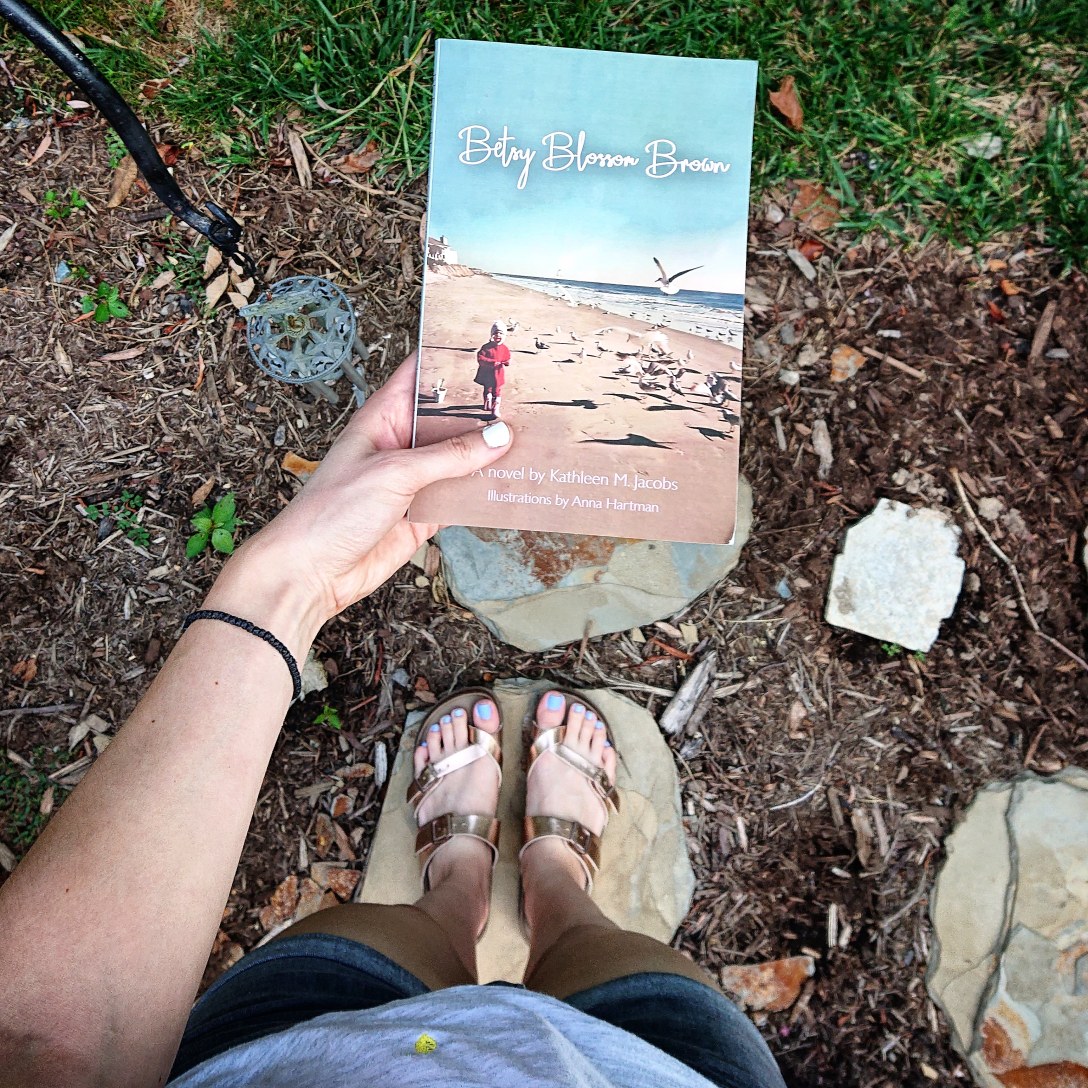
Review: Betsy Blossom Brown by Kathleen M. Jacobs

Alexis:

Thanks so much to Kathleen M. Jacobs for sending me her book! Jacobs has a gift for writing details, and vividly describing colors and clothes that create a vintage atmosphere and a Southern setting.

However, there are two big issues that kept me from being fully absorbed in the story: the POV randomly switches between first person and third person, and the name “Betsy Blossom Brown” was thrown around a little too often. 

To address the first issue, it happens so often in Betsy Blossom Brown that it made me confused. Even in the first couple of pages, one paragraph says, “‘But I don’t understand,’ Betsy winced.” And five paragraphs later begins with, “I turned each side of my hair behind my ears…” At first, I thought this was a characterization of Besty, that maybe she sometimes referred to herself in third person. But then I remembered that this was a minor problem in Honeysuckle Holiday.

As for Betsy’s name, it is a great Southern name, and makes for a great book title. However, I think the amount of times the repetition of her full name was repeated throughout the story lessened the magic of her name. 

That being said, I thought Jacobs did a great job of talking about and depicting Betsy’s Aspberger’s. Not many works of fiction deal with Aspberger’s, so I found this to be refreshing and enlightening. The story was character-driven, and I found Betsy’s character to be quirky and interesting. 

The writing in Betsy Blossom Brown is full of beautiful imagery, including vivid colors and clothing, that set up a coming-of-age story in a beautiful and nostalgic Southern setting. Jacobs writes in a conversational style that works well for her characters. However, I preferred the storyline in Honeysuckle Holiday, which I also found to be more cohesive. 

VERDICT: 3 stars

Review: Big Stone Gap by Adriana Trigiani

This was the perfect light read as I adjusted to my new job–one that I could pick up after a long day of work before bed. A mix of Gilmore Girls and Mama Mia, I enjoyed following the adventures of Ave Maria, the “town spinster” in her mid-30s in the rural mountain town of Big Stone Gap, Virginia. After the recent passing of her mother, Ave Maria is the only Italian left. Like any other small town, everyone in Big Stone Gap know everyone else’s business. So when Ave Maria discovers some long-buried secrets about her own identity, the rest of the town is quick to find out.

Parts of this book are downright hilarious. The part when Elizabeth Taylor comes to town actually had me laughing out loud. The same goes for the dog incident and the chicken bone incident. Classic.

I love the Bookmobile, and the fact that Ave Maria loves books. I love her devotion to her town and her mother, despite their faults. I love that Ave Maria is named after a prayer. I love that, because she’s an Italian in the mountains of Virginia, no one can pronounce her name. (My name is Anna-Marie–I can relate.)

Ave Maria does get a little annoying in her stubbornness to remain single,This would have been fine if she truly didn’t want a partner, but her actions tell otherwise. Sadly, she seems more jealous and vindictive toward love more than anything else. She turns men away and insists she’s happy, only to get jealous when those men turn to other women. There are parts of her character that I like and identify with, as I mentioned above, and then there are aspects to her that get really annoying, like her inability to notice what is literally in front of her nose.

Though I enjoyed Big Stone Gap overall, there are some things I can’t get past, which I’ll call here Early 2000’s Problems. It’s kind of like when you watch Gilmore Girls or an old rom com and you’re shocked at how something that you used to regard as so wholesome is actually filled with culturally insensitive, racist, and homophobic jokes. It’s not okay, but you have to approach these things in the context of time and how far we’ve come as a society in accepting people, even since the 2000s (and Big Stone Gap takes place in the late 70s).

Also very 2000’s is Trigani’s assumption that men and women live like species from different planets. There are literally lines such as, “this is how all men are,” and likewise, “ this is how all women are,”  this just isn’t the case! Again, I think that this has to be attributed to the time period (either that, or I just haven’t read a romance in a long time). There’s also an undertone in here that men are objects to be won by women and vice versa, which presents a big problem.

Despite the outdatedness, I still did enjoy reading Big Stone Gap, and I would recommend it if you’re looking for a small town southern romance.

VERDICT: 3 out of 5 books

 
Now for some very specific things that really irked me (spoilers below)–


The fact that Jack essentially bought Ave Maria’s heart when he paid for all her Italian relatives to visit.

The fact that when the family showed up Ave Maria’s own plans were completely pushed aside.

The fact that as soon as Ave Maria cemented her love to Jack, Jack’s mom IMMEDIATELY died, because she knew Jack was in love and didn’t need her anymore.

I totally thought the best friend and band director was going to come out as gay. Maybe he still does later in the series…?

I love Pearl, except that she is the token fat smart girl who discovered makeup and it made her life better.

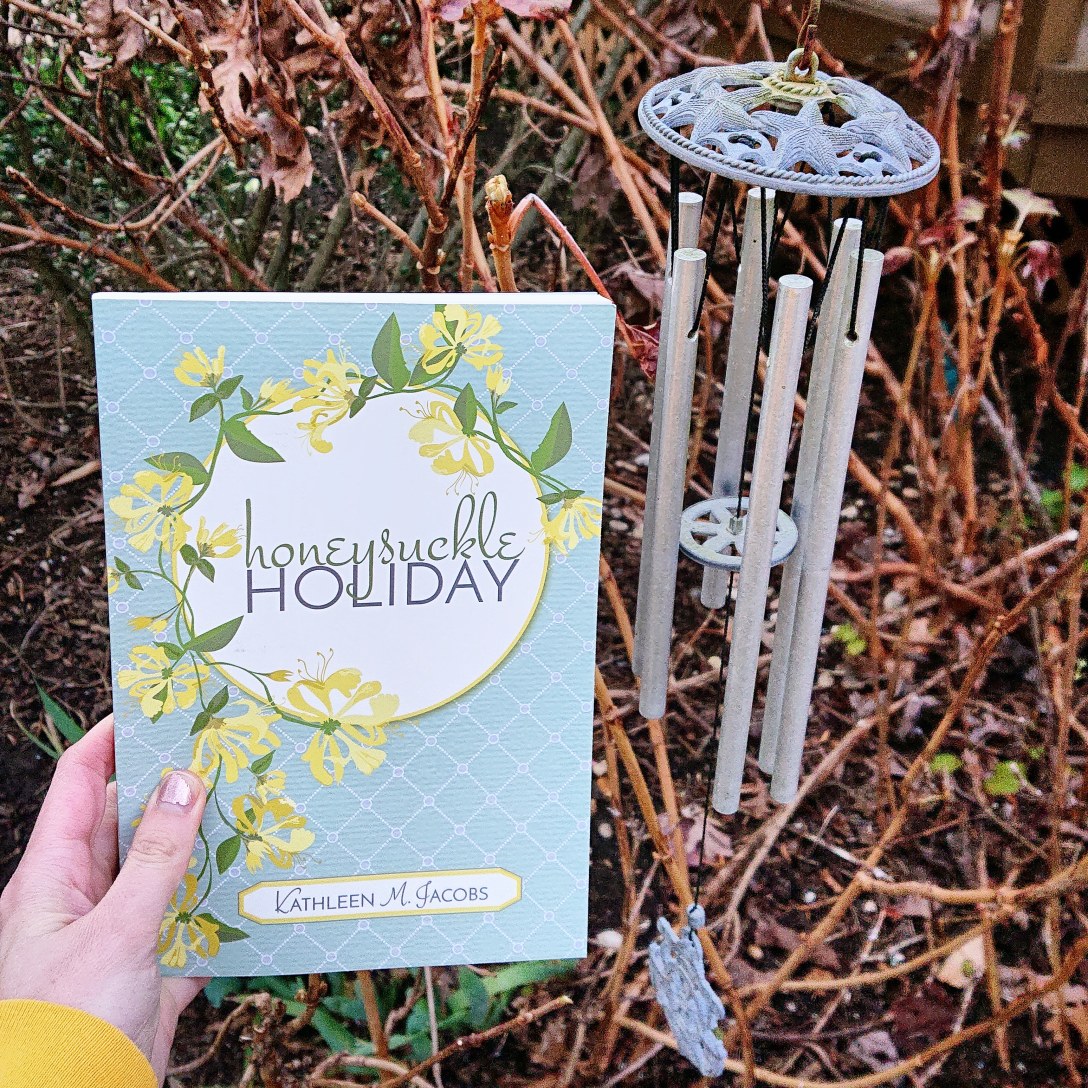
Review: Honeysuckle Holiday by Kathleen M. Jacobs

Alexis: Read 3/11/19

*The author sent me a copy of her book in exchange for an honest review.*

Honeysuckle Holiday was such a poignant read. Don’t let the cover fool you: this short book tackles childhood innocence and racism.

The story follows Lucy in two different time periods: 1965 and 1970, when she was twelve and sixteen-years-old. Though Honeysuckle Holiday is categorized as YA, I would describe it more as a bildungsroman/coming-of-age story. When Lucy’s father leaves, not looking back, on Christmas Day, she and her older sister, Caroline, try not to dwell on it too much. But she knows something has changed when her mother refuses to talk about him and when they have to move into a different house.

In her acknowledgements, Jacobs quotes a woman named Peggy Fox: ‘“You captured the voice of a twelve-year-old girl very well.’” And she’s right. Jacobs’ writing flows beautifully, but I was very aware that I was reading in the perspective of a twelve-year-old.

Lucy notices everything around her. She relates things to her Barbie dolls, which she admits she’s starting to outgrow. She is jealous of some of Caroline’s things but also wants to be like Caroline when she grows up. She partly knows why her dad left but is partly left in the dark. She’s curious about the world around her and asks lots of questions. Jacobs’ detailed descriptions mimic Lucy’s curious mind. I also like how she includes a lot of parenthetical phrases, as Lucy has a lot of afterthoughts.

I love all of the references Jacobs includes in her book. Lucy’s mother wears Chanel No. 5. Lucy uses a Velveeta box to hold her collection of found objects. The characters reference It’s A Wonderful Life, The Beatles, and TV shows of the time. These references cemented the story into its setting and time period, bringing it to life.

Lucy mentions To Kill a Mockingbird multiple times, and even relates herself to Scout. I found this fitting, as the story reminded me a lot of To Kill a Mockingbird. Both are told from a young perspective, but are really told for a more mature audience. Both deal with racial tensions and divides, as well as the horror of the KKK. I loved Jacobs’ inclusion of descriptions of food. The book is set in the South, and I enjoyed reading about Lila’s apple pies, okra, and Lucy’s love of steak.

While I liked how Lucy describes the honeysuckle vines ( as well as the smell) outside of her window, I don’t think the title of the story sums it up very well. Though the story itself was impactful, the title was not. To me, the honeysuckle symbolizes Lucy’s childhood innocence, and the book is about coming-of-age and losing that behind. I’m also not sure why the first couple of chapters are in Caroline’s POV.

Overall, if you’re looking for a quick read that’s packed with vivid details, that will draw you into the 60’s and 70’s, and whose message will stay with you, then I definitely recommend it.

VERDICT: 4 out of 5 books

Review: Sugar Run by Mesha Maren

This review is spoiler-free and from both of us!

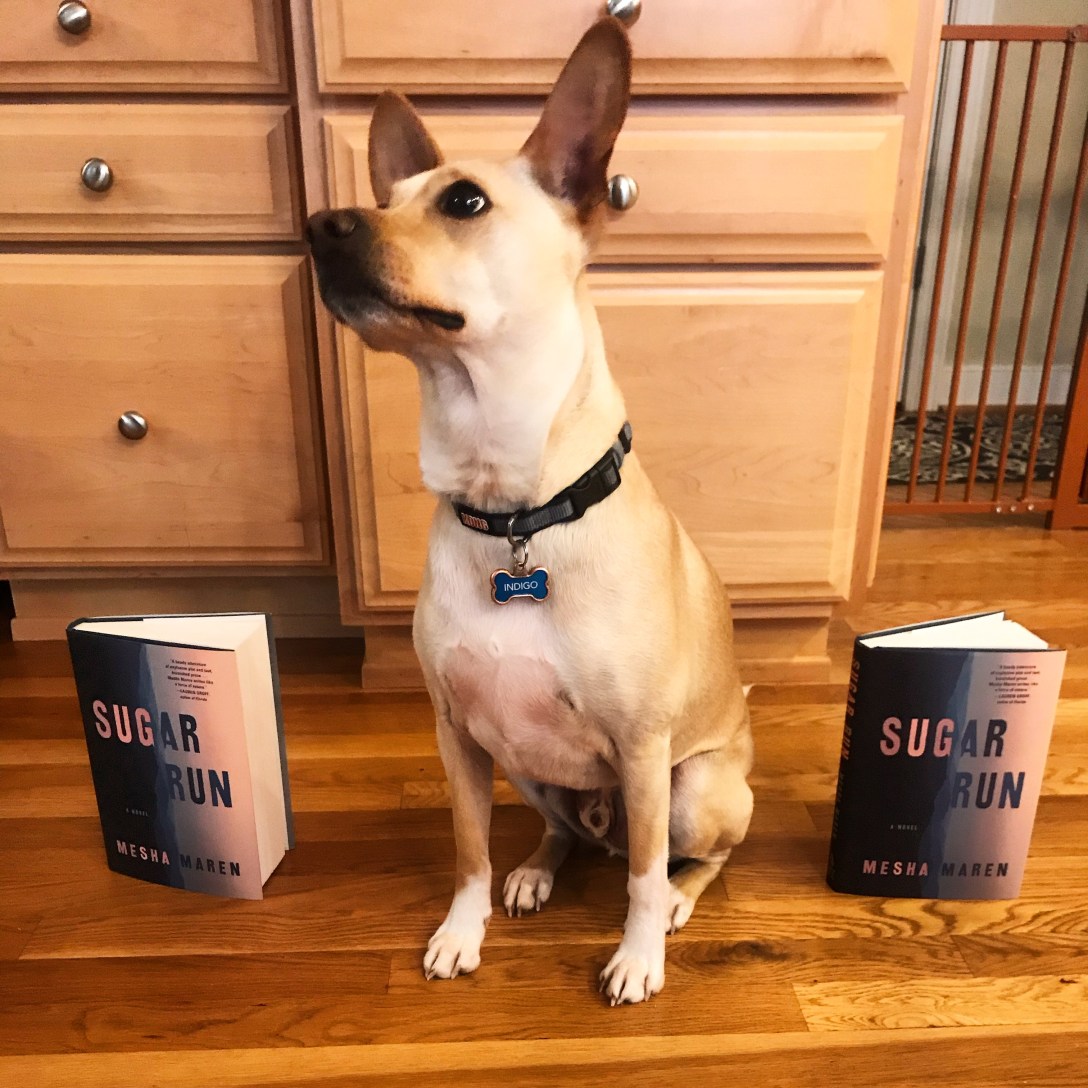
There is a dog in this book, so that’s our excuse for featuring a very confused Indy in this.

Alexis:

I’m thankful I had the opportunity to hear Mesha Maren discuss her book, because I feel like I really understood her vision. In Sugar Run, Jodi, the main character, is just released from prison, where she served eighteen years. She enters into a relationship with a young mother named Miranda, and their lives become tangled together. It’s a story of hope and hopelessness.

I love Maren’s lyrical writing style. Her writing has such a hard realness to it. She writes lush descriptions as she paints life in West Virginia. As Maren discussed in her talk, her book is hard to categorize. It’s a noir, crime, Southern Literature, and LGBTQ novel. But this is one of the great things about it: it’s a collage of genres, and it works.

This is a dark book that deals with vices to the max. It deals with crime, murder, sex, and lots of drugs. All of the characters are flawed, and make really bad decisions, yet I cared about them. The first half of the book is more character driven, while the second half is more plot heavy. The chapters alternate between the present (written in past tense) and the past (written in present tense) which I thought worked really well.

VERDICT: 4 out of 5 books


Anna:

Like Alexis, I’m so happy we had the opportunity to meet Maren at the Fountain Bookstore here in Richmond. Hearing an author discuss her book and writing process always enriches my understanding of it as a reader. The way Maren described her characters before I’d read about them made me more invested as a reader.

Maren’s writing is exactly what I love about literary fiction, even though, as Alexis said, this is a blend of genres. It is so dark and violent, but it is beautifully and breathtakingly written and full of nature imagery. The characters are well drawn out and real.

The violence in the lives of all the characters contrast so starkly with Jodi’s obsession with the rural landscape of her homeland. Her love of West Virginia mirrors themes of stability and nostalgia in Jodi’s life. It also offers commentary on the ways humans inflict violence on the earth, as the horrors of fracking is something frequently discussed.

The ending of books is something I’m constantly disappointed by, and, happily, this was not the case with Sugar Run! I thought the conclusion of both the interwoven timelines is so well done, and, most importantly, believable. Maren’s pacing is perfection.

During her talk, Maren touched a bit on the book she’s writing next, and you can bet I’ll be picking that up when that comes out!

VERDICT: 4 out of 5 books

Review: Salvage the Bones by Jesmyn Ward

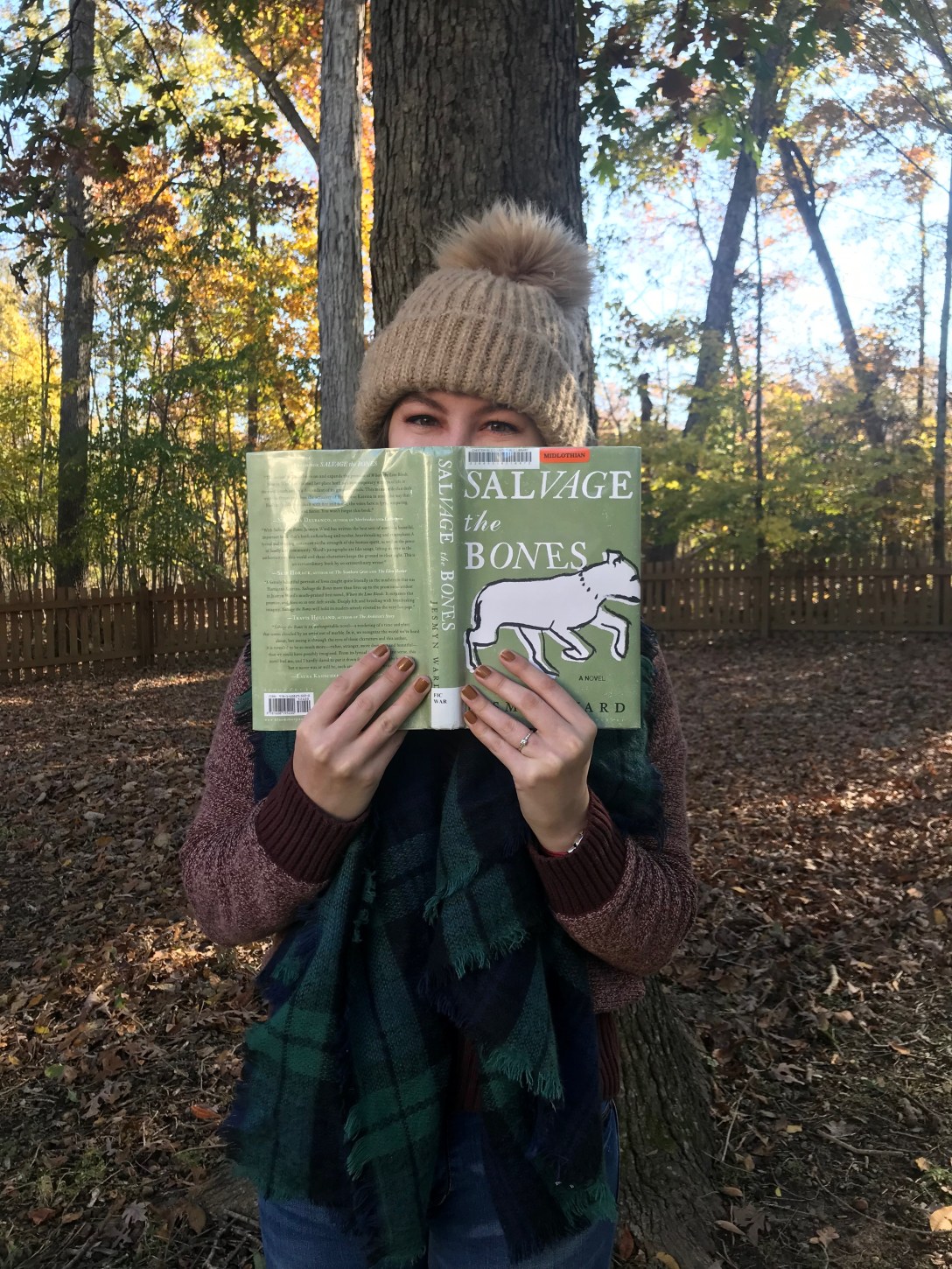
Anna: Read 11/16/18

In Salvage the Bones, Esch and her three brothers help their alcoholic brothers prepare for the arrival of Hurricane Katrina with their father, who is often drunk. Esch’s mother died giving birth to her youngest brother, Junior. Her brother Skeetah’s dog, China, gives birth to puppies, who he hopes to sell as prized fighting dogs. The oldest brother Randall is distant but protective, and Junior is always getting into trouble. But Esch has her own problem—she’s pregnant.

I loved this book! This is my second Jesmyn Ward book after Sing, Unburied, Sing. Her writing is so atmospheric that you can almost feel the sticky Southern humidity as you read. Ward is hands down one of the most lyrical writers I’ve read, and it’s amazing how she can make something as devastating as the destruction of Hurricane Katrina into something beautiful and even hopeful.

The pacing in this is fantastic and mimics the calm before a storm. As the tension builds and builds and the storm approaches, Esch’s pregnancy becomes harder to hide. I loved Ward’s foreshadowing in China’s motherhood to her puppies, the approach of the storm, and all the water/flood imagery.

I also loved the narrator, Esch, and her family, despite their many flaws. Esch’s memories of her dead mother throughout her day to day life make her as present as the other characters, and these descriptions were some of my favorite parts of the book. You can feel their mother’s love in the family by the way they remember her moving around the house, which they ultimately have to fight to save from the hurricane. Esch’s relationship with her brothers and father shifts as the events of the hurricane play out. This is a fantastic story of family and brotherly sacrifice.

Despite the fact that China was a fighting dog, I enjoyed reading about the bond between China and Skeetah. Even though I’m ethically opposed to dogspotting, I found Ward’s ability to write such calm scenes alongside the bloody ones of the dogfights, and then the destruction of the hurricane, impressive.

A word of warning: don’t read this if you can’t handle dogfighting, or other bad things happening to dogs, if you know what I mean. Honestly, this might be the reason I’m not giving it 5 stars/books. 

VERDICT: 4 out of 5 books

I highly recommend checking out Jesmyn Ward. I’ll definitely be reading the remaining two books on her backlist very soon!