In the Woods and mood reading!

Anna: It’s finally (slowly!) feeling a bit more like fall! 

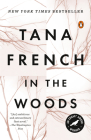
As cooler weather approaches, I’ve been in the mood for crime fiction. This is the second Tana French novel I’ve read in a month. The first in her Dublin Murder Squad series, In the Woods follows Detective Bob Ryan and his partner Cassie Maddox as they investigate the murder of a twelve-year-old girl found dead in the woods…the same woods where Ryan’s two childhood friends went missing years before. I didn’t enjoy this as much as The Witch Elm, but I’ve heard this series only gets better, and I think it’s one I could easily binge this fall.

Are you a mood reader?

 Support Independent Bookstores - Visit IndieBound.org

Review: Bel Canto by Ann Patchett

Alexis: Happy National Read A Book Day!

Yesterday, I finished reading Bel Canto by Ann Patchett. This was my first Ann Patchett read, and I’ve been meaning to read her books for a long time. 

Bel Canto was not my usual read. Here’s a quick summary: In an unidentified South American country, famous opera singer Roxane Coss is invited to sing at Mr. Hokosowa, a businessman’s, birthday party. During the party, a group of terrorists burst into the house and keep the entire party hostage. What ensues is an unusual hostage situation that goes on for months and months. 

This book is basically a giant character study. As a reader, you are launched into the minds of a multitude of characters. You learn about their families, their fears, and their interests in life. You learn about their inner lives.

The book itself is very slow moving. Plot wise, not much happens. About halfway through, the hostage dynamic changes, which leads to some interesting developments. 

To be honest, I was a little bored with the first half. Patchett spend pages and pages on characters that I wasn’t interested in learning about. But most of the book is about Gen, Mr. Hokosowa’s translator. He was by far my favorite character. It was really interesting to see life from his language-based perspective.  

My biggest issue with this book is the ending. After spending so much time learning about the characters, the book ends abruptly. I know Patchett probably did this on purpose, but still. As the reader, it was jarring. Despite the fact that I guessed the ending, it still felt melodramatic when it happened. With some much time dedicated to talking about opera, this book did tend to lean on the melodrama. 

And then there’s the epilogue. I could deal with the ending, but the epilogue was wholly unneeded, and it honestly made no sense. Unfortunately, the epilogue is the thing I was left with, so I still have its bitter aftertaste in my mouth.

Overall, I enjoyed some sections of this book, and found other sections very slow moving. It wasn’t my favorite, but I enjoyed the overarching message. 

VERDICT: 3 stars

Currently reading: Late Summer

Anna: Happy Monday from my two current reads!

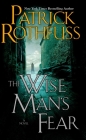
I’m finally getting to the second book in the Kingkiller Chronicles series. I’m 300 pages in and completely swept up once again into Kvothe’s story! I’m finding that it mimics the first book maybe a little too closely so far, but I’m excited to see the direction it goes. Will Patrick Rothfuss ever finish the third book?

Support Independent Bookstores - Visit IndieBound.org

I’m also loving We Are Okay, a novel that’s deep, character-driven, and introspective in a way that YA novels sometimes aren’t. I’m finding the slow pacing  a great contrast to an action-packed fantasy.

Support Independent Bookstores - Visit IndieBound.org

Review: Gather the Daughters by Jennie Melamed

Alexis:

Here are some words to describe Gather the Daughters: disturbing, haunting, cultish. The book focuses on very dark, heavy themes, including pedophilia, child marriage, and incest. 

In Gather the Daughters, a group of people live on an island, where very summer, the children run free. But when the girls start their periods, they are considered to be women, and must marry and have children as fast as possible. The rest of the world is post-apocalyptic, and is simply called “the wastelands.” Fathers are encouraged to groom their daughters from a young age, but are supposed to stop once the girls hit puberty. 

The book tells the story of multiple girls. Their lives are very similar and overlap. Caitlin is eager for knowledge and is allowed to read books from the wastelands; Janey, at seventeen, has been starving herself for years in order to prevent her period from coming.

This was a haunting and brutal book to read. While Melamed’s descriptions and writing are good, the book was slow-paced. I also wish the ending was more radical and made more of an impact.

Overall, I can’t really say I enjoyed reading this book, and I did skim through some of the middle. But it definitely made me think.

VERDICT: 3 stars 

How Many Books is Too Many Books?

Anna: How many books do you read at once? I’m always going between two or three–one audiobook and one or two physical books!

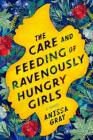
Though I prefer physical books, audiobooks are an easy and enjoyable way for me to read while I’m at work, working out, or doing chores. I often listen to crime fiction, nonfiction, and long books that I find difficult to read in their physical form. I’m actually listening to a fiction book now, though, The Care and Feeding of Ravenously Hungry Girls by Anissa Gray.

At home I’m currently switching between a memoir, My Life with Bob by Pamela Paul, and Three Women by Lisa Taddeo, which I’ve almost finished and I’m loving!

Check out what I’m currently reading:
Support Independent Bookstores - Visit IndieBound.org

Choosing a Book to Read Tomorrow

Alexis: Hi, everyone!

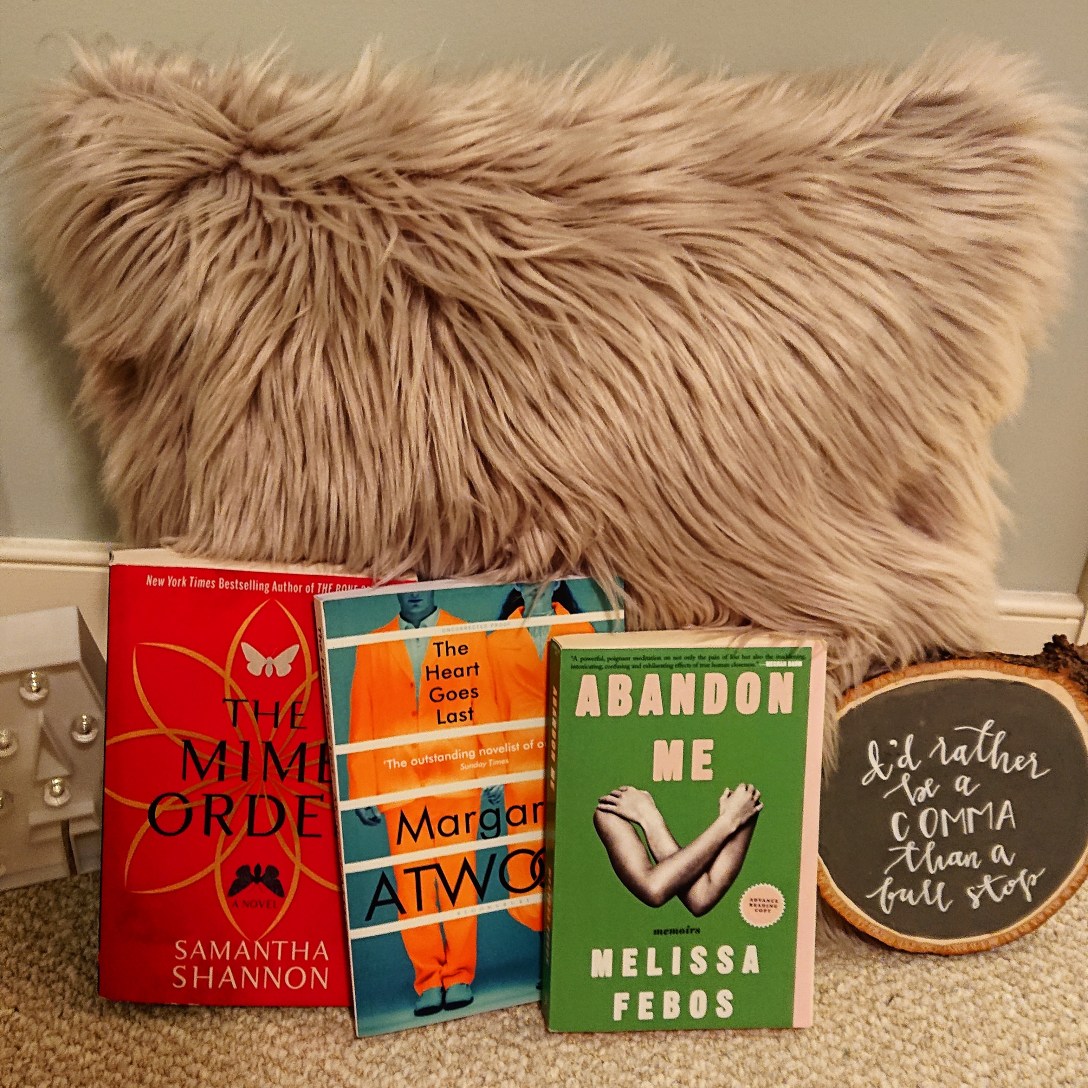
I’m trying to choose between these three books to read tomorrow. I’m just not sure what I’m in the mood for.

If anyone’s wondering, I’m thankful that Anna left most of the books she accumulated while living in NYC at home, so I have a lot of books to choose from!

I hope you all have had a great and productive Monday. Goodnight!

Review: Clock Dance by Anne Tyler

Alexis:

Clock Dance delves into the life of Willa, exploring her life over several different stages. The beginning of the book focuses on Willa at age 11, 21, and 41. The latter, longer half of the book focuses on her at age 61, when she suddenly decides to fly across the country to take care of a woman’s daughter.

What I liked: I really enjoyed the first three sections of the book. I think Tyler did a phenomenal job describing her life and her thoughts at her different life stages. I especially enjoyed learning about Willa’s family at age 11; it was poignant and explored her family’s dynamics.

The image of a saguaro cactus pops up several times in the story, hence the front cover. I enjoyed the recurring imagery and I thought it served the book well. I also adored the descriptions of Airplane the dog!

What I disliked: I wasn’t a huge fan of Willa’s storyline at age 61. Unlike the first three sections, Tylers’ writing was rambling. Other than Willa, I never felt a great connection to any of the other characters, and even though Tyler’s dialogue was on point, the characters felt too flat.

Derek and Peter were also super douchey. And Willa was such a passive character. The last section was supposed to be when Willa stands up for herself, and makes a life-altering decision. But I never really felt that. I appreciated that this is a book that focuses on the life of the always complacent woman, but I wanted the life-altering decision to be bigger.

I ended up skimming the ending because I couldn’t stand reading another description of Denise hobbling on her crutches, or Willa cooking something, or Cheryl watching TV. Also, a nine-year-old named Cheryl? Maybe I’m just being picky, but overall, the fourth section didn’t do it for me.

VERDICT:

First 3 sections: 5 stars

Last section: 1 star

Total: 3 stars

Support Independent Bookstores - Visit IndieBound.org

Review: The Editor by Steven Rowley

Alexis: 

What I liked: I like Rowley’s writing style. I remember liking it a lot in his other book, Lily and the Octopus. His dialogue is always on-point and funny, and I enjoy his imagery. 

I also really liked James as a character. I found him funny, and I enjoyed reading about his relationship with Daniel. I don’t think I’ve ever read a book set in the 1990’s, and I enjoyed the political climate and the history of the book.

What I disliked:

I really couldn’t get into this until about halfway through. James’ story was a little too boring at first, and I found myself skimming a lot of the details. I wanted to have more of James’ backstory earlier on in the story.

My biggest issue with the book was with Jackie Kennedy as a character. I could tell that Rowley was being careful with how he wrote her, and because of this, she never felt fully fleshed out as a character. I’m not a huge fan of historical people being one of the main characters in books, and I don’t think she served a good enough purpose. In my opinion, the editor would’ve made more of an impact in the story if Rowley had made up a famous editor and created a backstory for her. 

There was also an event towards the end of the book which I felt like didn’t fit into James’ character, and was a little too on the nose. 

Overall, I liked James and Daniel, and as a writer myself, I enjoyed reading about James writing his novel. But the slow plot and Jackie’s character dragged this down a star.

VERDICT: 3 stars

Support Independent Bookstores - Visit IndieBound.org

June Reads

Anna: It’s officially key lime pie season! Here are just a couple books I read in June– I don’t have a whole stack to show this month because a lot of my copies were due back to the library, but here’s my full wrap up: 

4 stars:

Girl in Translation by Jean Kwok

Men We Reaped by Jesmyn Ward

My Sister, the Serial by Oyinkan Braithwaite

Columbine by Dave Cullen

The Hopefuls by Jennifer Close 


3 stars:

Sunburn by Laura Lippman

No Exit by Taylor Adams

What did you read this month? I’ve had a great weekend so far lounging and reading by the pool, which I plan on doing more of this afternoon! 


Review: The Blood of Flowers by Anita Amirrezvani

Alexis:

The Blood of Flowers focuses on an unnamed fifteen-year-old girl in 17th century Persia, which is now modern day Iran. Her passion is making carpets, and after her father dies, she and her mother are taken in by her carpet-maker uncle. But then she is forced into a sigheh, a three month contract of marriage, with an older man, in order to have money for her and her mother to survive.

I loved the descriptions of the fabled city of Isfahan. The author spends a lot of time describing the marketplaces and the people that the main character runs into. She writes beautiful descriptions of the food, drink, and clothing of the characters. My favorite part of this book was the carpet making. It was such an interesting process to learn about, and the author did a great job describing the carpets, which were such an important way of life in 17th century Persia.

That being said, this novel is very slow-paced. It took a couple of chapters for me to get into it, and even then, I never felt particularly connected to the main character, despite the book being in first person. The plot is very simple: girl’s father dies, girl and mother must find a way to live, girl accepts a short marriage contract for money.

Unfortunately, way too much of this book focuses on the sigheh. Every chapter focused on the main character trying to sexually please her husband. The first couple of times were necessary, in order to show how the main character has no say in society, her life, or her marriage. She only exists to please a man. And while this is important to focus on, as a historical fiction novel, the author spends an increasingly amount of time on their sex scenes.

The novel also has many tales intersected throughout. While I liked these at first, there were too many of them and they drew me out of the story.

Eventually, the novel pulls away from this and focuses on the carpet making once again. But when the novel ends, I felt like I only got a glimpse of the main character’s life after her sigheh. The novel drags on and on, and then all of a sudden the girl is nineteen, in a better place, and the book just ends.

Overall, I can see the main point the author was trying to make. Life was terrible for women in 17th century Persia. Carpet making was not for women. Girls were supposed to be forced into child marriages by the age of fifteen. The author tried to show that the main character was different: she had a voice, she got out of a marriage, and she had a talent in a man-dominated field. But she and the other characters often felt flat.

The book had a great premise, and I loved the author’s worldbuilding. But I struggled to connect with the characters and the story.
Support Independent Bookstores - Visit IndieBound.org

VERDICT: 2 ½ stars