Review: A Court of Wings and Ruin by Sarah J. Maas

Alexis:

Spoilers Below!

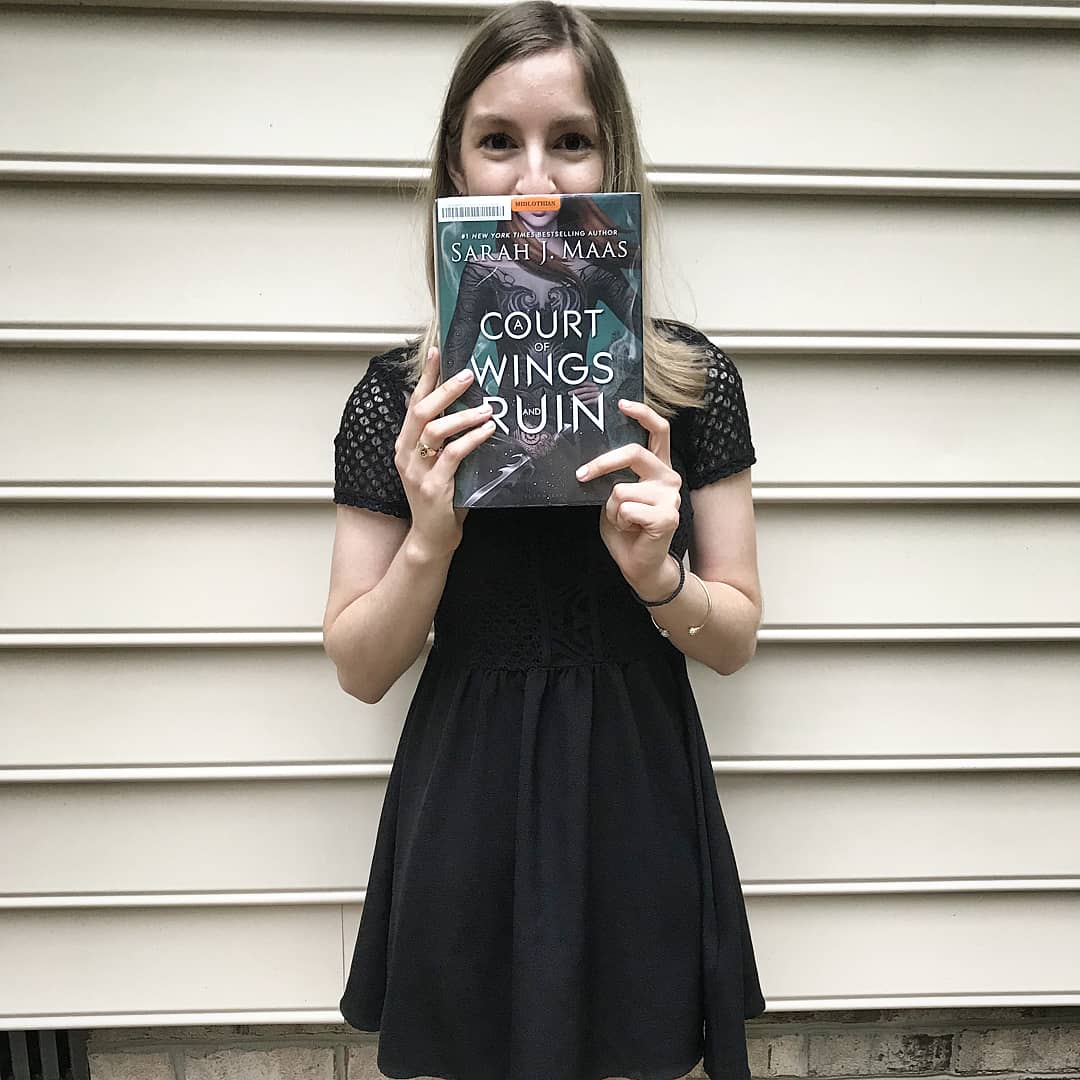
Overall, A Court of Wings and Ruin, the third book in the A Court of Thorns and Roses trilogy, was a 4 star read. It was more along the lines of the first book than it was the second book. However, I did have a list of issues with it that I will explain below!

I’ll start with what I liked. Maas’ writing shines when she writes action scenes. I loved reading the war scenes. I thought she did a great job with their pacing and descriptions.

I also loved that Rhysand fully transformed in the final battle. I was like, “Heck, yes!”

I also enjoyed having all the High Fae in the same scenes. Their histories and abilities were very interesting all pooled together.

As for what I didn’t like as much, for some reason, Maas’ writing is just a little bit worse in this book. She has a tendency to lean towards the occasional cheesy line, but this book seemed to bring her cheesiness out just a little more.

This book felt like Maas had been rushed, that she had a deadline that her publisher wanted her to keep, so she wrote this book quickly. And then it wasn’t edited enough. The pacing felt slow. This book is about war, and war does drag on, but the plot doesn’t flow as nicely as it did in A Court of Mist and Fury. Everything just felt slowed down.

And…the sex scenes did not fit as well in this book as they did in A Court of Mist and Fury. They felt cringey and all of them were basically a carbon copy of each other. There’s also a scene where Rhys tells Feyre, “You smell like blood,” after they fought in a battle. And then they have sex. Hmm. I don’t know about that.

And, my biggest issue. I am all for diversity, but not just for the sake of diversity. Mor’s reveal as bisexual was a complete cop-out from Maas. Mor’s been hiding that she’s bi…for 500 years?? Just so she won’t hurt Azriel’s feelings?? Her hiding this from her family for that long did not feel true to character.

As for the plot, I had issues with the fact that Feyre is insanely powerful and yet she HARDLY FOUGHT. Obviously, Rhysand has significantly more war experience, but Feyre is his equal, so they should’ve fought together. Her mention of, “You know, I don’t really like war,” was not a good enough reason for her not to fight.

As for the whole new cast of characters at the end, this also felt like a cop-out from Maas. When Rhysand asked why they couldn’t find them, their answer was, “Oh, I guess we hid too well, so even our friends couldn’t find us.”

If they had been such good friends/allies during the last war, they definitely would’ve found a way to keep in contact with Rhysand and his crew.

As for my last complaint, Armen should’ve died. Rhysand coming back from the dead made sense, but there’s no way Armen could’ve come back after all that.

Despite my issues, I enjoyed the book overall! I definitely think the trilogy is worth a read, just be aware that it isn’t perfect.

VERDICT: 4 stars
 

Review: A Court of Mist and Fury by Sarah J. Maas

Alexis:

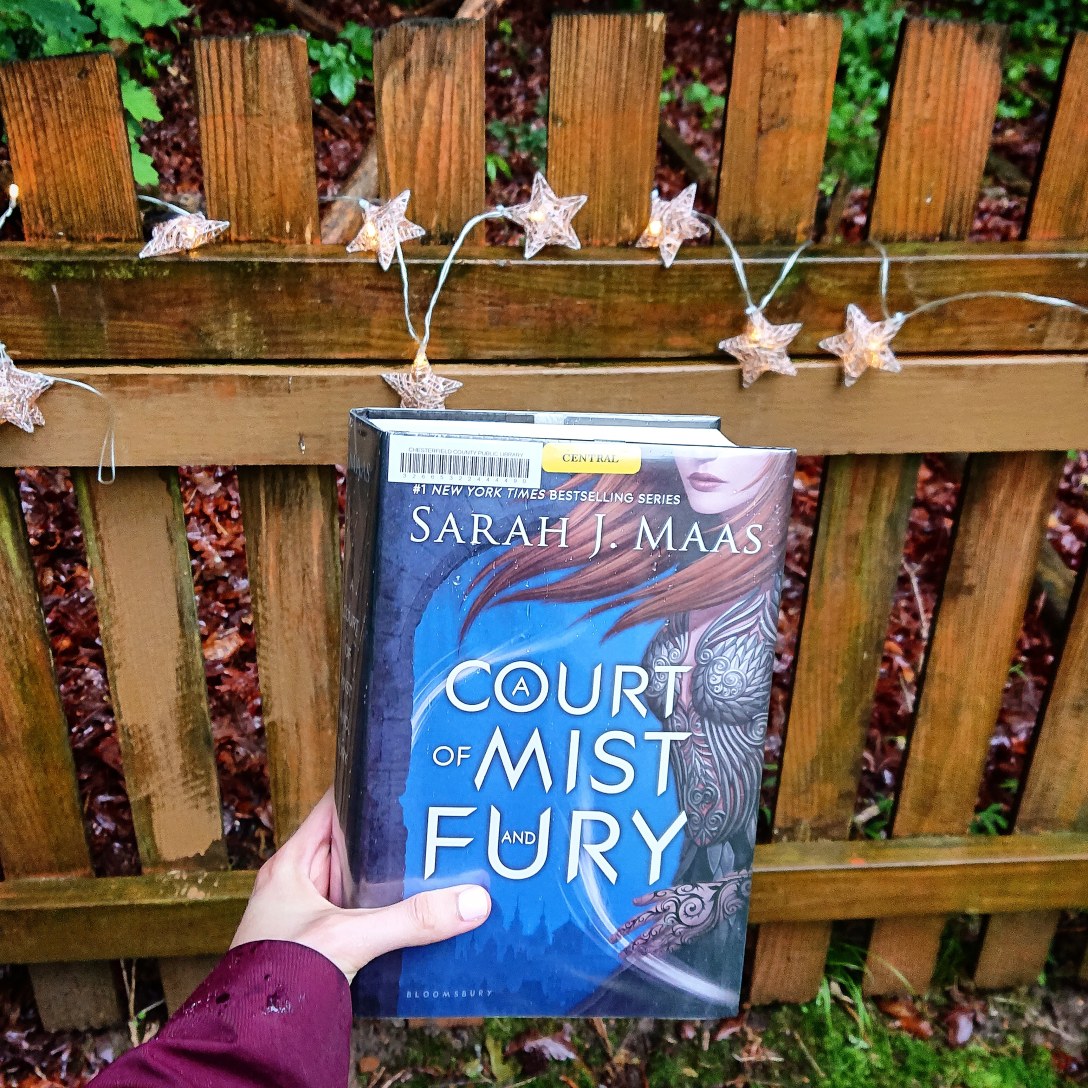
Okay, let me start off by saying I have a lot of feelings about this book, which is awesome, because if I book can dig down in me and make me feel all sorts of things, then I am here for it!

A Court of Mist and Fury builds off of A Court of Thorns and Roses but makes the world 10 times better. Plot? There’s lot of plot. Characterization? Tons of it. Tragic backstories and permeating feelings of guilt? There’s a lot of that, too. I love character driven stories, and this book dove deep into the characters of Feyre and Rhysand.

It’s hard to talk about this book without spoiling anything, but I’ll write my non-spoiler review first.

First of all, it’s important to address the fact that this book is a monster, as it weighs in at 626 pages. When I first got it from the library, I thought, “What can she possibly go on about for that many pages?”

I will admit, it took me a good 50 pages to get into it. The sex scene towards the beginning was cringey. The beginning was a little slow, but necessarily so, as Feyre dealt with the trauma from the end of the first book. But it quickly becomes interesting once Feyre enters the Night Court. I loved meeting a whole new cast of characters. Sometimes secondary characters feel too bare for me as a reader, but Rhysand’s crew felt very fleshed out.

Maas did a much better job of explaining the magic system, and I enjoyed learning about the world’s complicated history. I loved the whole atmosphere of the Night Court.

I enjoyed Feyre’s character development, and I really enjoyed learning about Rhysand. He’s such a complex character, and I loved learning about his motivations and his backstory. I’m also a sucker for the tall, dark, and handsome type.

Without spoiling anything, let me just say that this is the best relationship/romance I’ve read in a while. I wasn’t all for it in the first book; it was okay, but it was lacking a real depth. But Maas didn’t hold anything back in the sequel.

That being said, there were some small things in this book that I take issue with. While I enjoy Maas’ writing style overall, sometimes she throws out a line that makes me cringe. She writes “snarled” way too many times, and things like “said baldly.” She writes “he purred” more often than I ever want to read; I’m a firm believer in “said” is best. I know the characters are supposed to have a predatory side, but ugh. It was a little too cringey for me.

This book also negated the first book in a lot of ways, which I’ll go into in the spoiler-filled section of my review below.

If you’re debating reading the series, get through the first book so that you can get to this one! I loved the worldbuilding and I especially loved the character growth. I don’t give 5 stars lightly, but I was wholly engrossed in reading this. I stayed up past my bedtime reading this (whoops) and finished it the next day.

I’m excited to read the next one.

VERDICT: 5 stars

SPOILERY REVIEW BELOW:


Feyre + Rhysand—OH THANK GOD. Tamlin had no personality, and I was interested to see how Maas would further their relationship. But she hit it out of the park with Rhysand. He just oozes personality, and he and Feyre actually have chemistry! Yay! I’m very picky when it comes to relationships in books; often it feels too rushed or too out of nowhere. But Maas took the idea of a slow burn and stretched it, so that Feyre and Rhysand actually knew each other inside out and trusted each other with their lives.

I’m also down for anything with flying, and I loved how Maas described Rhysand and the other characters’ wings.

Like I said above, this book did negate some aspects of the first one. After everything Feyre went through to save Tamlin in the first book, she jumps awfully fast to Rhysand. I’m not complaining about it, because it honestly felt true to character, but it was a bit jarring at first. I know some other readers had issues with Tamlin’s actions in the beginning of A Court of Mist and Fury, and felt betrayed by his character and actions. But I wasn’t too fond of him as a character to begin with so…I didn’t mind!

And while Lucien was my favorite character in the first book, he acts like a shell of his former self in this one. But considering how his story arc ended, I’m sure I’ll see much more of him in the 3rd book!

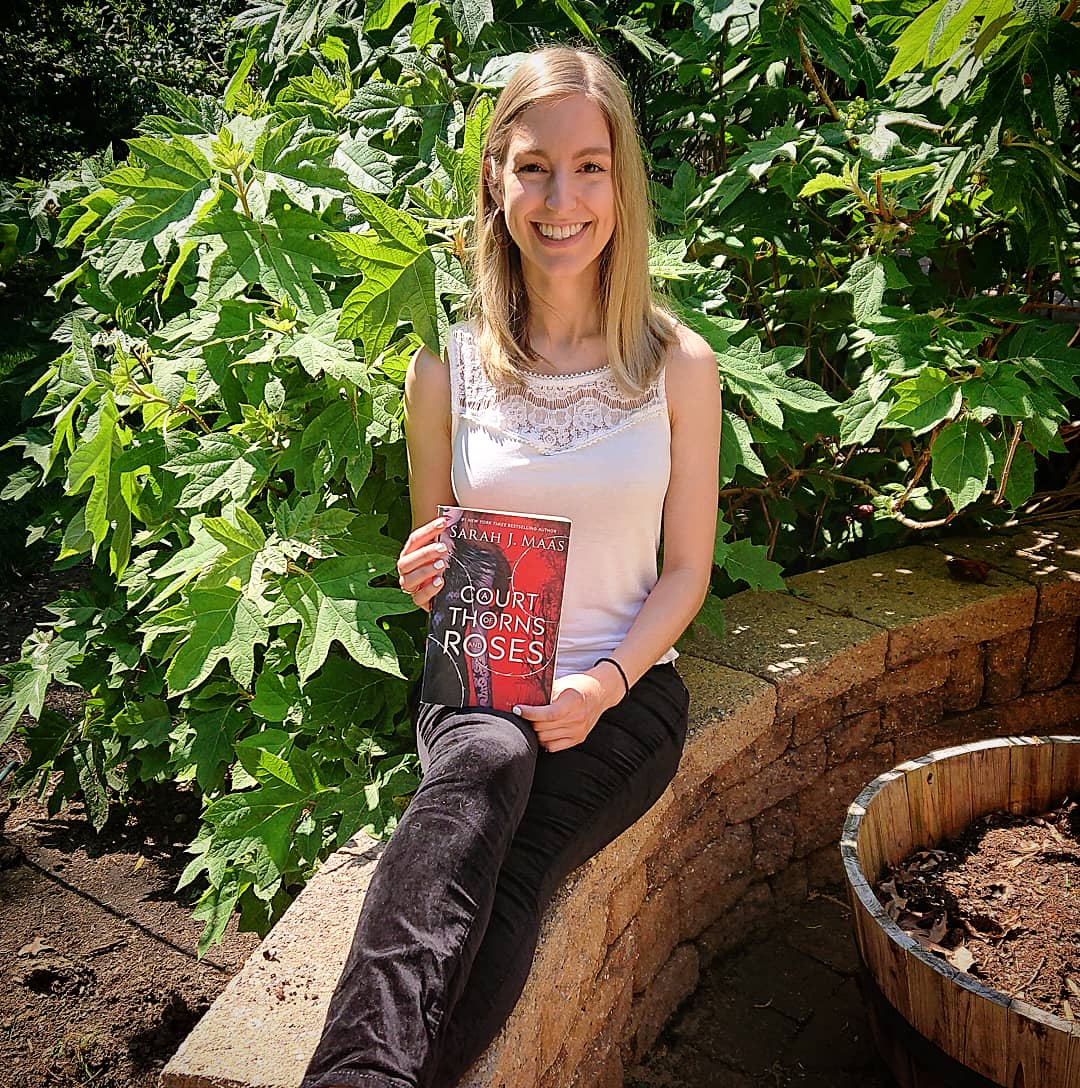
Review: A Court of Thorns and Roses by Sarah J. Maas

Alexis: Read 4/27/19

Spoilers Below!

While I have some mixed feelings about A Court of Thorns and Roses, overall, it was a 4 star read for me.

So, here’s the book in a nutshell: It starts out as The Hunger Games, then turns into Beauty and the Beast, and finally turns into Twilight.

I’ll start with what I loved about the book. While Maas writes the occasional cheesy and cringey line, I enjoyed her writing style overall. I love the way she describes color, and I was impressed by the landscape she painted in the beginning of the book. I related to Feyre in the beginning of the book the way I related to Katniss: she’s a girl turned hard from trying to survive, and I sympathized with her.

I found Tamlin an interesting character because of his role as a host and protector of his manor and land, because of his drive and sense of honor. His shapeshifting was written well. And I liked Lucien the most; he had the most vibrant personality of all the characters.

Once the plot picked up, I enjoyed the action-packed third section of the book. I think Maas’ writing shines the most when she writes action scenes. I also enjoyed (finally) learning about the political and historical backstories of the world.

I also liked the romance. The middle section of the book was very slow-paced, so Feyre and Tamlin’s budding romance didn’t feel too rushed or insta-love.

As for what I didn’t love about the book, my biggest issue was that most of the important backstory/plot points weren’t revealed until 250 pages in. Yep. 250 pages. Even the synopsis of the book includes the curse, which Feyre doesn’t know about until, again, 250 pages in. Here’s the thing: everyone knows the basis of Beauty and The Beast. So the main, mysterious plot of the most of the book wasn’t so mysterious, because this is a Beauty and the Beast retelling. If Maas had switched it up a little more, the reveals would have been more interesting.

I also had issue with some of the characters. I didn’t have any issue with Feyre, though I found her name annoying because I had to remind myself how to pronounce it. I’m also not a fan of Tamlin’s name; it just sounds like the name of a modern five-year-old boy. But that’s just personal preference. I wanted Tamlin to have more of a stand-out personality, especially since he doesn’t have much of a role in the latter half of the book. Rhysand has more personality than Tamlin, and unfortunately, I have a feeling a love-triangle is going to make an appearance in the next book.  

As for the ending, I guessed it about halfway through the book. There were too many similarities to Twilight, and I knew human-Feyre wouldn’t make it too much further in the series.

Overall, this was a fun and engaging read. Though the middle was a little slow, it allowed time to get to know the characters better. I enjoyed the final section of the book the best, despite the Twilighty ending. I’m definitely going to continue the series, as I tend to like the first book in a series the least!

VERDICT: 4 stars

Review: Cruel Beauty by Rosamund Hodge

Alexis: Read 4/16/19

Why do I always really enjoy the first half of a book, only to really dislike the second half? That’s how I felt about Cruel Beauty.

Cruel Beauty is a Beauty and the Beast retelling. I’m a fan of fairytale retellings, and I actually took a seminar on Beauty and the Beast while I was in college. But what’s different about this retelling is that it blends the fairytale with Greek and Roman mythology and history.

The story is set sometime after the fall of Rome in Romana-Graecia, in a fictional land called Arcadia that was cut off from the rest of the world and held captive underground by the Gentle Lord. The Gentle Lord makes cruel bargains with the people of his land and sometimes sets his demons on them. The Greek and Roman influence was an interesting change of pace, as the original Beauty and the Beast story is from France. I love Greek mythology, and I loved the mix of Latin and Greek terms, history, and terminology. The stories told in the book took me back to my Latin classes.

In this book, the magic is called the Hermetic arts. The main character, Nyx, was trained by her father in this art, which is connected to the four elements. Nyx can use sigils to sort of control the “hearts” of each symbol. While this sounds interesting, not only was the magic never explained any deeper, but it was never useful in the story.

Here’s a basic outline of the plot: When Nyx’s parents couldn’t have children, Nyx’s father made a bad bargain with the Gentle Lord. Nyx’s mother bore twins but died in childbirth. The Gentle Lord required that Nyx be married to him, while Nyx’s sister could live free for the rest of her life. So the book opens up with Nyx marrying the Gentle Lord, who’s also called Ignifex.

I really did enjoy the first half of the book. All of the original aspects of Beauty and the Beast are there: the roses, the mirror, the enchanted castle, the question every night, and a beastly prince of sorts. Nyx’s mission is to kill Ignifex in order to save her land from his terrible reign. The first half focuses on her exploring the castle and trying to find its Hermetic hearts, which was my favorite part of the story.

I wasn’t a huge fan of Nyx, who mostly complained about her tragic fate and battled with her intense hate for her family and Ignifex. But I appreciated that she was a strong female character who made her own choices and expressed her strong emotions. Her relationship with her sister was weird, and as a twin myself, it didn’t feel like a true twin relationship, though some of it was intentional due to the characters’ circumstances. To be honest, I wasn’t a huge fan of any of the characters except for Shade.

As for the second half, there’s a really weird love triangle that didn’t work for the story. The plot starts to go downhill and then becomes convoluted. Nyx and Ignifex’s relationship is abusive, with Nyx hitting him basically every chapter and Ignifex being emotionally abusive. Nyx remembers an important plot-point only to forget about it until the very end, which was supremely annoying. There’s no clear antagonist. And the ending has a weird alternative time thing that’s even hard to describe.

I obviously have a lot of thoughts about this book. I was pleasantly surprised by the first half and disappointed in the second half. If the ending was different, this would’ve been a solid read!

VERDICT: First half: 4 stars

Second half: 2 stars

Total: 3 stars

Review: King of Scars by Leigh Bardugo

Alexis: Read 3/24/19

I loved the first half of this book. I loved Nikolai’s internal (and sometimes external) battle within himself. I enjoyed learning more about Zoya: her past, her innermost feelings, her motivations. And at first, I rejoiced in Nina’s chapters, especially after her ending in Crooked Kingdom.

King of Scars is told in third person from various perspectives, including Nikolai, Zoya, Nina, and a man named Isaak. I’m glad Bardugo decided on third person, as I think it worked perfectly for the world in Six of Crows, and ultimately served a better purpose than the first person of the Shadow and Bone Trilogy.

I enjoyed the masterful worldbuilding and name dropping of characters from previous books. Bardugo has really cemented the Grishaverse. And I really enjoyed how the plot was building. However, the second half started to meander. Zoya ended up being the primary character, rather than Nikolai himself. The book’s title is literally Nikolai’s nickname, and yet he sometimes gets lost in the sea of other characters.

I honestly wanted to skip over Isaak’s chapters; I felt like his information could have been revealed later and it would have served the book better, even if the the reader wouldn’t get to know him as a character. But I really just didn’t care about him.

Nina’s chapters began to feel drawn out. As much as I enjoy her as a character, I found myself wanting to stay with Zoya and Nikolai’s storylines. I almost wanted Nina’s chapters to be separated from the rest of the story, maybe as its own short book.

My primary concern, besides Nikolai not being as center stage as I wanted him to be, was where the plot ended up. It was building up to such a great place, but then the ending ruined it for me. I’ll avoid spoilers here and go more into that below.

This book definitely felt like a follow-up to the Shadow of Bone trilogy, which I didn’t like nearly as much as the Six of Crows duology. I was hoping for more of a Six of Crows feel, with the masterfully crafted plot and characters. I just wish the book had only switched in POV from Nikolai to Zoya and that the plot was…different. Even with my mixed feelings, I still love the characters and Bardugo’s world, and I flew through this book.

The first half of the book: 5 stars. Second half: 3 stars

VERDICT: 4 stars

 
SPOILERS BELOW:

I felt like most of the plot reveals in the second half of the book were a little too coincidental. Hanne just happens to be the daughter of Brum? The Saints just happen to be alive with the answers to a greater power for Zoya? And the biggest of all: the Darkling’s comeback. It felt like a cop-out to me. I wanted something as equally as dark to be the main antagonist, but I wanted something different. The Darkling’s story was supposed to be over. With all the tumultuous politics going on, I just felt like the ending could’ve gone in a different and better direction.


Review: Nevermoor by Jessica Townsend

Nevermoor is the first installment in a series about Morrigan Crow, who was born on Eventine, the unluckiest day. Morrigan is cursed to die on midnight of her eleventh birthday. Morrigan is blamed for every misfortune in the town, and she’s kept at arm’s length from everyone, including her family. Before the clock can strike midnight on Eventide, she’s swept away to a magical land called Nevermoor by an equally magical man, Jupiter North. Jupiter prepares Morrigan to compete in four trials that, if she’s successful, will grant her entrance into the legendary Wundrous Society.  

Before reading this, I’d heard Nevermoor compared to Harry Potter, and this is true in a lot of ways (although let’s be honest, nothing can ever truly compare). Nevermoor feels like a mix of The Sorcerer’s Stone and The Goblet of Fire, because of Morrigan’s introduction to magic at age 11, and the trials being like a less deadly Triwizard Tournament. The magic system is difficult to summarize. It feels more eclectic than The Wizarding World. I’ve also heard Nevermoor called a mix of Harry Potter and Alice in Wonderland, which I’d call accurate. We also know that there is going to be a special magic school down the line. Jupiter is also a very Dumbledore-y character, as her mentor, and someone who is obviously keeping secrets from Harry. I mean, Morrigan.

Moving on from Harry Potter!

Townsend is a great writer. Nevermoor is fantastically and colorfully written. It’s clever, hilarious, and by far the most creative fantasy I’ve read in a long time. It has great worldbuilding, but still leaves much more to be explored in later books.


I love Morrigan as a character, which is one of the reasons Nevermoor is so compulsively readable. Before Nevermoor, she has never known love. She has been shamed and ostracized by her family for her entire life. She just wants a place to belong. As I mentioned before, It did get a little annoying that Jupiter keeps her in the dark for so much of the book (ahem, Dumbledore) but I understand why that this needs to happen plot-wise. The villains are sufficiently creepy and well-developed, as are the quirky host of characters in the Hotel, and Morrigan’s two close friends, Hawthorne and Jack.

Despite the fact that it’s middle grade, Nevermoor tackles dark themes, such as abuse and death. There’s also a lot of commentary for adults that I never would have picked up on as a kid, such as the discussion of illegal immigration. There’s a scene on page 428 when the Wunderground is experiencing technical difficulties that mirror the MTA subway delay announcements so much that they had me cracking up.

Most importantly, Nevermoor is filled with memorable magic and a story that I can’t wait to keep reading! My one concern is that it’s going to be difficult for the following books in the series to live up to the standard of book number one!


VERDICT: 4.5 out of 5 books

Review: Caraval by Stephanie Garber

Alexis: Read 3/2/19

Unfortunately, I found Caraval so much worse than The Night Circus. I know a lot of comparisons have been drawn between the two books, so I thought I would give you my own.

The Night Circus is beautifully written, with lush and lyrical descriptions, but is very slow moving and has a sparse plot. I can’t say the same thing about Caraval’s writing. It felt middle-grade (and not in a creative way) and cliché. However, it is fast-paced and there is a layered plot. Both books have insta-love, though I have to say the relationship in Caraval actually felt more convincing.

So let’s delve more into Garber’s writing. Throughout the book, she relies on one particular, peculiar type of metaphor: the insert color was insert emotion. Here’s an example: “…a blaze of shimmery gold, the color of magic and wishes and promises of things to come” (14). Here’s another: “A ruby welt bloomed across his cheek. The color of rage and punishment” (45). Here’s a third: “…a rich cerise—the color of seduction and secrets” (660).

I usually love repetition, whether in motifs, anaphora, etc. But the repetition of these metaphors drove me crazy. They’re cliché and terrible and made me say “really??” out loud too many times. And none of them even made sense!

Another thing that drove me crazy was that half of the plot was predictable. You know from the beginning that Scarlett is going to get together with Julian. There was only one plot point towards the end that I didn’t see coming.

As for the characters, I only liked Julian, but only because he’s the only character with somewhat of an interesting personality. He’s your classic “dark and handsome but is he good or bad?” type of guy with Edward-Twilight caramel eyes: “light brown, the color of caramel and liquid amber lust” (172). The descriptions of him were super cringey.

I found Scarlett to be too whiny and annoying, and Donatella wasn’t much better. Even their names seemed to get in the way of the story; it was as if their names drew too much attention from it. It doesn’t help that Scarlett’s name is also a color, so her name is thrown around with all of the cringey color metaphors. One of the characters even says of Scarlett, “You’re so dramatic, you would’ve made a fantastic performer” (308). And god, was he right.

The dialogue doesn’t have any subtext. I absolutely hated that Governor Dragna is described as dragon-like. And I could’ve cared less about the plot of this book.

I think the one word that sums up this book is cringeworthy. I really wanted to like it, I enjoyed how the book opened up with letters, and I initially though Garber’s worldbuilding was good (in the first 10 pages). But this obviously wasn’t the book for me.

VERDICT: 1 and ½ out of 5 books

Review: Ruin and Rising by Leigh Bardugo

Alexis: Read 2/20/19

Ruin and Rising was certainly the best book of the Shadow and Bone Trilogy. I disliked Alina’s character in the first two books, and I felt like she became a more complex character in this one. Additionally, Mal had zero personality in the first two books, and he felt more real to me in Ruin and Rising, as well.

Everyone can agree with me here: Nikolai is still the most vibrant character. He has a sparkling personality and he knows what he wants. He echoes the beginning of Bardugo’s masterfully crafted characters in the Six of Crows series.

As for the plot, I feel like the first half of the book meanders. There’s a whole host of secondary characters that I didn’t really care about, except for Genya.

And time for an unpopular opinion: I don’t like the Darkling. He’s creepy, manipulative, and honestly rapey. His beauty doesn’t make up for that.

SPOILERS BELOW:

Okay, so I really enjoyed the plot twists in the second half of the book. Mal being the third amplifier? Nikolai getting turned into a monster? I didn’t see either of those coming, and it made the book more exciting!

The ending felt very Hunger Games to me: boy and girl get together and live a nice, normal life together, where they can grieve together forever. I honestly didn’t mind the ending, as I think it was the happiest ending for Alina and Mal. But Alina losing her power was anticlimactic and confusing. It felt unnecessary. Plus, she had such a good character arc by Ruin and Rising that I felt it was unfair for her to return to how she was in the beginning of the series.

Despite some of my issues with this book, I really enjoy the Grishaverse and I couldn’t put this book down. I enjoyed seeing Bardugo’s writing style evolve!

VERDICT: 4 out of 5 books

Alexis’ Library Haul: Part 2

Alexis: The little snow that we got turned into mush and then rain, so I was able to get my library books! Here’s a library haul part 2.

  • Ruin and Rising by Leigh Bardugo
  • The Afterlife by Thomas Pierce
  • Caraval by Stephanie Garber
  • The River of Doubt by Candice Millard

For a change of pace, I’m intersecting my fantasy reads with some different genres! Even though I love fantasy and YA fantasy, I’m tired of the same tropes being recycled (I’m looking at you, love triangle). Sometimes I need to take a break and read something different. 

Review: Shadow and Bone; Siege and Storm by Leigh Bardugo

Alexis:

I’ve dedicated this past week to reading the first two books in the Shadow and Bone Trilogy, and hopefully I can get the last book from the library next week!

I read the Six of Crows Duology last year and I absolutely loved it, so I was looking forward to reading the first books in Bardugo’s Grishaverse.

I seem to agree with everyone else (at least on Goodreads) that the second book in the trilogy is better than the first. I was surprised to find that the first book relied on some tropes, the most prevalent of which is the love triangle. However, I thought that Shadow and Bone did a great job when it came to worldbuilding and introducing the Grisha’s powers. 

The second book’s plot is much more intricate than the first. It honestly reminds me of The Hunger Games. Politics come into play, and Alina starts to become a powerful symbol of hope. I enjoyed the new characters that were introduced, but I felt like Mal’s character wasn’t as strong as he was in the first book. However, Bardugo’s keen sense of humor comes out more in the second book.

Minor spoilers below:

One of the biggest issues I have with the two books is the way that male characters interact with Alina, which, unfortunately, only gets worse in Siege and Storm. Multiple male characters touch and kiss Alina without her consent, and the way the Darkling interacts with her makes me sick. In Siege and Storm, no one respects that Alina and Mal are in a relationship, and she gets kissed and even gets marriage proposals. I understood all of this happens for plot reasons, but here Alina is, in a different love triangle than in the first book, and she even enjoys the attention from Nikolai.

I feel like I say this in every review, but despite my issues with the books, I did enjoy reading them. I love the Grishaverse and I’m interested to see where the third book goes. I just can’t help comparing this series to the Six of Crows Duology. It’s interesting to see how much Bardugo’s writing has evolved.

Shadow and Bone: 3 out of 5 books

Siege and Storm: 4 out of 5 stars