Used Bookstore Haul

Alexis:

A bookstore where everything is $3 or under? Yes, please! I picked up four books, the max I should probably put in my suitcase, from Lucky Dog Books in Dallas, Texas. My boyfriend, who reads nonfiction/business books, found 5 books!

  1. On Gold Mountain by Lisa See
  2. Cruel Beauty by Rosamund Hodge
  3. Water Wings by Kristen den Hartog
  4. Rose’s Garden by Carrie Brown

A Small Thrift Haul

Anna: I love a good thrift haul! Here’s a small one from yesterday. I think it’s safe to say I found a new favorite spot. Not only did I get to dresses for spring, but I picked up a new romance and an old favorite both for under a dollar!


What’s your favorite weekend activity?


DNF: Milkman by Anna Burns

Anna: I’m DNFing Milkman by Anna Burns. I read 100 pages and I just can’t keep going. I’m finding the writing too lofty. I don’t like how the characters are just called “sister in law” and “maybe boyfriend” seemingly for the sake of sounding literary. And I’m getting slogged down by all the detail. Maybe I would keep reading if I were in a different mood, but I need something more straightforward right now.

I would love to hear your thoughts on Milkman!

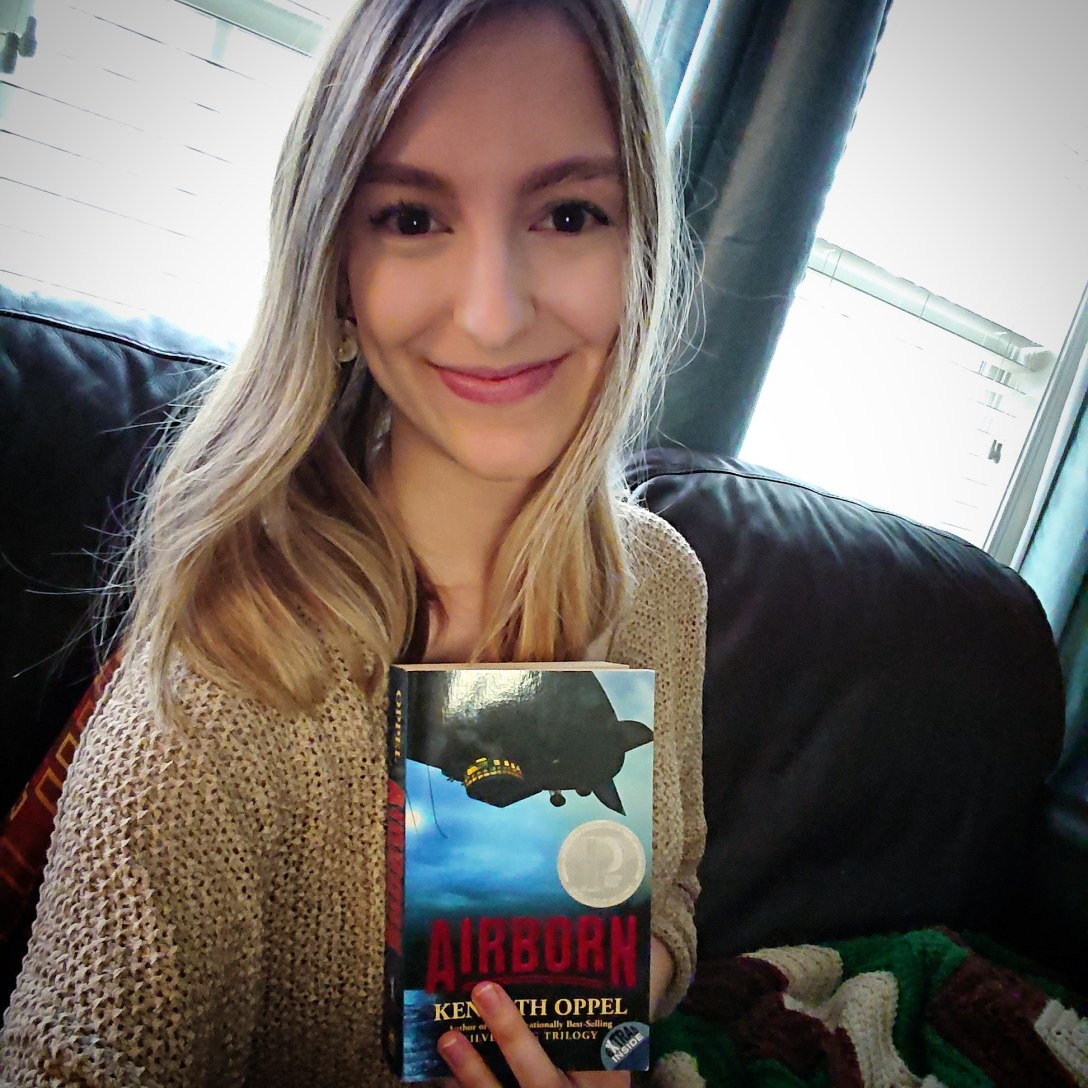
Currently Reading/Review: Airborn by Kenneth Oppel

Alexis:

When I was a pre-teen or teen, the Matt Cruse trilogy was one of my favorite series. Airborn, the first in the series, is a YA adventure with a Titanic vibe and an undercurrent of zoology, set in an early 1900’s alternate reality where airships are the primary mode of transportation. I know, interesting, right?

As I re-read this, I remember how much I enjoyed the story and the characters. Lately, about 90% of the books I’ve been reading have been from a female POV, and this is a good change of pace. Airborn is from the POV of Matt, a 15-year-old cabin boy of the airship Aurora. The story follows Matt on his adventures with a girl he meets named Kate as they try to track down a mysterious winged creature mentioned in a journal of a dying ballooinst. I really enjoy both Matt’s character and POV, as well as Kate’s curious and spunky character. 

This story is pure action-adventure, complete with pirates and a surivival storyline. I recommend reading the other two books in the series, as well. The series only becomes more interesting as the characters grow older and space travel gets involved!

VERDICT: 5/5

Alexis’ April tbr Stack

🌺Alexis’ April #tbr stack🌺

Did March fly by for anyone else? I kind of wanted winter to be longer; I’m not ready for all this pollen.

FYI: All of these books are secondhand!

  1. Airborn by Kenneth Oppel
  2. Better Than Fiction, Edited by Don George
  3. Idlewild by Nick Sagan
  4. A Court of Thorns and Roses by Sarah J. Maas

Review: Big Stone Gap by Adriana Trigiani

This was the perfect light read as I adjusted to my new job–one that I could pick up after a long day of work before bed. A mix of Gilmore Girls and Mama Mia, I enjoyed following the adventures of Ave Maria, the “town spinster” in her mid-30s in the rural mountain town of Big Stone Gap, Virginia. After the recent passing of her mother, Ave Maria is the only Italian left. Like any other small town, everyone in Big Stone Gap know everyone else’s business. So when Ave Maria discovers some long-buried secrets about her own identity, the rest of the town is quick to find out.

Parts of this book are downright hilarious. The part when Elizabeth Taylor comes to town actually had me laughing out loud. The same goes for the dog incident and the chicken bone incident. Classic.

I love the Bookmobile, and the fact that Ave Maria loves books. I love her devotion to her town and her mother, despite their faults. I love that Ave Maria is named after a prayer. I love that, because she’s an Italian in the mountains of Virginia, no one can pronounce her name. (My name is Anna-Marie–I can relate.)

Ave Maria does get a little annoying in her stubbornness to remain single,This would have been fine if she truly didn’t want a partner, but her actions tell otherwise. Sadly, she seems more jealous and vindictive toward love more than anything else. She turns men away and insists she’s happy, only to get jealous when those men turn to other women. There are parts of her character that I like and identify with, as I mentioned above, and then there are aspects to her that get really annoying, like her inability to notice what is literally in front of her nose.

Though I enjoyed Big Stone Gap overall, there are some things I can’t get past, which I’ll call here Early 2000’s Problems. It’s kind of like when you watch Gilmore Girls or an old rom com and you’re shocked at how something that you used to regard as so wholesome is actually filled with culturally insensitive, racist, and homophobic jokes. It’s not okay, but you have to approach these things in the context of time and how far we’ve come as a society in accepting people, even since the 2000s (and Big Stone Gap takes place in the late 70s).

Also very 2000’s is Trigani’s assumption that men and women live like species from different planets. There are literally lines such as, “this is how all men are,” and likewise, “ this is how all women are,”  this just isn’t the case! Again, I think that this has to be attributed to the time period (either that, or I just haven’t read a romance in a long time). There’s also an undertone in here that men are objects to be won by women and vice versa, which presents a big problem.

Despite the outdatedness, I still did enjoy reading Big Stone Gap, and I would recommend it if you’re looking for a small town southern romance.

VERDICT: 3 out of 5 books

 
Now for some very specific things that really irked me (spoilers below)–


The fact that Jack essentially bought Ave Maria’s heart when he paid for all her Italian relatives to visit.

The fact that when the family showed up Ave Maria’s own plans were completely pushed aside.

The fact that as soon as Ave Maria cemented her love to Jack, Jack’s mom IMMEDIATELY died, because she knew Jack was in love and didn’t need her anymore.

I totally thought the best friend and band director was going to come out as gay. Maybe he still does later in the series…?

I love Pearl, except that she is the token fat smart girl who discovered makeup and it made her life better.
Review: King of Scars by Leigh Bardugo

Alexis: Read 3/24/19

I loved the first half of this book. I loved Nikolai’s internal (and sometimes external) battle within himself. I enjoyed learning more about Zoya: her past, her innermost feelings, her motivations. And at first, I rejoiced in Nina’s chapters, especially after her ending in Crooked Kingdom.

King of Scars is told in third person from various perspectives, including Nikolai, Zoya, Nina, and a man named Isaak. I’m glad Bardugo decided on third person, as I think it worked perfectly for the world in Six of Crows, and ultimately served a better purpose than the first person of the Shadow and Bone Trilogy.

I enjoyed the masterful worldbuilding and name dropping of characters from previous books. Bardugo has really cemented the Grishaverse. And I really enjoyed how the plot was building. However, the second half started to meander. Zoya ended up being the primary character, rather than Nikolai himself. The book’s title is literally Nikolai’s nickname, and yet he sometimes gets lost in the sea of other characters.

I honestly wanted to skip over Isaak’s chapters; I felt like his information could have been revealed later and it would have served the book better, even if the the reader wouldn’t get to know him as a character. But I really just didn’t care about him.

Nina’s chapters began to feel drawn out. As much as I enjoy her as a character, I found myself wanting to stay with Zoya and Nikolai’s storylines. I almost wanted Nina’s chapters to be separated from the rest of the story, maybe as its own short book.

My primary concern, besides Nikolai not being as center stage as I wanted him to be, was where the plot ended up. It was building up to such a great place, but then the ending ruined it for me. I’ll avoid spoilers here and go more into that below.

This book definitely felt like a follow-up to the Shadow of Bone trilogy, which I didn’t like nearly as much as the Six of Crows duology. I was hoping for more of a Six of Crows feel, with the masterfully crafted plot and characters. I just wish the book had only switched in POV from Nikolai to Zoya and that the plot was…different. Even with my mixed feelings, I still love the characters and Bardugo’s world, and I flew through this book.

The first half of the book: 5 stars. Second half: 3 stars

VERDICT: 4 stars

 
SPOILERS BELOW:

I felt like most of the plot reveals in the second half of the book were a little too coincidental. Hanne just happens to be the daughter of Brum? The Saints just happen to be alive with the answers to a greater power for Zoya? And the biggest of all: the Darkling’s comeback. It felt like a cop-out to me. I wanted something as equally as dark to be the main antagonist, but I wanted something different. The Darkling’s story was supposed to be over. With all the tumultuous politics going on, I just felt like the ending could’ve gone in a different and better direction.


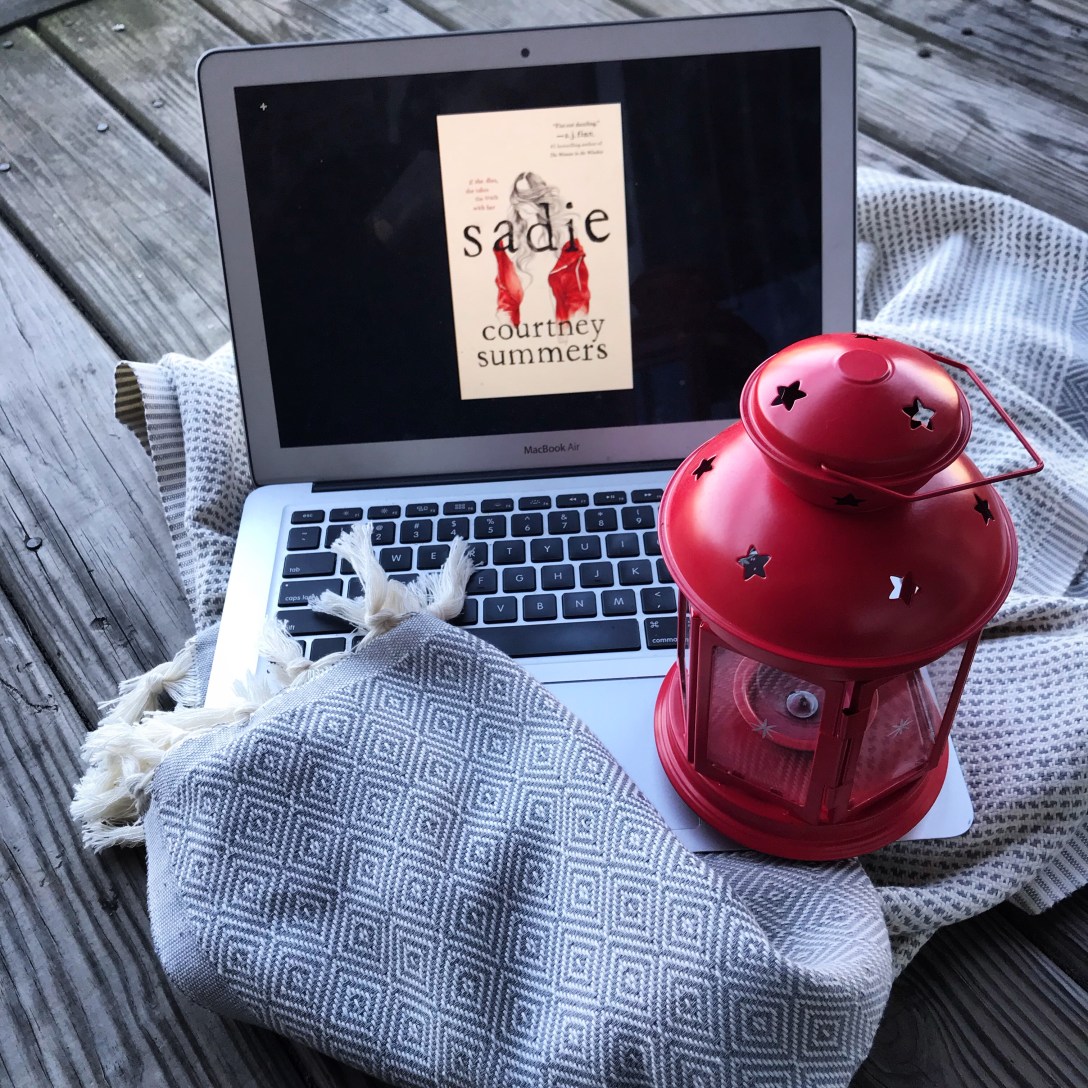
AUDIOBOOK REVIEW: Sadie by Courtney Summers

Anna:

Welcome to my first audiobook review! As I mentioned in my last post, I recently moved. While I haven’t had much time to read physical books, I have been enjoying listening to audiobooks while I unpack.

I’ve heard so much buzz around Sadie by Courtney Summers since it came out last September. This is a YA thriller, and though it definitely deals with some heavy and difficult themes (sexual assault, child abuse, murder, etc.) I didn’t find it very explicit. I’d definitely say it’s genre/age appropriate.

Sadie has had to be a grown up for as long as she can remember. Abandoned by her addict mother, Sadie essentially raised her younger sister, Mattie. But when Mattie was 13, she was murdered. Sadie sets out to kill the man who took her sister away from her. Meanwhile, in a complementary storyline, a podcast called The Girls has been created to retrace Sadie’s path, as Sadie has since gone missing.

First off, I think including a point of view from a podcast is brilliant. Not only is this creative, but it captures the obsession in recent years with serialized murder podcasts. This book exposes society’s fascination with murder podcasts and dead girls while also praising the attention brought to poorly-investigated deaths. (The police are utterly useless in helping with Mattie’s death and Sadie’s disappearance in this story.) Summers criticizes the use of serialized podcasts to exploit murder and sexual assault victims for listener’s entertainment, which I applaud her for.


Sadie is a complicated protagonist. You kind of hate her because of how stubborn she is, and yet you can’t blame her because she’s wicked strong and had a terrible childhood. Her redeeming factor is the fierce and protective love she has for her sister.

Sadie has a stutter, and her relationship with her stutter and, subsequently, her own body, is fascinating. Other people’s reaction to hearing her speak is heartbreaking. I think this is important representation for people with stutters, who I have never before encountered in literature. (Besides Quirrell in Harry Potter, and that’s definitely not a positive representation of stuttering…ouch….)

I enjoyed listening to the audiobook version of this because of the way The Girls sounds like a real podcast. The fact that the podcast has strummy, haunting intro music makes it that much more realistic. The voice of the show’s host is also spot on of what you would expect (and of course a show about two girls disappearing is narrated by a man! This feels like pointed commentary on the author’s part).

However, there are multiple voice actors in this and some of them are REALLY bad. I could have read some character’s lines more convincingly. But for the most part, I think the audiobook is well done.

I love that YA thrillers are becoming more of an established genre, and Sadie did not disappoint!

BOOK VERDICT: 4/5

AUDIOBOOK VERDICT: 4/5

Review: Pachinko by Min Jin Lee

Alexis: Read 3/17/19

Well, this book is certainly a saga. It feels like three different books, because really, it is. Pachinko covers four generations of the same family, from the early 1900’s to the 80’s. The story opens with Sunja, a Korean peasant, who meets a wealthy businessman and forms a relationship with him. When Sunja becomes pregnant, she finds out that the businessman is already married. So instead, she accepts a generous offer of marriage from Isak, a sickly Protestant preacher.

The amount of detail Lee manages to pack into this book is astounding. She covers the historical and political aspects of each time period. The book especially focuses on what it means to be Korean during a time when the country is taken over by the Japanese and then later split into two. Her characters deal with the dysphoria that they feel as Koreans living in Japan, as well as discrimination. I really enjoyed learning about the history and culture of Korea, and I could really go for some Korean or Japanese food right about now!

While extremely detailed, Pachinko is written matter-of-factly, with no flowery descriptions. Lee writes from a distant, omniscient point of view. At the end of the book, Lee discusses her reasoning behind this. She says, “‘Fair’ seems like a simple word, but I think because my subject matter is so troubling and controversial, I wanted my narrator to be as objective as possible” (494). Lee certainly achieves this, as the book, especially the first half, almost reads like a historical account. At first, I found the tone off-putting. But once the book became more political, I understood the need for distance. Still, that doesn’t neglect the fact that I prefer to get more into characters’ heads and emotions. I love character-driven stories, and while this was that, I never felt too involved in the characters’ lives.

For example, Lee has a bad habit of simply stating “and then he died.” When she did this in the beginning of the book with Yoonie, Sunja’s father, I did a double-take. She nonchalantly stated his death and they hardly went into it in the next chapter, and she repeats this throughout the book. While I understand her distance, as a reader, this was very off-putting. I wanted to feel each death and life-changing event the way the characters did.

Overall, I really enjoyed this book, even if I had to enjoy it in chunks. I learned a lot about Korea’s history and the history of misplaced Koreans. I really don’t know how to rate it as a whole, as it covered so much ground.

History and detail: 5 stars

POV and writing style: 2 stars

Characters: 4 stars

Review: Burial Rites by Hannah Kent

“‘It’s not fair. People claim to know you through the things you’ve done, and not by sitting down and listening to you speak for yourself. No matter how much you try to live a godly life, if you make a mistake in this valley, it’s never forgotten. No matter if you tried to do what was best.’”

Burial Rites is historical fiction and follows Iceland’s last execution of Agnes Magnúsdóttir in 1829. Agnes has been convincted of murdering two men and is sentenced to death. While she awaits her execution, she is sent to work on an isolated family farm. Agnes has an unexpected effect on the family while she stays.

Burial Rites is very dark, but beautifully and hauntingly written. I’ve never read anything set in Iceland before, and enjoyed learning about the area and time period. This is different from a lot that I’ve read recently because from the beginning, you know what’s going to happen—Agnes is going to die. The real tension in the book is between the family, servants, and priest on the farm where Agnes resides as she awaits her impending death. There’s also the mystery of what happened that night of the two murders, and what Agnes’s role in the deaths really was.

The characters make the story. Agnes’s backstory is heartbreaking and makes her feel real. Kent made me feel sympathy for Agnes despite her murder charge.  

There are a lot of questions in this book of justice and right versus wrong. Who gets to decide when someone deserves to die? Are some people’s words more valuable than others? This can be read as an examination of the death penalty in its most ancient and barbaric forms.

Religion’s role in justice is also a prevailing theme of the book, and something I found interesting. Agnes is assigned a priest to help her find achieve absolution with God before she is executed. Agnes resists by not repenting and, slowly, begins talking as an equal with the priest. Something Agnes repeatedly questions is why she has to ask for forgiveness to a God who is allowing her to be executed.

I love historical fiction that shows the discrepancies in class, and there is a very clear class divide in this era of Iceland. Agnes is not only a murderer, but a servant accused of killing her master, which adds a level of certain guilt in the rest of society’s eyes. When she first arrives at the farm, the entire family is disgusted by her. Agnes is gradually accepted by the family despite her class and status as a convicted criminal.  

Definitely check out this fantastic debut!

VERDICT: 4 out of 5 books