Review: We are the Ants by Shaun David Hutchinson

“What if I don’t give a shit about the world?”

“I’d say that’s pretty fucking sad.”

“Why?”

“Because the world is so beautiful.”  

We are the Ants is a difficult book to explain and to “place”. This is technically “science fiction”, and I say technically because it blends reality and fantasy. I love that it defies genres! The reader is left to wonder what is real and what is not. I’d warn potential readers not to the read the book jacket copy, because I want them to enjoy the mystery and surprise.

Trigger warnings for self harm, sexual assault, and suicide. This is a BIG part of the book so please don’t read this if that’s something too close to home.

I felt such a connection to the characters, particularly the narrator and protagonist, Henry, a teenage boy who is faced with a big decision: should he save the world or allow it to be destroyed? When we meet him, he’s overcome with grief over losing his boyfriend.  I was so invested in his story as he comes to terms with his grief and mental instability and battles many forms of bullying and harassment. Henry’s grief and mental health manifests itself in a totally original way that I thought worked so well.

This is also just “angsty” enough to be believable but not shallow or stereotypical in any way, a problem I sometimes have “drama” in YA. We are the Ants depicts horrific reality of mental health. This book doesn’t shy away from critically examining the demands our society has on teenagers. The amazing part is that Hutchinson explores all these themes through the unique lens of alien abduction and the impending apocalypse.

We are the Ants is one of the best YA novels I’ve read in awhile! I highly recommend it!

VERDICT: 5 books!


Review: We Never Asked for Wings by Vanessa Diffenbaugh

Alexis:

Anna and I both read The Language of Flowers by Vanessa Diffenbaugh years ago and we loved it. We Never Asked for Wings has some similar themes: pregnancy, motherhood, family, and honesty.

The book opens when Letty, a young and troubled mother of two, leaves her children alone to go to Mexico to find her parents. Her parents were living with her and taking care of her children, and she doesn’t know how to be a mother.

The story mostly alternates between Letty and her young teenage son, Alex. While Letty navigates motherhood, Alex navigates school and a budding relationship with a girl named Yesenia, all while caring for his six-year-old sister Luna and searching for the father he’s never known.

I mostly connected with Alex as a character, as his dreams and motivations felt real and true to character. He was a good and innocent character who happened to be in a bad situation. However, because the story did focus on him so much, the book tended to lean towards a more YA vibe.

I think Diffenbaugh did a good job with certain struggles of the Espinosa family, such as poverty and citizenship.

However, I struggled to connect with Letty. She was almost overly flawed, so much so that I disliked reading about her character. I was annoyed with all of her actions. She neglected her family and continued to make a string of bad decisions, including getting her son drunk. She had some almost-redeemable moments towards the end, but it wasn’t enough of a character arc for me.

My biggest problem with the book is that you can tell Diffenbaugh struggled to write the story. In the acknowledgments, Diffenbaugh says, “They say book two is hard. Whether or not this is true I don’t know, but I believed it to be true, and so this book was hard for me. Really hard.”

While I enjoyed the overall core of the story, as well as the motif of bird and feathers, parts of this book felt off. When Wes, Alex’s father, is finally introduced, he never feels like a round character. He, and his personality and motivations, just sort of hover in the story.

The events in the latter part of the book feel too melodramatic. While somewhat believable, Alex’s actions are a little too out of character. And after all the dramatic events at the end, it wraps up just a little too nicely.

VERDICT: 3 stars


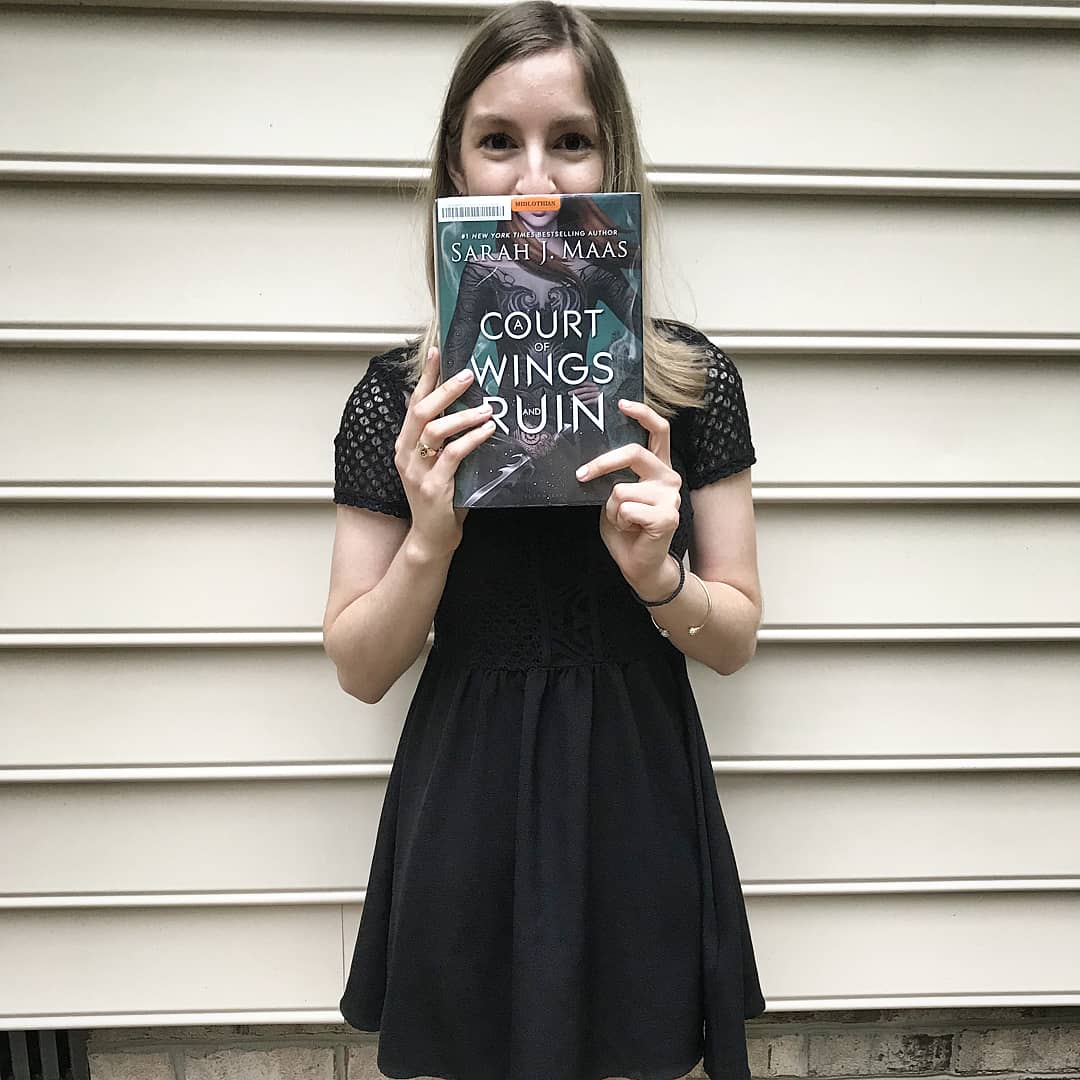
Review: A Court of Wings and Ruin by Sarah J. Maas

Alexis:

Spoilers Below!

Overall, A Court of Wings and Ruin, the third book in the A Court of Thorns and Roses trilogy, was a 4 star read. It was more along the lines of the first book than it was the second book. However, I did have a list of issues with it that I will explain below!

I’ll start with what I liked. Maas’ writing shines when she writes action scenes. I loved reading the war scenes. I thought she did a great job with their pacing and descriptions.

I also loved that Rhysand fully transformed in the final battle. I was like, “Heck, yes!”

I also enjoyed having all the High Fae in the same scenes. Their histories and abilities were very interesting all pooled together.

As for what I didn’t like as much, for some reason, Maas’ writing is just a little bit worse in this book. She has a tendency to lean towards the occasional cheesy line, but this book seemed to bring her cheesiness out just a little more.

This book felt like Maas had been rushed, that she had a deadline that her publisher wanted her to keep, so she wrote this book quickly. And then it wasn’t edited enough. The pacing felt slow. This book is about war, and war does drag on, but the plot doesn’t flow as nicely as it did in A Court of Mist and Fury. Everything just felt slowed down.

And…the sex scenes did not fit as well in this book as they did in A Court of Mist and Fury. They felt cringey and all of them were basically a carbon copy of each other. There’s also a scene where Rhys tells Feyre, “You smell like blood,” after they fought in a battle. And then they have sex. Hmm. I don’t know about that.

And, my biggest issue. I am all for diversity, but not just for the sake of diversity. Mor’s reveal as bisexual was a complete cop-out from Maas. Mor’s been hiding that she’s bi…for 500 years?? Just so she won’t hurt Azriel’s feelings?? Her hiding this from her family for that long did not feel true to character.

As for the plot, I had issues with the fact that Feyre is insanely powerful and yet she HARDLY FOUGHT. Obviously, Rhysand has significantly more war experience, but Feyre is his equal, so they should’ve fought together. Her mention of, “You know, I don’t really like war,” was not a good enough reason for her not to fight.

As for the whole new cast of characters at the end, this also felt like a cop-out from Maas. When Rhysand asked why they couldn’t find them, their answer was, “Oh, I guess we hid too well, so even our friends couldn’t find us.”

If they had been such good friends/allies during the last war, they definitely would’ve found a way to keep in contact with Rhysand and his crew.

As for my last complaint, Armen should’ve died. Rhysand coming back from the dead made sense, but there’s no way Armen could’ve come back after all that.

Despite my issues, I enjoyed the book overall! I definitely think the trilogy is worth a read, just be aware that it isn’t perfect.

VERDICT: 4 stars


Review: The Book of Dreams by Nina George

Alexis:

The Book of Dreams is a thought-provoking and profound read. It follows four different characters from three different perspectives; Henri, a man who feels he is undeserving of love, who saves a girl from drowning but gets hit by a car and slips into a coma; Sam, his teenage son, who he’s unwillingly never met; Eddie, Henri’s ex-girlfriend and the love of his life; and Madelyn, a twelve-year-old coma patient who we see through the eyes of the other characters.

Though this isn’t classified as magical realism, aspects of it feel very magical realism. The book blurs the line between dream and reality. I won’t explain it any further than that, because I feel it’s best to read this book with fresh eyes.

George explores the cyclicality of life and death, and what it means to straddle the not-so-straight line between the two. She explores love, grief, and regret. Sometimes translations don’t do a book justice, but I found that Simon Pare did a beautiful job. The writing flows really well and George’s descriptions are beautiful and unique. 

This is a very character-driven story. It focuses on the experiences, relationships, and emotions of its three main characters as they navigate life around Henri’s coma. I loved all of the characters and was interested in all of their lives.

Another aspect I love about this book is Sam’s synesthesia: he sees color for numbers, emotions, etc. I loved his character and found his synesthesia added a lot of color (ha) to the story, though I felt like it could’ve been cranked up a notch because I found it so fascinating!

I think the ending of this book is polarizing, but I thought the ending worked well for the book as a whole; George even mentions in her afterword that this book was not intended to be “market friendly.” But I found this book deep, moving, and true to itself.

If you’re looking for a beautifully written book that intensely focuses on its characters and explores the boundaries between life and death, then I highly recommend it.

VERDICT: 5 stars

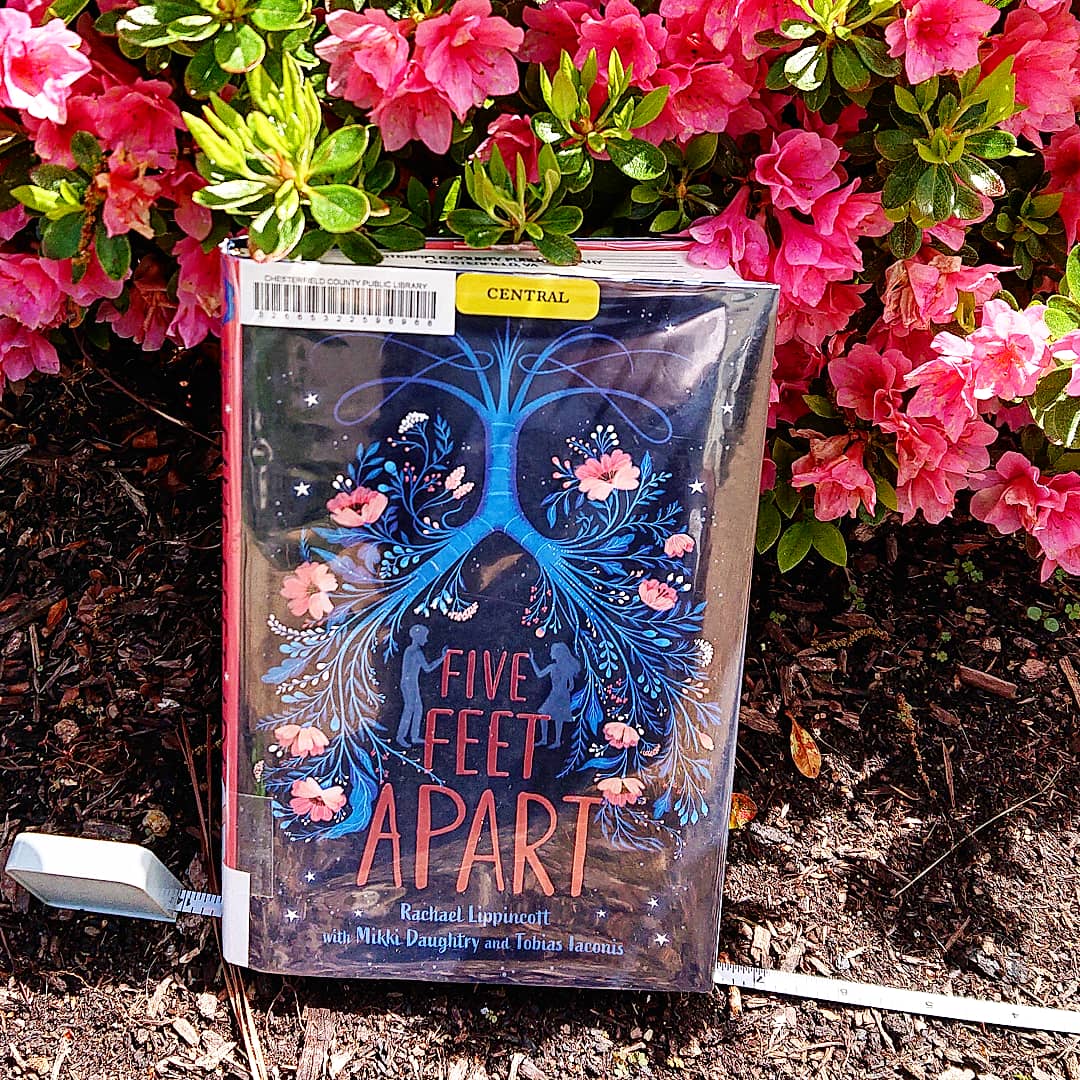
Review: Five Feet Apart by Rachael Lippincott

Alexis: Read 4/18/19

I was hesitant to read this. I put it on hold at the library so I would have time to think about it for a while, and a month later, I got an email that I could pick it up. And I decided, you know what? Why not!

For those of you who don’t know, last year, my lung spontaneously partially collapsed twice, a couple months apart. After the second one, I had surgery to adhere my lung to my chest wall so that it won’t ever happen again. But because of this, Five Feet Apart was super relatable for me. I found myself knowing how horrible it is not to be able to breathe, to literally feel your lung keep you from taking a deep breath as it fills your body with pain.

That being said, I do not have cystic fibrosis, and I can’t begin to know what it feels like to have a terminal illness. But this book brought back a lot of memories and feelings, and I identified with parts of Stella and Will’s ordeal.

Now, onto the review. I don’t have much to stay about the book other than well done. This is definitely this generation’s The Fault In Our Stars. The story is told from two different perspectives: Stella’s and Will’s. I love alternating POV’s and I found it worked really well for the story. And while I wasn’t a huge fan of Stella or Will’s characters at the beginning, I really enjoyed their journeys and their full character arcs by the end.

The writing style is very conversational. I enjoyed how the authors had the characters use so much modern technology because it felt very true to people/teenagers in real life. I will say that yes, parts of this book are cheesy, and yes, I guessed the ending halfway through. But Stella and Will’s relationship moves at an appropriate pace. I liked all of the characters’ backstories and motivations.

All in all, I think this is a solid YA read that achieves awareness of cystic fibrosis while telling a good story. I’m excited to watch the movie!

VERDICT: 4 ½ stars

Review: Lab Girl by Hope Jaren

Anna: Welcome to my April memoir review! This month my memoir of choice was Lab Girl by Hope Jahren. I thought this called for feet and green tea.

I’m really enjoying the challenge I’ve seemed to have given myself in 2019 of reading a memoir a month! I’m finding memoirs particularly enjoyable to listen to on audiobook, because I can easily listen to them at work. I listened to Lab Girl this way!

I found Hope’s life fascinating. Her love of science is so beautifully described—she thinks and writes so differently than I’m used too. There are breathtaking descriptions of trees and plants, which I found peaceful (although sometimes they made me a little sleepy!) I also liked how Jahren framed the narrative events of her life around chapters of release plant studies. My reading taste however, craves narrative, and I think what I enjoyed most were the scenes of Hope and Bill’s quirky friendship and the descriptions of her Scandinavian family.

Something that bothered me was Jahren’s use of dialogue tags that weren’t “said.” “Said” is, in my opinion, the only necessary dialogue tag 90 percent of the time, and I find other tags endlessly distracting, and this was especially the case in this book. All the “replies” “answered” “sighed” etc. in this really stuck out to me! This is quite the pet peeve, I know, but this is something I couldn’t avoid noticing on audio.

As a person who studied English and works in book publishing, the value of scientific research is something I take for granted. I read memoirs about writers all the time, something I never really realized until this book. Lab Girl reminded me of the importance of science in our world. Something Jahren repeatedly talks about is the fact that scientists don’t receive enough funding to carry out expensive and necessary research. This is something I knew but honestly never think about. Lab Girl helped me realize the importance of scientific funding and has even made me look at trees differently.

VERDICT: 3.5/5 trees


Review: Big Stone Gap by Adriana Trigiani

This was the perfect light read as I adjusted to my new job–one that I could pick up after a long day of work before bed. A mix of Gilmore Girls and Mama Mia, I enjoyed following the adventures of Ave Maria, the “town spinster” in her mid-30s in the rural mountain town of Big Stone Gap, Virginia. After the recent passing of her mother, Ave Maria is the only Italian left. Like any other small town, everyone in Big Stone Gap know everyone else’s business. So when Ave Maria discovers some long-buried secrets about her own identity, the rest of the town is quick to find out.

Parts of this book are downright hilarious. The part when Elizabeth Taylor comes to town actually had me laughing out loud. The same goes for the dog incident and the chicken bone incident. Classic.

I love the Bookmobile, and the fact that Ave Maria loves books. I love her devotion to her town and her mother, despite their faults. I love that Ave Maria is named after a prayer. I love that, because she’s an Italian in the mountains of Virginia, no one can pronounce her name. (My name is Anna-Marie–I can relate.)

Ave Maria does get a little annoying in her stubbornness to remain single,This would have been fine if she truly didn’t want a partner, but her actions tell otherwise. Sadly, she seems more jealous and vindictive toward love more than anything else. She turns men away and insists she’s happy, only to get jealous when those men turn to other women. There are parts of her character that I like and identify with, as I mentioned above, and then there are aspects to her that get really annoying, like her inability to notice what is literally in front of her nose.

Though I enjoyed Big Stone Gap overall, there are some things I can’t get past, which I’ll call here Early 2000’s Problems. It’s kind of like when you watch Gilmore Girls or an old rom com and you’re shocked at how something that you used to regard as so wholesome is actually filled with culturally insensitive, racist, and homophobic jokes. It’s not okay, but you have to approach these things in the context of time and how far we’ve come as a society in accepting people, even since the 2000s (and Big Stone Gap takes place in the late 70s).

Also very 2000’s is Trigani’s assumption that men and women live like species from different planets. There are literally lines such as, “this is how all men are,” and likewise, “ this is how all women are,”  this just isn’t the case! Again, I think that this has to be attributed to the time period (either that, or I just haven’t read a romance in a long time). There’s also an undertone in here that men are objects to be won by women and vice versa, which presents a big problem.

Despite the outdatedness, I still did enjoy reading Big Stone Gap, and I would recommend it if you’re looking for a small town southern romance.

VERDICT: 3 out of 5 books

 
Now for some very specific things that really irked me (spoilers below)–


The fact that Jack essentially bought Ave Maria’s heart when he paid for all her Italian relatives to visit.

The fact that when the family showed up Ave Maria’s own plans were completely pushed aside.

The fact that as soon as Ave Maria cemented her love to Jack, Jack’s mom IMMEDIATELY died, because she knew Jack was in love and didn’t need her anymore.

I totally thought the best friend and band director was going to come out as gay. Maybe he still does later in the series…?

I love Pearl, except that she is the token fat smart girl who discovered makeup and it made her life better.
Review: King of Scars by Leigh Bardugo

Alexis: Read 3/24/19

I loved the first half of this book. I loved Nikolai’s internal (and sometimes external) battle within himself. I enjoyed learning more about Zoya: her past, her innermost feelings, her motivations. And at first, I rejoiced in Nina’s chapters, especially after her ending in Crooked Kingdom.

King of Scars is told in third person from various perspectives, including Nikolai, Zoya, Nina, and a man named Isaak. I’m glad Bardugo decided on third person, as I think it worked perfectly for the world in Six of Crows, and ultimately served a better purpose than the first person of the Shadow and Bone Trilogy.

I enjoyed the masterful worldbuilding and name dropping of characters from previous books. Bardugo has really cemented the Grishaverse. And I really enjoyed how the plot was building. However, the second half started to meander. Zoya ended up being the primary character, rather than Nikolai himself. The book’s title is literally Nikolai’s nickname, and yet he sometimes gets lost in the sea of other characters.

I honestly wanted to skip over Isaak’s chapters; I felt like his information could have been revealed later and it would have served the book better, even if the the reader wouldn’t get to know him as a character. But I really just didn’t care about him.

Nina’s chapters began to feel drawn out. As much as I enjoy her as a character, I found myself wanting to stay with Zoya and Nikolai’s storylines. I almost wanted Nina’s chapters to be separated from the rest of the story, maybe as its own short book.

My primary concern, besides Nikolai not being as center stage as I wanted him to be, was where the plot ended up. It was building up to such a great place, but then the ending ruined it for me. I’ll avoid spoilers here and go more into that below.

This book definitely felt like a follow-up to the Shadow of Bone trilogy, which I didn’t like nearly as much as the Six of Crows duology. I was hoping for more of a Six of Crows feel, with the masterfully crafted plot and characters. I just wish the book had only switched in POV from Nikolai to Zoya and that the plot was…different. Even with my mixed feelings, I still love the characters and Bardugo’s world, and I flew through this book.

The first half of the book: 5 stars. Second half: 3 stars

VERDICT: 4 stars

 
SPOILERS BELOW:

I felt like most of the plot reveals in the second half of the book were a little too coincidental. Hanne just happens to be the daughter of Brum? The Saints just happen to be alive with the answers to a greater power for Zoya? And the biggest of all: the Darkling’s comeback. It felt like a cop-out to me. I wanted something as equally as dark to be the main antagonist, but I wanted something different. The Darkling’s story was supposed to be over. With all the tumultuous politics going on, I just felt like the ending could’ve gone in a different and better direction.


Review: Burial Rites by Hannah Kent

“‘It’s not fair. People claim to know you through the things you’ve done, and not by sitting down and listening to you speak for yourself. No matter how much you try to live a godly life, if you make a mistake in this valley, it’s never forgotten. No matter if you tried to do what was best.’”

Burial Rites is historical fiction and follows Iceland’s last execution of Agnes Magnúsdóttir in 1829. Agnes has been convincted of murdering two men and is sentenced to death. While she awaits her execution, she is sent to work on an isolated family farm. Agnes has an unexpected effect on the family while she stays.

Burial Rites is very dark, but beautifully and hauntingly written. I’ve never read anything set in Iceland before, and enjoyed learning about the area and time period. This is different from a lot that I’ve read recently because from the beginning, you know what’s going to happen—Agnes is going to die. The real tension in the book is between the family, servants, and priest on the farm where Agnes resides as she awaits her impending death. There’s also the mystery of what happened that night of the two murders, and what Agnes’s role in the deaths really was.

The characters make the story. Agnes’s backstory is heartbreaking and makes her feel real. Kent made me feel sympathy for Agnes despite her murder charge.  

There are a lot of questions in this book of justice and right versus wrong. Who gets to decide when someone deserves to die? Are some people’s words more valuable than others? This can be read as an examination of the death penalty in its most ancient and barbaric forms.

Religion’s role in justice is also a prevailing theme of the book, and something I found interesting. Agnes is assigned a priest to help her find achieve absolution with God before she is executed. Agnes resists by not repenting and, slowly, begins talking as an equal with the priest. Something Agnes repeatedly questions is why she has to ask for forgiveness to a God who is allowing her to be executed.

I love historical fiction that shows the discrepancies in class, and there is a very clear class divide in this era of Iceland. Agnes is not only a murderer, but a servant accused of killing her master, which adds a level of certain guilt in the rest of society’s eyes. When she first arrives at the farm, the entire family is disgusted by her. Agnes is gradually accepted by the family despite her class and status as a convicted criminal.  

Definitely check out this fantastic debut!

VERDICT: 4 out of 5 books

Review: The Afterlives by Thomas Pierce

Alexis: Read 3/7/19

This book had an interesting premise, so why not check it out? After a cardiac arrest episode that leaves him legally dead, Jim Byrd lives with a device called the HeartNet. The HeartNet will continue to pump his heart if another cardiac arrest occurs. But now Jim is faced with his own mortality, and can’t help thinking about the afterlife. He and his new wife, Annie, try to figure out the afterlife by attending a new church called the Church of Search, by ghost hunting, and by tracking down a woman who claims she has a machine that will allow you to talk to the dead.

The story is in first person, told by Jim himself. But snippets of the past intersect his story. These snippets are in third person, following a cast of characters who lived in an old house, which is now a haunted restaurant. Jim and Annie aren’t sure why the house is haunted, though one of the house’s former owners, Clara, had a dog who died in a fire. I really liked these snippets into the past and thought it was an interesting choice to include them in the story.

I also really enjoyed Pierce’s writing style. His writing is conversational, and his sentences all have a pleasing cadence. Every character is a round character, with their own idiosyncrasies and passions and opinions on the afterlife.

The book has a small frame that mimics stage directions of a play. I found this fitting, as Annie is a playwright:

“Exit heartbeat. / Exit breath. / Exit every mood, every memory. / Exit you. / To where” (3)?

I enjoyed the sections about the ghost hunt, the machine, and Jim’s musings on life and death, which includes heart worries and panic attacks. There wasn’t much of a plot, and a lot of the middle section was spent on interactions with minor characters and minor plot points. Most of the book almost felt like a memoir or character study of Jim’s life. I enjoyed the beginning and the end, but I felt like 100 pages could’ve been cut out of this book and it would’ve made it more impactful.

The book also takes on a sci-fi edge, with the machine and the inclusion of holograms becoming a part of normal life. The book stretches over decades of Jim’s life, including decades into the future, but I found the holograms an odd choice for the book. Maybe they’re supposed to be symbols, like ghosts, in between life and death?

VERDICT: 3 out of 5 books