Review: Bel Canto by Ann Patchett

Alexis: Happy National Read A Book Day!

Yesterday, I finished reading Bel Canto by Ann Patchett. This was my first Ann Patchett read, and I’ve been meaning to read her books for a long time. 

Bel Canto was not my usual read. Here’s a quick summary: In an unidentified South American country, famous opera singer Roxane Coss is invited to sing at Mr. Hokosowa, a businessman’s, birthday party. During the party, a group of terrorists burst into the house and keep the entire party hostage. What ensues is an unusual hostage situation that goes on for months and months. 

This book is basically a giant character study. As a reader, you are launched into the minds of a multitude of characters. You learn about their families, their fears, and their interests in life. You learn about their inner lives.

The book itself is very slow moving. Plot wise, not much happens. About halfway through, the hostage dynamic changes, which leads to some interesting developments. 

To be honest, I was a little bored with the first half. Patchett spend pages and pages on characters that I wasn’t interested in learning about. But most of the book is about Gen, Mr. Hokosowa’s translator. He was by far my favorite character. It was really interesting to see life from his language-based perspective.  

My biggest issue with this book is the ending. After spending so much time learning about the characters, the book ends abruptly. I know Patchett probably did this on purpose, but still. As the reader, it was jarring. Despite the fact that I guessed the ending, it still felt melodramatic when it happened. With some much time dedicated to talking about opera, this book did tend to lean on the melodrama. 

And then there’s the epilogue. I could deal with the ending, but the epilogue was wholly unneeded, and it honestly made no sense. Unfortunately, the epilogue is the thing I was left with, so I still have its bitter aftertaste in my mouth.

Overall, I enjoyed some sections of this book, and found other sections very slow moving. It wasn’t my favorite, but I enjoyed the overarching message. 

VERDICT: 3 stars
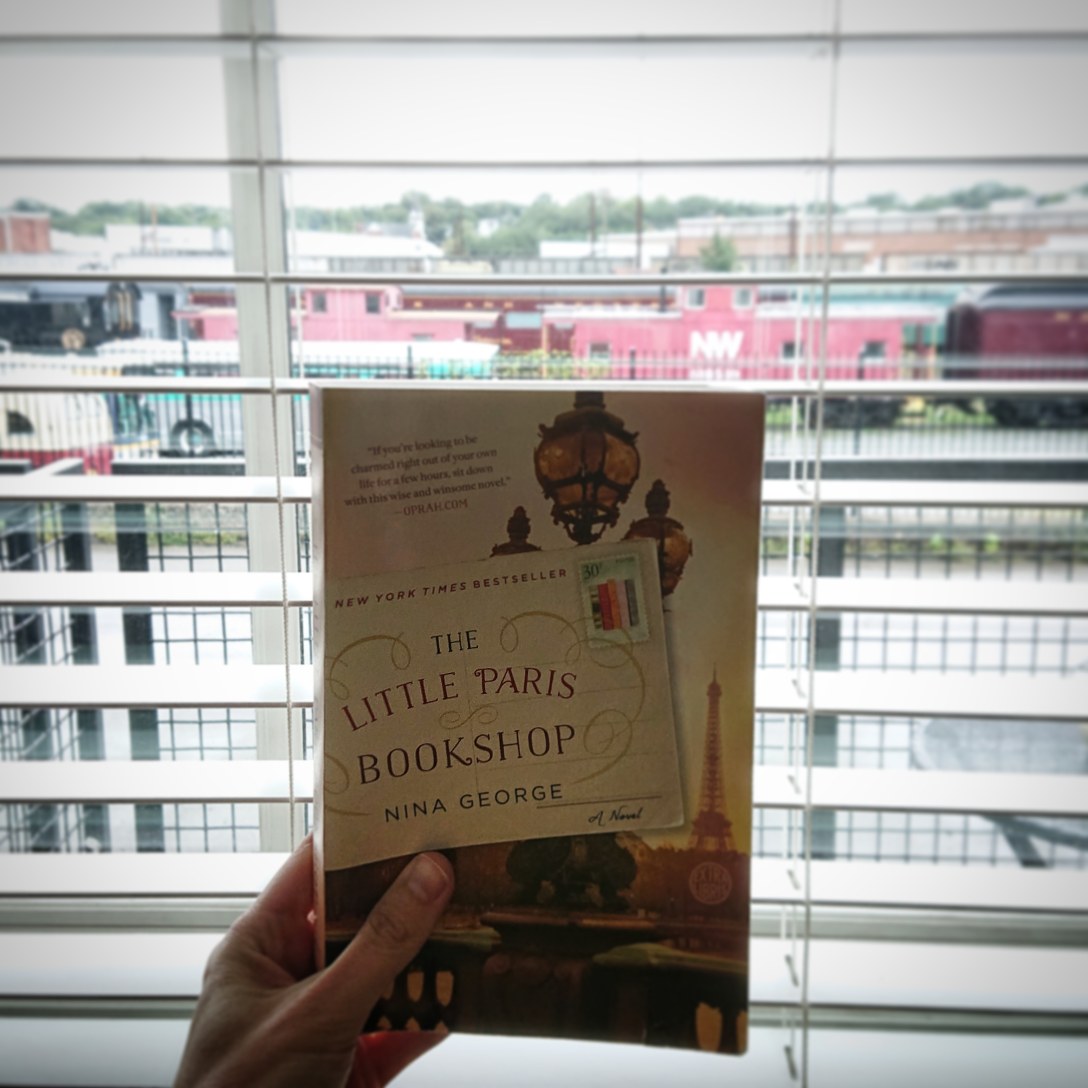
Review: The Little Paris Bookshop by Nina George

Alexis: While I didn’t enjoy The Little Paris Bookshop as much as The Book of Dreams by Nina George, I still really enjoyed reading it!

Summary: In Paris, a fifty-year-old man named Monsieur Perdu runs a bookstore on a barge, which floats on the Seine. He calls it the Literary Apothecary, because he treats books as medicines to cure people of their broken hearts. But Perdu is harboring twenty years of heartache, after the love of his life left him without any explanation, except for a letter, which Perdu hasn’t been able to bear to even read. Until one day, when he finally reads the letter, and decides to finally start living his life.

What I liked: I loved Perdu’s journey. While he physically journeys down the Seine in his bookshop, he emotionally breaks out of the depressed funk that he’s been stuck in for twenty years. His character arc was perfect.

I enjoyed George’s lyrical writing style, and how the book veers towards magical realism in some parts. For example, Perdu is always able to somehow read his customers and understand what book they need. 

The overall bookish feel of this book was wonderful, and you can really feel George’s love of books seep into Perdu’s character. 

The secondary characters are vibrant and oftentimes outlandish. I enjoyed reading about Perdu meeting them and finally creating connections with people after all his years of loneliness.

What I didn’t like: I really wasn’t a fan of Manon’s character. Her diary entries gave me a good glimpse into her character, and I figured out early on that I didn’t like her. She just seemed so immature and erratic, and sometimes the way she talked about Jean felt too manipulative. What I did enjoy about her diary entries were her descriptions of Jean, because it showed what Jean was like when he was young.

Overall, I loved reading about Perdu’s journey. This book is about love lost and love found, finding yourself, and the power of books. 

VERDICT: 4 starsZ

Review: Gather the Daughters by Jennie Melamed

Alexis:

Here are some words to describe Gather the Daughters: disturbing, haunting, cultish. The book focuses on very dark, heavy themes, including pedophilia, child marriage, and incest. 

In Gather the Daughters, a group of people live on an island, where very summer, the children run free. But when the girls start their periods, they are considered to be women, and must marry and have children as fast as possible. The rest of the world is post-apocalyptic, and is simply called “the wastelands.” Fathers are encouraged to groom their daughters from a young age, but are supposed to stop once the girls hit puberty. 

The book tells the story of multiple girls. Their lives are very similar and overlap. Caitlin is eager for knowledge and is allowed to read books from the wastelands; Janey, at seventeen, has been starving herself for years in order to prevent her period from coming.

This was a haunting and brutal book to read. While Melamed’s descriptions and writing are good, the book was slow-paced. I also wish the ending was more radical and made more of an impact.

Overall, I can’t really say I enjoyed reading this book, and I did skim through some of the middle. But it definitely made me think.

VERDICT: 3 stars 

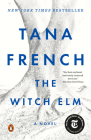
5 star review: The Witch Elm by Tana French

Anna: New favorite book (and author?) alert! VERDICT: 5 stars

Support Independent Bookstores - Visit IndieBound.org

Toby is the kind of guy who has always had it easy. He’s always been fairly popular, successful at his job, and has never had to worry about money. Until one night, when he’s beaten so badly in his apartment that he nearly dies. Afterwards, he experiences amnesia and some brain trauma. Following his accident, Toby learns that his Uncle Hugo is dying of brain cancer. Toby and his cousins return to Uncle Hugo’s Ivy House, where they spent their summers growing up. When they find a dead body in the Witch Elm on the property, everyone in the family is a suspect–and Toby, it seems might be suspect number one.

I couldn’t put this down. The Witch Elm is the kind of book that rewards you the more you read, as the events in the beginning seem unrelated at first and slowly become more and more a part of the larger plot. What I really love about this book is that French’s characterization is fantastic. Toby is an often unlikable and undeniably realistic character who I’m pretty sure I would hate in real life. After Toby’s accident, he’s forced to examine how he’s treated others over the course of his life. 

There’s also the murder aspect of the book, which twists and turns the more you read. Because of Toby’s amnesia and other evidence, Toby is immediately one of the top suspects in the murder, and he graps at nothing as he tries to remember what he might have done. On top of it being a who-done-it-book, at its core The Witch Elm is a complicated family drama about the secrets families keep together and the ones they keep from each other. 

I’ve already put In the Woods, at hold at the library, the first book in Tana French’s Dublin Murder Squad series. I can’t wait to read her backlist!

Review: The Masterpiece by Fiona Davis

Alexis:

Hi, everyone! I’m moving into my new apartment tomorrow. I’m really excited, but I’m also already exhausted just thinking about it!

The Masterpiece is the last book I read on the beach. It isn’t my usual read, but it was a great beach read! Overall, this is one of those books that I read and I liked, but it didn’t leave a long-lasting impression.

The book alternates between two timelines. In 1928, Clara Darden is an illustrator teaching at the Grand Central School of Art in New York City. In 1974, Virginia Clay is a recent divorcee and cancer survivor who begins working at the Grand Central Terminal when she finds a painting abandoned in the old art school. 

What I liked: I loved that the story centered around a building. I learned a lot about the history of the Grand Central Terminal. The story focuses a lot on the beauty of the terminal in the 20’s, and how the building has been worn down over the years by the time the 70’s roll around. 

I really enjoyed reading about Clara’s life as a woman struggling to prove herself as an artist. I loved her determined character, and her struggle resonated with me. I also learned a lot about art, especially how illustrators, not to mention women artists, were viewed in the 1920’s. 

What I didn’t like: I wasn’t a huge fan of Virginia’s storyline. I’m not really sure why, but it didn’t resonate with me like Clara’s storyline. 

Clara’s sectionsfocused too much on Oliver, in my opinion, and I wasn’t a fan of his character.

I also found the ending to be melodramatic and not very believable. 

As an aside, my mom also read this book. She loves historical fiction, and she really liked this book. She loved the descriptions and the history of the Grand Central Terminal. 

VERDICT: 3 stars

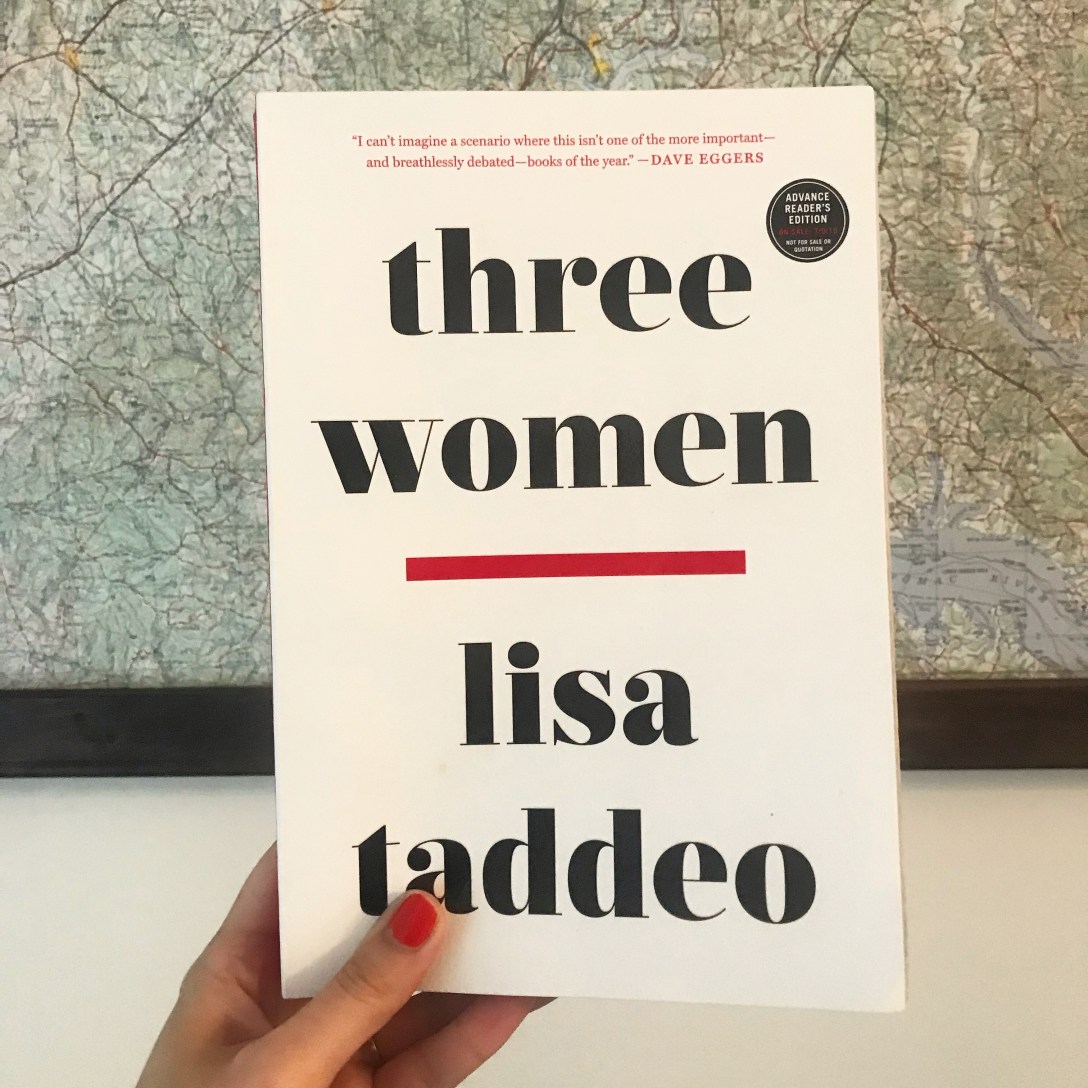
Review: Three Women by Lisa Taddeo

Anna: Three Women is hands-down the most original book I’ve read all year. Inspired by the stories of three real women, Lisa Taddeo explores how women are blamed and othered for showing any kind of sexuality that goes against the norm.

My favorite story to read was Maggie’s, who had an inappropriate relationship with her teacher when she was in high school. Looking back on it years later she realizes that she was taken advantage of, but when she presses charges no one wants to see the truth.

This is a slow but explosive book that shows how women are systematically shamed and repressed. It’s not exactly hopeful, but it’s important, and something I’m going to be thinking about for a long time.

VERDICT: 4 books

Support Independent Bookstores - Visit IndieBound.org

Review: Good Omens by Neil Gaiman and Terry Pratchett

Alexis:

Good Omens is a satirical book about the Apocalypse. When a demon named Crowley realizes he’s misplaced the Antichrist, an eleven-year-old boy named Adam, he teams up with his old enemy turned friend, an angel named Aziraphale. Together, they try to find Adam so that they can save Earth before the Apocalypse starts.

While I really enjoyed this book, I didn’t love it. I did love the beginning. The writing is brilliant and satirical, and it makes fun of everything. The book is full of religious scripture and religious references. Every line is witty, out there, and full of British humor.

I really enjoyed reading about Crowley and Aziraphale, and I wish that the majority of the book was from their point of view. I did like reading about the Four Horsemen, but some of the other characters were tedious to read about. My biggest complaint with the book is that there is a huge cast of characters, and the book jumps around a lot. It’s also a little too slow-paced.

If you like Supernatural, the two share a lot of names and qualities. I’m excited to watch the Good Omens show on Amazon Prime, however; I think it will come across really well on screen!

VERDICT: 3.5 stars

Review: Gods of Jade and Shadow by Silvia Moreno-Garcia

Alexis:

I read Gods of Jade and Shadow while I was on the beach yesterday. It’s currently storming, so I’m inside writing this review!

In Gods of Jade and Shadow, eighteen-year-old Casiopea Tun lives in Mexico in the 1920’s. But her town is small and traditional, and she lives in her grandfather’s house, where she is forced to serve him and his grandson, Martín. But one day, she opens a locked box in her grandfather’s room and unleashes the Mayan god of death: Hun-Kamé. Together, Casiopea and Hun-Kamé go on a journey to reclaim Hun-Kamé’s throne from his brother in Xibalba: The Underworld. 

In a lot of ways, this book defies genres. It’s a mix of Mayan mythology, magical realism, and historical fiction. I love all of the different elements thrown together; it makes for such a rich and interesting culture and setting. Moreno-Garcia crafts a dark and mythic world.

I love Casiopea’s character, and I enjoyed following her journey. She’s such a strong character who, even though she’s a little lost in the world, knows who she wants to be. She’s determined and strong-willed but caring and righteous, and I enjoyed getting to know her. 

I also enjoyed reading about the character of Hun-Kamé. I loved how the author described him and wrote him as a complex god who tried his best to figure out Casiopea as well as his brother. 

This is one of those books that’s full of memorable lines. 

“Dreams are for mortals.”

“Why?”
“Because they must die.” (121).

“Is that why you stare at stars?” he asked. “Are you searching for beauty or dreaming with your eyes wide open?” (122). 

“Words are seeds, Casiopea. With words you embroider narratives, and the narratives breed myths, and there’s power in the myth. Yes, the things you name have power.”

I loved the author’s descriptions, and I loved reading about Casiopea and Hun-Kamé’s journey.

VERDICT: 5 stars 

Review: Etta and Otto and Russell and James by Emma Hooper

Alexis:

I read Etta and Otto and Russell and James last year, and I immediately added it to my favorite books list and gave it 5 stars! But I read so many books that, over a year later, I couldn’t remember all the details. I knew I was going to the beach, so I thought, “Why not get it for the beach and give it a re-read?”

The first time I read this, when I checked it out from the library, I didn’t realize it was magical realism. But I love magical realism, and reading it a second time, it made more sense in the story.

This book is character-driven, low on the plot, and heavy on the emotion. The book is non-linear, and switches back and forth not only in POVs (though all are in 3rd person) but also back and forth in time. It explores the relationships between three main characters: Etta, Otto, and Russell. Etta and Otto are married, and Russell is their longtime friend. In the present day, they are all old farmers in Canada. One day, Etta decides to trek across the Canadian wilderness in order to see the ocean for the first time.

In the past, Otto grows up on a farm, and Russell, his neighbor, becomes his best friend. Later, Etta becomes a school teacher while Otto goes off to fight in WWII.

Hooper is a wonderful writer. She’s also a musician, which gives her writing a rhythmic and lyrical feel that I love. Hooper also excludes quotation marks in her dialogue, which adds to the magical realism feel of the book.

Overall, this is a quietly powerful book. At its core, it’s about both a physical and an emotional journey through the Canadian landscape and the characters’ pasts. It explores war, family, and farming, with a talking coyote thrown in there for good measure. If you love magical realism, lyrical, poetic writing, and character-driven stories, I highly recommend it!

VERDICT: 5 stars

Support Independent Bookstores - Visit IndieBound.org

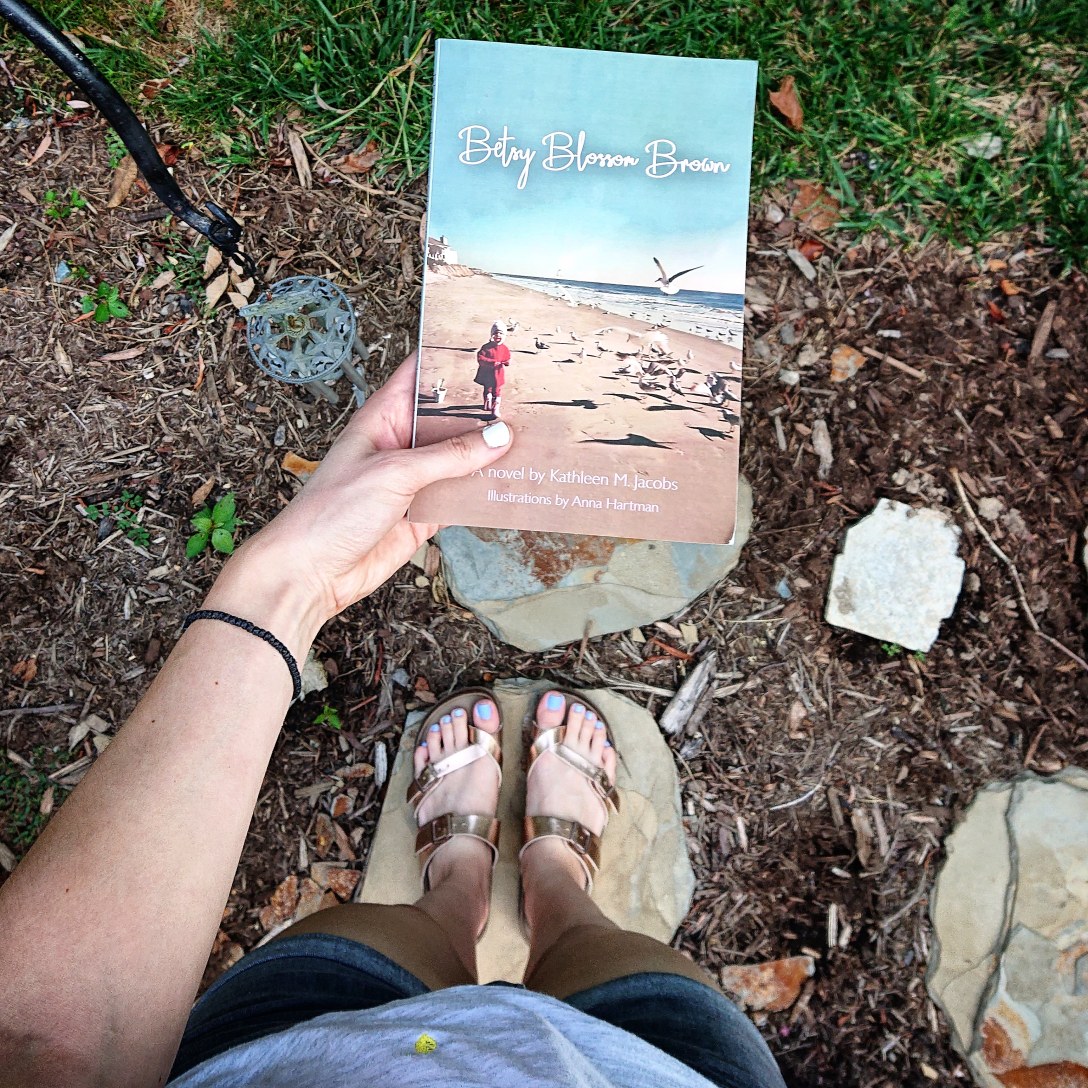
Review: Betsy Blossom Brown by Kathleen M. Jacobs

Alexis:

Thanks so much to Kathleen M. Jacobs for sending me her book! Jacobs has a gift for writing details, and vividly describing colors and clothes that create a vintage atmosphere and a Southern setting.

However, there are two big issues that kept me from being fully absorbed in the story: the POV randomly switches between first person and third person, and the name “Betsy Blossom Brown” was thrown around a little too often. 

To address the first issue, it happens so often in Betsy Blossom Brown that it made me confused. Even in the first couple of pages, one paragraph says, “‘But I don’t understand,’ Betsy winced.” And five paragraphs later begins with, “I turned each side of my hair behind my ears…” At first, I thought this was a characterization of Besty, that maybe she sometimes referred to herself in third person. But then I remembered that this was a minor problem in Honeysuckle Holiday.

As for Betsy’s name, it is a great Southern name, and makes for a great book title. However, I think the amount of times the repetition of her full name was repeated throughout the story lessened the magic of her name. 

That being said, I thought Jacobs did a great job of talking about and depicting Betsy’s Aspberger’s. Not many works of fiction deal with Aspberger’s, so I found this to be refreshing and enlightening. The story was character-driven, and I found Betsy’s character to be quirky and interesting. 

The writing in Betsy Blossom Brown is full of beautiful imagery, including vivid colors and clothing, that set up a coming-of-age story in a beautiful and nostalgic Southern setting. Jacobs writes in a conversational style that works well for her characters. However, I preferred the storyline in Honeysuckle Holiday, which I also found to be more cohesive. 

VERDICT: 3 stars