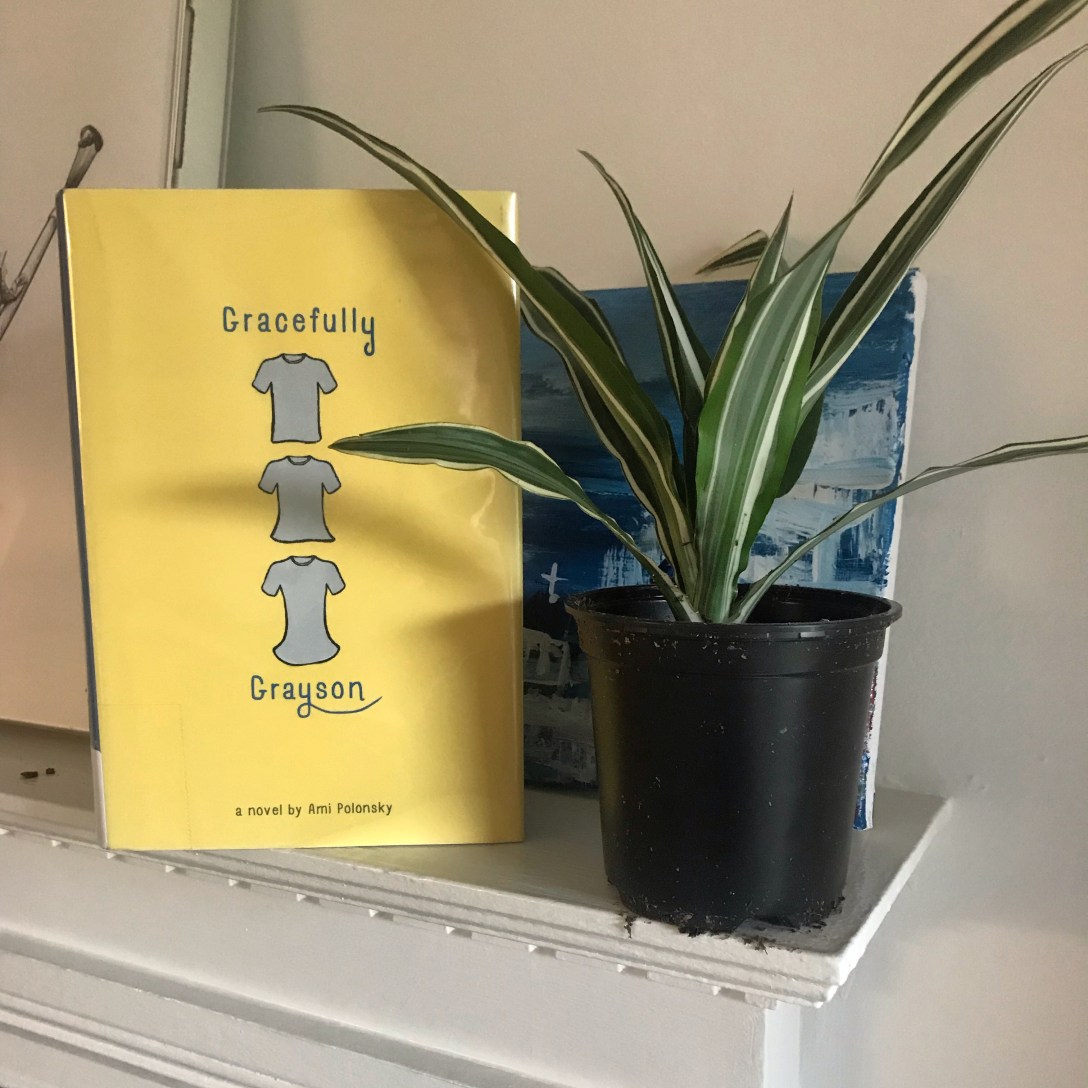
Review: Gracefully Grayson by Ami Polonsky

Book Review: Gracefully Grayson by Ami Polonsky

Gracefully Grayson is a great example of the magic of middle grade fiction. Grayson’s parents died in a traumatic car crash, and he now lives with his aunt and uncle and cousins. Grayson has always wanted to be a girl. He knows that acting this way means getting in trouble and getting bullied, so he just daydreams. That is, until he tries out for the part of Persephone, the lead part in the school play.

This book is heartbreaking because Grayson feels lost both in his gender identity and an outsider in his adopted family. Grayson is caught between many adults who believe they are acting with his best interests in heart. When Grayson’s teacher, Mr. Finn, casts Grayson as the lead female role in the play, his Aunt Sally thinks Mr. Finn overstepped his boundaries. In their own household, Uncle Evan disagrees with his wife’s actions, and hints that Grayson’s aunt and uncle might know more about Grayson than they let on. There are lots of opinions from the adults in Grayson’s life about who he should be, which made me think critically about a parent’s role in their children’s identity.

At the end of the book Grayson is still using female gender pronouns, but wears clothes meant for girls. I can’t speak from experience of course, but I think this is a believable account of a young transgender child’s journey. I say this because I also recently read George by Alex Grino and it had hardly any conflict. Everyone was instantly accepting of George and her transition, which is great, but didn’t feel realistic.

This book is everything beautiful about middle grade fiction and more. Grayson faces bullying, he’s outcast by a friend, and he’s ridiculed for his identity. The end of the book also doesn’t wrap everything up perfectly but points Grayson in a hopeful direction, which I think is important in middle grade fiction for a slightly older audience, like this one.

VERDICT: 4 books
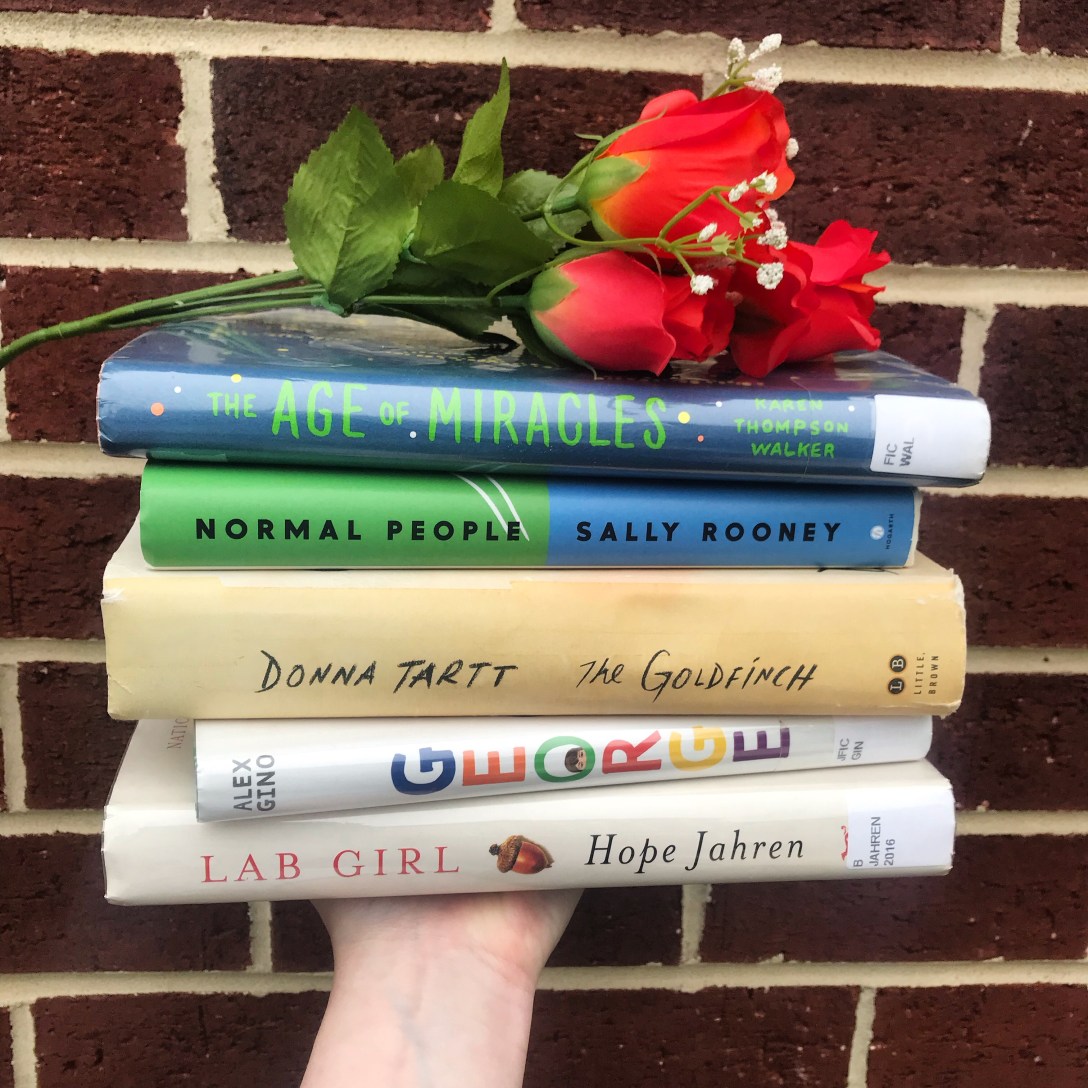
 

Anna’s April Wrap Up!

Anna: I’m excited to share my April wrap up! This month included not one, but TWO five star books for me! Im currently finishing up three books that didn’t make it into this wrap up (classic). I’m also still loving memoir and middle grade!


Lab Girl by Hope Jahren: 4 books

George by Alex Gino: 3.5 books

The Goldfinch by Donna Tart: 5 books

Normal People by Sally Rooney: 5 books

The Age of Miracles by Karen Thompson Walker: 3 books


What books did you love this month?


Review: Normal People by Sally Rooney

Normal People by Sally Rooney is a book that one hundred percent deserves all the hype! I read Conversations with Friends last year, and it was one of my favorite books of 2018. I couldn’t wait for this one to come out, and I preordered my copy from a local independent bookstore.

Normal People lived up to all my expectations and maybe even exceeded them. Sally Rooney has such a literary talent, and I love her writing style. Her characters are unique but–dare I say it–original. Set in Ireland, this novel captures the joy, anxieties and difficulties of college life perfectly.

This follows Marianne and Connell’s relationship over many years, beginning in the Irish equivalent of high school and continuing through the end of college or university. Marianne and Connell have an intense and complicated relationship that began in secret because Connell was popular in high school and Marianne was not. This dynamic shifted when they went to university, creating an undertone of shame, jealousy, and insecurity that they must continually grapple with.

A prevailing theme in Rooney’s writing is the role that miscommunication plays in relationships. She also frequently writes about how differences in social class, the presence of mental illness, and time abroad and apart affect and change relationships. It’s difficult to describe what happens in this book, because it’s kind of about everything. I love how Rooney writes about everyday life so simply but beautifully, and I loved, loved, loved these two quirky central characters.

I cannot wait until her next book!

VERDICT: 5 books

Anna: Currently Reading 4/15

I’m horrible at continuing series, when when I really love the first book! Here’s an example of one I’ve neglected far too long, even though I read and loved My Brilliant Friend in 2017, I’m just getting around to reading book two, The Story of a New Name.

I love Elena Ferrante’s writing. Her characters are wonderfully complex, as are their relationships with each other. I’m about halfway through and can’t wait to (hopefully) pick up the next two soon.

What’s your favorite series?


Review: Big Stone Gap by Adriana Trigiani

This was the perfect light read as I adjusted to my new job–one that I could pick up after a long day of work before bed. A mix of Gilmore Girls and Mama Mia, I enjoyed following the adventures of Ave Maria, the “town spinster” in her mid-30s in the rural mountain town of Big Stone Gap, Virginia. After the recent passing of her mother, Ave Maria is the only Italian left. Like any other small town, everyone in Big Stone Gap know everyone else’s business. So when Ave Maria discovers some long-buried secrets about her own identity, the rest of the town is quick to find out.

Parts of this book are downright hilarious. The part when Elizabeth Taylor comes to town actually had me laughing out loud. The same goes for the dog incident and the chicken bone incident. Classic.

I love the Bookmobile, and the fact that Ave Maria loves books. I love her devotion to her town and her mother, despite their faults. I love that Ave Maria is named after a prayer. I love that, because she’s an Italian in the mountains of Virginia, no one can pronounce her name. (My name is Anna-Marie–I can relate.)

Ave Maria does get a little annoying in her stubbornness to remain single,This would have been fine if she truly didn’t want a partner, but her actions tell otherwise. Sadly, she seems more jealous and vindictive toward love more than anything else. She turns men away and insists she’s happy, only to get jealous when those men turn to other women. There are parts of her character that I like and identify with, as I mentioned above, and then there are aspects to her that get really annoying, like her inability to notice what is literally in front of her nose.

Though I enjoyed Big Stone Gap overall, there are some things I can’t get past, which I’ll call here Early 2000’s Problems. It’s kind of like when you watch Gilmore Girls or an old rom com and you’re shocked at how something that you used to regard as so wholesome is actually filled with culturally insensitive, racist, and homophobic jokes. It’s not okay, but you have to approach these things in the context of time and how far we’ve come as a society in accepting people, even since the 2000s (and Big Stone Gap takes place in the late 70s).

Also very 2000’s is Trigani’s assumption that men and women live like species from different planets. There are literally lines such as, “this is how all men are,” and likewise, “ this is how all women are,”  this just isn’t the case! Again, I think that this has to be attributed to the time period (either that, or I just haven’t read a romance in a long time). There’s also an undertone in here that men are objects to be won by women and vice versa, which presents a big problem.

Despite the outdatedness, I still did enjoy reading Big Stone Gap, and I would recommend it if you’re looking for a small town southern romance.

VERDICT: 3 out of 5 books

 
Now for some very specific things that really irked me (spoilers below)–


The fact that Jack essentially bought Ave Maria’s heart when he paid for all her Italian relatives to visit.

The fact that when the family showed up Ave Maria’s own plans were completely pushed aside.

The fact that as soon as Ave Maria cemented her love to Jack, Jack’s mom IMMEDIATELY died, because she knew Jack was in love and didn’t need her anymore.

I totally thought the best friend and band director was going to come out as gay. Maybe he still does later in the series…?

I love Pearl, except that she is the token fat smart girl who discovered makeup and it made her life better.

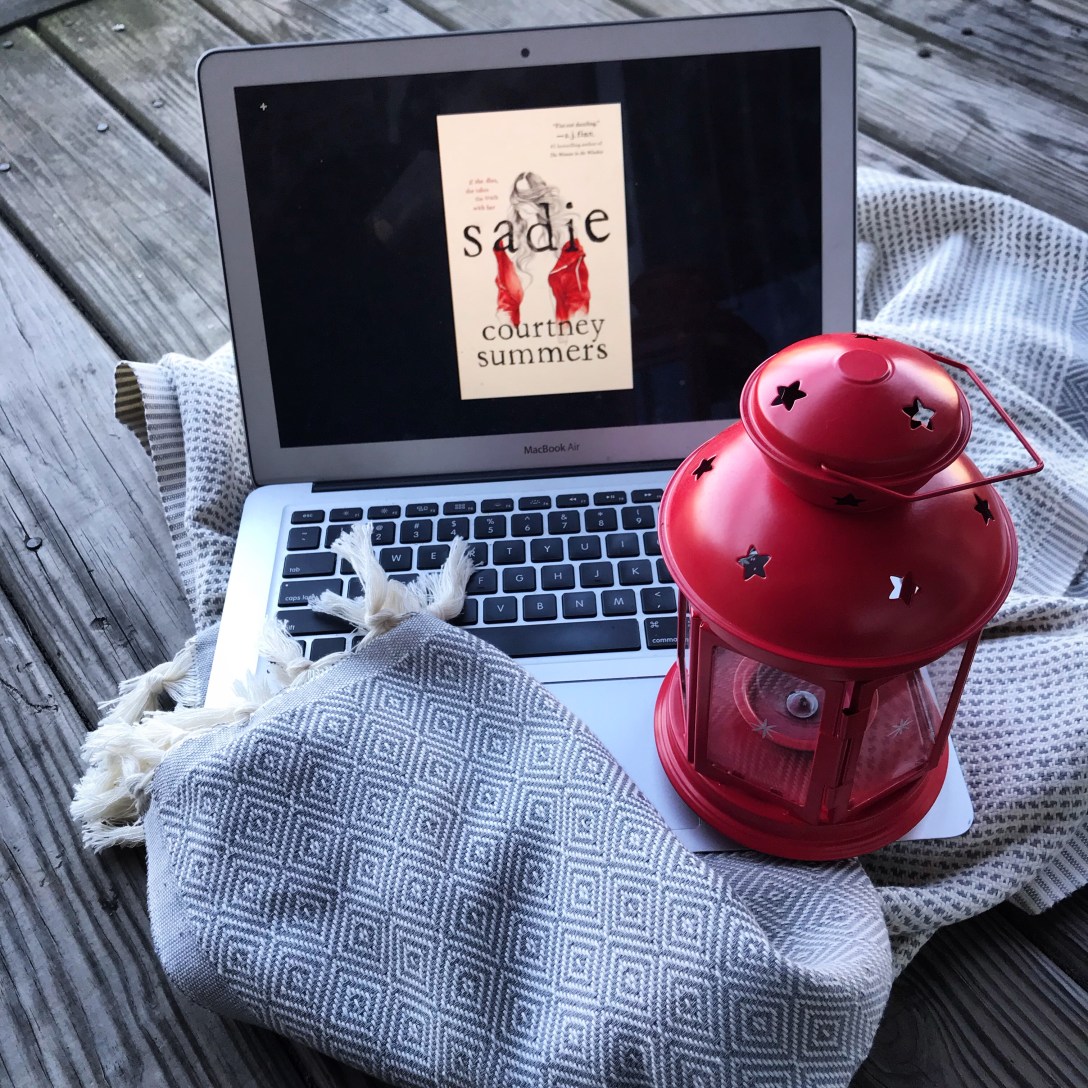
AUDIOBOOK REVIEW: Sadie by Courtney Summers

Anna:

Welcome to my first audiobook review! As I mentioned in my last post, I recently moved. While I haven’t had much time to read physical books, I have been enjoying listening to audiobooks while I unpack.

I’ve heard so much buzz around Sadie by Courtney Summers since it came out last September. This is a YA thriller, and though it definitely deals with some heavy and difficult themes (sexual assault, child abuse, murder, etc.) I didn’t find it very explicit. I’d definitely say it’s genre/age appropriate.

Sadie has had to be a grown up for as long as she can remember. Abandoned by her addict mother, Sadie essentially raised her younger sister, Mattie. But when Mattie was 13, she was murdered. Sadie sets out to kill the man who took her sister away from her. Meanwhile, in a complementary storyline, a podcast called The Girls has been created to retrace Sadie’s path, as Sadie has since gone missing.

First off, I think including a point of view from a podcast is brilliant. Not only is this creative, but it captures the obsession in recent years with serialized murder podcasts. This book exposes society’s fascination with murder podcasts and dead girls while also praising the attention brought to poorly-investigated deaths. (The police are utterly useless in helping with Mattie’s death and Sadie’s disappearance in this story.) Summers criticizes the use of serialized podcasts to exploit murder and sexual assault victims for listener’s entertainment, which I applaud her for.


Sadie is a complicated protagonist. You kind of hate her because of how stubborn she is, and yet you can’t blame her because she’s wicked strong and had a terrible childhood. Her redeeming factor is the fierce and protective love she has for her sister.

Sadie has a stutter, and her relationship with her stutter and, subsequently, her own body, is fascinating. Other people’s reaction to hearing her speak is heartbreaking. I think this is important representation for people with stutters, who I have never before encountered in literature. (Besides Quirrell in Harry Potter, and that’s definitely not a positive representation of stuttering…ouch….)

I enjoyed listening to the audiobook version of this because of the way The Girls sounds like a real podcast. The fact that the podcast has strummy, haunting intro music makes it that much more realistic. The voice of the show’s host is also spot on of what you would expect (and of course a show about two girls disappearing is narrated by a man! This feels like pointed commentary on the author’s part).

However, there are multiple voice actors in this and some of them are REALLY bad. I could have read some character’s lines more convincingly. But for the most part, I think the audiobook is well done.

I love that YA thrillers are becoming more of an established genre, and Sadie did not disappoint!

BOOK VERDICT: 4/5

AUDIOBOOK VERDICT: 4/5

Review: Pachinko by Min Jin Lee

Alexis: Read 3/17/19

Well, this book is certainly a saga. It feels like three different books, because really, it is. Pachinko covers four generations of the same family, from the early 1900’s to the 80’s. The story opens with Sunja, a Korean peasant, who meets a wealthy businessman and forms a relationship with him. When Sunja becomes pregnant, she finds out that the businessman is already married. So instead, she accepts a generous offer of marriage from Isak, a sickly Protestant preacher.

The amount of detail Lee manages to pack into this book is astounding. She covers the historical and political aspects of each time period. The book especially focuses on what it means to be Korean during a time when the country is taken over by the Japanese and then later split into two. Her characters deal with the dysphoria that they feel as Koreans living in Japan, as well as discrimination. I really enjoyed learning about the history and culture of Korea, and I could really go for some Korean or Japanese food right about now!

While extremely detailed, Pachinko is written matter-of-factly, with no flowery descriptions. Lee writes from a distant, omniscient point of view. At the end of the book, Lee discusses her reasoning behind this. She says, “‘Fair’ seems like a simple word, but I think because my subject matter is so troubling and controversial, I wanted my narrator to be as objective as possible” (494). Lee certainly achieves this, as the book, especially the first half, almost reads like a historical account. At first, I found the tone off-putting. But once the book became more political, I understood the need for distance. Still, that doesn’t neglect the fact that I prefer to get more into characters’ heads and emotions. I love character-driven stories, and while this was that, I never felt too involved in the characters’ lives.

For example, Lee has a bad habit of simply stating “and then he died.” When she did this in the beginning of the book with Yoonie, Sunja’s father, I did a double-take. She nonchalantly stated his death and they hardly went into it in the next chapter, and she repeats this throughout the book. While I understand her distance, as a reader, this was very off-putting. I wanted to feel each death and life-changing event the way the characters did.

Overall, I really enjoyed this book, even if I had to enjoy it in chunks. I learned a lot about Korea’s history and the history of misplaced Koreans. I really don’t know how to rate it as a whole, as it covered so much ground.

History and detail: 5 stars

POV and writing style: 2 stars

Characters: 4 stars

Review: Burial Rites by Hannah Kent

“‘It’s not fair. People claim to know you through the things you’ve done, and not by sitting down and listening to you speak for yourself. No matter how much you try to live a godly life, if you make a mistake in this valley, it’s never forgotten. No matter if you tried to do what was best.’”

Burial Rites is historical fiction and follows Iceland’s last execution of Agnes Magnúsdóttir in 1829. Agnes has been convincted of murdering two men and is sentenced to death. While she awaits her execution, she is sent to work on an isolated family farm. Agnes has an unexpected effect on the family while she stays.

Burial Rites is very dark, but beautifully and hauntingly written. I’ve never read anything set in Iceland before, and enjoyed learning about the area and time period. This is different from a lot that I’ve read recently because from the beginning, you know what’s going to happen—Agnes is going to die. The real tension in the book is between the family, servants, and priest on the farm where Agnes resides as she awaits her impending death. There’s also the mystery of what happened that night of the two murders, and what Agnes’s role in the deaths really was.

The characters make the story. Agnes’s backstory is heartbreaking and makes her feel real. Kent made me feel sympathy for Agnes despite her murder charge.  

There are a lot of questions in this book of justice and right versus wrong. Who gets to decide when someone deserves to die? Are some people’s words more valuable than others? This can be read as an examination of the death penalty in its most ancient and barbaric forms.

Religion’s role in justice is also a prevailing theme of the book, and something I found interesting. Agnes is assigned a priest to help her find achieve absolution with God before she is executed. Agnes resists by not repenting and, slowly, begins talking as an equal with the priest. Something Agnes repeatedly questions is why she has to ask for forgiveness to a God who is allowing her to be executed.

I love historical fiction that shows the discrepancies in class, and there is a very clear class divide in this era of Iceland. Agnes is not only a murderer, but a servant accused of killing her master, which adds a level of certain guilt in the rest of society’s eyes. When she first arrives at the farm, the entire family is disgusted by her. Agnes is gradually accepted by the family despite her class and status as a convicted criminal.  

Definitely check out this fantastic debut!

VERDICT: 4 out of 5 books

Review: Nevermoor by Jessica Townsend

Nevermoor is the first installment in a series about Morrigan Crow, who was born on Eventine, the unluckiest day. Morrigan is cursed to die on midnight of her eleventh birthday. Morrigan is blamed for every misfortune in the town, and she’s kept at arm’s length from everyone, including her family. Before the clock can strike midnight on Eventide, she’s swept away to a magical land called Nevermoor by an equally magical man, Jupiter North. Jupiter prepares Morrigan to compete in four trials that, if she’s successful, will grant her entrance into the legendary Wundrous Society.  

Before reading this, I’d heard Nevermoor compared to Harry Potter, and this is true in a lot of ways (although let’s be honest, nothing can ever truly compare). Nevermoor feels like a mix of The Sorcerer’s Stone and The Goblet of Fire, because of Morrigan’s introduction to magic at age 11, and the trials being like a less deadly Triwizard Tournament. The magic system is difficult to summarize. It feels more eclectic than The Wizarding World. I’ve also heard Nevermoor called a mix of Harry Potter and Alice in Wonderland, which I’d call accurate. We also know that there is going to be a special magic school down the line. Jupiter is also a very Dumbledore-y character, as her mentor, and someone who is obviously keeping secrets from Harry. I mean, Morrigan.

Moving on from Harry Potter!

Townsend is a great writer. Nevermoor is fantastically and colorfully written. It’s clever, hilarious, and by far the most creative fantasy I’ve read in a long time. It has great worldbuilding, but still leaves much more to be explored in later books.


I love Morrigan as a character, which is one of the reasons Nevermoor is so compulsively readable. Before Nevermoor, she has never known love. She has been shamed and ostracized by her family for her entire life. She just wants a place to belong. As I mentioned before, It did get a little annoying that Jupiter keeps her in the dark for so much of the book (ahem, Dumbledore) but I understand why that this needs to happen plot-wise. The villains are sufficiently creepy and well-developed, as are the quirky host of characters in the Hotel, and Morrigan’s two close friends, Hawthorne and Jack.

Despite the fact that it’s middle grade, Nevermoor tackles dark themes, such as abuse and death. There’s also a lot of commentary for adults that I never would have picked up on as a kid, such as the discussion of illegal immigration. There’s a scene on page 428 when the Wunderground is experiencing technical difficulties that mirror the MTA subway delay announcements so much that they had me cracking up.

Most importantly, Nevermoor is filled with memorable magic and a story that I can’t wait to keep reading! My one concern is that it’s going to be difficult for the following books in the series to live up to the standard of book number one!


VERDICT: 4.5 out of 5 books

Review: The Night Tiger by Yangsze Choo

Alexis: Read 2/27/19

The Night Tiger is a fascinating blend of magical realism, historical fiction, romance, and murder mystery. It follows two main characters: Ji Lin and Ren. Ji Lin is the apprentice of a dressmaker who is also secretly a dance-hall girl. Ren is an eleven-year-old houseboy who recently switched masters due to his old master’s death. Their lives come together when Ji Lin finds a severed finger and tries to figure out where to return it.

I love that the book is set in 1930’s colonial Malay, now modern Malaysia. This makes for a rich and cultural setting, and I loved reading about the different languages spoken and the foods eaten. I loved Choo’s descriptions of clothing from Ji Lin’s point of view, and how she showed England’s rule and influence over the culture of Malay.

Throughout the book, Choo focuses on the superstitions based on chinese numbers, as well the folklore of weretigers. She even includes a section explaining these at the end of the book, which I wish were placed before the book as pretext, but I still appreciated her including them at all.

The first 30 pages were a little slow, and I had to get used to Choo’s writing style and tone. But then I was hooked. This isn’t a fast-paced book, and the mystery is revealed slowly. Though the main plot is fairly slow, there were enough subplots to hold my attention.

I loved Ji Lin as a character. She’s a classic modern day heroine in 1930’s Malaysia, yet she also fits in perfectly in the time period. She’s intelligent and clever and isn’t afraid to speak her mind. Yet, unlike where a lot of strong female characters seem to fail, she is still feminine and caring. I also really enjoyed Shin, her step brother’s, character. I found he and Ji Lin to have a lot of chemistry, and I found their relationship moved in a natural direction.

What I didn’t like about the book: the switching POVs. Ji Lin’s chapters were first person, past tense, while Ren’s chapters were in third person, present tense. And every once in a while, I was thrown into William Acton’s POV (Ren’s new master). It would have served the book better if both Ji Lin and Ren’s chapters were in first person, or, honestly, if the whole book was in Ji Lin’s perspective. Sometimes Ren felt like an afterthought.

I really enjoyed The Night Tiger’s setting, atmosphere, and characters. I wish the ending had tied up some of the loose ends, but overall, this was an interesting and unique read. Just don’t read it if you get queasy at the mention of severed fingers!

VERDICT: 4 out of 5 books


SPOILERS BELOW:

I’m not really even sure how to address the twin issue. Why do authors always feel like one of the twins has to be dead? I enjoyed Ren’s “cat whiskers” sense, but Yi’s role in the story was kind of “eh” for me.

I actually really liked the fact that Ji Lin and Shin fell in love. Their relationship, and the progression of their relationship, felt very real to me, and I loved the dynamic. I didn’t find it weird because they were so close and important to each other and not actually related.

However, I wasn’t a fan of how Shin’s character progressed. He professed his love for Ji Lin, only to beg her to have sex with him…? It felt completely out of character, as Shin was nothing but respectful towards Ji Lin, and even though he was portrayed as a womanizer, I knew from the beginning that it was obviously just a front. I felt like their almost-bedroom scene could have gone very differently. But, in the end, I was glad Ji Lin stood up for herself and decided to wait on marriage and pursue a career. It felt true to her character.