Review: The House in the Cerulean Sea by T.J. Klune

Alexis:

Long time no see, everyone. I’ve been busy with school, but thank god Thanksgiving break is almost here! Because of Covid, my schedule has been wacky, and I haven’t had a break yet this semester.

It’s been a while since I read a book for fun, but I finally got a book that sloughed me out of my reading slump: The House in the Cerulean Sea by T.J. Klune. And to no one’s surprise, since this book did drag me out of a reading slump, after all, it was a five star read!

The book is reminiscent of both Harry Potter and X-Men. Klune’s writing style is whimsical and unique. The basic plot consists of Linus, a man who works as a case worker for the Department in Charge Of Magical Youth. Linus gets an unexpected, classified assignment to investigate Marsyas Island Orphanage, an orphanage consisting of a hodgepodge of magical children.

I found Klune’s descriptions to be wonderful and precise.

This is a lighthearted book but with a deep message. I ended up loving the main character, Linus, who reminded me of Aziraphale from Good Omens

I didn’t know much about this book going in, but I found it to be a refreshing read, and I was pleasantly surprised by the queer representation! 

My only small critique is that the plot lagged a bit in the middle, and I didn’t get to see as much of Arthur’s character as I wanted, but the rest of the book was so fun to read that I found that I didn’t care!

If, like me, you need a whimsical, character-driven book with a happy ending during these times, then I highly recommend picking this up.

VERDICT: 5 ⭐s

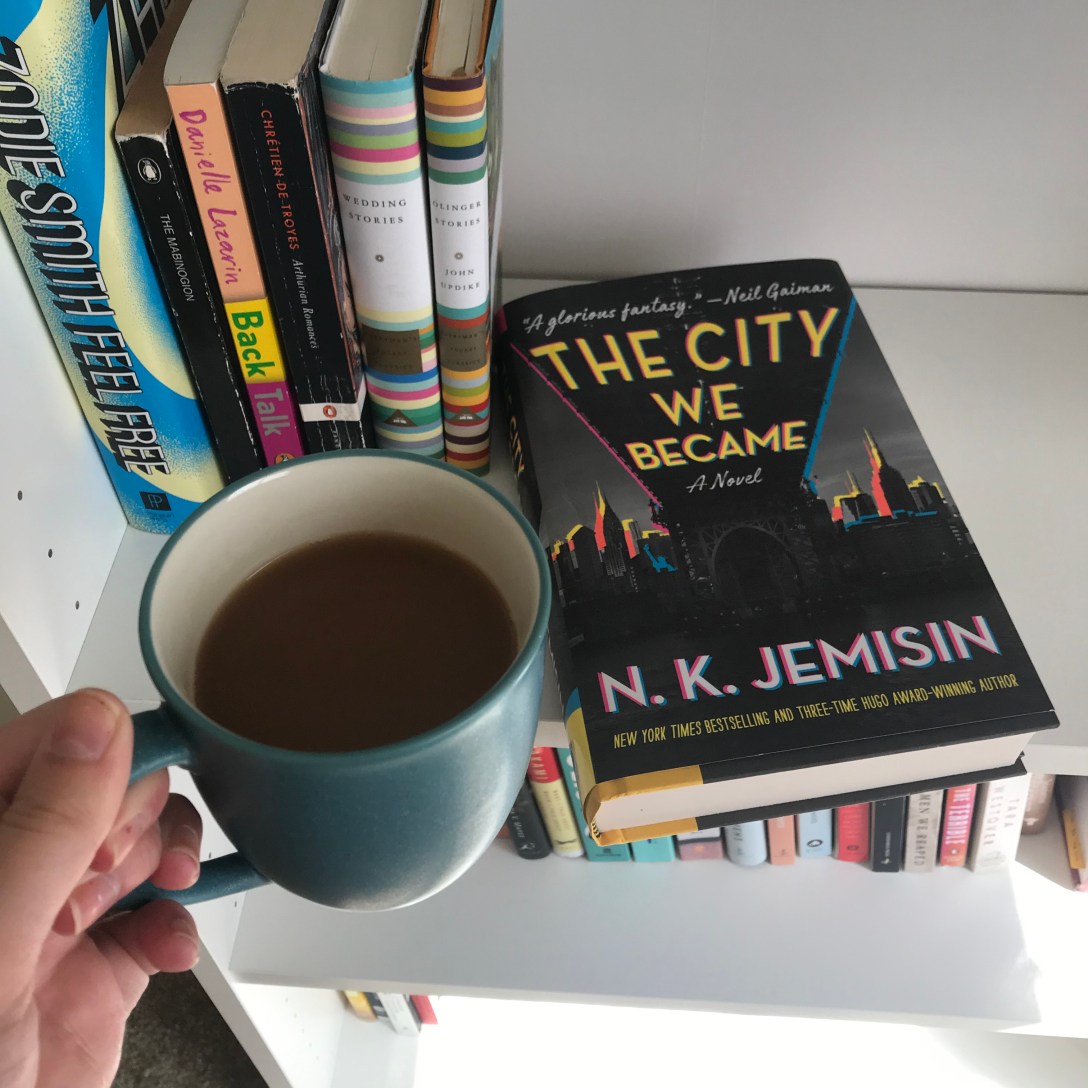
Review: The City We Became by N.K. Jemisin

Anna: I so badly wanted to love this! I love New York City and I lived there for a year, so I want to make a disclaimer that this wasn’t an issue of me not understanding NYC. I also think N.K. Jemisin is a talented author and I enjoyed The Fifth Season

What I liked:

  • Great themes of equality, identity and belonging; fighting hate: racism, sexism, homophobia; and what it means to belong somewhere
  • Wonderfully diverse group of characters of varied races, sexualities, and identities
  • The setting and the complex characterization of New York City

What I didn’t like:

  • Too on the nose
  • Confusing world building
  • Lots of telling and not showing (We are told exactly what something is and what it means throughout)

This is a unique and creative fantasy novel, but not without some thoroughly confusing world building. While I enjoyed the setting and the diverse cast of characters, I couldn’t shake the feeling of being hit over the head with thinly-veiled symbolism throughout. With little room for interpretation and imagination, I’m not sure if I’ll pick up the next book in this series. 

VERDICT: 3 out of 5 books

Review: His Only Wife by Peace Adzo Medie

Anna: Thank you to Algonquin Books for sending me a copy of this lovely book! His Only Wife is a smart simply written and beautiful story about a modern woman finding her voice under complicated circumstances.

When Afi’s family arranges a marriage for her with one of the richest and sought after men in Ghana, she is excited and nervous. She finds it a bit strange that her new husband, Eli, doesn’t come to the wedding, but she’s told not to worry about it. From there, Afi moves from her small village, where she shared a tiny room with her mother, into a fancy apartment in the city. Weeks pass, and she’s yet to meet her husband. Slowly, Afi learns more about her husband and the other woman he is hiding. As she becomes accustomed to her new luxurious life, she also becomes obsessed with securing her position as Eli’s only wife.

 I loved the simple and straightforward way this is written. There are complicated relationships between the characters, made even more dynamic by cultural expectations and traditions. When she first marries Eil, Afi is completely subservient to society’s expectations and worries about her cooking, cleaning, and pleasing her husband. But as the story goes on, she starts to question everything she knows about being a woman.

Spoiler: The only complaint I have is that everything regarding Afi’s career as a seamstress comes very easy for her, almost too easy for here. There are no obstacles in the plot in regards to her career, and by the end of the novel she has become a renowned designer in a matter of months. Unrealistic? I think so.

Otherwise, I don’t think I’ve ever read a book set in Ghana, and I enjoyed the rich descriptions of the customs, culture, and the food. I look forward to reading more by Peace Adzo Medie in the future! 

VERDICT: 4/5 books!

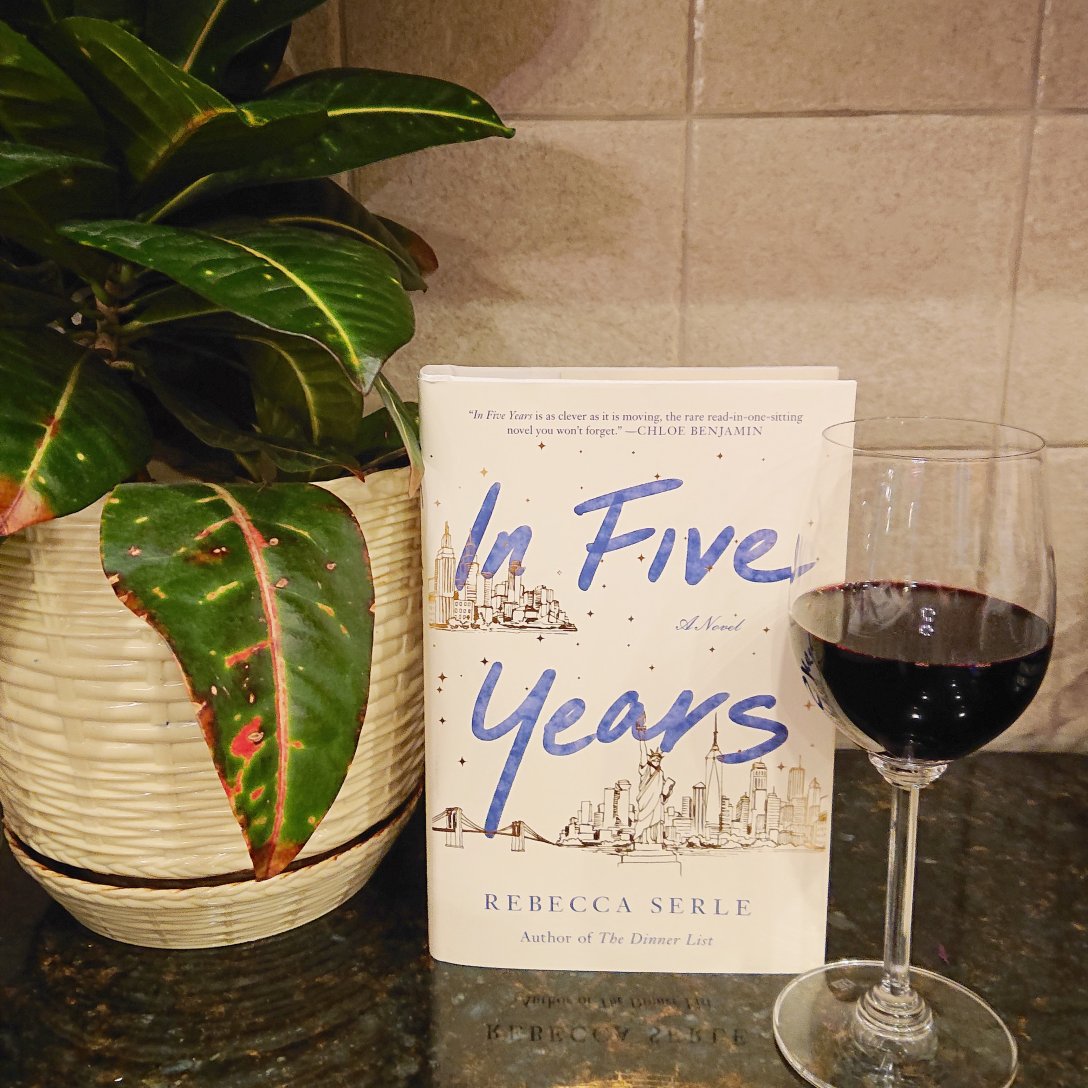
Review: In Five Years by Rebecca Serle

Alexis:

I only have a couple of weeks left of my summer break, and while I’m excited to start my second year of grad school (even if it’s only 50% in person) it means I’ll have less time to read and review books in my free time. So I’m trying to get as much reading in as possible, though I’m planning on continuing my Harry Potter re-read this fall!

Let me start out by saying that In Five Years isn’t my usual genre. In case it wasn’t obvious, I’m usually a YA fantasy type of reader.

Here’s the synopsis from Goodreads in case you’re interested:

“Where do you see yourself in five years?

When Type-A Manhattan lawyer Dannie Cohan is asked this question at the most important interview of her career, she has a meticulously crafted answer at the ready. Later, after nailing her interview and accepting her boyfriend’s marriage proposal, Dannie goes to sleep knowing she is right on track to achieve her five-year plan.

But when she wakes up, she’s suddenly in a different apartment, with a different ring on her finger, and beside a very different man. The television news is on in the background, and she can just make out the scrolling date. It’s the same night—December 15—but 2025, five years in the future.

After a very intense, shocking hour, Dannie wakes again, at the brink of midnight, back in 2020. She can’t shake what has happened. It certainly felt much more than merely a dream, but she isn’t the kind of person who believes in visions. That nonsense is only charming coming from free-spirited types, like her lifelong best friend, Bella. Determined to ignore the odd experience, she files it away in the back of her mind.

That is, until four-and-a-half years later, when by chance Dannie meets the very same man from her long-ago vision.”

I really enjoyed the first half of the book. Rebecca Serle’s writing is good, and the beginning sucked me into the story. I thought Dannie was an interesting, flawed character. And I thought the theme of not letting your panned idea of life getting in the way of your actual life was good.

But the second half is where the story began to become too melodramatic for me. A lot of the events just didn’t really make sense. The story becomes more focused on friendship, which I liked, but it didn’t really align with the beginning of the book. I don’t want to give too much away, but the ending felt like Serle saying “I’m trying to put as many plot twists as possible to make my ending not predictable.” But to me, it felt cliche and like a cop-out. This book had the potential to deal with the themes and Dannie’s problems in a profound way, but the Hallmark movie ending took away what could’ve been a much more powerful message. 

VERDICT: 📚📚📚/5

SPOILERS BELOW:

I could handle Bella’s cancer diagnosis. I wasn’t expecting a cancer story, but I thought Serle handled it with care despite the fact that it also felt like killing off Bella was the only way to make her plot work.

The fact that the apartment ended up being an apartment that Bella got for Dannie was weird, especially because she got the apartment for Dannie before Bella knew she was dying…? And before Dannie broke up with David?

The whole backstory of Bella’s mother telling Dannie that she knew they were destined to be best friends so she enrolled Bella in Dannie’s school was so weird and unnecessary. 

Having Dannie’s little brother die and then having Bella die was a little much, like somehow the brother’s death was supposed to foreshadow Bella’s.

And, of course, having Dannie and Aaron’s relationship actually be a weird one-time stand brought on by grief from Bella’s death…yikes. That didn’t sit right with me at all. 

Finally, the very end. Oh boy. With some suspended disbelief, I could deal with everything else. But the fact that Dannie feels weird about getting with Aaron because of Bella, but then gets together with Bella’s oncologist…That was such a cheap ending. And unfortunately, the ending of a book is what sticks with you.
Review: The Terrible by Yrsa Daley-Ward

Trigger warnings for sexual assault, drug and alcohol addiction, and domestic and physical abuse

“They are not ours, the stars/and have never been.”

Anna: Let me just say that when I bought this in the $1 section of Strand, I didn’t know that it was a memoir told through poetry. I am not a huge fan of poetry, but The Terrible blew me away. Most of it is told through narrative style poems, which helped make it less scary for newbies like me. But there were some really beautiful poems in here that were much more experimental in form than I was not expecting to enjoy. 

Yrsa grew up with her ultra religious grandparents in Northwest England. We follow Yrsa’s childhood, her troubled relationship with her mother, her love for little brother, and her journey into adulthood and ultimately finding herself as a poet and a person. Be warned–this is extremely dark and in some ways is largely the story of Yrs’s struggle with drug addiction. I could not stop reading and flew through it. I especially loved her relationship with her little brother. My only complaint is that I think the final poem tied everything together a little too nicely.

Maybe I’ll read more poetry now?

VERDICT: 4 out of 5 books

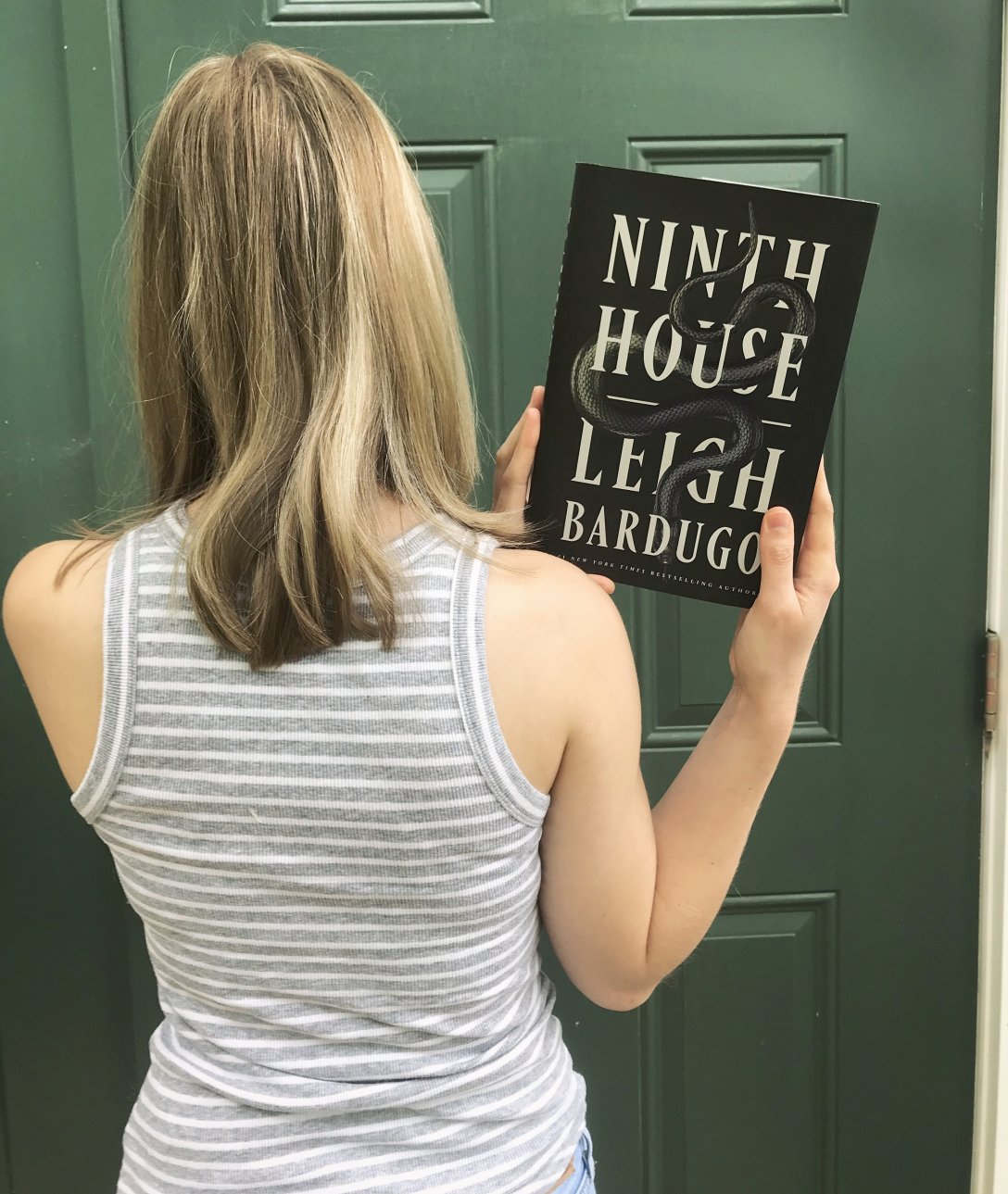
Review: Ninth House by Leigh Bardugo

Alexis:

Ultimately, I enjoyed this book. There’s no such thing as a perfect book, but there were definitely some major things that made me almost not enjoy this book. (Disclaimer: Historically, I haven’t been a fan of dark academia).  

What I wasn’t a huge fan of:

  1. The first 200 pages are basically a giant info dump. I had absolutely no idea what the heck I was reading for a long time, and while I kept charging through, this will definitely turn off a lot of readers right off the bat. In Bardugo’s past books, her worldbuilding usually improves in book two of her series. But Ninth House has alternating timelines, which doesn’t make the beginning any less confusing. A lot of important worldbuilding information wasn’t explained until late into the book, which made this book a bit of a chore to get through.
  2. The plot is fairly slow moving. Because of the info dump beginning, there is a lot of narration and flashbacks. This gets in the way of the actual plot, which picked up around page 300.
  3. I generally enjoy reading dark books, but Ninth House almost verges on being too dark. Basically anything bad that can happen happens. Alex, the main character, had a hard past, but it’s almost too hard, if that makes sense. There’s a lot of violence that happens that’s almost unnecessary; it feels like violence for the sake of violence, as if Bardugo is trying to prove that she can write an adult book.

But the saving graces were:

  1. Darlington. And from what I’ve heard from other people who have read the book, we’re in agreement! He is definitely the shining character; his backstory resonated with me more than Alex’s. He has a great personality, and a charisma that bounces off of the page. And in a book full of morally grey characters, his character was welcoming. 
  2. Bardugo’s actual writing is great. Her dialogue is always on-point. Her characterization is great. Her descriptions are lush and flow well. She’s clearly a smart writer, and her knowledge of Yale really shapes this book. 
  3. The ending. The ending was the best part of the book, and it made me want to read the rest of the series. I have high hopes for the second book! 

If you like dark academia, intense magic systems, and morally gray characters, then give this one a shot! Pro tip: There’s a small index in the back of the book that I recommend checking out before you start reading. If I knew it was there, the beginning definitely would’ve made a little more sense!

VERDICT: ⭐⭐⭐.5 /5

Trigger warnings: Pretty much everything: violence, gore, rape, murder, sexual assault, drug use. If you don’t like dark books, then I don’t recommend this book. 

Review: Race the Sands by Sarah Beth Durst

Alexis:

This is my third five star review in a row. This is so rare for me! Clearly, I did a good job choosing books from the library.

I found Race the Sands to be a complex book, full of politics and magic.

In Becar, everyone is reincarnated based on how you act in your current life. The lowest of the low are reincarnated as kehoks, savage monsters. Tamra is a kehok trainer, trying to save up enough money to fund her daughter’s education. And Raia is a seventeen year old trying to make her own life by becoming a kehok rider. She ends up riding a black, metal lion kehok, and together, Tamra and Raia work hard to win the Races.

Overall, I loved the characters, especially Tamra. This book felt unique from other young adult fantasy books that I’ve read lately.

Durst manages to balance several POV’s very well. I’m not normally a fan of books with more than two different perspectives, but it worked well for this world.

I enjoyed reading about the races, and all of the different kind of kehoks. I enjoyed reading about the augurs, the almost monk-like figures who read other people’s auras to determine how they will be reincarnated. I also enjoyed reading from Dar, the emperor-to-be’s, perspective.

There were only two small apects that I wasn’t a huge fan of, but they didn’t deter me from enjoying the book. The first is that one of the main mystery plot points in the beginning of the book is extremely predictable. Thankfully, the plot got more complicated as the book went on. The second is that a lot of the minor characters felt pretty one dimensional and had similar voices, but because they were the minor characters, it didn’t bother me too much.

While this book is still YA, it felt more adult to me than the average YA fantasy, especially since it features the POV of several adult characters.

If you’re looking for a book with great worldbuilding, strong female characters, racing monsters, and politics, then I recommend giving this one a try.

VERDICT: ⭐⭐⭐⭐⭐

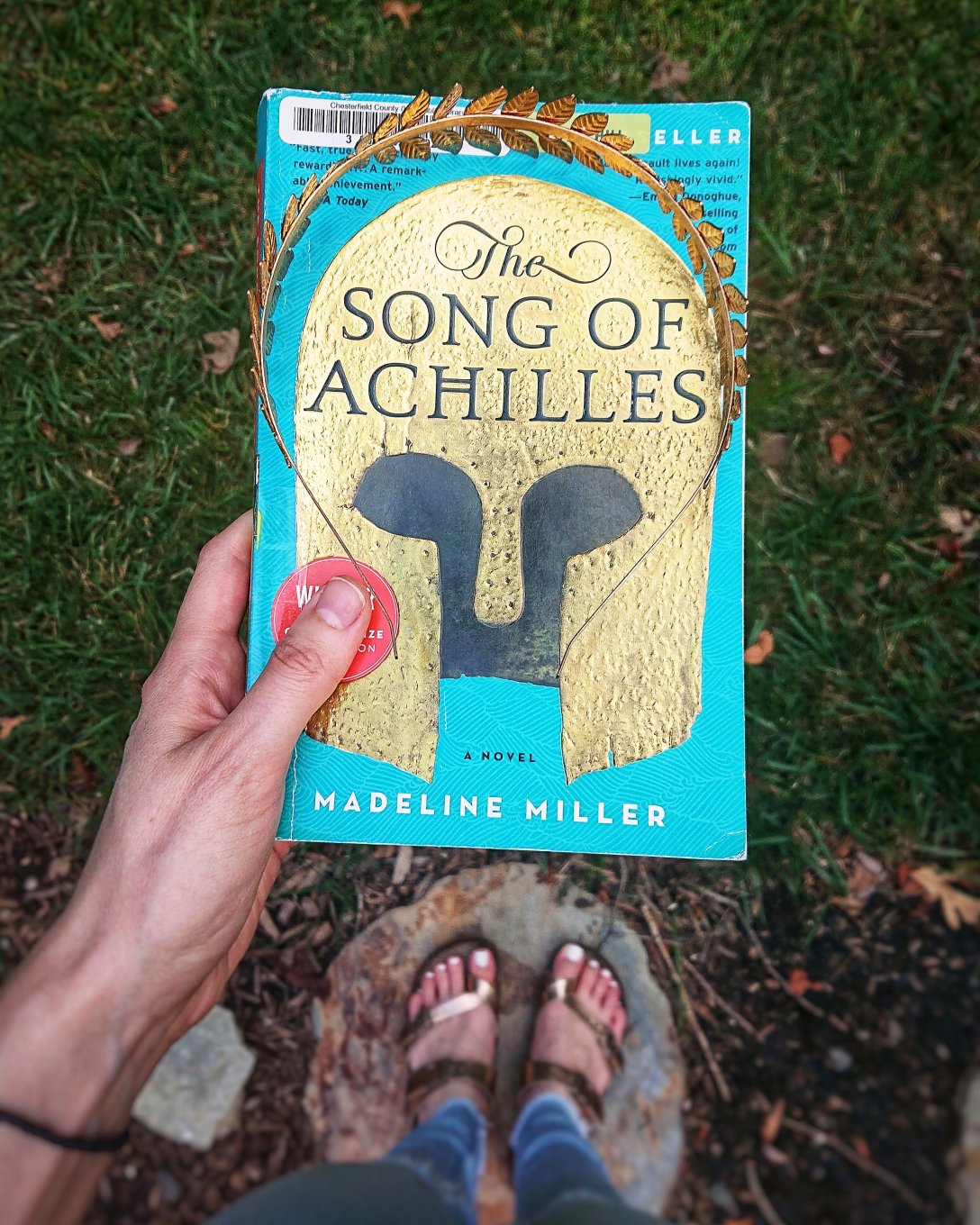
Review: The Song of Achilles by Madeline Miller

Alexis:

What a beautiful love story. Because at the core, this is a love story. Because anyone who knows Greek mythology knows that Patroclus was Achilles’ lover, not “friend.”

Millers’ love for Greek mythology shines in this book. And she knows the ins and outs of it. She captures the Ancient Greek culture and society so well, including the Ancient Greek definition of honor, that I felt like I was being transported back to my three years of Latin class. Everything stays true to Homer, even her creative liberties.

And Miller’s writing is just beautiful, even when it’s brutual; she doesn’t sugarcoat the Trojan War. Even her similes are steeped in the culture, and Patroclus often compares things to olives (which makes my half-Greek self happy!)

I think writing from Patroclus’ POV was a brave choice, but it worked really well for the story as a whole. And I loved how Miller filled in the gaps of he and Achilles’s story. And their relationship is really the shining star of the book. Miller just poured emotion and chemistry and characterization into them.

The only thing that bothered me ***(small spoiler, but really, this story has been around forever) is that Achilles’ heel was taken from the story, and he dies in a different way. I understand why Miller changed it, but I think it’s such an iconic part of Achilles’ story that it felt a little off.

VERDICT: ⭐⭐⭐⭐⭐

Review: The Bone Houses by Emily Lloyd-Jones

Alexis:

The Bone Houses is a historical fantasy novel, which is quickly becoming one of my favorite subgenres. It’s set in medieval Wales, and follows two main characters: Ryn, a gravedigger, and Ellis, a mapmaker.

Due to remnants of lost magic, the dead are rising in the forest neighboring Ryn’s small village of Colbren. She and Ellis, each for their own reasons, team together on a journey to eradicate the undead, known as bone houses.

I loved every page of this book. It was dark and gritty and full of death, but the characters were a joy to read, and the dialogue was great. I love dark books that take small scenes, small moments, to let the characters relax, enjoy themselves, and crack jokes.

This story is about home, family, and loss. I loved learning the stories and Welsh-inspired folklore of the world. I loved that Ryn’s sister’s pet goat became a main character; I’m a sucker for an animal sidekick!

Lately, it’s been a little rare for me to find two characters that I’ve enjoyed reading about and rooting for, but this book was it. And I haven’t read a lot of books lately with a cringeless romance, either. I appreciated the slow-burn romance in this book, and the fact that the characters actually took the time to become close friends first. It was a subplot, and it didn’t get in the way of the main story. It didn’t feel forced in the least!

And, finally, I loved that this story was well-written. Lloyd-Jones’ prose feels almost effortless to read, while also being lush and evocative.

“She was half a wild creature that loved a graveyard, the first taste of misty night air, and the heft of a shovel. She knew how things died. And in her darkest moments, she feared she did not know how to live.”

VERDICT: ☠️☠️☠️☠️☠️/5

Review: Bone Crier’s Moon by Kathryn Purdie

Alexis:

I’ll be honest: this book wasn’t my favorite.

Synopsis: In the Lands of South Galle, Bone Criers are a myth, except to Bastien, whose father was killed by a beautiful woman in white when he was a kid. Bone Criers are young women who must lure their soulmates to them, only to kill them as a sacrifice. This rite of passage allows Bone Criers (or Leuress, as they call themselves) to become Ferriers. Ferriers ferry dead souls to the afterlife. 

Bastien vows to take revenge on the Bone Criers, only for him to end up as the soulmate to the same Bone Crier he’s trying to kill. Ailesse is trying to complete her rite of passage in order to one day become the matriarch when she becomes entangled with Bastien, even though she knows she’s destined to kill him.

The plot becomes more complicated from there, but the story is told from three different points of view: Bastien, Ailesse, and Sabine, Ailesse’s best friend.

I found the overall world and the fantasy worldbuilding really intriguing, and the idea of the Bone Criers— and their rites of passage, and the idea of grace bones (bones that the Bone Criers take from wild animals, which grant them certain abilities)—was awesome. The mythology, the lore, and the history, all based off of France, was interesting, and I appreciated the originality. 

Normally, I’m not a fan of more than two POV shifts, but I actually think Purdie did a great job.

There were three main aspects of this book that put me off. 

One: I had a hard time rooting for the characters. Bastien and Ailesse just weren’t interesting to me, and even though I knew their backstories and motivations, I didn’t really click with either character. They felt a little flat, and a lot of the secondary characters also fell flat.

That being said, Sabine was my favorite character. She had the most emotion, and she had the best character arc. 

Two: The romance felt forced. Obviously with the doomed soulmate storyline there was going to be some sort of forced romance, but my point is, there weren’t any real reasons for Bastien and Aliesse to fall for each other outside of: Oh, I think she’s hot. Oh, I think he’s hot. I didn’t think the chemistry was there.

Three: Even with the mythology and the in-depth look at the Bone Criers, I still found myself a little confused hundreds of pages in. I felt like some aspects of the Bone Criers were left unexplained, and so a lot of Ailesse’s solutions to problems felt like they came out of nowhere to me. I often found myself thinking: How does she know that will work? Overall, I thought the plot was good, but Ailesse and Marcel’s deductions just felt off to me. 

On top of that, Purdie’s writing wasn’t my favorite. Sometimes the dialogue felt a little too cheesy and predictable, and it took me about 100 pages in for me to start caring about the story.

Overall, this was just an okay read for me. 

VERDICT: 🌙🌙 and ½ moons /5