Review: Caraval by Stephanie Garber

Alexis: Read 3/2/19

Unfortunately, I found Caraval so much worse than The Night Circus. I know a lot of comparisons have been drawn between the two books, so I thought I would give you my own.

The Night Circus is beautifully written, with lush and lyrical descriptions, but is very slow moving and has a sparse plot. I can’t say the same thing about Caraval’s writing. It felt middle-grade (and not in a creative way) and cliché. However, it is fast-paced and there is a layered plot. Both books have insta-love, though I have to say the relationship in Caraval actually felt more convincing.

So let’s delve more into Garber’s writing. Throughout the book, she relies on one particular, peculiar type of metaphor: the insert color was insert emotion. Here’s an example: “…a blaze of shimmery gold, the color of magic and wishes and promises of things to come” (14). Here’s another: “A ruby welt bloomed across his cheek. The color of rage and punishment” (45). Here’s a third: “…a rich cerise—the color of seduction and secrets” (660).

I usually love repetition, whether in motifs, anaphora, etc. But the repetition of these metaphors drove me crazy. They’re cliché and terrible and made me say “really??” out loud too many times. And none of them even made sense!

Another thing that drove me crazy was that half of the plot was predictable. You know from the beginning that Scarlett is going to get together with Julian. There was only one plot point towards the end that I didn’t see coming.

As for the characters, I only liked Julian, but only because he’s the only character with somewhat of an interesting personality. He’s your classic “dark and handsome but is he good or bad?” type of guy with Edward-Twilight caramel eyes: “light brown, the color of caramel and liquid amber lust” (172). The descriptions of him were super cringey.

I found Scarlett to be too whiny and annoying, and Donatella wasn’t much better. Even their names seemed to get in the way of the story; it was as if their names drew too much attention from it. It doesn’t help that Scarlett’s name is also a color, so her name is thrown around with all of the cringey color metaphors. One of the characters even says of Scarlett, “You’re so dramatic, you would’ve made a fantastic performer” (308). And god, was he right.

The dialogue doesn’t have any subtext. I absolutely hated that Governor Dragna is described as dragon-like. And I could’ve cared less about the plot of this book.

I think the one word that sums up this book is cringeworthy. I really wanted to like it, I enjoyed how the book opened up with letters, and I initially though Garber’s worldbuilding was good (in the first 10 pages). But this obviously wasn’t the book for me.

VERDICT: 1 and ½ out of 5 books

Review: Ruin and Rising by Leigh Bardugo

Alexis: Read 2/20/19

Ruin and Rising was certainly the best book of the Shadow and Bone Trilogy. I disliked Alina’s character in the first two books, and I felt like she became a more complex character in this one. Additionally, Mal had zero personality in the first two books, and he felt more real to me in Ruin and Rising, as well.

Everyone can agree with me here: Nikolai is still the most vibrant character. He has a sparkling personality and he knows what he wants. He echoes the beginning of Bardugo’s masterfully crafted characters in the Six of Crows series.

As for the plot, I feel like the first half of the book meanders. There’s a whole host of secondary characters that I didn’t really care about, except for Genya.

And time for an unpopular opinion: I don’t like the Darkling. He’s creepy, manipulative, and honestly rapey. His beauty doesn’t make up for that.

SPOILERS BELOW:

Okay, so I really enjoyed the plot twists in the second half of the book. Mal being the third amplifier? Nikolai getting turned into a monster? I didn’t see either of those coming, and it made the book more exciting!

The ending felt very Hunger Games to me: boy and girl get together and live a nice, normal life together, where they can grieve together forever. I honestly didn’t mind the ending, as I think it was the happiest ending for Alina and Mal. But Alina losing her power was anticlimactic and confusing. It felt unnecessary. Plus, she had such a good character arc by Ruin and Rising that I felt it was unfair for her to return to how she was in the beginning of the series.

Despite some of my issues with this book, I really enjoy the Grishaverse and I couldn’t put this book down. I enjoyed seeing Bardugo’s writing style evolve!

VERDICT: 4 out of 5 books

Review: My Absolute Darling by Gabriel Tallent

Anna: I’m finding this book very difficult to review. I love how detail-oriented the writing is and how Turtle’s internal dialogue dominates and drive the narrative. However, this book is hard to get through because of the horrific violence.

This is a survival/escape story. Strong warning for sexual, emotional, and physical abuse.

Tallent does a great job of building Turtle as a character, and we see her grow throughout the book. Turtles self-deprecating internal dialogue is really unique and shows the true impact of her dad’s abuse.

Turtle slowly realizes the extent of her father’s abuse. Part of what makes her realize she needs to leave is when she gets her period and therefore realizes she can get pregnant. She also helps realize that she needs to leave through her relationships with other characters, as she was isolated from other people for so long. Her romantic relationship with Jason is obviously a big part of this, too.

I like how Turtle ultimately defeated/escaped Martin with a skill that he taught her, i.e. shooting. It’s also her final revenge for so many things that he forced her to do, like making her shoot Cayenne. This showdown in also foreshadowed in the way that Turtle takes meticulous care of her gun and her knife, while Martin is so careless with his. It feels like Turtle finally takes ownership of herself. It feels full-circle.

I liked the ending. The fact that Turtle can’t even think about progressing in her relationship with Jason is realistic and I’m so glad Tallent ended it that way. I wouldn’t have believed it if they’d had a fairytale ending and if Turtle could automatically express her love for him. This also shows, like with the last scene with Anna and Turtle, that it’s going to take time for Turtle to recover from what’s happened to her, and that she never completely will.

Here’s what I had problems with:

There are lots of moments when it’s very apparent that the author is an adult male writing about prepubescent female anatomy, which honestly creeps me out. The way Turtle gets her first period IS NOT REALISTIC AT ALL. I thought she was having a miscarriage! There are so many scenes that are so cringy and obviously written by someone who does not possess female anatomy.

What in the world happened with the ocean, when Turtle and Jason got sucked out to sea? That scene is so abrupt and confusing that I had no idea what was happening, and I actually thought they were getting caught in a tsunami! Though I see the merit of stranding Turtle and Jason together on a cliff to grow their relationship, I still found this whole scene unnecessary and distracting (and not to mention so confusing). We know Turtle is tough and can survive in the wild and we don’t need to see it again here. I think a quieter bonding scene between Turtle and Jason would have been more effective.

I think there needed to be more Anna and Caroline. Both these women are presented as mother figures, yet they’re hardly developed. Anna’s character especially isn’t believable. As soon as she was introduced as the caring teacher I knew she would be the savior in the end. But then she’s hardly in the rest of the book, and she doesn’t even try to do anything when Turtle just disappears from school!

I wanted more about what happened to Turtle’s mom as well as more about the general past. For instance, Martin kept referring to another time when Turtle ran away, but we never get to see it as a reader. We’re told that Turtle’s mom killed herself to escape from Martin’s abuse, but that’s it. That’s also why I didn’t believe the bits about Caroline. If she was so close to Turtle’s mom, she had to have suspected something!

Mostly glaringly, there are bits of this book that feel violent for the sake of being violent. I think there’s a fine line between showing how something really is to bring light to an issue and exploiting it. Though Martin is clearly an awful person, this book sometime toed that line. Everything is shown to the reader, and it’s horrifying.

While I found I couldn’t put this down, there were aspects of this book that are so repelling and misguided that I can’t stand behind the book as a whole. I would love to hear other opinions from people who have read this!

VERDICT: 3 stars

Review: Shadow and Bone; Siege and Storm by Leigh Bardugo

Alexis:

I’ve dedicated this past week to reading the first two books in the Shadow and Bone Trilogy, and hopefully I can get the last book from the library next week!

I read the Six of Crows Duology last year and I absolutely loved it, so I was looking forward to reading the first books in Bardugo’s Grishaverse.

I seem to agree with everyone else (at least on Goodreads) that the second book in the trilogy is better than the first. I was surprised to find that the first book relied on some tropes, the most prevalent of which is the love triangle. However, I thought that Shadow and Bone did a great job when it came to worldbuilding and introducing the Grisha’s powers. 

The second book’s plot is much more intricate than the first. It honestly reminds me of The Hunger Games. Politics come into play, and Alina starts to become a powerful symbol of hope. I enjoyed the new characters that were introduced, but I felt like Mal’s character wasn’t as strong as he was in the first book. However, Bardugo’s keen sense of humor comes out more in the second book.

Minor spoilers below:

One of the biggest issues I have with the two books is the way that male characters interact with Alina, which, unfortunately, only gets worse in Siege and Storm. Multiple male characters touch and kiss Alina without her consent, and the way the Darkling interacts with her makes me sick. In Siege and Storm, no one respects that Alina and Mal are in a relationship, and she gets kissed and even gets marriage proposals. I understood all of this happens for plot reasons, but here Alina is, in a different love triangle than in the first book, and she even enjoys the attention from Nikolai.

I feel like I say this in every review, but despite my issues with the books, I did enjoy reading them. I love the Grishaverse and I’m interested to see where the third book goes. I just can’t help comparing this series to the Six of Crows Duology. It’s interesting to see how much Bardugo’s writing has evolved.

Shadow and Bone: 3 out of 5 books

Siege and Storm: 4 out of 5 stars

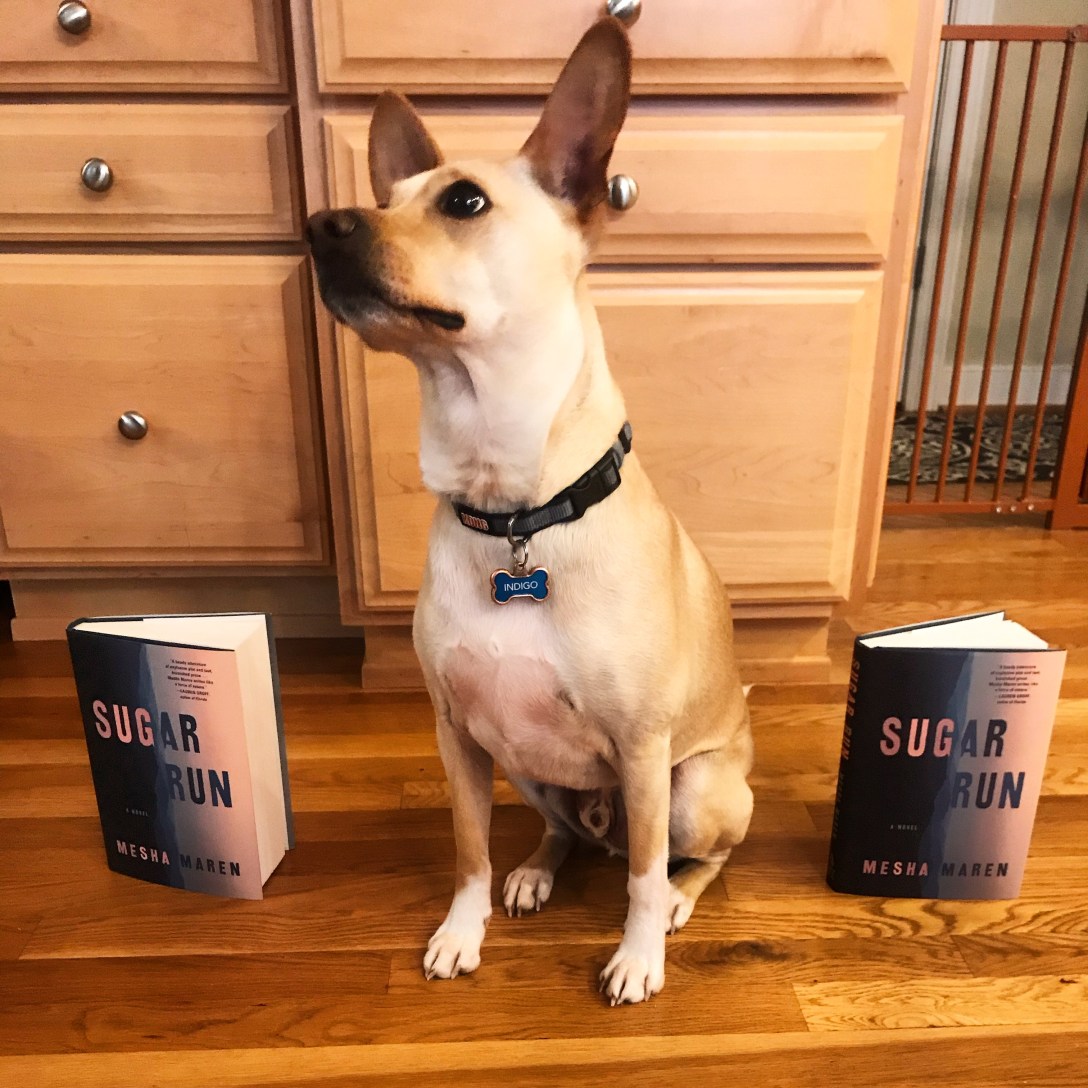
Review: Sugar Run by Mesha Maren

This review is spoiler-free and from both of us!

There is a dog in this book, so that’s our excuse for featuring a very confused Indy in this.

Alexis:

I’m thankful I had the opportunity to hear Mesha Maren discuss her book, because I feel like I really understood her vision. In Sugar Run, Jodi, the main character, is just released from prison, where she served eighteen years. She enters into a relationship with a young mother named Miranda, and their lives become tangled together. It’s a story of hope and hopelessness.

I love Maren’s lyrical writing style. Her writing has such a hard realness to it. She writes lush descriptions as she paints life in West Virginia. As Maren discussed in her talk, her book is hard to categorize. It’s a noir, crime, Southern Literature, and LGBTQ novel. But this is one of the great things about it: it’s a collage of genres, and it works.

This is a dark book that deals with vices to the max. It deals with crime, murder, sex, and lots of drugs. All of the characters are flawed, and make really bad decisions, yet I cared about them. The first half of the book is more character driven, while the second half is more plot heavy. The chapters alternate between the present (written in past tense) and the past (written in present tense) which I thought worked really well.

VERDICT: 4 out of 5 books


Anna:

Like Alexis, I’m so happy we had the opportunity to meet Maren at the Fountain Bookstore here in Richmond. Hearing an author discuss her book and writing process always enriches my understanding of it as a reader. The way Maren described her characters before I’d read about them made me more invested as a reader.

Maren’s writing is exactly what I love about literary fiction, even though, as Alexis said, this is a blend of genres. It is so dark and violent, but it is beautifully and breathtakingly written and full of nature imagery. The characters are well drawn out and real.

The violence in the lives of all the characters contrast so starkly with Jodi’s obsession with the rural landscape of her homeland. Her love of West Virginia mirrors themes of stability and nostalgia in Jodi’s life. It also offers commentary on the ways humans inflict violence on the earth, as the horrors of fracking is something frequently discussed.

The ending of books is something I’m constantly disappointed by, and, happily, this was not the case with Sugar Run! I thought the conclusion of both the interwoven timelines is so well done, and, most importantly, believable. Maren’s pacing is perfection.

During her talk, Maren touched a bit on the book she’s writing next, and you can bet I’ll be picking that up when that comes out!

VERDICT: 4 out of 5 books

Review: The Lie Tree by Frances Hardinge

Alexis: Read 2/4/19

“There was a hunger in her, and girls were not supposed to be hungry. They were supposed to nibble sparingly when at table, and their minds were supposed to be satisfied with a slim diet too.”

The Lie Tree is both about revenge and finding yourself. It manages to be a murder mystery book while exploring themes of science vs. religion, paleontology, family, and, of course, lies.

The book follows Faith, the 14-year-old daughter of a reverend/scientist, who moves to an island with her family. Throughout the story, she struggles with being a complacent girl in 19th century England while battling her desire to be seen and heard as a person with a brain and scientific ambitions. This was my favorite part of the book. I loved reading about Faith’s navigation through 19th century society and ideals. I felt and understood her frustrations as she dealt with being called useless. I also appreciated that Hardinge explored how her petticoats and corset always got in the way; it just felt very real to me. And, as the book progressed, I loved reading about her showing off her cleverness and proving to her mother, and the men in the book, what she can do.

Faith’s character was a little hard for me to like. I rooted for her to win, even through her ill-fated motives and her willingness to lie. I thought that the unlikability of the characters served the dark nature of the story and the Lie Tree well. However, at times, I found the story hard to get through because of this, and also because the plot was a little slow. Despite this, Hardinge is still a poetic writer and I enjoyed her descriptions and the murder mystery storyline.

VERDICT: 3 ½ out of 5 books

Review: Long Live the Tribe of Fatherless Girls by T Kira Madden

Anna:

I’m excited to share my first 5 star read of the year! T Kira Madden’s memoir is a heartbreaking and beautiful account of growing up in Boca Raton—or Rat’s Mouth— of Florida. It’s so raw and emotional, and not to mention lyrically written, that it’s both hard to read yet impossible to put down. My inability to stop reading, despite the contestant pretense of bleak topics, is something I love about Madden’s writing. She truly has a talent in making the bad beautiful in her writing without diminishing the severity and impact of the bad.

This book comes with a trigger warning for just about everything. A lot of this book deals with drug abuse, alcohol abuse, physical abuse, child pornography and sexual abuse, and basically every kind of abuse you can think of.

Something I really like about this memoir is the cyclical nature of it, which is something I find quite annoying in some memoirs, but that isn’t the case here. Madden never “harps” on certain details or asks the reader to feel bad for her in any way. It is her blunt and rich writing that earned my sympathy and trust.

Something else that stood out to me is Madden’s tremendous ability to forgive, especially in the case of her family and her parents. This lack of anger and blame, despite the difficulties she has experienced, is what has resonated with me the most since finishing this memoir.

Long Live the Tribe of Fatherless Girls will be published March 5, 2019 in the U.S. I can’t wait for more people to read this!

VERDICT: 5 out of 5 books


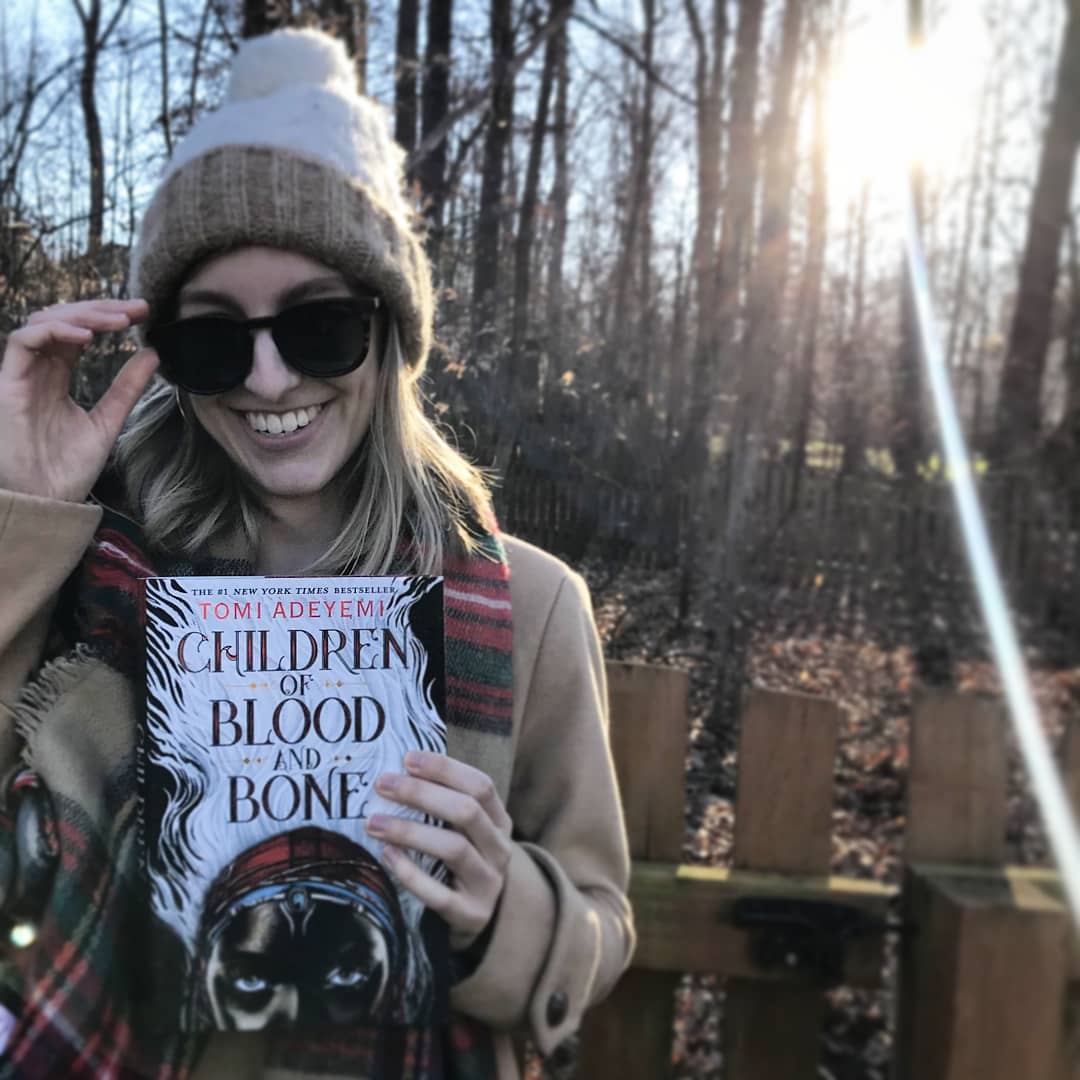
Review: Children of Blood and Bone by Tomi Adeyemi

Alexis: Read 1/9/19

Children of Blood and Bone, despite being a thick book, is super fast-paced. The plot is always moving, which I appreciated as I read. Adeyemi does a good job of explaining how the magic system works, and I enjoyed learning about all the gods and the maji’s connections to them. Sometimes multiple perspectives can be hard to pull off, but I really enjoyed reading from all the different perspectives, and the shifts never pulled me out of the book.

As for the characters, I’ll be honest: I’m not a huge fan of Zélie. She sometimes felt like a Katniss Everdeen character. However, I connected more with her as the book went on. I enjoyed Inan’s character until about halfway through the book. As for Amari and Tzain, I always enjoyed reading from their points of view. At times, the plot was a bit predictable, but not enough that I didn’t continue to enjoy reading the story. There was a love-at-first-sight storyline, and though I normally hate this YA trope, I thought Adeyemi used it to her advantage.

About a quarter way through this book, I realized something: parts of this book mirror Avatar: The Last Airbender.

Zélie is very similar to Katara. When she is young, her mother is killed in a raid because she possessed magical powers. Zélie possesses these same powers and she grows up wanting revenge. She has an older, non-magical brother, Tzain, who just wants to protect her. Zélie meets an Aang-like character, Amari: a girl who was trained how to fight from an early age, but who needs to learn to get past her peaceful side.

Amari’s older brother, Inan, the prince, has a good heart but is misguided. He wants his father’s approval but he has to betray those he loves in order to achieve it, just like Zuko. The father is definitely a Fire Lord Ozai type of character.

There is a temple “made of air” which connects maji to their gods. This temple was mostly destroyed in a raid in which a genocide happened.   

Despite these similarities, Children of Blood and Bone is an original book. I I loved the diversity and the magic based on Nigerian mythology. I also admired Adeyemi’s creativity—the characters ride on giant, horned lions and leopards, called lionaires and snow leoponaires.

Overall, this book was wholly engrossing and I had a hard time putting it down. And for that reason I can’t rate it any less than 5 books. I’m excited for the sequel!

VERDICT: 5 books

Review: The Tea Girl of Hummingbird Lane by Lisa See

Alexis: Read 5/11/18

“‘Tea reminds us to slow down and escape the pressures of modern life,’ he says. ”

There are some rare books out there that I just know I’ll love, and this was one of them. Okay, maybe I read it because I love tea and the reviews were good. But what other reasons do I need?

The Tea Girl of Hummingbird Lane ended up being my top book of 2018!

The section part of the book is a fascinating, and sometimes disturbing (let’s just say I’m a twin) detailed exploration of the Akha people and their way of life. The middle is a little slower paced, but it masterfully meshes Li-yan’s Akha culture with the modern way of life in China. The last section explores Li-yan’s new life and Haley’s life in California. Haley’s life is revealed through documents, letters, and essays.

See manages to weave an epic story while also exploring China’s history, the history of tea, and what it means to be Chinese and Chinese American. She handles each of her characters with care (in their characterization, that is; they all go through some incredibly tough situations). The only character that felt out of place was Ci-teh later in the book, though I understand why she turned out the way she did.

Overall, The Tea Girl of Hummingbird Lane is a beautifully written story, the core of which focuses on the relationship between mother and daughter, and the promise of finding one another again.

Review: The Wildlands by Abby Geni

Alexis: Read 1/4/19

I’m not too fond of prologues, but I found the prologue of The Wildlands to be the perfect introduction to the book. It describes, in detail, Cora’s first memory: the category 5 tornado which destroyed her childhood home and left her, and her siblings, an orphan. I loved Geni’s descriptions from the start. When Cora looks outside before the tornado strikes, the sky has turned green: “…I glanced out the window and saw the Oklahoma sky soaked with a new color. Damp jade. Split pea soup. Moss on stone.”

I was involved in each character’s storyline, especially Cora and Darlene’s, but also Roy’s and even Tucker’s, despite his violence. Geni captures emotions well, whether through her character descriptions or the descriptions of the harsh and barren Oklahoma landscape. She paints a picture of loss, poverty, and family. Many scenes in this book are vividly dark and disturbing, and Geni does a good job of showing how they affect Cora both psychologically and physically. Geni’s writing style mimics the sense of loss that follows the characters throughout the book. Despite the plot, The Wildlands is more of a character-driven story.

Cora’s relationship with her sisters feels raw, real, and appropriate for a nine-year-old. Her relationship with Tucker, however, is borderline obsessive. I couldn’t blame Cora for this, considering her painful childhood, but it was still disturbing at times.

I’m an animal lover, and I found Tucker’s theories about animals and mass extinction interesting yet terrifying. Seeing his thought process was an interesting insight in how someone’s interests can turn into a dangerous and radical obsession. The scenes with the animals towards the end of the book are surreal and poetic.

I understand why Geni includes the epilogue, but I felt like it was unnecessary. The book ended on the right note, but the epilogue drew away from it.

All in all, this was a well-written and thought-provoking read.

VERDICT: 4 and ½ out of 5 books