Review: The Book of Dreams by Nina George

Alexis:

The Book of Dreams is a thought-provoking and profound read. It follows four different characters from three different perspectives; Henri, a man who feels he is undeserving of love, who saves a girl from drowning but gets hit by a car and slips into a coma; Sam, his teenage son, who he’s unwillingly never met; Eddie, Henri’s ex-girlfriend and the love of his life; and Madelyn, a twelve-year-old coma patient who we see through the eyes of the other characters.

Though this isn’t classified as magical realism, aspects of it feel very magical realism. The book blurs the line between dream and reality. I won’t explain it any further than that, because I feel it’s best to read this book with fresh eyes.

George explores the cyclicality of life and death, and what it means to straddle the not-so-straight line between the two. She explores love, grief, and regret. Sometimes translations don’t do a book justice, but I found that Simon Pare did a beautiful job. The writing flows really well and George’s descriptions are beautiful and unique. 

This is a very character-driven story. It focuses on the experiences, relationships, and emotions of its three main characters as they navigate life around Henri’s coma. I loved all of the characters and was interested in all of their lives.

Another aspect I love about this book is Sam’s synesthesia: he sees color for numbers, emotions, etc. I loved his character and found his synesthesia added a lot of color (ha) to the story, though I felt like it could’ve been cranked up a notch because I found it so fascinating!

I think the ending of this book is polarizing, but I thought the ending worked well for the book as a whole; George even mentions in her afterword that this book was not intended to be “market friendly.” But I found this book deep, moving, and true to itself.

If you’re looking for a beautifully written book that intensely focuses on its characters and explores the boundaries between life and death, then I highly recommend it.

VERDICT: 5 stars
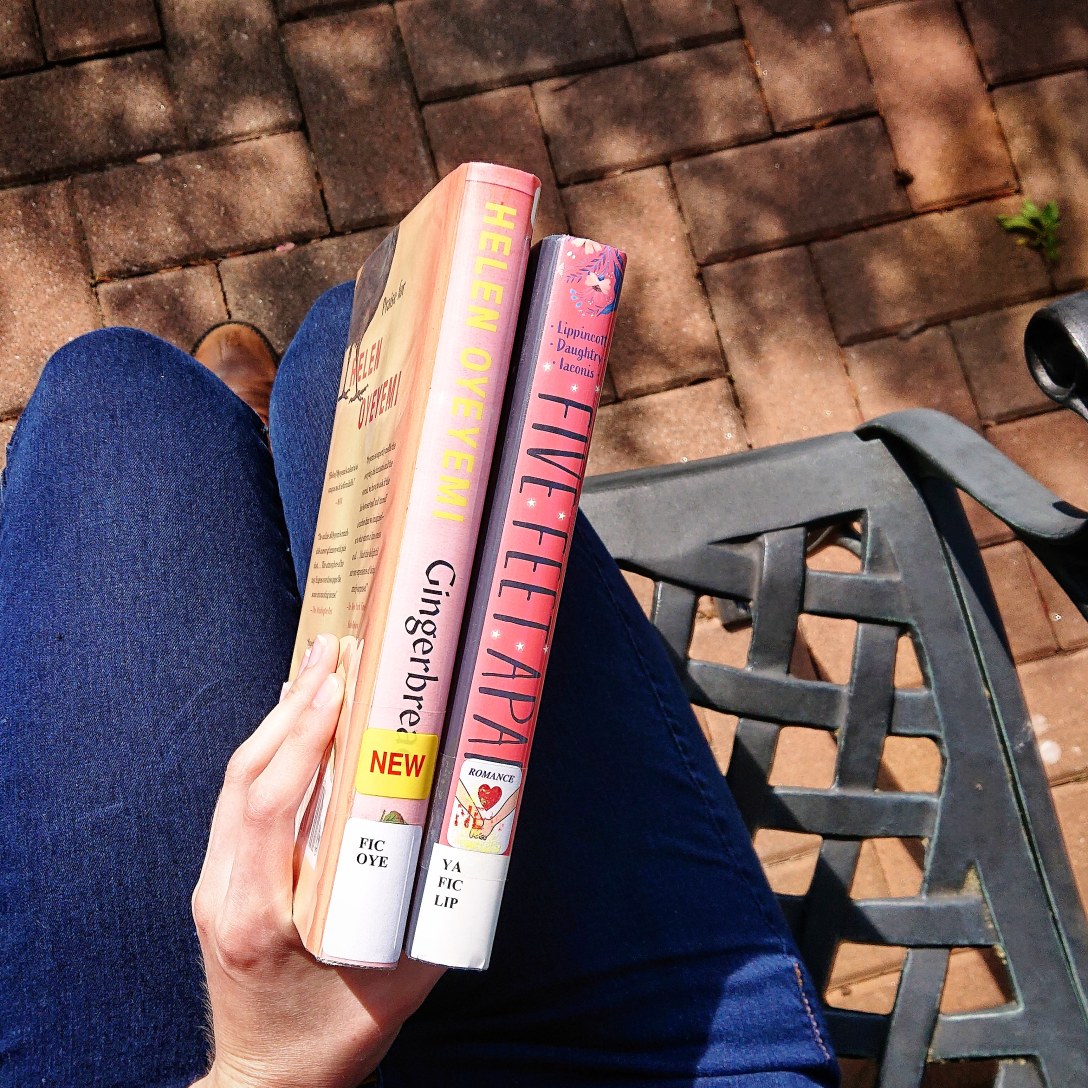
Alexis’ April Library Haul

Alexis: Happy Friday, everyone!

Yesterday, I got an email that two of my requested library book were ready to be picked up: Five Feet Apart by Rachael Lippincott, Mikki Daughtry, and Tobias Iaconis, and Gingerbread by Helen Oyeyemi.

These are two of my most highly-anticipated reads, and I waited over a month for them.

I sat down and binged all of Five Feet Apart yesterday, so look out for a review tomorrow.

I can’t wait to dig into Gingerbread, because I have a feeling I’m going to love it!

Used Bookstore Haul

Alexis:

A bookstore where everything is $3 or under? Yes, please! I picked up four books, the max I should probably put in my suitcase, from Lucky Dog Books in Dallas, Texas. My boyfriend, who reads nonfiction/business books, found 5 books!

  1. On Gold Mountain by Lisa See
  2. Cruel Beauty by Rosamund Hodge
  3. Water Wings by Kristen den Hartog
  4. Rose’s Garden by Carrie Brown

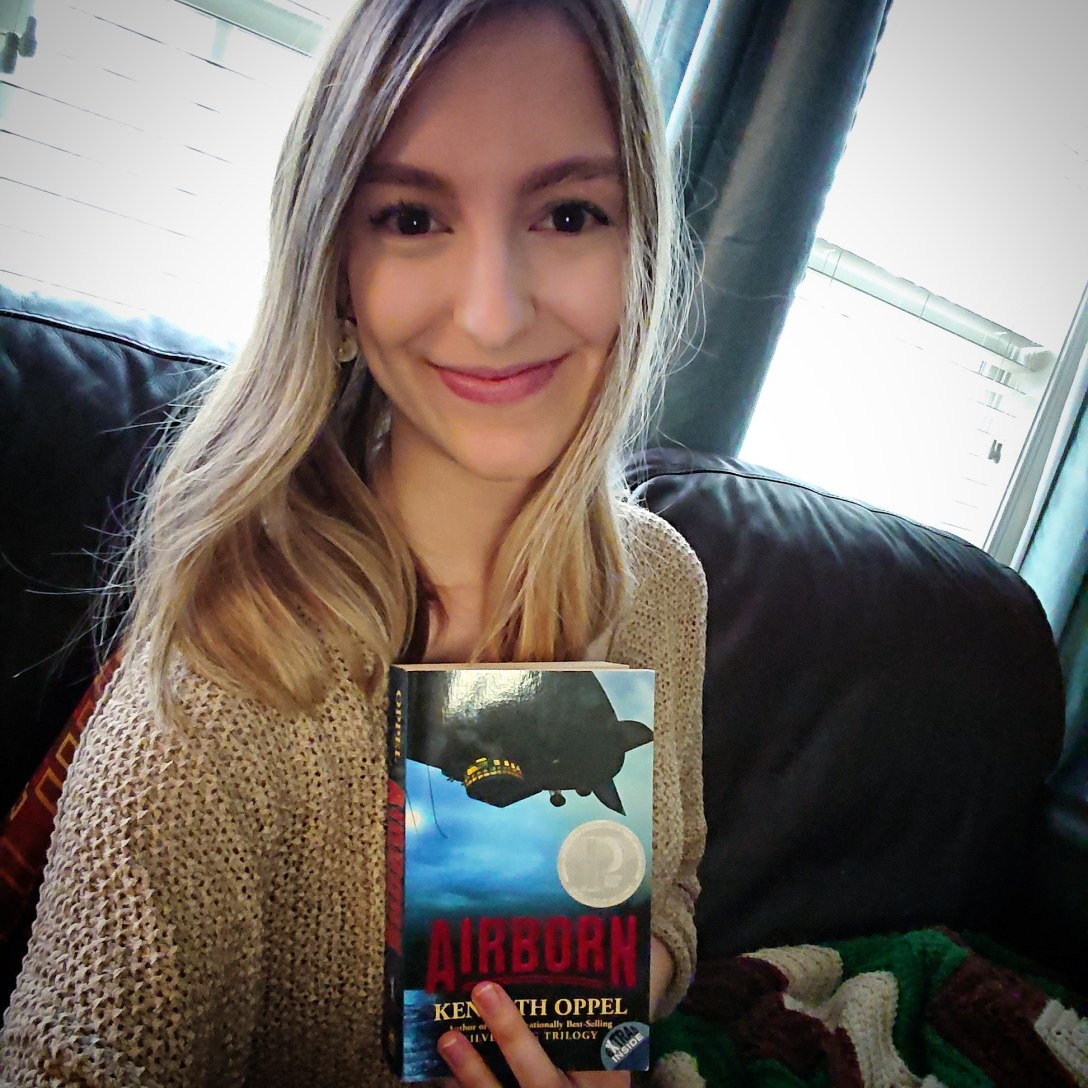
Currently Reading/Review: Airborn by Kenneth Oppel

Alexis:

When I was a pre-teen or teen, the Matt Cruse trilogy was one of my favorite series. Airborn, the first in the series, is a YA adventure with a Titanic vibe and an undercurrent of zoology, set in an early 1900’s alternate reality where airships are the primary mode of transportation. I know, interesting, right?

As I re-read this, I remember how much I enjoyed the story and the characters. Lately, about 90% of the books I’ve been reading have been from a female POV, and this is a good change of pace. Airborn is from the POV of Matt, a 15-year-old cabin boy of the airship Aurora. The story follows Matt on his adventures with a girl he meets named Kate as they try to track down a mysterious winged creature mentioned in a journal of a dying ballooinst. I really enjoy both Matt’s character and POV, as well as Kate’s curious and spunky character. 

This story is pure action-adventure, complete with pirates and a surivival storyline. I recommend reading the other two books in the series, as well. The series only becomes more interesting as the characters grow older and space travel gets involved!

VERDICT: 5/5

Alexis’ April tbr Stack

🌺Alexis’ April #tbr stack🌺

Did March fly by for anyone else? I kind of wanted winter to be longer; I’m not ready for all this pollen.

FYI: All of these books are secondhand!

  1. Airborn by Kenneth Oppel
  2. Better Than Fiction, Edited by Don George
  3. Idlewild by Nick Sagan
  4. A Court of Thorns and Roses by Sarah J. Maas

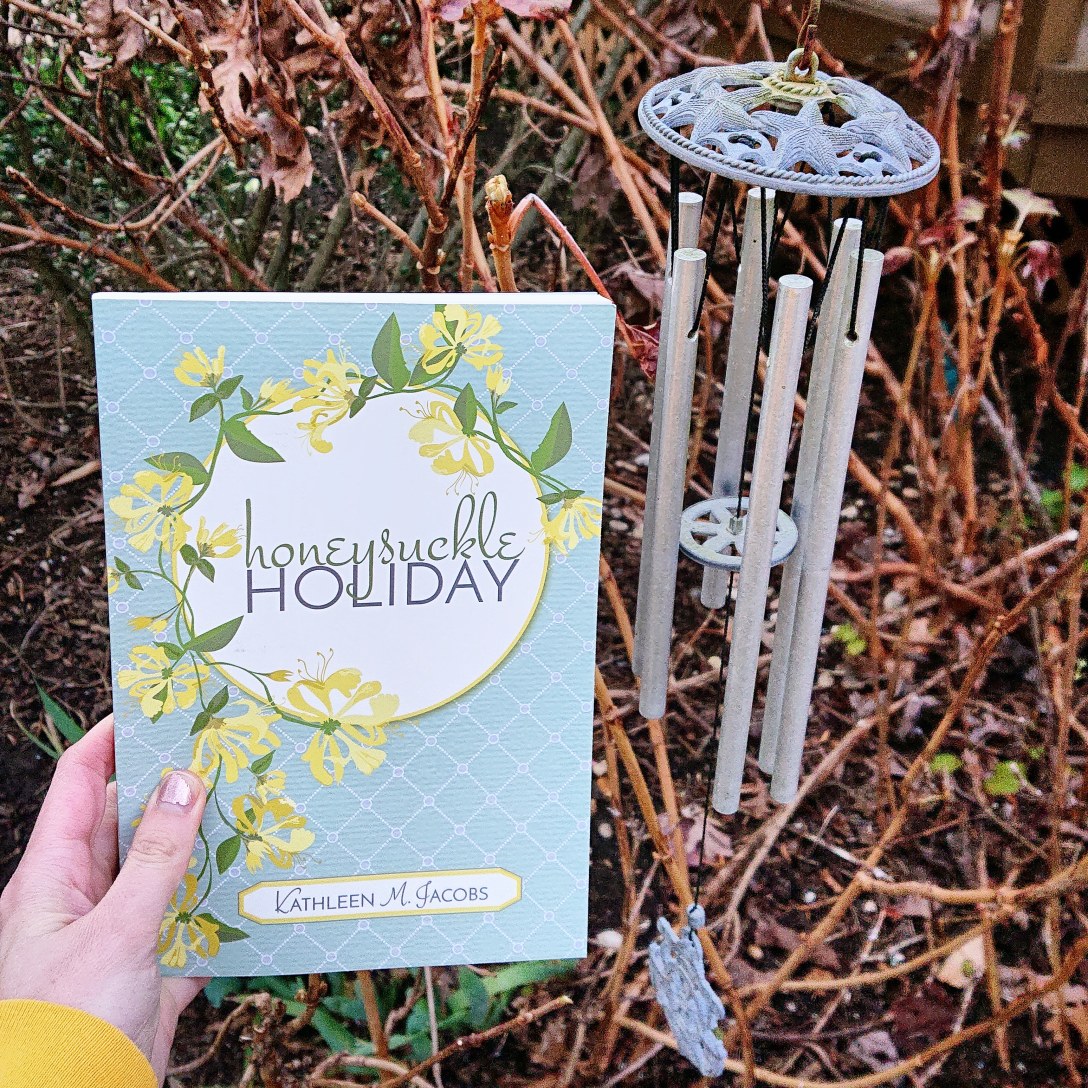
Review: Honeysuckle Holiday by Kathleen M. Jacobs

Alexis: Read 3/11/19

*The author sent me a copy of her book in exchange for an honest review.*

Honeysuckle Holiday was such a poignant read. Don’t let the cover fool you: this short book tackles childhood innocence and racism.

The story follows Lucy in two different time periods: 1965 and 1970, when she was twelve and sixteen-years-old. Though Honeysuckle Holiday is categorized as YA, I would describe it more as a bildungsroman/coming-of-age story. When Lucy’s father leaves, not looking back, on Christmas Day, she and her older sister, Caroline, try not to dwell on it too much. But she knows something has changed when her mother refuses to talk about him and when they have to move into a different house.

In her acknowledgements, Jacobs quotes a woman named Peggy Fox: ‘“You captured the voice of a twelve-year-old girl very well.’” And she’s right. Jacobs’ writing flows beautifully, but I was very aware that I was reading in the perspective of a twelve-year-old.

Lucy notices everything around her. She relates things to her Barbie dolls, which she admits she’s starting to outgrow. She is jealous of some of Caroline’s things but also wants to be like Caroline when she grows up. She partly knows why her dad left but is partly left in the dark. She’s curious about the world around her and asks lots of questions. Jacobs’ detailed descriptions mimic Lucy’s curious mind. I also like how she includes a lot of parenthetical phrases, as Lucy has a lot of afterthoughts.

I love all of the references Jacobs includes in her book. Lucy’s mother wears Chanel No. 5. Lucy uses a Velveeta box to hold her collection of found objects. The characters reference It’s A Wonderful Life, The Beatles, and TV shows of the time. These references cemented the story into its setting and time period, bringing it to life.

Lucy mentions To Kill a Mockingbird multiple times, and even relates herself to Scout. I found this fitting, as the story reminded me a lot of To Kill a Mockingbird. Both are told from a young perspective, but are really told for a more mature audience. Both deal with racial tensions and divides, as well as the horror of the KKK. I loved Jacobs’ inclusion of descriptions of food. The book is set in the South, and I enjoyed reading about Lila’s apple pies, okra, and Lucy’s love of steak.

While I liked how Lucy describes the honeysuckle vines ( as well as the smell) outside of her window, I don’t think the title of the story sums it up very well. Though the story itself was impactful, the title was not. To me, the honeysuckle symbolizes Lucy’s childhood innocence, and the book is about coming-of-age and losing that behind. I’m also not sure why the first couple of chapters are in Caroline’s POV.

Overall, if you’re looking for a quick read that’s packed with vivid details, that will draw you into the 60’s and 70’s, and whose message will stay with you, then I definitely recommend it.

VERDICT: 4 out of 5 books

Review: The Afterlives by Thomas Pierce

Alexis: Read 3/7/19

This book had an interesting premise, so why not check it out? After a cardiac arrest episode that leaves him legally dead, Jim Byrd lives with a device called the HeartNet. The HeartNet will continue to pump his heart if another cardiac arrest occurs. But now Jim is faced with his own mortality, and can’t help thinking about the afterlife. He and his new wife, Annie, try to figure out the afterlife by attending a new church called the Church of Search, by ghost hunting, and by tracking down a woman who claims she has a machine that will allow you to talk to the dead.

The story is in first person, told by Jim himself. But snippets of the past intersect his story. These snippets are in third person, following a cast of characters who lived in an old house, which is now a haunted restaurant. Jim and Annie aren’t sure why the house is haunted, though one of the house’s former owners, Clara, had a dog who died in a fire. I really liked these snippets into the past and thought it was an interesting choice to include them in the story.

I also really enjoyed Pierce’s writing style. His writing is conversational, and his sentences all have a pleasing cadence. Every character is a round character, with their own idiosyncrasies and passions and opinions on the afterlife.

The book has a small frame that mimics stage directions of a play. I found this fitting, as Annie is a playwright:

“Exit heartbeat. / Exit breath. / Exit every mood, every memory. / Exit you. / To where” (3)?

I enjoyed the sections about the ghost hunt, the machine, and Jim’s musings on life and death, which includes heart worries and panic attacks. There wasn’t much of a plot, and a lot of the middle section was spent on interactions with minor characters and minor plot points. Most of the book almost felt like a memoir or character study of Jim’s life. I enjoyed the beginning and the end, but I felt like 100 pages could’ve been cut out of this book and it would’ve made it more impactful.

The book also takes on a sci-fi edge, with the machine and the inclusion of holograms becoming a part of normal life. The book stretches over decades of Jim’s life, including decades into the future, but I found the holograms an odd choice for the book. Maybe they’re supposed to be symbols, like ghosts, in between life and death?

VERDICT: 3 out of 5 books

Review: Bluebird, Bluebird by Attica

Anna: This month, my fiancé and I read Bluebird, Bluebird by Attica Locke. This is the first in a new noir series about Darren Matthews, a black Texas Ranger in East Texas. Darren’s job is on the line when he is sent to the rural town of Lark to investigate the murder of two people, a black lawyer and Chicago-resident Michael Wright, and a local white woman named Missy Dale. The people of Lark are frustratingly secretive. To further complicate things for Darren, Michael’s wife, Randie, is already trying to find out what happened to her husband.

Bluebird, Bluebird is about race, family, and justice. While I found all the topics important and the plot okay, I wasn’t thrilled by the writing style, which is why I ultimately gave the book three stars. Most of the characters felt glaringly one dimensional, especially the women.

The weakest character is Lisa. Not only is she extremely one dimensional and mostly nonexistent, but she’s the stereotypical “wife”. She’s mad at Darren because he just wants to ”roam” and live his life and she just wants him to come home and be safe. Um, no. I know this takes place in the south, but still. You’d think a man wrote this.


This use of recall and memory also made it hard to care about some of the secondary characters like Joe and Joe Junior. The reader never sees them, and their stories are told in such an indirect way that I found it hard to care.

The writing in general is super tell-y. I felt I was being alternately spoon fed and smacked over the head while being told, “this is what this means!” I would have liked to draw these conclusions myself.

One of my huge pet peeves in books is when a twin dies and the other twin is dating the dead twin’s former lover. Ahem, J.K. Rowling, I’m looking at you. As a twin, this is super annoying because TWINS AREN’T INTERCHANGEABLE. In this book, Darren’s twin uncles, William and Clayton, raised him. His Uncle William is dead, and William’s wife Naomi is dating Clayton now. I hate this.

Here are some things I did like:

The discussion of race relationships and how the justice system treats black people unfairly.

The fact that Randie and Darren didn’t fall in love. I would have just stopped reading then and there if that happened.

That Darren had noticed the tree in his yard where Mack had buried the gun, but left it alone. I think that was a great twist and a clever way to end the book and say that justice is complicated.

VERDICT: 3 out of 5 books

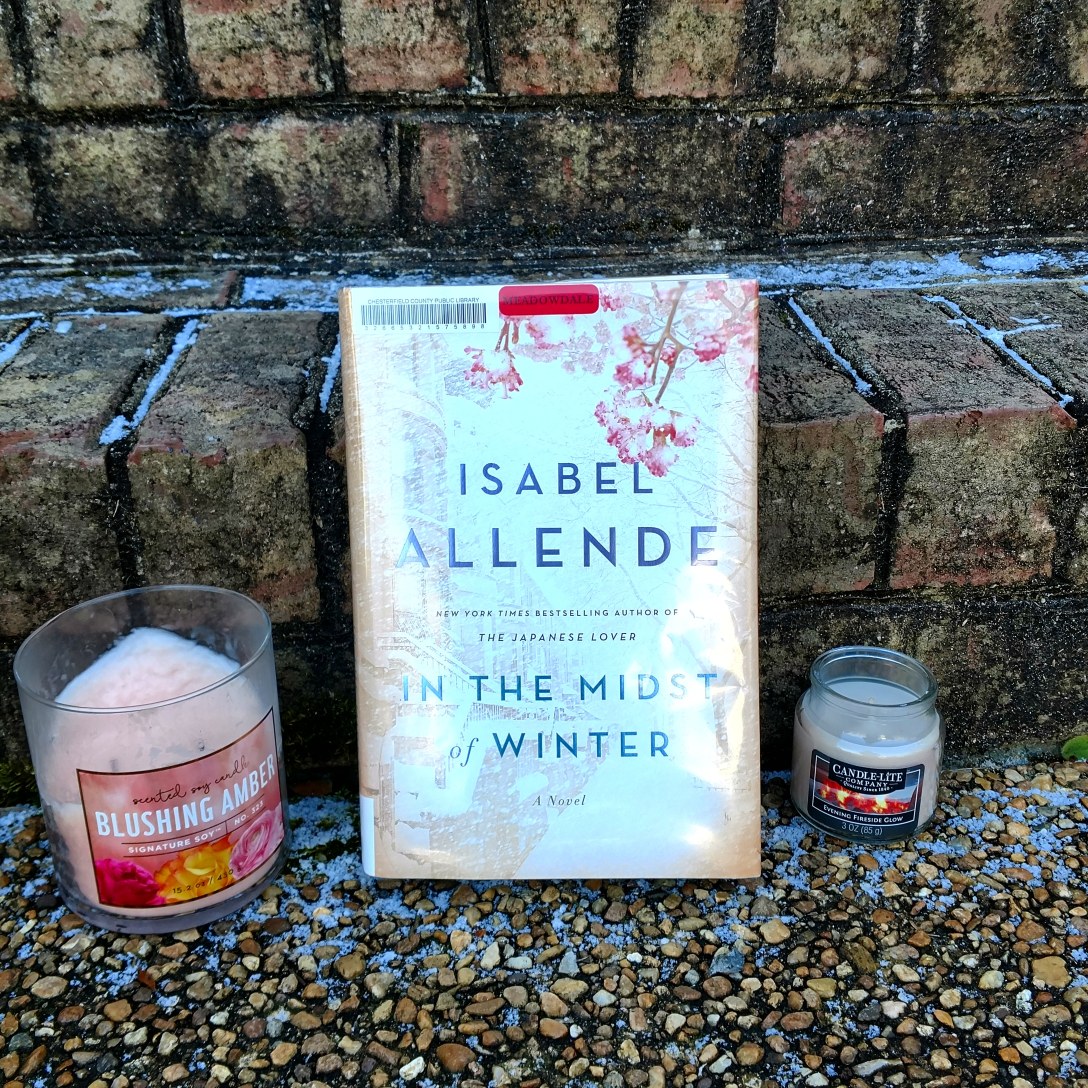
Review: In the Midst of Winter by Isabel Allende

Alexis: Read 2/1/19

In the Midst of Winter is a story of grief, guilt, and love. The book focuses on three main characters: Lucia, a lecturer from Chile; Richard, a professor; and Evelyn, a caregiver from Guatemala. Half of the book is set in 2016, explaining how the three characters meet and become involved in each other’s lives, while the other half explores their complicated, and often depressing, pasts.

I adored the first half of the book, which opens on Lucia’s life in New York City during a snowstorm. It’s such a promising premise. As the reader, you are immediately thrown into the minds of Lucia and Richard, and I enjoyed reading about their contrasting personalities. I love that Lucia has a bug-eyed old Chihuahua, while Richard has four cats that he simply calls one through four in Portuguese. Though I found Evelyn’s life and story interesting, I felt like her dedicated chapters didn’t reveal her character or thoughts as well as Lucia’s and Richard’s.

As usual with Allende’s writing, I love her descriptions in this book and I think they serve the story and the characters well. I also enjoyed reading about the tumultuous histories of Chile and Guatemala, as well as Richard’s time in Brazil.

This book went in a different direction than I expected, however. The morbid reason the three characters go on a journey together works at first, but I found that it didn’t work the further I got in the story. I correctly guessed the twist towards the end. When I finished the book, I was left underwhelmed. It addresses such deep and interesting histories and emotions, yet it ends on an almost “oh, well!” and weirdly cheery note, which dragged down my review.

VERDICT: 3 ½ out of 5 books

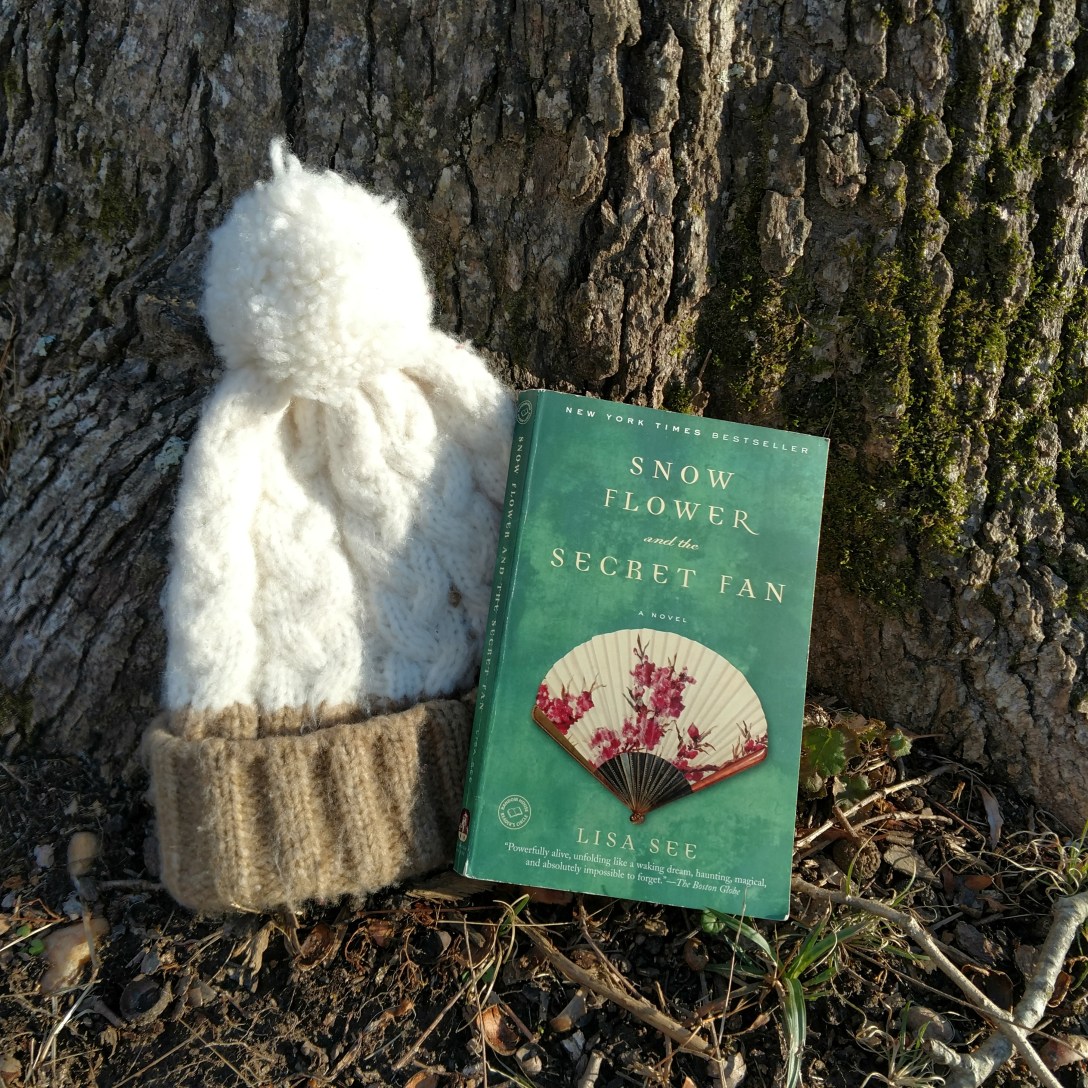
Review: Snow Flower and the Secret Fan

Alexis: Read 1/28/19

“For my entire life I longed for love. I knew it was not right for me — as a girl and later as a woman — to want or expect it, but I did, and this unjustified desire has been at the root of every problem I have experienced in my life.”

Snow Flower and the Secret Fan is a beautifully written historical fiction novel. Lisa See’s writing always flows well, and her writing did not disappoint.

This is a novel about women in 19th century China. I, who usually reads a book in one to three sittings, found myself having to take multiple mental breaks from this book. This was also the case when I read The Tea Girl of Hummingbird Lane, which turned out to be one of my favorite books.

The reason for the needed breaks was the heavy topics that this book addresses. I had to push my 21st century Western ideals to the back of my mind while reading this (See even discusses this in the afterword). She addresses some beautiful and fascinating ideas, such as embroidery, nu shu, the secret woman’s language, and friendship. But this book also addresses foot binding in detail, as well as death, starvation, and miscarriages. It deals with the extreme sexism of the time, including abuse and acceptance of the low societal positions from the main characters, Lily and Snow Flower.

If I had held onto my modern viewpoint while reading this, I would have intensely disliked the characters and the storyline. Who wants to read about two women who believe they are utterly worthless unless they have three inch feet, marry, and have all sons?

But I learned so much from reading this book, and I enjoyed learning about Chinese society during this era. You can tell that See did her research. See writes well-rounded characters and doesn’t shy away from giving them flaws, and this is one of the greatest aspects of the book. I loved Lily and Snow Flower in the first half of the book, and I was frustrated with them in the second half. However, Lily hints at this in the very first page, so it wasn’t unexpected.

Overall, if you’re interested in learning about a remote, 19th century Chinese society, and you’re not afraid of a sad story, pick this up. If you’re interested in a woman-centered story, and the complicated love between two women, then pick this up.

VERDICT: 4 out of 5 books