Review: Shadow and Bone; Siege and Storm by Leigh Bardugo

Alexis:

I’ve dedicated this past week to reading the first two books in the Shadow and Bone Trilogy, and hopefully I can get the last book from the library next week!

I read the Six of Crows Duology last year and I absolutely loved it, so I was looking forward to reading the first books in Bardugo’s Grishaverse.

I seem to agree with everyone else (at least on Goodreads) that the second book in the trilogy is better than the first. I was surprised to find that the first book relied on some tropes, the most prevalent of which is the love triangle. However, I thought that Shadow and Bone did a great job when it came to worldbuilding and introducing the Grisha’s powers. 

The second book’s plot is much more intricate than the first. It honestly reminds me of The Hunger Games. Politics come into play, and Alina starts to become a powerful symbol of hope. I enjoyed the new characters that were introduced, but I felt like Mal’s character wasn’t as strong as he was in the first book. However, Bardugo’s keen sense of humor comes out more in the second book.

Minor spoilers below:

One of the biggest issues I have with the two books is the way that male characters interact with Alina, which, unfortunately, only gets worse in Siege and Storm. Multiple male characters touch and kiss Alina without her consent, and the way the Darkling interacts with her makes me sick. In Siege and Storm, no one respects that Alina and Mal are in a relationship, and she gets kissed and even gets marriage proposals. I understood all of this happens for plot reasons, but here Alina is, in a different love triangle than in the first book, and she even enjoys the attention from Nikolai.

I feel like I say this in every review, but despite my issues with the books, I did enjoy reading them. I love the Grishaverse and I’m interested to see where the third book goes. I just can’t help comparing this series to the Six of Crows Duology. It’s interesting to see how much Bardugo’s writing has evolved.

Shadow and Bone: 3 out of 5 books

Siege and Storm: 4 out of 5 stars

Review: Sugar Run by Mesha Maren

This review is spoiler-free and from both of us!

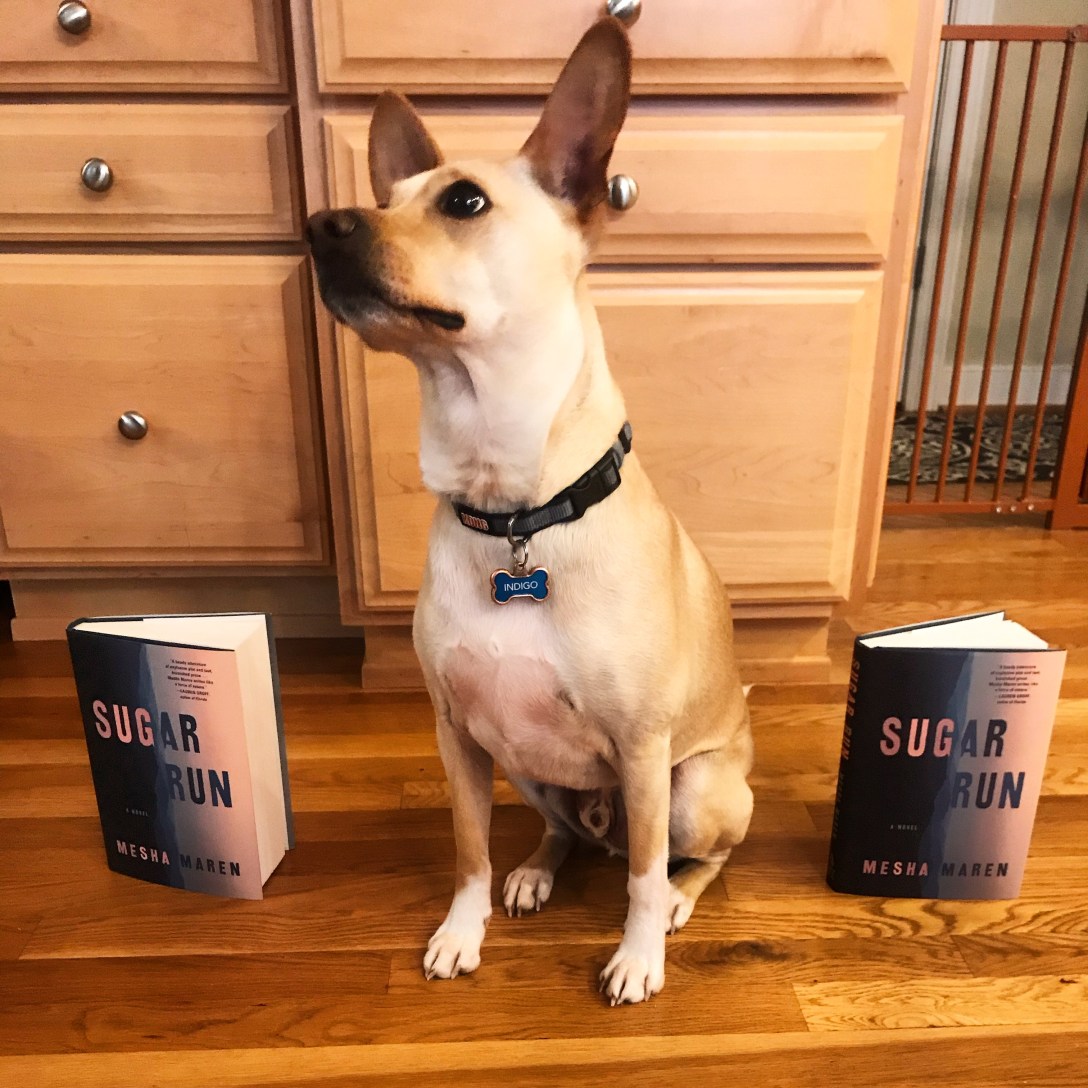
There is a dog in this book, so that’s our excuse for featuring a very confused Indy in this.

Alexis:

I’m thankful I had the opportunity to hear Mesha Maren discuss her book, because I feel like I really understood her vision. In Sugar Run, Jodi, the main character, is just released from prison, where she served eighteen years. She enters into a relationship with a young mother named Miranda, and their lives become tangled together. It’s a story of hope and hopelessness.

I love Maren’s lyrical writing style. Her writing has such a hard realness to it. She writes lush descriptions as she paints life in West Virginia. As Maren discussed in her talk, her book is hard to categorize. It’s a noir, crime, Southern Literature, and LGBTQ novel. But this is one of the great things about it: it’s a collage of genres, and it works.

This is a dark book that deals with vices to the max. It deals with crime, murder, sex, and lots of drugs. All of the characters are flawed, and make really bad decisions, yet I cared about them. The first half of the book is more character driven, while the second half is more plot heavy. The chapters alternate between the present (written in past tense) and the past (written in present tense) which I thought worked really well.

VERDICT: 4 out of 5 books


Anna:

Like Alexis, I’m so happy we had the opportunity to meet Maren at the Fountain Bookstore here in Richmond. Hearing an author discuss her book and writing process always enriches my understanding of it as a reader. The way Maren described her characters before I’d read about them made me more invested as a reader.

Maren’s writing is exactly what I love about literary fiction, even though, as Alexis said, this is a blend of genres. It is so dark and violent, but it is beautifully and breathtakingly written and full of nature imagery. The characters are well drawn out and real.

The violence in the lives of all the characters contrast so starkly with Jodi’s obsession with the rural landscape of her homeland. Her love of West Virginia mirrors themes of stability and nostalgia in Jodi’s life. It also offers commentary on the ways humans inflict violence on the earth, as the horrors of fracking is something frequently discussed.

The ending of books is something I’m constantly disappointed by, and, happily, this was not the case with Sugar Run! I thought the conclusion of both the interwoven timelines is so well done, and, most importantly, believable. Maren’s pacing is perfection.

During her talk, Maren touched a bit on the book she’s writing next, and you can bet I’ll be picking that up when that comes out!

VERDICT: 4 out of 5 books

Review: The Lie Tree by Frances Hardinge

Alexis: Read 2/4/19

“There was a hunger in her, and girls were not supposed to be hungry. They were supposed to nibble sparingly when at table, and their minds were supposed to be satisfied with a slim diet too.”

The Lie Tree is both about revenge and finding yourself. It manages to be a murder mystery book while exploring themes of science vs. religion, paleontology, family, and, of course, lies.

The book follows Faith, the 14-year-old daughter of a reverend/scientist, who moves to an island with her family. Throughout the story, she struggles with being a complacent girl in 19th century England while battling her desire to be seen and heard as a person with a brain and scientific ambitions. This was my favorite part of the book. I loved reading about Faith’s navigation through 19th century society and ideals. I felt and understood her frustrations as she dealt with being called useless. I also appreciated that Hardinge explored how her petticoats and corset always got in the way; it just felt very real to me. And, as the book progressed, I loved reading about her showing off her cleverness and proving to her mother, and the men in the book, what she can do.

Faith’s character was a little hard for me to like. I rooted for her to win, even through her ill-fated motives and her willingness to lie. I thought that the unlikability of the characters served the dark nature of the story and the Lie Tree well. However, at times, I found the story hard to get through because of this, and also because the plot was a little slow. Despite this, Hardinge is still a poetic writer and I enjoyed her descriptions and the murder mystery storyline.

VERDICT: 3 ½ out of 5 books

Review: Long Live the Tribe of Fatherless Girls by T Kira Madden

Anna:

I’m excited to share my first 5 star read of the year! T Kira Madden’s memoir is a heartbreaking and beautiful account of growing up in Boca Raton—or Rat’s Mouth— of Florida. It’s so raw and emotional, and not to mention lyrically written, that it’s both hard to read yet impossible to put down. My inability to stop reading, despite the contestant pretense of bleak topics, is something I love about Madden’s writing. She truly has a talent in making the bad beautiful in her writing without diminishing the severity and impact of the bad.

This book comes with a trigger warning for just about everything. A lot of this book deals with drug abuse, alcohol abuse, physical abuse, child pornography and sexual abuse, and basically every kind of abuse you can think of.

Something I really like about this memoir is the cyclical nature of it, which is something I find quite annoying in some memoirs, but that isn’t the case here. Madden never “harps” on certain details or asks the reader to feel bad for her in any way. It is her blunt and rich writing that earned my sympathy and trust.

Something else that stood out to me is Madden’s tremendous ability to forgive, especially in the case of her family and her parents. This lack of anger and blame, despite the difficulties she has experienced, is what has resonated with me the most since finishing this memoir.

Long Live the Tribe of Fatherless Girls will be published March 5, 2019 in the U.S. I can’t wait for more people to read this!

VERDICT: 5 out of 5 books


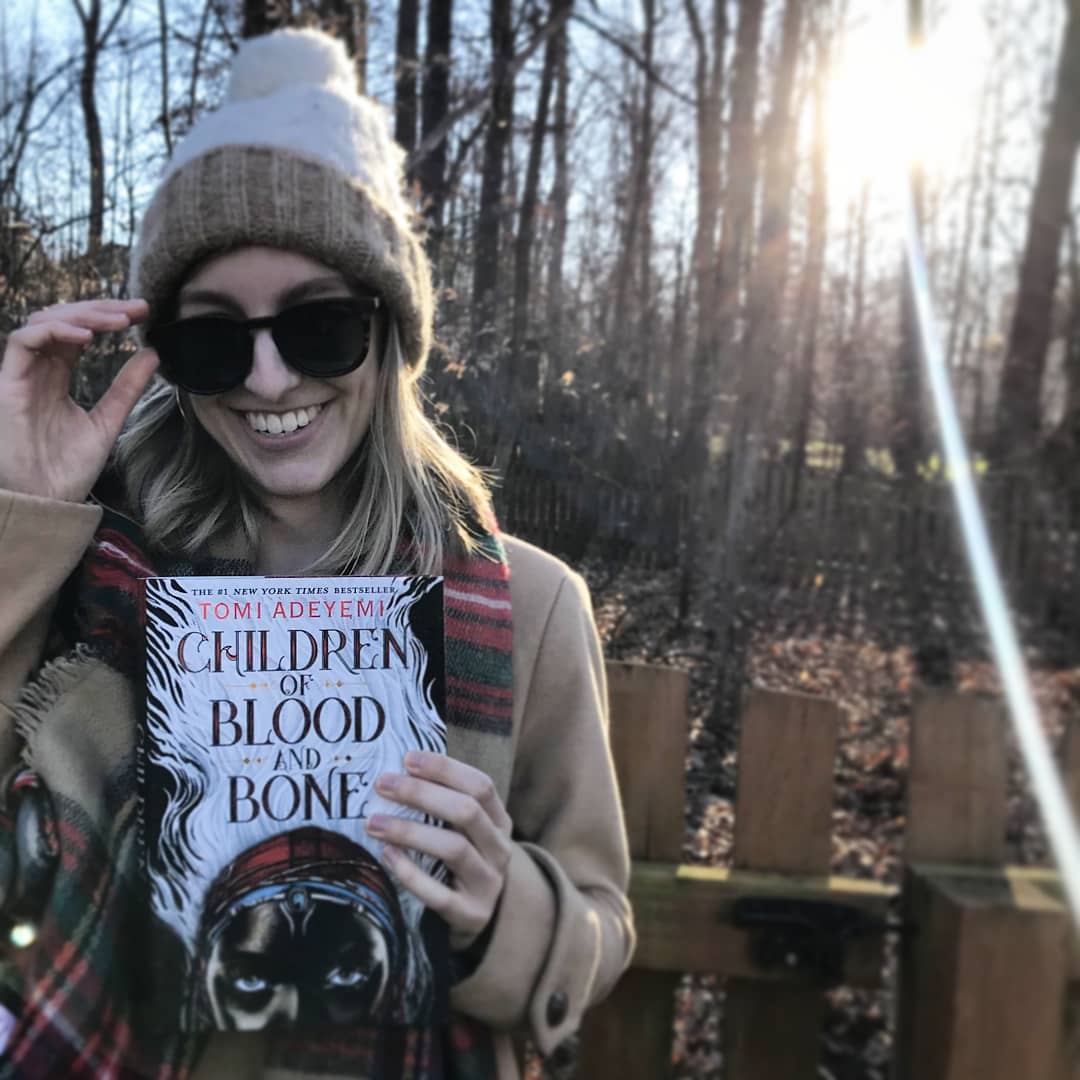
Review: Children of Blood and Bone by Tomi Adeyemi

Alexis: Read 1/9/19

Children of Blood and Bone, despite being a thick book, is super fast-paced. The plot is always moving, which I appreciated as I read. Adeyemi does a good job of explaining how the magic system works, and I enjoyed learning about all the gods and the maji’s connections to them. Sometimes multiple perspectives can be hard to pull off, but I really enjoyed reading from all the different perspectives, and the shifts never pulled me out of the book.

As for the characters, I’ll be honest: I’m not a huge fan of Zélie. She sometimes felt like a Katniss Everdeen character. However, I connected more with her as the book went on. I enjoyed Inan’s character until about halfway through the book. As for Amari and Tzain, I always enjoyed reading from their points of view. At times, the plot was a bit predictable, but not enough that I didn’t continue to enjoy reading the story. There was a love-at-first-sight storyline, and though I normally hate this YA trope, I thought Adeyemi used it to her advantage.

About a quarter way through this book, I realized something: parts of this book mirror Avatar: The Last Airbender.

Zélie is very similar to Katara. When she is young, her mother is killed in a raid because she possessed magical powers. Zélie possesses these same powers and she grows up wanting revenge. She has an older, non-magical brother, Tzain, who just wants to protect her. Zélie meets an Aang-like character, Amari: a girl who was trained how to fight from an early age, but who needs to learn to get past her peaceful side.

Amari’s older brother, Inan, the prince, has a good heart but is misguided. He wants his father’s approval but he has to betray those he loves in order to achieve it, just like Zuko. The father is definitely a Fire Lord Ozai type of character.

There is a temple “made of air” which connects maji to their gods. This temple was mostly destroyed in a raid in which a genocide happened.   

Despite these similarities, Children of Blood and Bone is an original book. I I loved the diversity and the magic based on Nigerian mythology. I also admired Adeyemi’s creativity—the characters ride on giant, horned lions and leopards, called lionaires and snow leoponaires.

Overall, this book was wholly engrossing and I had a hard time putting it down. And for that reason I can’t rate it any less than 5 books. I’m excited for the sequel!

VERDICT: 5 books

Review: The Tea Girl of Hummingbird Lane by Lisa See

Alexis: Read 5/11/18

“‘Tea reminds us to slow down and escape the pressures of modern life,’ he says. ”

There are some rare books out there that I just know I’ll love, and this was one of them. Okay, maybe I read it because I love tea and the reviews were good. But what other reasons do I need?

The Tea Girl of Hummingbird Lane ended up being my top book of 2018!

The section part of the book is a fascinating, and sometimes disturbing (let’s just say I’m a twin) detailed exploration of the Akha people and their way of life. The middle is a little slower paced, but it masterfully meshes Li-yan’s Akha culture with the modern way of life in China. The last section explores Li-yan’s new life and Haley’s life in California. Haley’s life is revealed through documents, letters, and essays.

See manages to weave an epic story while also exploring China’s history, the history of tea, and what it means to be Chinese and Chinese American. She handles each of her characters with care (in their characterization, that is; they all go through some incredibly tough situations). The only character that felt out of place was Ci-teh later in the book, though I understand why she turned out the way she did.

Overall, The Tea Girl of Hummingbird Lane is a beautifully written story, the core of which focuses on the relationship between mother and daughter, and the promise of finding one another again.

Review: The Wildlands by Abby Geni

Alexis: Read 1/4/19

I’m not too fond of prologues, but I found the prologue of The Wildlands to be the perfect introduction to the book. It describes, in detail, Cora’s first memory: the category 5 tornado which destroyed her childhood home and left her, and her siblings, an orphan. I loved Geni’s descriptions from the start. When Cora looks outside before the tornado strikes, the sky has turned green: “…I glanced out the window and saw the Oklahoma sky soaked with a new color. Damp jade. Split pea soup. Moss on stone.”

I was involved in each character’s storyline, especially Cora and Darlene’s, but also Roy’s and even Tucker’s, despite his violence. Geni captures emotions well, whether through her character descriptions or the descriptions of the harsh and barren Oklahoma landscape. She paints a picture of loss, poverty, and family. Many scenes in this book are vividly dark and disturbing, and Geni does a good job of showing how they affect Cora both psychologically and physically. Geni’s writing style mimics the sense of loss that follows the characters throughout the book. Despite the plot, The Wildlands is more of a character-driven story.

Cora’s relationship with her sisters feels raw, real, and appropriate for a nine-year-old. Her relationship with Tucker, however, is borderline obsessive. I couldn’t blame Cora for this, considering her painful childhood, but it was still disturbing at times.

I’m an animal lover, and I found Tucker’s theories about animals and mass extinction interesting yet terrifying. Seeing his thought process was an interesting insight in how someone’s interests can turn into a dangerous and radical obsession. The scenes with the animals towards the end of the book are surreal and poetic.

I understand why Geni includes the epilogue, but I felt like it was unnecessary. The book ended on the right note, but the epilogue drew away from it.

All in all, this was a well-written and thought-provoking read.

VERDICT: 4 and ½ out of 5 books

Review: The Crowns of Croswald by D.E. Night

Hi all! We’re excited to kick off 2019 with a review of a book that we were kindly sent (two copies, too!)

Alexis: Read 12/29/18

The Crowns of Croswald is a fast-paced, solid middle-grade fantasy read. The fantasy world is well-developed and detailed. It’s very Harry Potter-esque, in a good way: the world has creative and alliterative names, a castle-school full of magical students, and fantastic beasts. I enjoyed learning about the history of the world and the crowns.

I found Ivy to be a likable and interesting main character. This is the first book in a series, and I’m interested to see how her relationships with Rebecca and Fyn continue to grow. Besides Ivy, my favorite character was Humboldt.  

I only have a couple of criticisms. The plot is pretty predictable; however, this is middle-grade and it was still a fun read, so it wasn’t a deal breaker. I’m a harsh critic of dialogue, and I found the dialogue to be weak at times. I also wasn’t a fan of Night’s use of exclamation points and question marks together (?!).

All in all, this was a fun read that I definitely recommend for middle-grade readers who love Harry Potter.

VERDICT: 4 out of 5 books


Anna: Read 12/27/18

The Crowns of Croswald made me remember how good middle grade can be! I loved the worldbuilding in this. Alexis is right; it is slightly reminiscent of Harry Potter. I thought Professor Fenix a thinly-veiled Flitwick, and Woodley Butterlove. But I know it’s difficult to write anything fantasy without being compared to Harry Potter.

I loved the little details that made Ivy’s new world so magical and creative. Ivy’s allergen-ridden porcupine and her dim hairies are adorable, and they added to her overall scrappiness. There are also some hilarious scenes that made me literally laugh out loud, and I haven’t had that reaction to a book in a while.

Like Alexis, I guessed beginning, which is pretty standard for middle grade. I thought the beginning, when Ivy works as a squaldron maid, was a little rushed, and we don’t quite get to see much of Ivy’s unhappy situation before her world is changed and she goes to The Halls of Ivy. But we get the idea.

I’m confused by Ivy’s age. She is supposed to be fifteen, but reads as much younger. I think the intended audience would also be significantly younger than fifteen, so I don’t know why she wouldn’t be younger.

Overall I enjoyed this. It had all the elements of magic, innocence, and creativity of middle-grade fantasy that I didn’t realize I was missing.

VERDICT: 4 out of 5 books


Thank you to Stories Untold Press for sending each of us a copy to review!

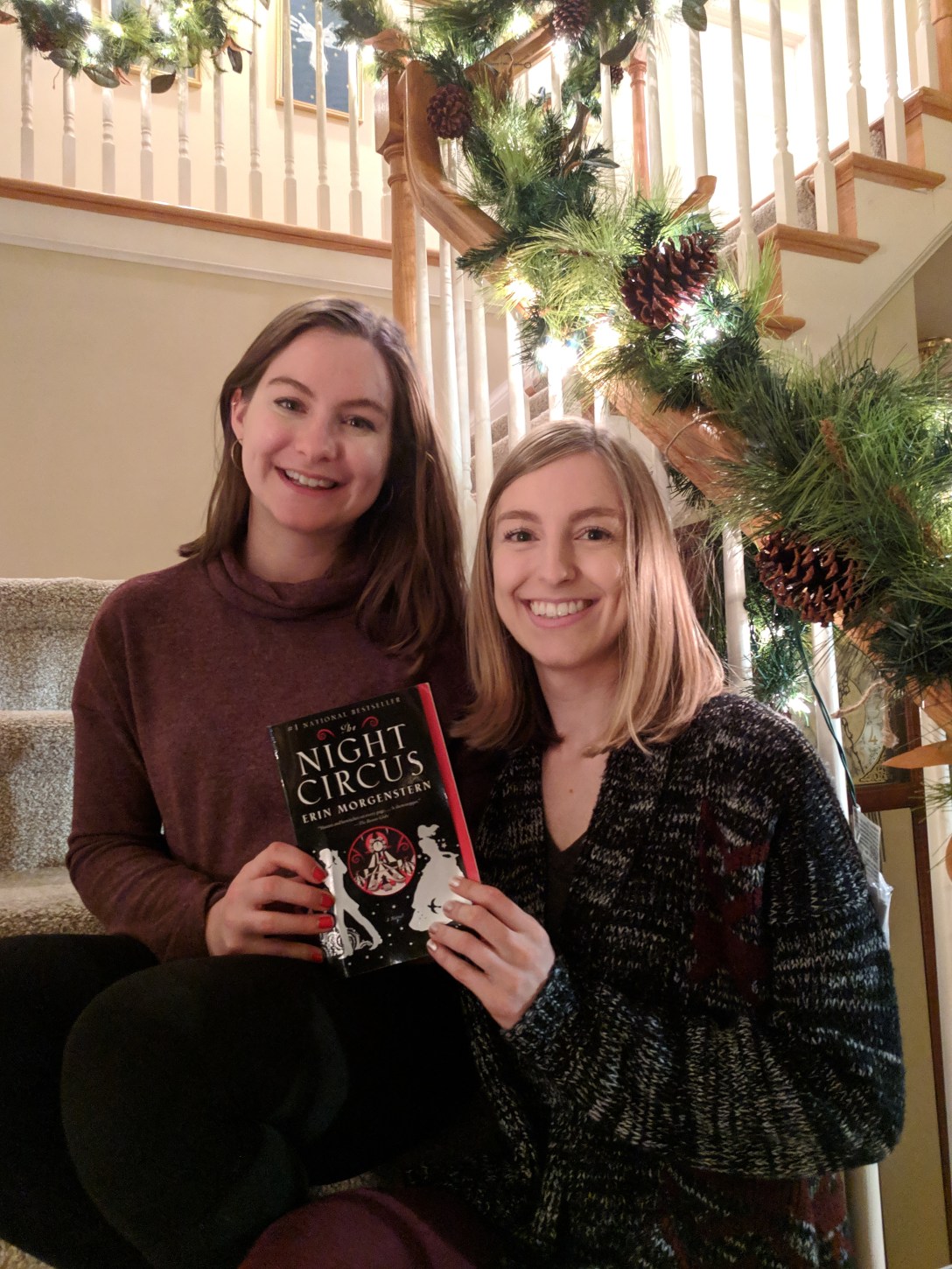
Review: The Night Circus by Erin Morgenstern

Alexis: Read 12/16/18

I feel like I’ve been saying this a lot lately, but this is a really hard book for me to rate. Is it 3 ½ stars? 4? 4 and ½? I had a hard time deciding. I will confess, I skimmed a lot of Goodreads reviews and was relieved to find that a lot of other people felt the same way.

I loved aspects of this book; I was confused by aspects of this book; I disliked aspects of this book. I understand the major hype surrounding it, and maybe I went in with too-high expectations.

Morgenstern’s writing is beautiful and lyrical. The best part of this book is how her descriptions of the circus launch you into a wonderful, atmospheric world. She uses all four senses to describe the circus, and I loved the recurring descriptions of how the circus smelled: like popcorn, caramel, and bonfire smoke. I loved the black and white theme of the circus, the intricate clock, and the minute details Morgenstern includes about each tent.

The circus itself is almost the main character as much as it is the setting, which actually fits perfectly when you reach the ending.

As for the characters, both Celia and Marco’s characters start out strong, but seem to flatline as the book progresses. It doesn’t help that the book switches perspectives every chapter. This creates a snapshot effect. Each chapter almost feels like a character study, interspersed with short circus-character studies. Not only does the book jump back and forth in perspectives, but it jumps back and forth in time. Because of this, the first hundred pages or so were a bit of a drag for me. Not much is revealed, and the book’s plot progresses slowly.

In fact, I would go so far as to say that this book doesn’t have much of a plot. Whenever the perspective deviates from Celia and Marco, I found myself feeling annoyed. I wanted them to be more present characters than they were, and I wanted them to do more actions than they did. I found myself gravitating more towards Bailey, Poppet, and Widgets’ storylines, as their characters felt more lively and real.

Despite the skimpy plot, my other issue with the book is the romance. I’m not a fan of the love at first sight storyline unless it serves a good purpose. It would make sense that Celia and Marco would have an outright connection, due to their similarities. However, for a 500 page book, there was definitely room for more of a romantic build up so the reader could actually see them falling in love instead of just being told that they fell in love. Their relationship didn’t feel as deep and real as I wanted it to, and a certain speech by Marco (on pages 419 and 420) didn’t help; Marco and Celia’s dialogue with each other often felt too flat.

Thankfully, I was pleased with the direction the ending went, and I’m glad that it tied up some of the many loose knots tied throughout the book. I just wished there was more of a plot. 

VERDICT: 3 ½ out of 5 books


Anna: Read 12/25/18

Like Alexis, this book was so hyped that I expected a lot of it. Also like Alexis, I loved the descriptions of the circus and its different tents and inhabitants. I was also intrigued by the magic in the beginning, as well as the mystery of the circus, and the competition, and think I lost some interest as more of the rules of the competition are revealed (even though the reader never really gets a fully satisfactory explanation of the competition, which frustrated me.)

Honestly, I would have rated this four stars if not for the love story, which I found both cliche and tedious. Though the romance between Marco and Celia added more tension to the competition, I felt that there are more interesting and imaginative ways to raise the stakes. There is also the troubling fact that Marco and Celia’s relationship is shallow, which makes it hard to root for or even believe. I enjoyed reading from Bailey’s perspective more so that any of the others, and I liked that his storyline grounded the circus in reality. I also agree with Alexis that there are WAY too many unnecessary perspectives in this, which bogs down the pace. Perhaps with the perspectives Morgenstern is trying to show that there are many moving parts to the circus, but I think she relayed this with the sheer amount of characters.

Can I also point out that the way that Marco treats Isobel is that of a misogynist pig? I had a big problem with that.

The melodramatic romance automatically knocked it down one star, as did the resolution of the competition, which I found wishy-washy. Despite the fantastic and magical circus scenes, I’m honestly disappointed!

VERDICT: 3 out of 5 books


Hopefully in future dual reviews we have more varied opinions from each other!
Review: The Tattooist of Auschwitz by Heather Morris

Alexis: Read 12/10/18

This is a hard book for me to rate. The story, as are all Holocaust stories, is dark, harrowing, and resonant. This is a story of survival and love. It focuses on Lale and Gita, who manage to fall in love amidst the horrors of Auschwitz.

Parts of the novel hit me hard. It’s impossible to read a book about the Holocaust and not come away emotionally affected by it. The knowledge that this was not only based on a real historical event but also on the lives of two very real people played in the back of my mind as I read. I liked that it was written in present tense, which propels you into the story.

But how do you rate a book like this? The perspective is one of the most interesting parts of the book. Lale, as the Tattooist, has a higher position than most of his fellow prisoners. I was wholly involved in his storyline of using his position in order to barter jewelry for food, help feed other prisoners, and help save other prisoners’ lives. His feelings of revulsion at tattooing his own people conflict with his instinct to do what he must to survive.

Yet chunks of this book still fall flat. The writing style is awkward in places. Half of Lale and Gita’s relationship feels real and raw, and half feels stitled. In the “about the author” section of the book, it’s mentioned that Morris originally wrote this story as a screenplay, and this seems to fit with the style of some sections of the book. Near the end, it’s mentioned that Lale’s way of dealing with the horrors of his imprisonment is emotional detachment. This could be the reason for the stiltedness, as the writing could reflect Lale’s repressed emotions. However, I don’t think this was a purposeful choice on Morris’ part.  

VERDICT: 4 out of 5 stars