
Alexis: Happy Earth Day, everyone! But good luck avoiding all the pollen.
I’m currently reading Gingerbread by Helen Oyeyemi (while Indy searches for bunnies) and thinking about summer. I can’t wait to go to the beach!
a bookish blog by twins Anna & Alexis
Alexis: Happy Earth Day, everyone! But good luck avoiding all the pollen.
I’m currently reading Gingerbread by Helen Oyeyemi (while Indy searches for bunnies) and thinking about summer. I can’t wait to go to the beach!
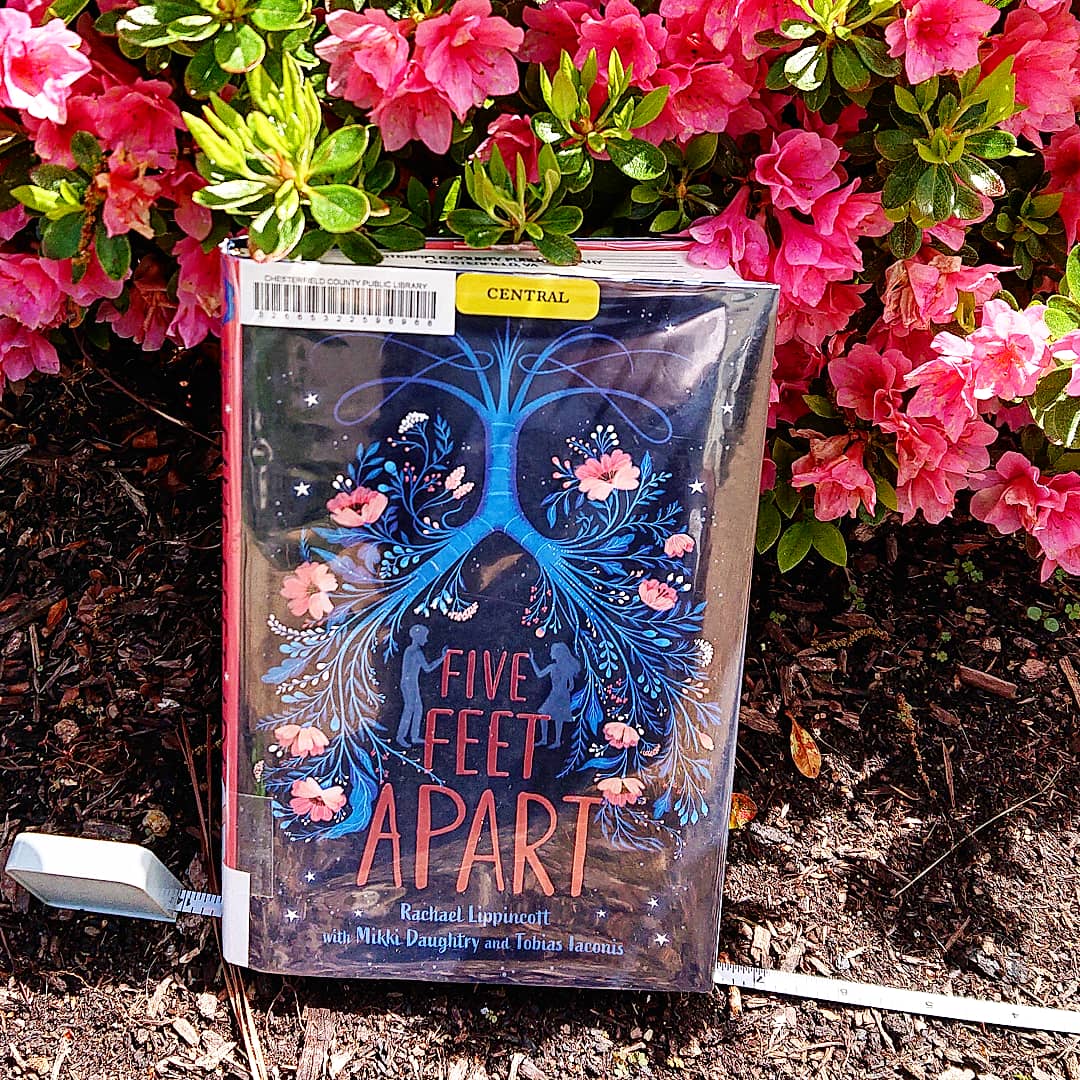
Alexis: Read 4/18/19
I was hesitant to read this. I put it on hold at the library so I would have time to think about it for a while, and a month later, I got an email that I could pick it up. And I decided, you know what? Why not!
For those of you who don’t know, last year, my lung spontaneously partially collapsed twice, a couple months apart. After the second one, I had surgery to adhere my lung to my chest wall so that it won’t ever happen again. But because of this, Five Feet Apart was super relatable for me. I found myself knowing how horrible it is not to be able to breathe, to literally feel your lung keep you from taking a deep breath as it fills your body with pain.
That being said, I do not have cystic fibrosis, and I can’t begin to know what it feels like to have a terminal illness. But this book brought back a lot of memories and feelings, and I identified with parts of Stella and Will’s ordeal.
Now, onto the review. I don’t have much to stay about the book other than well done. This is definitely this generation’s The Fault In Our Stars. The story is told from two different perspectives: Stella’s and Will’s. I love alternating POV’s and I found it worked really well for the story. And while I wasn’t a huge fan of Stella or Will’s characters at the beginning, I really enjoyed their journeys and their full character arcs by the end.
The writing style is very conversational. I enjoyed how the authors had the characters use so much modern technology because it felt very true to people/teenagers in real life. I will say that yes, parts of this book are cheesy, and yes, I guessed the ending halfway through. But Stella and Will’s relationship moves at an appropriate pace. I liked all of the characters’ backstories and motivations.
All in all, I think this is a solid YA read that achieves awareness of cystic fibrosis while telling a good story. I’m excited to watch the movie!
VERDICT: 4 ½ stars
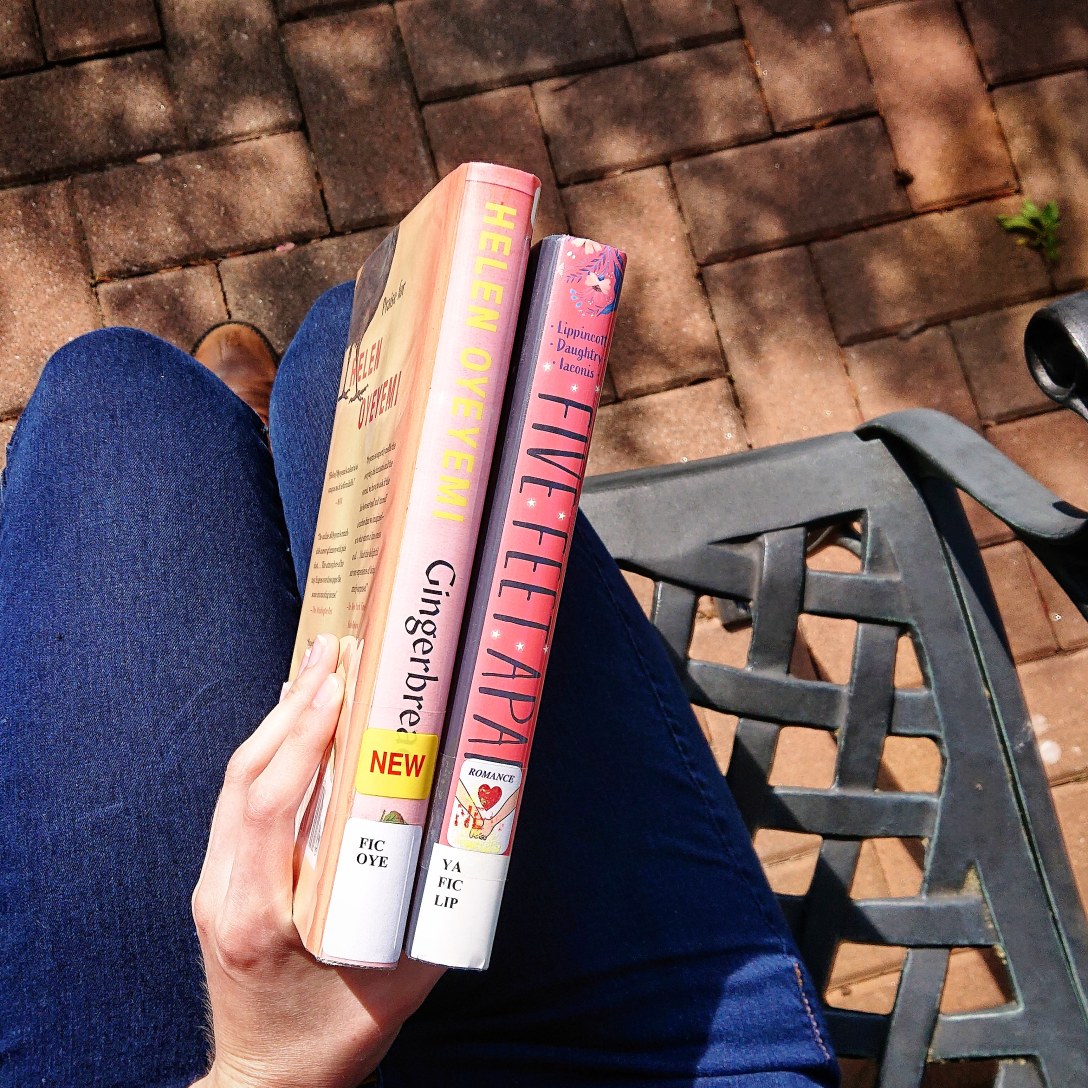
Alexis: Happy Friday, everyone!
Yesterday, I got an email that two of my requested library book were ready to be picked up: Five Feet Apart by Rachael Lippincott, Mikki Daughtry, and Tobias Iaconis, and Gingerbread by Helen Oyeyemi.
These are two of my most highly-anticipated reads, and I waited over a month for them.
I sat down and binged all of Five Feet Apart yesterday, so look out for a review tomorrow.
I can’t wait to dig into Gingerbread, because I have a feeling I’m going to love it!

Alexis: Read 4/16/19
Why do I always really enjoy the first half of a book, only to really dislike the second half? That’s how I felt about Cruel Beauty.
Cruel Beauty is a Beauty and the Beast retelling. I’m a fan of fairytale retellings, and I actually took a seminar on Beauty and the Beast while I was in college. But what’s different about this retelling is that it blends the fairytale with Greek and Roman mythology and history.
The story is set sometime after the fall of Rome in Romana-Graecia, in a fictional land called Arcadia that was cut off from the rest of the world and held captive underground by the Gentle Lord. The Gentle Lord makes cruel bargains with the people of his land and sometimes sets his demons on them. The Greek and Roman influence was an interesting change of pace, as the original Beauty and the Beast story is from France. I love Greek mythology, and I loved the mix of Latin and Greek terms, history, and terminology. The stories told in the book took me back to my Latin classes.
In this book, the magic is called the Hermetic arts. The main character, Nyx, was trained by her father in this art, which is connected to the four elements. Nyx can use sigils to sort of control the “hearts” of each symbol. While this sounds interesting, not only was the magic never explained any deeper, but it was never useful in the story.
Here’s a basic outline of the plot: When Nyx’s parents couldn’t have children, Nyx’s father made a bad bargain with the Gentle Lord. Nyx’s mother bore twins but died in childbirth. The Gentle Lord required that Nyx be married to him, while Nyx’s sister could live free for the rest of her life. So the book opens up with Nyx marrying the Gentle Lord, who’s also called Ignifex.
I really did enjoy the first half of the book. All of the original aspects of Beauty and the Beast are there: the roses, the mirror, the enchanted castle, the question every night, and a beastly prince of sorts. Nyx’s mission is to kill Ignifex in order to save her land from his terrible reign. The first half focuses on her exploring the castle and trying to find its Hermetic hearts, which was my favorite part of the story.
I wasn’t a huge fan of Nyx, who mostly complained about her tragic fate and battled with her intense hate for her family and Ignifex. But I appreciated that she was a strong female character who made her own choices and expressed her strong emotions. Her relationship with her sister was weird, and as a twin myself, it didn’t feel like a true twin relationship, though some of it was intentional due to the characters’ circumstances. To be honest, I wasn’t a huge fan of any of the characters except for Shade.
As for the second half, there’s a really weird love triangle that didn’t work for the story. The plot starts to go downhill and then becomes convoluted. Nyx and Ignifex’s relationship is abusive, with Nyx hitting him basically every chapter and Ignifex being emotionally abusive. Nyx remembers an important plot-point only to forget about it until the very end, which was supremely annoying. There’s no clear antagonist. And the ending has a weird alternative time thing that’s even hard to describe.
I obviously have a lot of thoughts about this book. I was pleasantly surprised by the first half and disappointed in the second half. If the ending was different, this would’ve been a solid read!
VERDICT: First half: 4 stars
Second half: 2 stars
Total: 3 stars
Alexis:
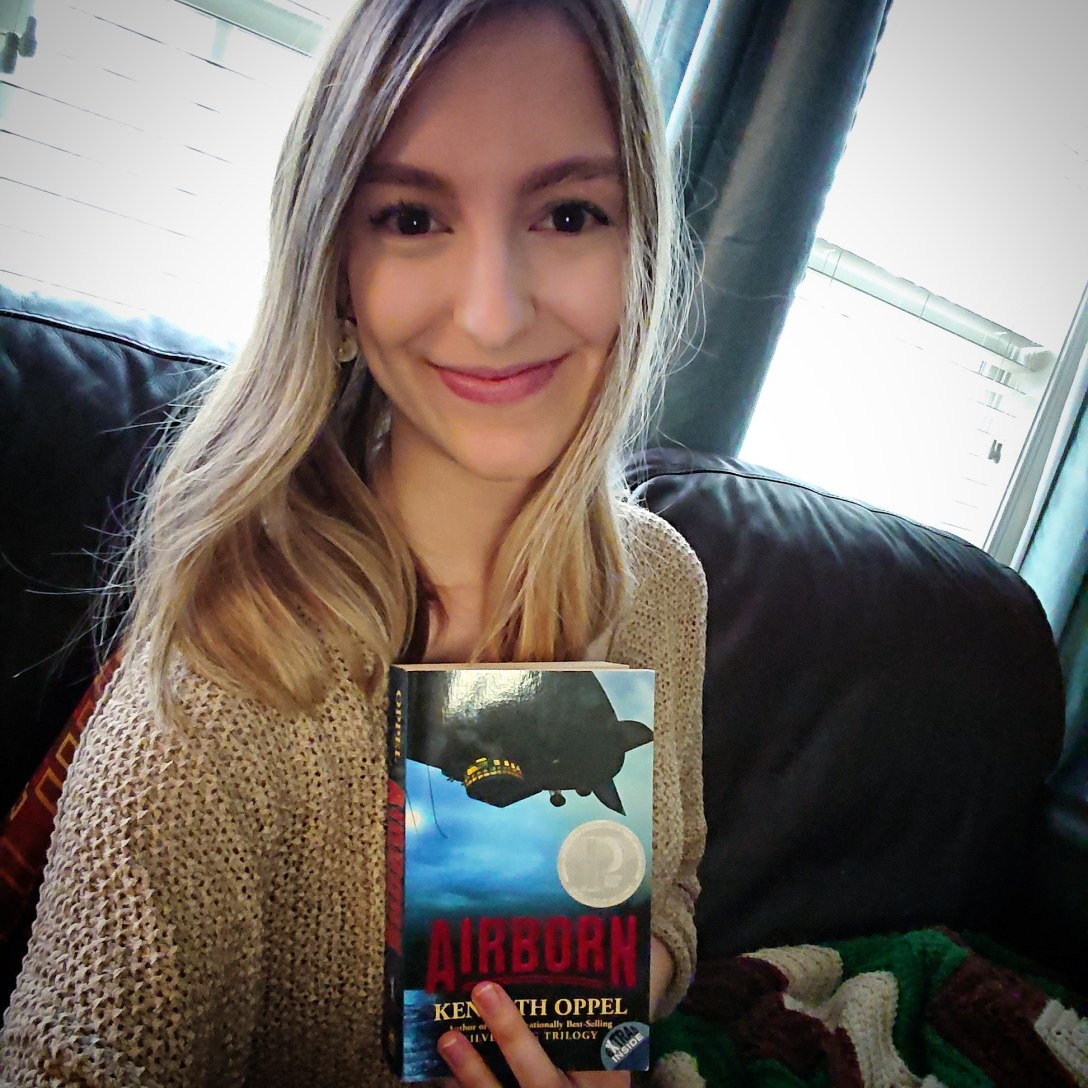
When I was a pre-teen or teen, the Matt Cruse trilogy was one of my favorite series. Airborn, the first in the series, is a YA adventure with a Titanic vibe and an undercurrent of zoology, set in an early 1900’s alternate reality where airships are the primary mode of transportation. I know, interesting, right?
As I re-read this, I remember how much I enjoyed the story and the characters. Lately, about 90% of the books I’ve been reading have been from a female POV, and this is a good change of pace. Airborn is from the POV of Matt, a 15-year-old cabin boy of the airship Aurora. The story follows Matt on his adventures with a girl he meets named Kate as they try to track down a mysterious winged creature mentioned in a journal of a dying ballooinst. I really enjoy both Matt’s character and POV, as well as Kate’s curious and spunky character.
This story is pure action-adventure, complete with pirates and a surivival storyline. I recommend reading the other two books in the series, as well. The series only becomes more interesting as the characters grow older and space travel gets involved!
VERDICT: 5/5

🌺Alexis’ April #tbr stack🌺
Did March fly by for anyone else? I kind of wanted winter to be longer; I’m not ready for all this pollen.
FYI: All of these books are secondhand!
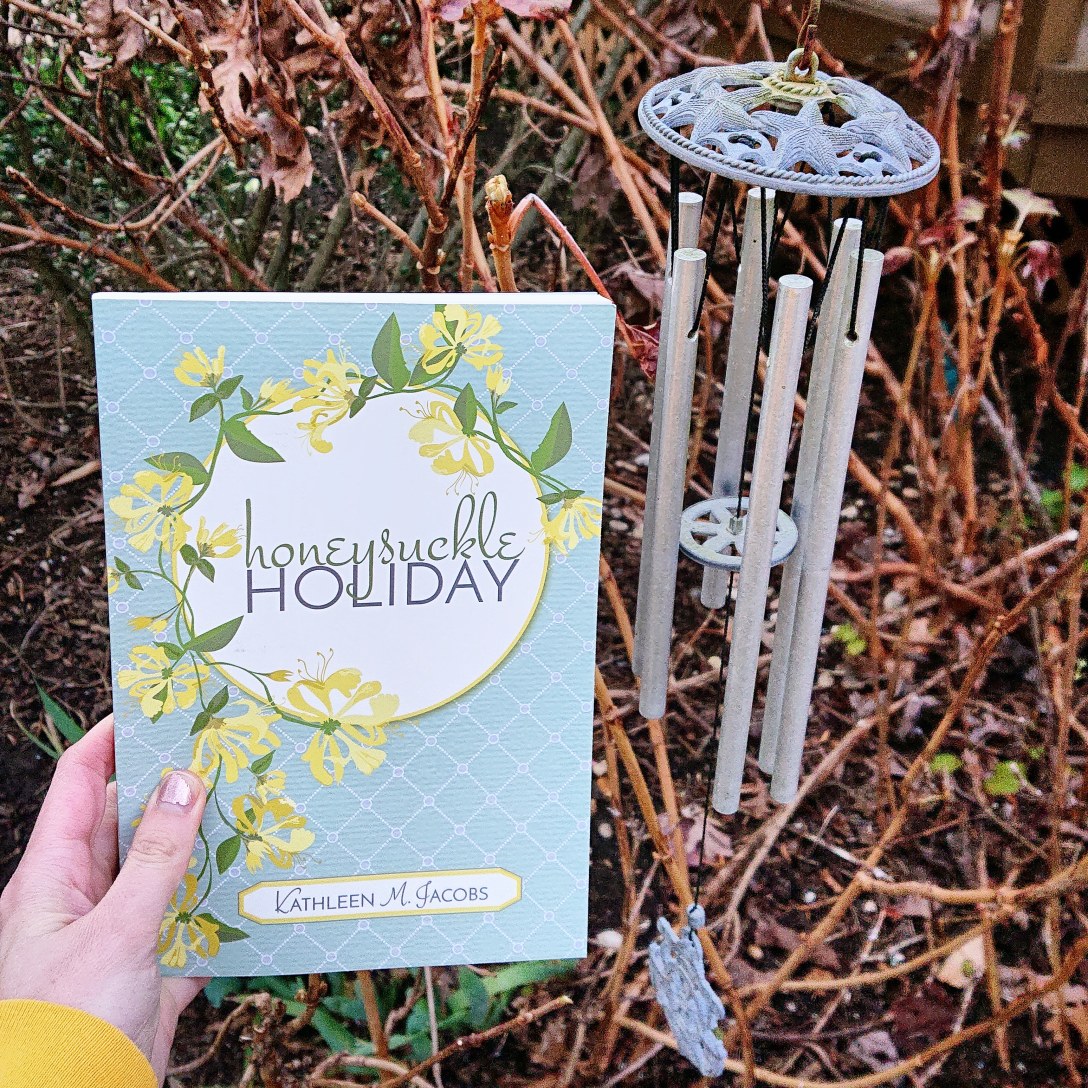
Alexis: Read 3/11/19
*The author sent me a copy of her book in exchange for an honest review.*
Honeysuckle Holiday was such a poignant read. Don’t let the cover fool you: this short book tackles childhood innocence and racism.
The story follows Lucy in two different time periods: 1965 and 1970, when she was twelve and sixteen-years-old. Though Honeysuckle Holiday is categorized as YA, I would describe it more as a bildungsroman/coming-of-age story. When Lucy’s father leaves, not looking back, on Christmas Day, she and her older sister, Caroline, try not to dwell on it too much. But she knows something has changed when her mother refuses to talk about him and when they have to move into a different house.
In her acknowledgements, Jacobs quotes a woman named Peggy Fox: ‘“You captured the voice of a twelve-year-old girl very well.’” And she’s right. Jacobs’ writing flows beautifully, but I was very aware that I was reading in the perspective of a twelve-year-old.
Lucy notices everything around her. She relates things to her Barbie dolls, which she admits she’s starting to outgrow. She is jealous of some of Caroline’s things but also wants to be like Caroline when she grows up. She partly knows why her dad left but is partly left in the dark. She’s curious about the world around her and asks lots of questions. Jacobs’ detailed descriptions mimic Lucy’s curious mind. I also like how she includes a lot of parenthetical phrases, as Lucy has a lot of afterthoughts.
I love all of the references Jacobs includes in her book. Lucy’s mother wears Chanel No. 5. Lucy uses a Velveeta box to hold her collection of found objects. The characters reference It’s A Wonderful Life, The Beatles, and TV shows of the time. These references cemented the story into its setting and time period, bringing it to life.
Lucy mentions To Kill a Mockingbird multiple times, and even relates herself to Scout. I found this fitting, as the story reminded me a lot of To Kill a Mockingbird. Both are told from a young perspective, but are really told for a more mature audience. Both deal with racial tensions and divides, as well as the horror of the KKK. I loved Jacobs’ inclusion of descriptions of food. The book is set in the South, and I enjoyed reading about Lila’s apple pies, okra, and Lucy’s love of steak.
While I liked how Lucy describes the honeysuckle vines ( as well as the smell) outside of her window, I don’t think the title of the story sums it up very well. Though the story itself was impactful, the title was not. To me, the honeysuckle symbolizes Lucy’s childhood innocence, and the book is about coming-of-age and losing that behind. I’m also not sure why the first couple of chapters are in Caroline’s POV.
Overall, if you’re looking for a quick read that’s packed with vivid details, that will draw you into the 60’s and 70’s, and whose message will stay with you, then I definitely recommend it.
VERDICT: 4 out of 5 books

Alexis: Read 3/7/19
This book had an interesting premise, so why not check it out? After a cardiac arrest episode that leaves him legally dead, Jim Byrd lives with a device called the HeartNet. The HeartNet will continue to pump his heart if another cardiac arrest occurs. But now Jim is faced with his own mortality, and can’t help thinking about the afterlife. He and his new wife, Annie, try to figure out the afterlife by attending a new church called the Church of Search, by ghost hunting, and by tracking down a woman who claims she has a machine that will allow you to talk to the dead.
The story is in first person, told by Jim himself. But snippets of the past intersect his story. These snippets are in third person, following a cast of characters who lived in an old house, which is now a haunted restaurant. Jim and Annie aren’t sure why the house is haunted, though one of the house’s former owners, Clara, had a dog who died in a fire. I really liked these snippets into the past and thought it was an interesting choice to include them in the story.
I also really enjoyed Pierce’s writing style. His writing is conversational, and his sentences all have a pleasing cadence. Every character is a round character, with their own idiosyncrasies and passions and opinions on the afterlife.
The book has a small frame that mimics stage directions of a play. I found this fitting, as Annie is a playwright:
“Exit heartbeat. / Exit breath. / Exit every mood, every memory. / Exit you. / To where” (3)?
I enjoyed the sections about the ghost hunt, the machine, and Jim’s musings on life and death, which includes heart worries and panic attacks. There wasn’t much of a plot, and a lot of the middle section was spent on interactions with minor characters and minor plot points. Most of the book almost felt like a memoir or character study of Jim’s life. I enjoyed the beginning and the end, but I felt like 100 pages could’ve been cut out of this book and it would’ve made it more impactful.
The book also takes on a sci-fi edge, with the machine and the inclusion of holograms becoming a part of normal life. The book stretches over decades of Jim’s life, including decades into the future, but I found the holograms an odd choice for the book. Maybe they’re supposed to be symbols, like ghosts, in between life and death?
VERDICT: 3 out of 5 books

Alexis: Read 3/2/19
Unfortunately, I found Caraval so much worse than The Night Circus. I know a lot of comparisons have been drawn between the two books, so I thought I would give you my own.
The Night Circus is beautifully written, with lush and lyrical descriptions, but is very slow moving and has a sparse plot. I can’t say the same thing about Caraval’s writing. It felt middle-grade (and not in a creative way) and cliché. However, it is fast-paced and there is a layered plot. Both books have insta-love, though I have to say the relationship in Caraval actually felt more convincing.
So let’s delve more into Garber’s writing. Throughout the book, she relies on one particular, peculiar type of metaphor: the insert color was insert emotion. Here’s an example: “…a blaze of shimmery gold, the color of magic and wishes and promises of things to come” (14). Here’s another: “A ruby welt bloomed across his cheek. The color of rage and punishment” (45). Here’s a third: “…a rich cerise—the color of seduction and secrets” (660).
I usually love repetition, whether in motifs, anaphora, etc. But the repetition of these metaphors drove me crazy. They’re cliché and terrible and made me say “really??” out loud too many times. And none of them even made sense!
Another thing that drove me crazy was that half of the plot was predictable. You know from the beginning that Scarlett is going to get together with Julian. There was only one plot point towards the end that I didn’t see coming.
As for the characters, I only liked Julian, but only because he’s the only character with somewhat of an interesting personality. He’s your classic “dark and handsome but is he good or bad?” type of guy with Edward-Twilight caramel eyes: “light brown, the color of caramel and liquid amber lust” (172). The descriptions of him were super cringey.
I found Scarlett to be too whiny and annoying, and Donatella wasn’t much better. Even their names seemed to get in the way of the story; it was as if their names drew too much attention from it. It doesn’t help that Scarlett’s name is also a color, so her name is thrown around with all of the cringey color metaphors. One of the characters even says of Scarlett, “You’re so dramatic, you would’ve made a fantastic performer” (308). And god, was he right.
The dialogue doesn’t have any subtext. I absolutely hated that Governor Dragna is described as dragon-like. And I could’ve cared less about the plot of this book.
I think the one word that sums up this book is cringeworthy. I really wanted to like it, I enjoyed how the book opened up with letters, and I initially though Garber’s worldbuilding was good (in the first 10 pages). But this obviously wasn’t the book for me.
VERDICT: 1 and ½ out of 5 books

Anna:
I’m excited to share my first 5 star read of the year! T Kira Madden’s memoir is a heartbreaking and beautiful account of growing up in Boca Raton—or Rat’s Mouth— of Florida. It’s so raw and emotional, and not to mention lyrically written, that it’s both hard to read yet impossible to put down. My inability to stop reading, despite the contestant pretense of bleak topics, is something I love about Madden’s writing. She truly has a talent in making the bad beautiful in her writing without diminishing the severity and impact of the bad.
This book comes with a trigger warning for just about everything. A lot of this book deals with drug abuse, alcohol abuse, physical abuse, child pornography and sexual abuse, and basically every kind of abuse you can think of.
Something I really like about this memoir is the cyclical nature of it, which is something I find quite annoying in some memoirs, but that isn’t the case here. Madden never “harps” on certain details or asks the reader to feel bad for her in any way. It is her blunt and rich writing that earned my sympathy and trust.
Something else that stood out to me is Madden’s tremendous ability to forgive, especially in the case of her family and her parents. This lack of anger and blame, despite the difficulties she has experienced, is what has resonated with me the most since finishing this memoir.
Long Live the Tribe of Fatherless Girls will be published March 5, 2019 in the U.S. I can’t wait for more people to read this!
VERDICT: 5 out of 5 books
 takes two to book review