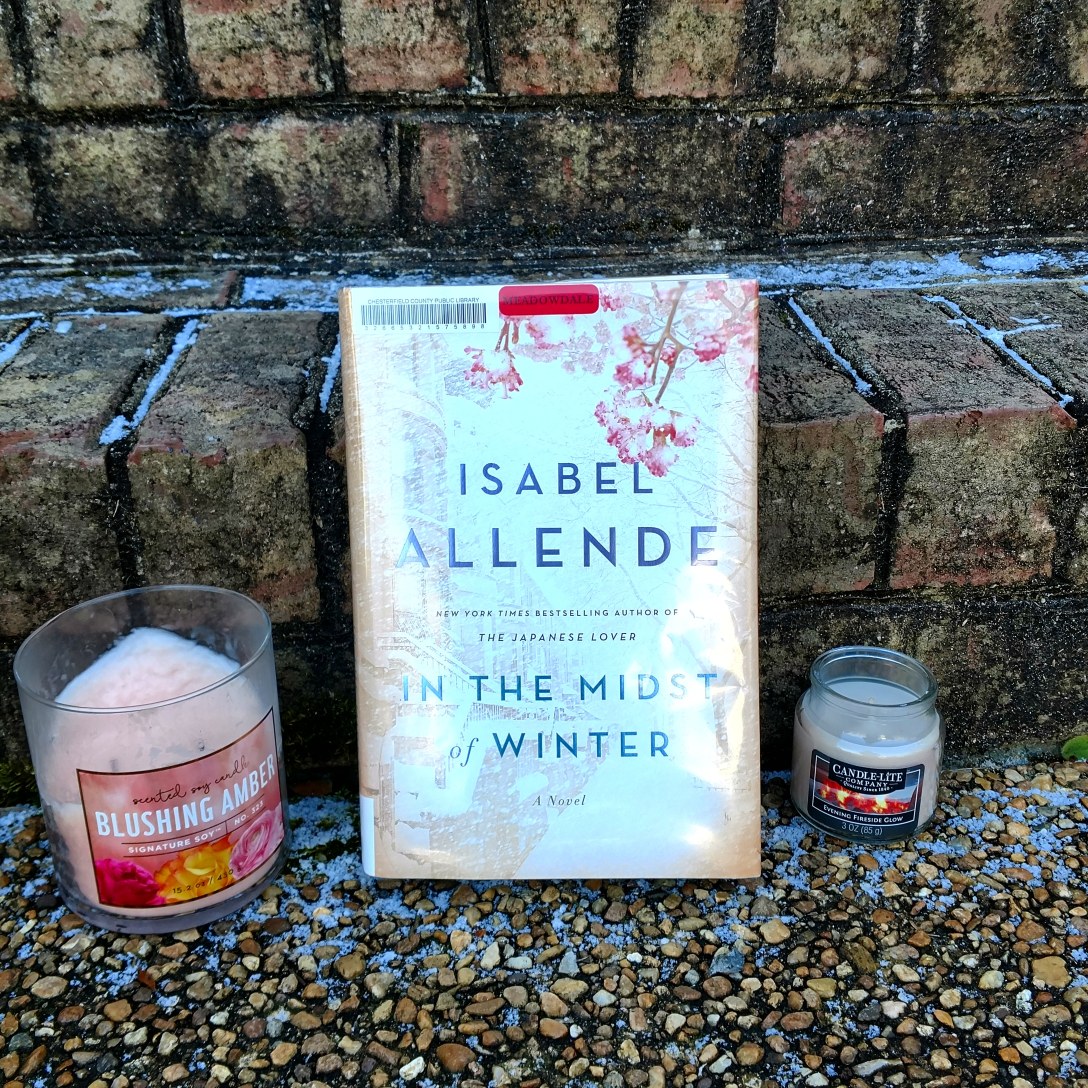
Review: In the Midst of Winter by Isabel Allende

Alexis: Read 2/1/19

In the Midst of Winter is a story of grief, guilt, and love. The book focuses on three main characters: Lucia, a lecturer from Chile; Richard, a professor; and Evelyn, a caregiver from Guatemala. Half of the book is set in 2016, explaining how the three characters meet and become involved in each other’s lives, while the other half explores their complicated, and often depressing, pasts.

I adored the first half of the book, which opens on Lucia’s life in New York City during a snowstorm. It’s such a promising premise. As the reader, you are immediately thrown into the minds of Lucia and Richard, and I enjoyed reading about their contrasting personalities. I love that Lucia has a bug-eyed old Chihuahua, while Richard has four cats that he simply calls one through four in Portuguese. Though I found Evelyn’s life and story interesting, I felt like her dedicated chapters didn’t reveal her character or thoughts as well as Lucia’s and Richard’s.

As usual with Allende’s writing, I love her descriptions in this book and I think they serve the story and the characters well. I also enjoyed reading about the tumultuous histories of Chile and Guatemala, as well as Richard’s time in Brazil.

This book went in a different direction than I expected, however. The morbid reason the three characters go on a journey together works at first, but I found that it didn’t work the further I got in the story. I correctly guessed the twist towards the end. When I finished the book, I was left underwhelmed. It addresses such deep and interesting histories and emotions, yet it ends on an almost “oh, well!” and weirdly cheery note, which dragged down my review.

VERDICT: 3 ½ out of 5 books
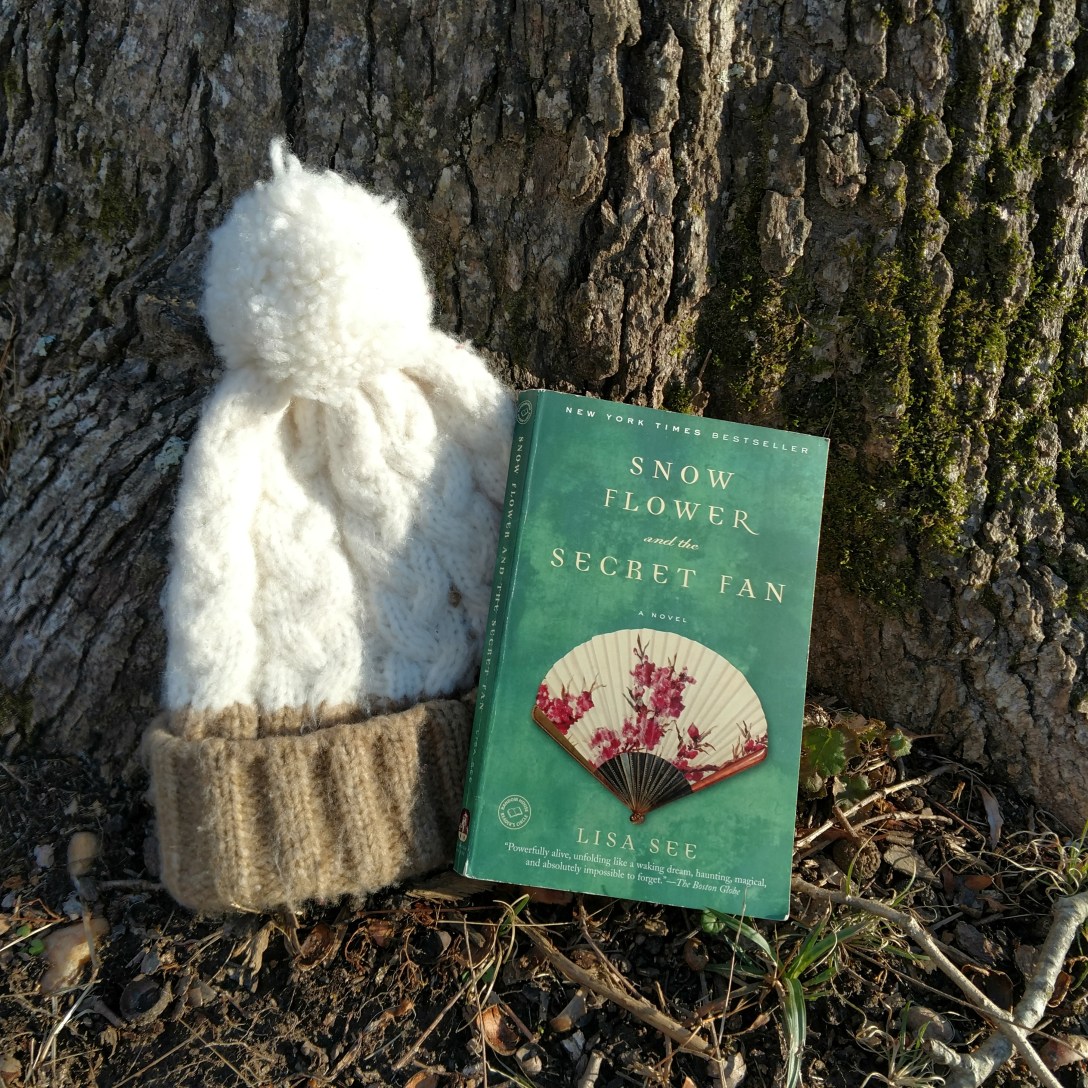
Review: Snow Flower and the Secret Fan

Alexis: Read 1/28/19

“For my entire life I longed for love. I knew it was not right for me — as a girl and later as a woman — to want or expect it, but I did, and this unjustified desire has been at the root of every problem I have experienced in my life.”

Snow Flower and the Secret Fan is a beautifully written historical fiction novel. Lisa See’s writing always flows well, and her writing did not disappoint.

This is a novel about women in 19th century China. I, who usually reads a book in one to three sittings, found myself having to take multiple mental breaks from this book. This was also the case when I read The Tea Girl of Hummingbird Lane, which turned out to be one of my favorite books.

The reason for the needed breaks was the heavy topics that this book addresses. I had to push my 21st century Western ideals to the back of my mind while reading this (See even discusses this in the afterword). She addresses some beautiful and fascinating ideas, such as embroidery, nu shu, the secret woman’s language, and friendship. But this book also addresses foot binding in detail, as well as death, starvation, and miscarriages. It deals with the extreme sexism of the time, including abuse and acceptance of the low societal positions from the main characters, Lily and Snow Flower.

If I had held onto my modern viewpoint while reading this, I would have intensely disliked the characters and the storyline. Who wants to read about two women who believe they are utterly worthless unless they have three inch feet, marry, and have all sons?

But I learned so much from reading this book, and I enjoyed learning about Chinese society during this era. You can tell that See did her research. See writes well-rounded characters and doesn’t shy away from giving them flaws, and this is one of the greatest aspects of the book. I loved Lily and Snow Flower in the first half of the book, and I was frustrated with them in the second half. However, Lily hints at this in the very first page, so it wasn’t unexpected.

Overall, if you’re interested in learning about a remote, 19th century Chinese society, and you’re not afraid of a sad story, pick this up. If you’re interested in a woman-centered story, and the complicated love between two women, then pick this up.

VERDICT: 4 out of 5 books

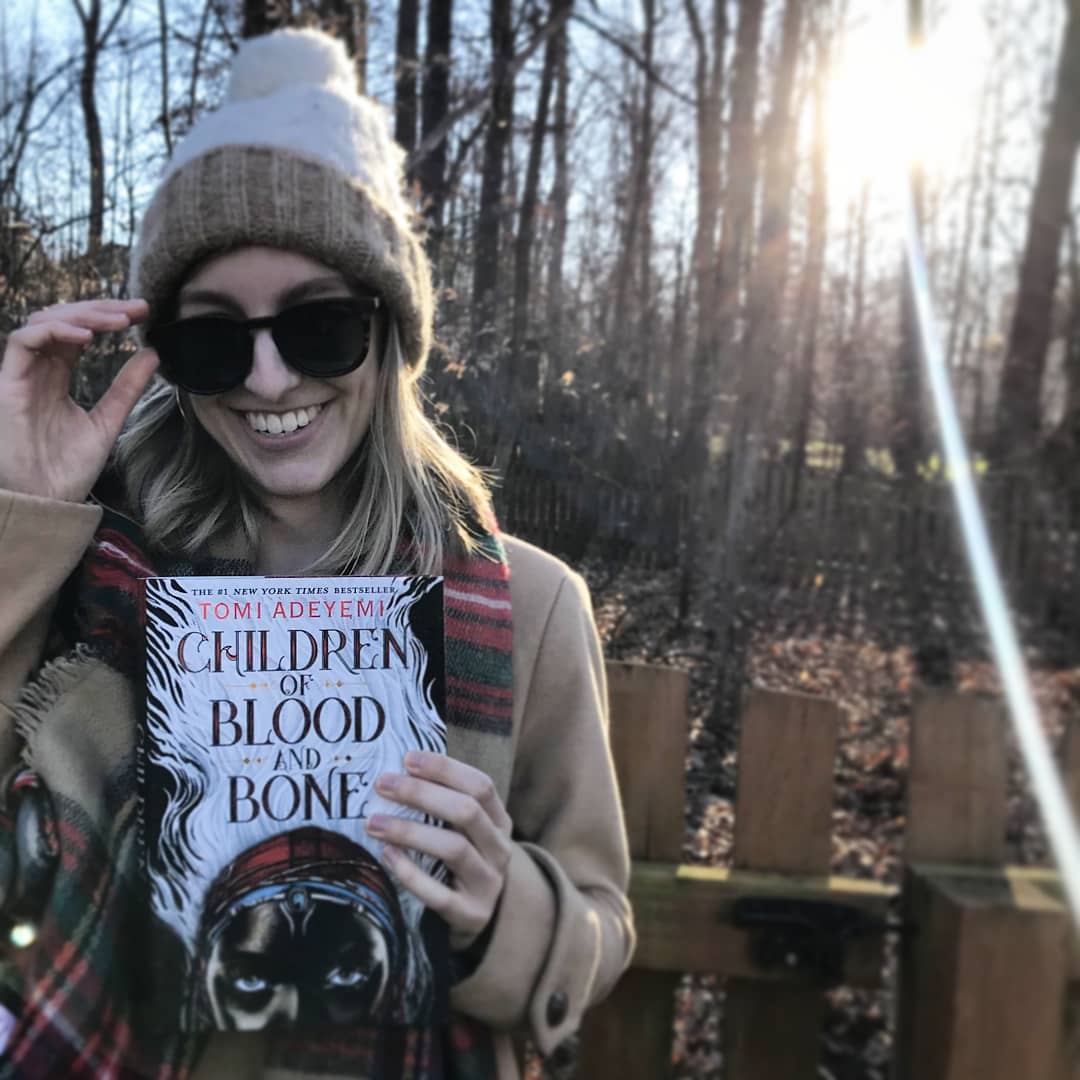
Review: Children of Blood and Bone by Tomi Adeyemi

Alexis: Read 1/9/19

Children of Blood and Bone, despite being a thick book, is super fast-paced. The plot is always moving, which I appreciated as I read. Adeyemi does a good job of explaining how the magic system works, and I enjoyed learning about all the gods and the maji’s connections to them. Sometimes multiple perspectives can be hard to pull off, but I really enjoyed reading from all the different perspectives, and the shifts never pulled me out of the book.

As for the characters, I’ll be honest: I’m not a huge fan of Zélie. She sometimes felt like a Katniss Everdeen character. However, I connected more with her as the book went on. I enjoyed Inan’s character until about halfway through the book. As for Amari and Tzain, I always enjoyed reading from their points of view. At times, the plot was a bit predictable, but not enough that I didn’t continue to enjoy reading the story. There was a love-at-first-sight storyline, and though I normally hate this YA trope, I thought Adeyemi used it to her advantage.

About a quarter way through this book, I realized something: parts of this book mirror Avatar: The Last Airbender.

Zélie is very similar to Katara. When she is young, her mother is killed in a raid because she possessed magical powers. Zélie possesses these same powers and she grows up wanting revenge. She has an older, non-magical brother, Tzain, who just wants to protect her. Zélie meets an Aang-like character, Amari: a girl who was trained how to fight from an early age, but who needs to learn to get past her peaceful side.

Amari’s older brother, Inan, the prince, has a good heart but is misguided. He wants his father’s approval but he has to betray those he loves in order to achieve it, just like Zuko. The father is definitely a Fire Lord Ozai type of character.

There is a temple “made of air” which connects maji to their gods. This temple was mostly destroyed in a raid in which a genocide happened.   

Despite these similarities, Children of Blood and Bone is an original book. I I loved the diversity and the magic based on Nigerian mythology. I also admired Adeyemi’s creativity—the characters ride on giant, horned lions and leopards, called lionaires and snow leoponaires.

Overall, this book was wholly engrossing and I had a hard time putting it down. And for that reason I can’t rate it any less than 5 books. I’m excited for the sequel!

VERDICT: 5 books

Review: The Tattooist of Auschwitz by Heather Morris

Alexis: Read 12/10/18

This is a hard book for me to rate. The story, as are all Holocaust stories, is dark, harrowing, and resonant. This is a story of survival and love. It focuses on Lale and Gita, who manage to fall in love amidst the horrors of Auschwitz.

Parts of the novel hit me hard. It’s impossible to read a book about the Holocaust and not come away emotionally affected by it. The knowledge that this was not only based on a real historical event but also on the lives of two very real people played in the back of my mind as I read. I liked that it was written in present tense, which propels you into the story.

But how do you rate a book like this? The perspective is one of the most interesting parts of the book. Lale, as the Tattooist, has a higher position than most of his fellow prisoners. I was wholly involved in his storyline of using his position in order to barter jewelry for food, help feed other prisoners, and help save other prisoners’ lives. His feelings of revulsion at tattooing his own people conflict with his instinct to do what he must to survive.

Yet chunks of this book still fall flat. The writing style is awkward in places. Half of Lale and Gita’s relationship feels real and raw, and half feels stitled. In the “about the author” section of the book, it’s mentioned that Morris originally wrote this story as a screenplay, and this seems to fit with the style of some sections of the book. Near the end, it’s mentioned that Lale’s way of dealing with the horrors of his imprisonment is emotional detachment. This could be the reason for the stiltedness, as the writing could reflect Lale’s repressed emotions. However, I don’t think this was a purposeful choice on Morris’ part.  

VERDICT: 4 out of 5 stars