Review: Mexican Goth by Silvia Moreno-Garcia

Alexis:

This is one of the most atmospheric books I’ve read in a while. It reads like a gothic, psychedelic nightmare. Moreno-Garcia’s gross, creepy descriptions shine. High Place is dripping in mold, villainous characters, and ghost-like visions.

What I enjoyed:

The gothic feel of this novel. I love the homage to books like Wuthering Heights and Jane Eyre. I love the fairly upfront references to The Yellow Wallpaper.

Moreno-Garcia’s descriptions are wonderful (but in a horror type of way). And she describes everything in masterfully drawn descriptions with high amounts of detail. You’ll have no trouble visualizing High Place or its contents. The descriptions of the mold alone made my allergies want to flare up.

This book touches on a lot of the ideas of the 1950’s, even the unfavorable ones…like eugenics. But I enjoyed the discussions of anthropology and botany.

Francis’ character was definitely my favorite; he grew on me more as the book went along.

What I wasn’t a fan of:

The beginning of this book is so slow. The entire first chapter feels almost unnecessary. The first entire half of the book basically has no plot; it’s just Noemí trying to figure out what the heck is going on at High Place while also trying to comfort her cousin, Catalina. For that reason, I don’t think you can call this book “suspenseful.”

As for Catalina, there are reasons that pop up later as to why we don’t get to know her character that well, but at the same time, I don’t feel like I know her at all. We get Noemí’s perspective on her cousin, but I didn’t even get the notion that she even knows Catalina that well to begin with.

Overall, I wish the plot had been more solidified.

All in all, this book is split pretty much down the middle for me. The first half is slow moving and has a gothic atmosphere, while the second half is faster moving and leans more on horror.

If you want a lushly written, atmospheric, bizarre gothic story with a twist of horror, then this might be the book for you. Just be aware that it unravels slowly, but the descriptions and the twists at the end will stick with you.

VERDICT: ⭐⭐⭐⭐/5

Trigger warnings: Rape/sexual assault, violence, murder/death. Mentions of suicide, cannibalism, eugenics, incest, and miscarriage.

Review: The Masterpiece by Fiona Davis

Alexis:

Hi, everyone! I’m moving into my new apartment tomorrow. I’m really excited, but I’m also already exhausted just thinking about it!

The Masterpiece is the last book I read on the beach. It isn’t my usual read, but it was a great beach read! Overall, this is one of those books that I read and I liked, but it didn’t leave a long-lasting impression.

The book alternates between two timelines. In 1928, Clara Darden is an illustrator teaching at the Grand Central School of Art in New York City. In 1974, Virginia Clay is a recent divorcee and cancer survivor who begins working at the Grand Central Terminal when she finds a painting abandoned in the old art school. 

What I liked: I loved that the story centered around a building. I learned a lot about the history of the Grand Central Terminal. The story focuses a lot on the beauty of the terminal in the 20’s, and how the building has been worn down over the years by the time the 70’s roll around. 

I really enjoyed reading about Clara’s life as a woman struggling to prove herself as an artist. I loved her determined character, and her struggle resonated with me. I also learned a lot about art, especially how illustrators, not to mention women artists, were viewed in the 1920’s. 

What I didn’t like: I wasn’t a huge fan of Virginia’s storyline. I’m not really sure why, but it didn’t resonate with me like Clara’s storyline. 

Clara’s sectionsfocused too much on Oliver, in my opinion, and I wasn’t a fan of his character.

I also found the ending to be melodramatic and not very believable. 

As an aside, my mom also read this book. She loves historical fiction, and she really liked this book. She loved the descriptions and the history of the Grand Central Terminal. 

VERDICT: 3 stars

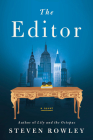
Review: The Editor by Steven Rowley

Alexis: 

What I liked: I like Rowley’s writing style. I remember liking it a lot in his other book, Lily and the Octopus. His dialogue is always on-point and funny, and I enjoy his imagery. 

I also really liked James as a character. I found him funny, and I enjoyed reading about his relationship with Daniel. I don’t think I’ve ever read a book set in the 1990’s, and I enjoyed the political climate and the history of the book.

What I disliked:

I really couldn’t get into this until about halfway through. James’ story was a little too boring at first, and I found myself skimming a lot of the details. I wanted to have more of James’ backstory earlier on in the story.

My biggest issue with the book was with Jackie Kennedy as a character. I could tell that Rowley was being careful with how he wrote her, and because of this, she never felt fully fleshed out as a character. I’m not a huge fan of historical people being one of the main characters in books, and I don’t think she served a good enough purpose. In my opinion, the editor would’ve made more of an impact in the story if Rowley had made up a famous editor and created a backstory for her. 

There was also an event towards the end of the book which I felt like didn’t fit into James’ character, and was a little too on the nose. 

Overall, I liked James and Daniel, and as a writer myself, I enjoyed reading about James writing his novel. But the slow plot and Jackie’s character dragged this down a star.

VERDICT: 3 stars

Support Independent Bookstores - Visit IndieBound.org

Review: China Dream by Ma Jian

Alexis:

I definitely recommend knowing modern Chinese history, especially The Cultural Revolution, before diving into China Dream by Ma Jian.

In modern day China, totalianarism is on the rise. Main character Ma Daode is the director of the China Dream Bureau, which aims to use a device to replace people’s dreams with the China Dream of the Communisty Party by directing the China Dream directly into their brains. But Ma begins to struggle with recurrent nightmarish memories of the Cultural Revolution. Soon, he feels like he’s two separate people: his past self, and his current self, and he begins to worry he will lose his job and status.

I struggled to read the first chapter, which mostly focused on introducing Ma’s character by talking about his many affairs, and by having Ma talk to other people at his work to establish the ideology of the China Dream.

But after the first chapter, I found this an intriguing satire about the Chinese government. I enjoyed the juxtaposition of Ma’s past with his present. The writing itself is straightforward and a little stilted, although that probably has to do with the translation. The further you get into the book, the more absurd it becomes as Ma struggles to keep a grip on reality.

I definitely recommend reading the Afterword, where Ma discusses his motive for writing the book.

Overall, this is a well-done, often brutal and violent satire that reveals the dangers of a totalitarian government, and what happens when you suppress the truth. 

VERDICT: 4 stars

Support Independent Bookstores - Visit IndieBound.org