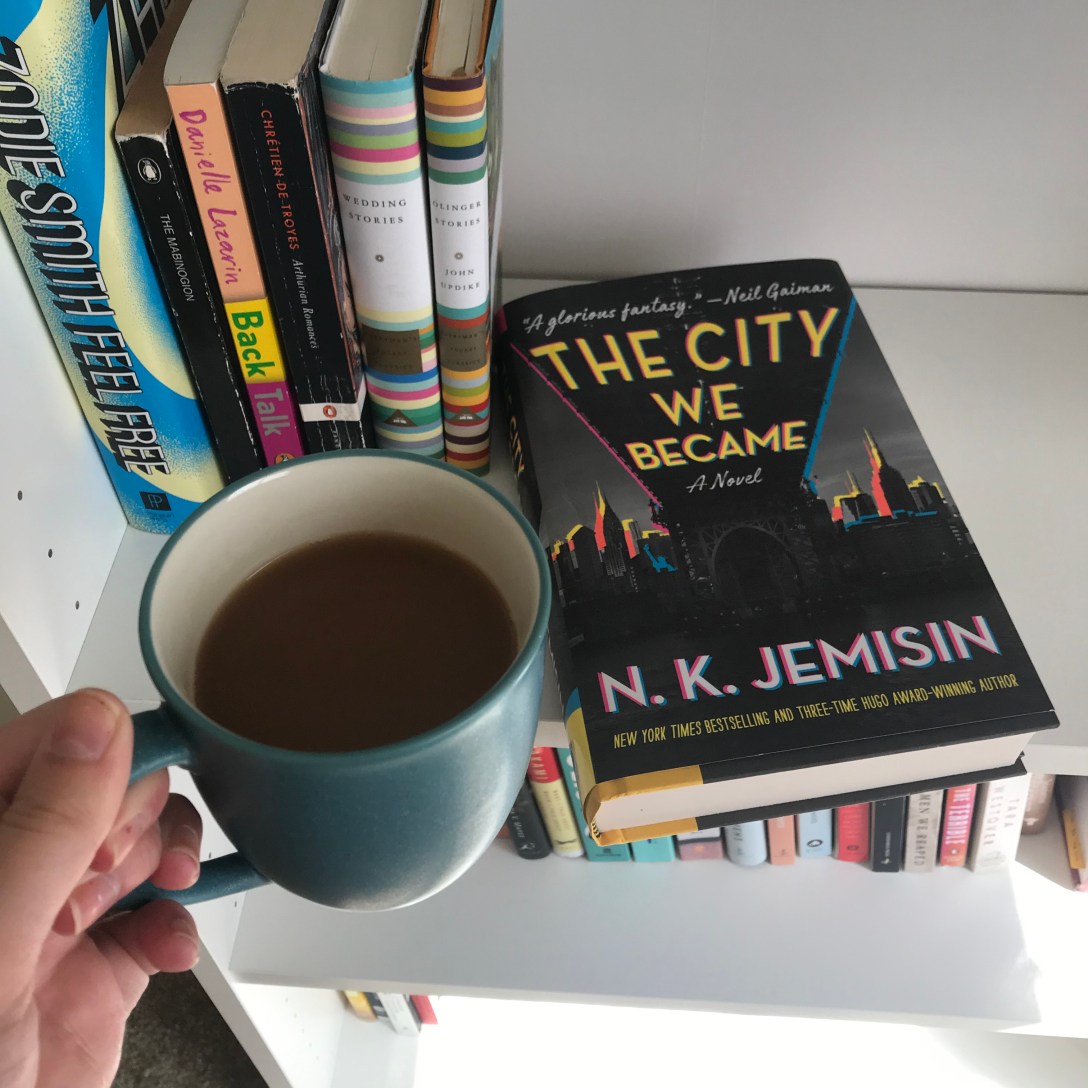
Review: The City We Became by N.K. Jemisin

Anna: I so badly wanted to love this! I love New York City and I lived there for a year, so I want to make a disclaimer that this wasn’t an issue of me not understanding NYC. I also think N.K. Jemisin is a talented author and I enjoyed The Fifth Season

What I liked:

  • Great themes of equality, identity and belonging; fighting hate: racism, sexism, homophobia; and what it means to belong somewhere
  • Wonderfully diverse group of characters of varied races, sexualities, and identities
  • The setting and the complex characterization of New York City

What I didn’t like:

  • Too on the nose
  • Confusing world building
  • Lots of telling and not showing (We are told exactly what something is and what it means throughout)

This is a unique and creative fantasy novel, but not without some thoroughly confusing world building. While I enjoyed the setting and the diverse cast of characters, I couldn’t shake the feeling of being hit over the head with thinly-veiled symbolism throughout. With little room for interpretation and imagination, I’m not sure if I’ll pick up the next book in this series. 

VERDICT: 3 out of 5 books

Review: The Last Wish by Andrzej Sapkowski

Alexis:

I’m glad I read The Last Wish, but since it was originally published in 1993, it definitely has that old high fantasy feel to it.

This is the original series that delves into the world of the Witcher called Geralt of Rivia—before the popular video games, and before the TV show adaptation.

I’m not sure if it was just the translation or not, but this book is very heavy on the “tell” without a lot of “show.” Whenever there was imagery, I really enjoyed it, but this book is honestly 90% dialogue. I normally love dialogue, but it was a little too much, to the point that sometimes actions would only happen in dialogue. 

I also found it interesting that Geralt is much more vocal in the book than in the show. 

However, I was pleasantly surprised that the book is non-linear, just like the show. Suddenly, the show’s structure, which seemed all over the place at first, makes more sense. 

This first book only delves into Geralt’s storyline, with one main scene with the sorceress Yennefer, and several of the adventures with the troubadour Dandelion, who is named Jaskier in the show. The main difference in the worlds is, like I said earlier, that the book feels very “old” high fantasy. What I mean by that it’s a medieval world, with elves, and dwarves and monsters, and pubs with beer, but also sexism.

The first section of the book opens with a sex scene. Several of the characters (though most are monsters, but still) talk very casually about being rapists, and unnecessary comments about women were made several times throughout the book.

I think the show feels more contemporary (and it should, since it was created decades after the book was written). Many of the characters in the book hold unsavory views of women, especially Dandelion, who comes off as a rowdy, rather than the foolish but lovable Jaskier. While the TV show still has sexist characters, both Geralt and Jaskier are respectable characters.

Overall, I’m glad I was able to see where this popular fandom originated. But I’m probably going to stick to only watching the show, which is rare for me when it comes to books!

VERDICT: ⭐⭐⭐/5

Review: His Only Wife by Peace Adzo Medie

Anna: Thank you to Algonquin Books for sending me a copy of this lovely book! His Only Wife is a smart simply written and beautiful story about a modern woman finding her voice under complicated circumstances.

When Afi’s family arranges a marriage for her with one of the richest and sought after men in Ghana, she is excited and nervous. She finds it a bit strange that her new husband, Eli, doesn’t come to the wedding, but she’s told not to worry about it. From there, Afi moves from her small village, where she shared a tiny room with her mother, into a fancy apartment in the city. Weeks pass, and she’s yet to meet her husband. Slowly, Afi learns more about her husband and the other woman he is hiding. As she becomes accustomed to her new luxurious life, she also becomes obsessed with securing her position as Eli’s only wife.

 I loved the simple and straightforward way this is written. There are complicated relationships between the characters, made even more dynamic by cultural expectations and traditions. When she first marries Eil, Afi is completely subservient to society’s expectations and worries about her cooking, cleaning, and pleasing her husband. But as the story goes on, she starts to question everything she knows about being a woman.

Spoiler: The only complaint I have is that everything regarding Afi’s career as a seamstress comes very easy for her, almost too easy for here. There are no obstacles in the plot in regards to her career, and by the end of the novel she has become a renowned designer in a matter of months. Unrealistic? I think so.

Otherwise, I don’t think I’ve ever read a book set in Ghana, and I enjoyed the rich descriptions of the customs, culture, and the food. I look forward to reading more by Peace Adzo Medie in the future! 

VERDICT: 4/5 books!

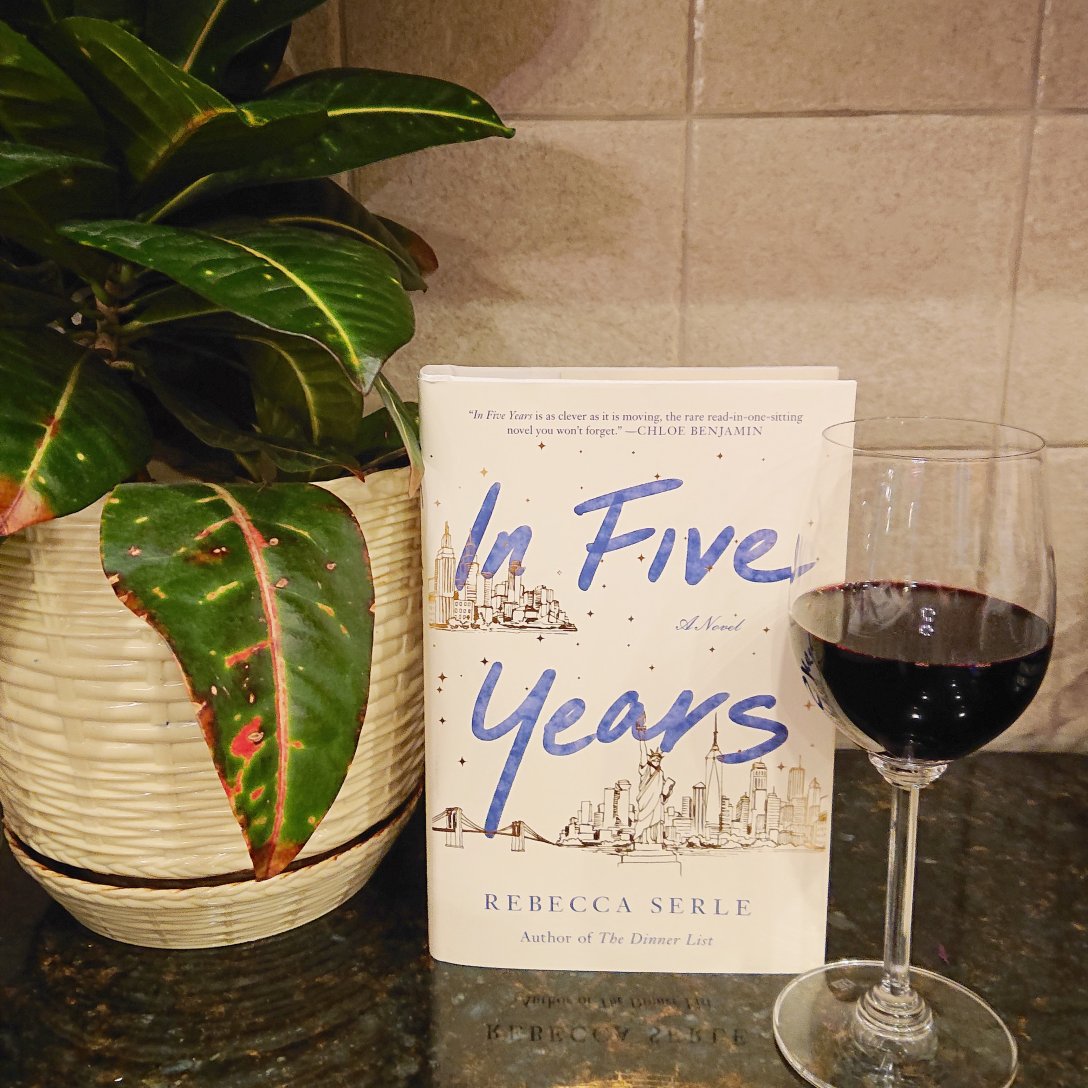
Review: In Five Years by Rebecca Serle

Alexis:

I only have a couple of weeks left of my summer break, and while I’m excited to start my second year of grad school (even if it’s only 50% in person) it means I’ll have less time to read and review books in my free time. So I’m trying to get as much reading in as possible, though I’m planning on continuing my Harry Potter re-read this fall!

Let me start out by saying that In Five Years isn’t my usual genre. In case it wasn’t obvious, I’m usually a YA fantasy type of reader.

Here’s the synopsis from Goodreads in case you’re interested:

“Where do you see yourself in five years?

When Type-A Manhattan lawyer Dannie Cohan is asked this question at the most important interview of her career, she has a meticulously crafted answer at the ready. Later, after nailing her interview and accepting her boyfriend’s marriage proposal, Dannie goes to sleep knowing she is right on track to achieve her five-year plan.

But when she wakes up, she’s suddenly in a different apartment, with a different ring on her finger, and beside a very different man. The television news is on in the background, and she can just make out the scrolling date. It’s the same night—December 15—but 2025, five years in the future.

After a very intense, shocking hour, Dannie wakes again, at the brink of midnight, back in 2020. She can’t shake what has happened. It certainly felt much more than merely a dream, but she isn’t the kind of person who believes in visions. That nonsense is only charming coming from free-spirited types, like her lifelong best friend, Bella. Determined to ignore the odd experience, she files it away in the back of her mind.

That is, until four-and-a-half years later, when by chance Dannie meets the very same man from her long-ago vision.”

I really enjoyed the first half of the book. Rebecca Serle’s writing is good, and the beginning sucked me into the story. I thought Dannie was an interesting, flawed character. And I thought the theme of not letting your panned idea of life getting in the way of your actual life was good.

But the second half is where the story began to become too melodramatic for me. A lot of the events just didn’t really make sense. The story becomes more focused on friendship, which I liked, but it didn’t really align with the beginning of the book. I don’t want to give too much away, but the ending felt like Serle saying “I’m trying to put as many plot twists as possible to make my ending not predictable.” But to me, it felt cliche and like a cop-out. This book had the potential to deal with the themes and Dannie’s problems in a profound way, but the Hallmark movie ending took away what could’ve been a much more powerful message. 

VERDICT: 📚📚📚/5

SPOILERS BELOW:

I could handle Bella’s cancer diagnosis. I wasn’t expecting a cancer story, but I thought Serle handled it with care despite the fact that it also felt like killing off Bella was the only way to make her plot work.

The fact that the apartment ended up being an apartment that Bella got for Dannie was weird, especially because she got the apartment for Dannie before Bella knew she was dying…? And before Dannie broke up with David?

The whole backstory of Bella’s mother telling Dannie that she knew they were destined to be best friends so she enrolled Bella in Dannie’s school was so weird and unnecessary. 

Having Dannie’s little brother die and then having Bella die was a little much, like somehow the brother’s death was supposed to foreshadow Bella’s.

And, of course, having Dannie and Aaron’s relationship actually be a weird one-time stand brought on by grief from Bella’s death…yikes. That didn’t sit right with me at all. 

Finally, the very end. Oh boy. With some suspended disbelief, I could deal with everything else. But the fact that Dannie feels weird about getting with Aaron because of Bella, but then gets together with Bella’s oncologist…That was such a cheap ending. And unfortunately, the ending of a book is what sticks with you.
Review: The Terrible by Yrsa Daley-Ward

Trigger warnings for sexual assault, drug and alcohol addiction, and domestic and physical abuse

“They are not ours, the stars/and have never been.”

Anna: Let me just say that when I bought this in the $1 section of Strand, I didn’t know that it was a memoir told through poetry. I am not a huge fan of poetry, but The Terrible blew me away. Most of it is told through narrative style poems, which helped make it less scary for newbies like me. But there were some really beautiful poems in here that were much more experimental in form than I was not expecting to enjoy. 

Yrsa grew up with her ultra religious grandparents in Northwest England. We follow Yrsa’s childhood, her troubled relationship with her mother, her love for little brother, and her journey into adulthood and ultimately finding herself as a poet and a person. Be warned–this is extremely dark and in some ways is largely the story of Yrs’s struggle with drug addiction. I could not stop reading and flew through it. I especially loved her relationship with her little brother. My only complaint is that I think the final poem tied everything together a little too nicely.

Maybe I’ll read more poetry now?

VERDICT: 4 out of 5 books

Review: The Bone Houses by Emily Lloyd-Jones

Alexis:

The Bone Houses is a historical fantasy novel, which is quickly becoming one of my favorite subgenres. It’s set in medieval Wales, and follows two main characters: Ryn, a gravedigger, and Ellis, a mapmaker.

Due to remnants of lost magic, the dead are rising in the forest neighboring Ryn’s small village of Colbren. She and Ellis, each for their own reasons, team together on a journey to eradicate the undead, known as bone houses.

I loved every page of this book. It was dark and gritty and full of death, but the characters were a joy to read, and the dialogue was great. I love dark books that take small scenes, small moments, to let the characters relax, enjoy themselves, and crack jokes.

This story is about home, family, and loss. I loved learning the stories and Welsh-inspired folklore of the world. I loved that Ryn’s sister’s pet goat became a main character; I’m a sucker for an animal sidekick!

Lately, it’s been a little rare for me to find two characters that I’ve enjoyed reading about and rooting for, but this book was it. And I haven’t read a lot of books lately with a cringeless romance, either. I appreciated the slow-burn romance in this book, and the fact that the characters actually took the time to become close friends first. It was a subplot, and it didn’t get in the way of the main story. It didn’t feel forced in the least!

And, finally, I loved that this story was well-written. Lloyd-Jones’ prose feels almost effortless to read, while also being lush and evocative.

“She was half a wild creature that loved a graveyard, the first taste of misty night air, and the heft of a shovel. She knew how things died. And in her darkest moments, she feared she did not know how to live.”

VERDICT: ☠️☠️☠️☠️☠️/5

My Re-Read: Harry Potter and the Prisoner of Azkaban

Alexis:

I’m loving my re-read of the Harry Potter series! I’d forgotten just how intricate the world is, and it’s been a welcome break from the current 94 degree weather outside. Whew!

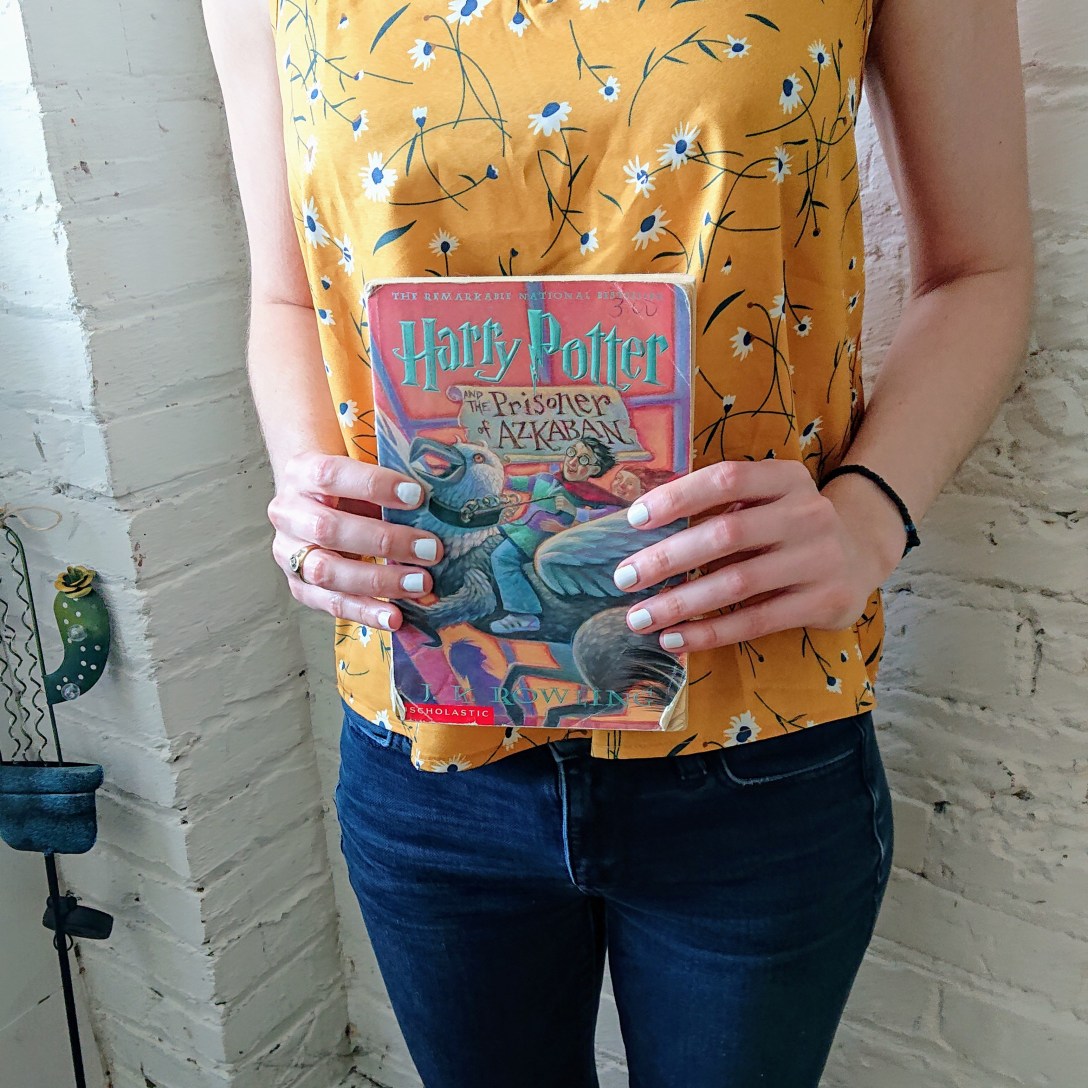
Harry Potter and the Prisoner of Azkaban remains one of my favorite in the series. (I may also be a little biased because it’s my absolute favorite movie adaptation in the series. I still swear that if Alfonso Cuarón had directed all of the movies with John William’s scores, they would’ve all been *chef’s kiss*).

The Golden Trio’s characterization continues to deepen, and we learn more information about Harry’s parents.

Lupin is one of my favorite characters, and I loved being introduced to him. We also get introduced to Sirius and his relationship with Lupin, Wormtail, and Harry. And the way the plot unfurls throughout the book is just perfect.

Harry Potter gif


Review: Deeplight by Frances Hardinge

Alexis:

Hi, everyone. I’m finally done with my first year of grad school, and you know what that means– I get to read for fun again!

Deeplight starts out as a slow burn. At first, it turned me off a little bit, but I know Frances Hardinge; she’s one of my favorite authors! She is a masterful worldbuilder, and she spends the first 100 pages exploring the world of Deeplight and letting you dig into the mind of her characters in order to set up a powerful punch later.

Synopsis: Deeplight follows Hark, a fifteen-year-old boy who’s a little lost in the world. He just feels like a sidekick to his longtime friend, Jelt, until he’s put on trial for a crime and sold as an indentured servant. If you couldn’t tell from the front cover, the story is set on an island, called Lady’s Crave, where thirty years ago, the sea gods “turned on one another and tore each other apart.” If the islanders are lucky, they can find relics of the dead gods called “godware,” which are powerful and valuable. Hark just so happens to find a heart, which saves the life of Jelt. But when it starts to change Jelt, and not in a good way, Hark searches for answers with the help of a girl named Selphin and an old priest named Quest. 

I think this is the first book I’ve read by Hardinge that has a boy narrator instead of a girl. I will admit: I kind of wish the story was told from the perspective of Selphin, a girl he meets on his journey. I connected with her character a little more than Hark. 

The plot picks up a ton during the second half of the book, and I found myself really appreciating how she set up the world in the first half. Hardinge’s plot always goes in a direction I’m not expecting, and her books (including this one!) are always the epitome of fantasy, always delving deep into her dark, imaginative world and filling them with masterful descriptions. And this is why she’s one of my favorite authors!

I love the morally grey characters, and how Hardinge focuses on a toxic friendship, a topic not often explored in fantasy. I think the character arcs were great. Hardinge also created a world where deaf culture is normal and accepted, and the characters often use sign language to talk to each other. Overall, this book is a well-drawn, imaginative sea story that travels in unexpected, vivid directions. 

VERDICT: ⭐⭐⭐⭐.5 


Review: The Testaments by Margaret Atwood

Anna: I’m sorry to say that I was so disappointed by this! In the vein of 𝘛𝘩𝘦 𝘊𝘶𝘳𝘴𝘦𝘥 𝘊𝘩𝘪𝘭𝘥, 𝘛𝘩𝘦 𝘛𝘦𝘴𝘵𝘢𝘮𝘦𝘯𝘵𝘴 read like a total money grab. I really enjoyed 𝘛𝘩𝘦 𝘏𝘢𝘯𝘥𝘮𝘢𝘪𝘥’𝘴 𝘛𝘢𝘭𝘦, and in no way did 𝘛𝘩𝘦 𝘛𝘦𝘴𝘵𝘢𝘮𝘦𝘯𝘵𝘴 feel like its sequel. For one, 𝘛𝘩𝘦 𝘛𝘦𝘴𝘵𝘢𝘮𝘦𝘯𝘵𝘴 lacks the tension and literary weight of 𝘛𝘩𝘦 𝘏𝘢𝘯𝘥𝘮𝘢𝘪𝘥’𝘴 𝘛𝘢𝘭𝘦 in every way. ⁣

𝘛𝘩𝘦 𝘏𝘢𝘯𝘥𝘮𝘢𝘪𝘥’𝘴 𝘛𝘢𝘭𝘦 is slow-paced and slowly reveals the horror of the dystopian world of Gilead. 𝘛𝘩𝘦 𝘛𝘦𝘴𝘵𝘢𝘮𝘦𝘯𝘵𝘴, on the other hand, is pace-y, dialogue heavy, and driven mostly by plot. It completely lacks the dark, creeping so prevalent in 𝘛𝘩𝘦 𝘏𝘢𝘯𝘥𝘮𝘢𝘪𝘥’𝘴 𝘛𝘢𝘭𝘦. ⁣

Set fifteen years after 𝘛𝘩𝘦 𝘏𝘢𝘯𝘥𝘮𝘢𝘪𝘥’𝘴 𝘛𝘢𝘭𝘦, 𝘛𝘩𝘦 𝘛𝘦𝘴𝘵𝘢𝘮𝘦𝘯𝘵𝘴 is told in three perspectives. There’s Agnes, who grows up in a prominent family in Gilead; Daisy; living in the free country of Canada; and, wait for it… the third is Aunt Lydia’s perspective. My biggest problem is Aunt Lydia’s storyline, which just wasn’t believable for me. I don’t want to give away any spoilers, but I just didn’t buy any of it. The other two perspectives were interesting enough. That is, until they started to overlap, which is where I really think this book fell apart. ⁣

Unfortunately, I came away from this feeling that Atwood was forced into this book in response to the show. I’m so sad–I really wanted to love this!⁣

VERDICT: 3 stars

In the age of JK Rowling, who has exploited her wold and characters for everything that she can (disclaimer, I still love the original Harry Potter books), I feel that having a bestselling book or series isn’t enough any more.  The new Hunger Games book coming out this year, The Ballad of Songbirds and Snakes, is a prime example. It’s a prequel to the series that reveals the backstory of President Snow. I’m so over prequels and have no desire to read this. I think that sometimes there’s value in letting a good book or series stand on it’s own. I know things like book deals and an author’s career are part of this, but I think I’ll be avoiding any long-awaited add ons to old favorites for a while.


Review: The World That We Knew by Alice Hoffman

Alexis:

Despite the fact that the characters were a little too distant and one dimensional for my taste, this was still a five star read for me. Hoffman’s writing is haunting, beautiful, and lyrical. I love magical realism, and this book is a wonderful mix of magical realism, historical fiction, and folklore.

The book focuses on Lea at the beginning of WWII during the Nazi regime. Lea’s mother’s one goal is to keep her daughter safe, so she does the unthinkable: finds Ettie, the daughter of a rabbi, to create a golem, a powerful magical creature/person made from clay, who is to protect Lea at all costs.

This is a Holocaust story, and Hoffman doesn’t shy away from the horrors that the Jewish people of Europe faced. But I love the way Hoffman weaves small beauties into the story, especially with the relationship of Ava (the golem) with the heron. The heron was a beautiful symbol throughout the book. Out of all of the characters, I actually felt like I connected with Ava the most.

This is a survival story, so while I prefer to get into the heart and soul of the characters, the distant POV felt right with the atrocities the characters face in the story. Hoffman focuses on what it means to be human, and what it means to survive.

VERDICT: 5 stars