Review: King of Scars by Leigh Bardugo

Alexis: Read 3/24/19

I loved the first half of this book. I loved Nikolai’s internal (and sometimes external) battle within himself. I enjoyed learning more about Zoya: her past, her innermost feelings, her motivations. And at first, I rejoiced in Nina’s chapters, especially after her ending in Crooked Kingdom.

King of Scars is told in third person from various perspectives, including Nikolai, Zoya, Nina, and a man named Isaak. I’m glad Bardugo decided on third person, as I think it worked perfectly for the world in Six of Crows, and ultimately served a better purpose than the first person of the Shadow and Bone Trilogy.

I enjoyed the masterful worldbuilding and name dropping of characters from previous books. Bardugo has really cemented the Grishaverse. And I really enjoyed how the plot was building. However, the second half started to meander. Zoya ended up being the primary character, rather than Nikolai himself. The book’s title is literally Nikolai’s nickname, and yet he sometimes gets lost in the sea of other characters.

I honestly wanted to skip over Isaak’s chapters; I felt like his information could have been revealed later and it would have served the book better, even if the the reader wouldn’t get to know him as a character. But I really just didn’t care about him.

Nina’s chapters began to feel drawn out. As much as I enjoy her as a character, I found myself wanting to stay with Zoya and Nikolai’s storylines. I almost wanted Nina’s chapters to be separated from the rest of the story, maybe as its own short book.

My primary concern, besides Nikolai not being as center stage as I wanted him to be, was where the plot ended up. It was building up to such a great place, but then the ending ruined it for me. I’ll avoid spoilers here and go more into that below.

This book definitely felt like a follow-up to the Shadow of Bone trilogy, which I didn’t like nearly as much as the Six of Crows duology. I was hoping for more of a Six of Crows feel, with the masterfully crafted plot and characters. I just wish the book had only switched in POV from Nikolai to Zoya and that the plot was…different. Even with my mixed feelings, I still love the characters and Bardugo’s world, and I flew through this book.

The first half of the book: 5 stars. Second half: 3 stars

VERDICT: 4 stars

 
SPOILERS BELOW:

I felt like most of the plot reveals in the second half of the book were a little too coincidental. Hanne just happens to be the daughter of Brum? The Saints just happen to be alive with the answers to a greater power for Zoya? And the biggest of all: the Darkling’s comeback. It felt like a cop-out to me. I wanted something as equally as dark to be the main antagonist, but I wanted something different. The Darkling’s story was supposed to be over. With all the tumultuous politics going on, I just felt like the ending could’ve gone in a different and better direction.



Review: Pachinko by Min Jin Lee

Alexis: Read 3/17/19

Well, this book is certainly a saga. It feels like three different books, because really, it is. Pachinko covers four generations of the same family, from the early 1900’s to the 80’s. The story opens with Sunja, a Korean peasant, who meets a wealthy businessman and forms a relationship with him. When Sunja becomes pregnant, she finds out that the businessman is already married. So instead, she accepts a generous offer of marriage from Isak, a sickly Protestant preacher.

The amount of detail Lee manages to pack into this book is astounding. She covers the historical and political aspects of each time period. The book especially focuses on what it means to be Korean during a time when the country is taken over by the Japanese and then later split into two. Her characters deal with the dysphoria that they feel as Koreans living in Japan, as well as discrimination. I really enjoyed learning about the history and culture of Korea, and I could really go for some Korean or Japanese food right about now!

While extremely detailed, Pachinko is written matter-of-factly, with no flowery descriptions. Lee writes from a distant, omniscient point of view. At the end of the book, Lee discusses her reasoning behind this. She says, “‘Fair’ seems like a simple word, but I think because my subject matter is so troubling and controversial, I wanted my narrator to be as objective as possible” (494). Lee certainly achieves this, as the book, especially the first half, almost reads like a historical account. At first, I found the tone off-putting. But once the book became more political, I understood the need for distance. Still, that doesn’t neglect the fact that I prefer to get more into characters’ heads and emotions. I love character-driven stories, and while this was that, I never felt too involved in the characters’ lives.

For example, Lee has a bad habit of simply stating “and then he died.” When she did this in the beginning of the book with Yoonie, Sunja’s father, I did a double-take. She nonchalantly stated his death and they hardly went into it in the next chapter, and she repeats this throughout the book. While I understand her distance, as a reader, this was very off-putting. I wanted to feel each death and life-changing event the way the characters did.

Overall, I really enjoyed this book, even if I had to enjoy it in chunks. I learned a lot about Korea’s history and the history of misplaced Koreans. I really don’t know how to rate it as a whole, as it covered so much ground.

History and detail: 5 stars

POV and writing style: 2 stars

Characters: 4 stars

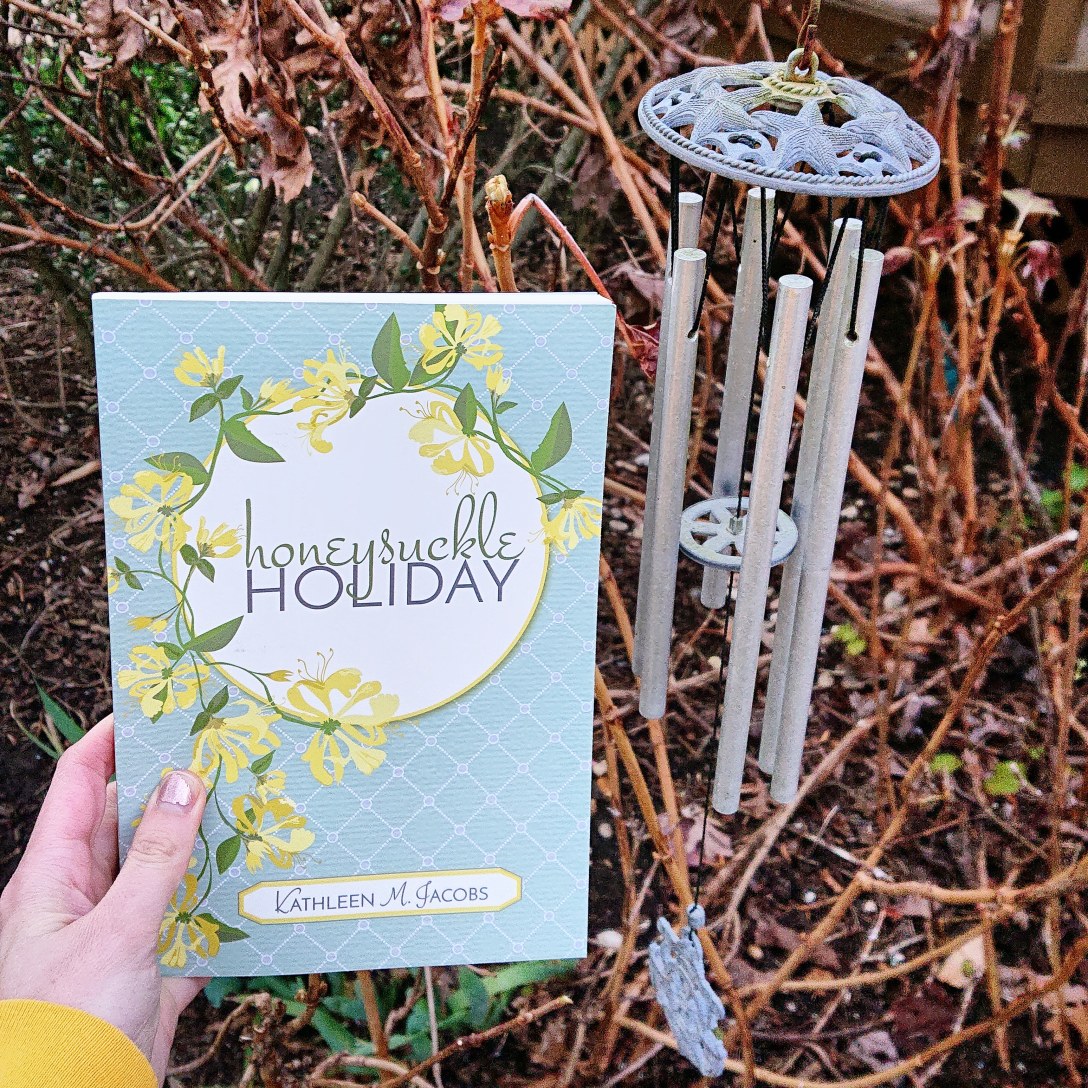
Review: Honeysuckle Holiday by Kathleen M. Jacobs

Alexis: Read 3/11/19

*The author sent me a copy of her book in exchange for an honest review.*

Honeysuckle Holiday was such a poignant read. Don’t let the cover fool you: this short book tackles childhood innocence and racism.

The story follows Lucy in two different time periods: 1965 and 1970, when she was twelve and sixteen-years-old. Though Honeysuckle Holiday is categorized as YA, I would describe it more as a bildungsroman/coming-of-age story. When Lucy’s father leaves, not looking back, on Christmas Day, she and her older sister, Caroline, try not to dwell on it too much. But she knows something has changed when her mother refuses to talk about him and when they have to move into a different house.

In her acknowledgements, Jacobs quotes a woman named Peggy Fox: ‘“You captured the voice of a twelve-year-old girl very well.’” And she’s right. Jacobs’ writing flows beautifully, but I was very aware that I was reading in the perspective of a twelve-year-old.

Lucy notices everything around her. She relates things to her Barbie dolls, which she admits she’s starting to outgrow. She is jealous of some of Caroline’s things but also wants to be like Caroline when she grows up. She partly knows why her dad left but is partly left in the dark. She’s curious about the world around her and asks lots of questions. Jacobs’ detailed descriptions mimic Lucy’s curious mind. I also like how she includes a lot of parenthetical phrases, as Lucy has a lot of afterthoughts.

I love all of the references Jacobs includes in her book. Lucy’s mother wears Chanel No. 5. Lucy uses a Velveeta box to hold her collection of found objects. The characters reference It’s A Wonderful Life, The Beatles, and TV shows of the time. These references cemented the story into its setting and time period, bringing it to life.

Lucy mentions To Kill a Mockingbird multiple times, and even relates herself to Scout. I found this fitting, as the story reminded me a lot of To Kill a Mockingbird. Both are told from a young perspective, but are really told for a more mature audience. Both deal with racial tensions and divides, as well as the horror of the KKK. I loved Jacobs’ inclusion of descriptions of food. The book is set in the South, and I enjoyed reading about Lila’s apple pies, okra, and Lucy’s love of steak.

While I liked how Lucy describes the honeysuckle vines ( as well as the smell) outside of her window, I don’t think the title of the story sums it up very well. Though the story itself was impactful, the title was not. To me, the honeysuckle symbolizes Lucy’s childhood innocence, and the book is about coming-of-age and losing that behind. I’m also not sure why the first couple of chapters are in Caroline’s POV.

Overall, if you’re looking for a quick read that’s packed with vivid details, that will draw you into the 60’s and 70’s, and whose message will stay with you, then I definitely recommend it.

VERDICT: 4 out of 5 books

Review: The Afterlives by Thomas Pierce

Alexis: Read 3/7/19

This book had an interesting premise, so why not check it out? After a cardiac arrest episode that leaves him legally dead, Jim Byrd lives with a device called the HeartNet. The HeartNet will continue to pump his heart if another cardiac arrest occurs. But now Jim is faced with his own mortality, and can’t help thinking about the afterlife. He and his new wife, Annie, try to figure out the afterlife by attending a new church called the Church of Search, by ghost hunting, and by tracking down a woman who claims she has a machine that will allow you to talk to the dead.

The story is in first person, told by Jim himself. But snippets of the past intersect his story. These snippets are in third person, following a cast of characters who lived in an old house, which is now a haunted restaurant. Jim and Annie aren’t sure why the house is haunted, though one of the house’s former owners, Clara, had a dog who died in a fire. I really liked these snippets into the past and thought it was an interesting choice to include them in the story.

I also really enjoyed Pierce’s writing style. His writing is conversational, and his sentences all have a pleasing cadence. Every character is a round character, with their own idiosyncrasies and passions and opinions on the afterlife.

The book has a small frame that mimics stage directions of a play. I found this fitting, as Annie is a playwright:

“Exit heartbeat. / Exit breath. / Exit every mood, every memory. / Exit you. / To where” (3)?

I enjoyed the sections about the ghost hunt, the machine, and Jim’s musings on life and death, which includes heart worries and panic attacks. There wasn’t much of a plot, and a lot of the middle section was spent on interactions with minor characters and minor plot points. Most of the book almost felt like a memoir or character study of Jim’s life. I enjoyed the beginning and the end, but I felt like 100 pages could’ve been cut out of this book and it would’ve made it more impactful.

The book also takes on a sci-fi edge, with the machine and the inclusion of holograms becoming a part of normal life. The book stretches over decades of Jim’s life, including decades into the future, but I found the holograms an odd choice for the book. Maybe they’re supposed to be symbols, like ghosts, in between life and death?

VERDICT: 3 out of 5 books

Alexis’ Target Book Haul!

Time for a book haul! I ran to Target last night (in the pouring rain) because I needed cookie dough ice cream.

I told myself I was only going to read library books for a while, but both King of Scars and Pachinko were 20% off. Whoops!

These are two of my highly antipcated reads and I can’t wait to crack them open, after I’ve finished my library books, of course.

Review: The Night Tiger by Yangsze Choo

Alexis: Read 2/27/19

The Night Tiger is a fascinating blend of magical realism, historical fiction, romance, and murder mystery. It follows two main characters: Ji Lin and Ren. Ji Lin is the apprentice of a dressmaker who is also secretly a dance-hall girl. Ren is an eleven-year-old houseboy who recently switched masters due to his old master’s death. Their lives come together when Ji Lin finds a severed finger and tries to figure out where to return it.

I love that the book is set in 1930’s colonial Malay, now modern Malaysia. This makes for a rich and cultural setting, and I loved reading about the different languages spoken and the foods eaten. I loved Choo’s descriptions of clothing from Ji Lin’s point of view, and how she showed England’s rule and influence over the culture of Malay.

Throughout the book, Choo focuses on the superstitions based on chinese numbers, as well the folklore of weretigers. She even includes a section explaining these at the end of the book, which I wish were placed before the book as pretext, but I still appreciated her including them at all.

The first 30 pages were a little slow, and I had to get used to Choo’s writing style and tone. But then I was hooked. This isn’t a fast-paced book, and the mystery is revealed slowly. Though the main plot is fairly slow, there were enough subplots to hold my attention.

I loved Ji Lin as a character. She’s a classic modern day heroine in 1930’s Malaysia, yet she also fits in perfectly in the time period. She’s intelligent and clever and isn’t afraid to speak her mind. Yet, unlike where a lot of strong female characters seem to fail, she is still feminine and caring. I also really enjoyed Shin, her step brother’s, character. I found he and Ji Lin to have a lot of chemistry, and I found their relationship moved in a natural direction.

What I didn’t like about the book: the switching POVs. Ji Lin’s chapters were first person, past tense, while Ren’s chapters were in third person, present tense. And every once in a while, I was thrown into William Acton’s POV (Ren’s new master). It would have served the book better if both Ji Lin and Ren’s chapters were in first person, or, honestly, if the whole book was in Ji Lin’s perspective. Sometimes Ren felt like an afterthought.

I really enjoyed The Night Tiger’s setting, atmosphere, and characters. I wish the ending had tied up some of the loose ends, but overall, this was an interesting and unique read. Just don’t read it if you get queasy at the mention of severed fingers!

VERDICT: 4 out of 5 books


SPOILERS BELOW:

I’m not really even sure how to address the twin issue. Why do authors always feel like one of the twins has to be dead? I enjoyed Ren’s “cat whiskers” sense, but Yi’s role in the story was kind of “eh” for me.

I actually really liked the fact that Ji Lin and Shin fell in love. Their relationship, and the progression of their relationship, felt very real to me, and I loved the dynamic. I didn’t find it weird because they were so close and important to each other and not actually related.

However, I wasn’t a fan of how Shin’s character progressed. He professed his love for Ji Lin, only to beg her to have sex with him…? It felt completely out of character, as Shin was nothing but respectful towards Ji Lin, and even though he was portrayed as a womanizer, I knew from the beginning that it was obviously just a front. I felt like their almost-bedroom scene could have gone very differently. But, in the end, I was glad Ji Lin stood up for herself and decided to wait on marriage and pursue a career. It felt true to her character.


Review: Ruin and Rising by Leigh Bardugo

Alexis: Read 2/20/19

Ruin and Rising was certainly the best book of the Shadow and Bone Trilogy. I disliked Alina’s character in the first two books, and I felt like she became a more complex character in this one. Additionally, Mal had zero personality in the first two books, and he felt more real to me in Ruin and Rising, as well.

Everyone can agree with me here: Nikolai is still the most vibrant character. He has a sparkling personality and he knows what he wants. He echoes the beginning of Bardugo’s masterfully crafted characters in the Six of Crows series.

As for the plot, I feel like the first half of the book meanders. There’s a whole host of secondary characters that I didn’t really care about, except for Genya.

And time for an unpopular opinion: I don’t like the Darkling. He’s creepy, manipulative, and honestly rapey. His beauty doesn’t make up for that.

SPOILERS BELOW:

Okay, so I really enjoyed the plot twists in the second half of the book. Mal being the third amplifier? Nikolai getting turned into a monster? I didn’t see either of those coming, and it made the book more exciting!

The ending felt very Hunger Games to me: boy and girl get together and live a nice, normal life together, where they can grieve together forever. I honestly didn’t mind the ending, as I think it was the happiest ending for Alina and Mal. But Alina losing her power was anticlimactic and confusing. It felt unnecessary. Plus, she had such a good character arc by Ruin and Rising that I felt it was unfair for her to return to how she was in the beginning of the series.

Despite some of my issues with this book, I really enjoy the Grishaverse and I couldn’t put this book down. I enjoyed seeing Bardugo’s writing style evolve!

VERDICT: 4 out of 5 books

We Met Sugar Run’s Author, Mesha Maren!

Yesterday, we visited the Fountain Bookstore in Richmond to hear author Mesha Maren talk about her new book, Sugar Run.

Sugar Run has already gotten a lot of attention in the book world, and we loved hearing her talk about her book. Maren discussed her research, writing processes, and inspirations. She discussed how West Virginia, where she grew up, was her inspiration for the book. She even told a story about building a log cabin with her dad when she was 17, a log cabin that is now her writing space.

We enjoyed listening to her talk about identity and how she and her main character, Jodi, navigate being LGBTQ in West Virginia.

We look forward to reading and reviewing Sugar Run!

Review: Long Live the Tribe of Fatherless Girls by T Kira Madden

Anna:

I’m excited to share my first 5 star read of the year! T Kira Madden’s memoir is a heartbreaking and beautiful account of growing up in Boca Raton—or Rat’s Mouth— of Florida. It’s so raw and emotional, and not to mention lyrically written, that it’s both hard to read yet impossible to put down. My inability to stop reading, despite the contestant pretense of bleak topics, is something I love about Madden’s writing. She truly has a talent in making the bad beautiful in her writing without diminishing the severity and impact of the bad.

This book comes with a trigger warning for just about everything. A lot of this book deals with drug abuse, alcohol abuse, physical abuse, child pornography and sexual abuse, and basically every kind of abuse you can think of.

Something I really like about this memoir is the cyclical nature of it, which is something I find quite annoying in some memoirs, but that isn’t the case here. Madden never “harps” on certain details or asks the reader to feel bad for her in any way. It is her blunt and rich writing that earned my sympathy and trust.

Something else that stood out to me is Madden’s tremendous ability to forgive, especially in the case of her family and her parents. This lack of anger and blame, despite the difficulties she has experienced, is what has resonated with me the most since finishing this memoir.

Long Live the Tribe of Fatherless Girls will be published March 5, 2019 in the U.S. I can’t wait for more people to read this!

VERDICT: 5 out of 5 books


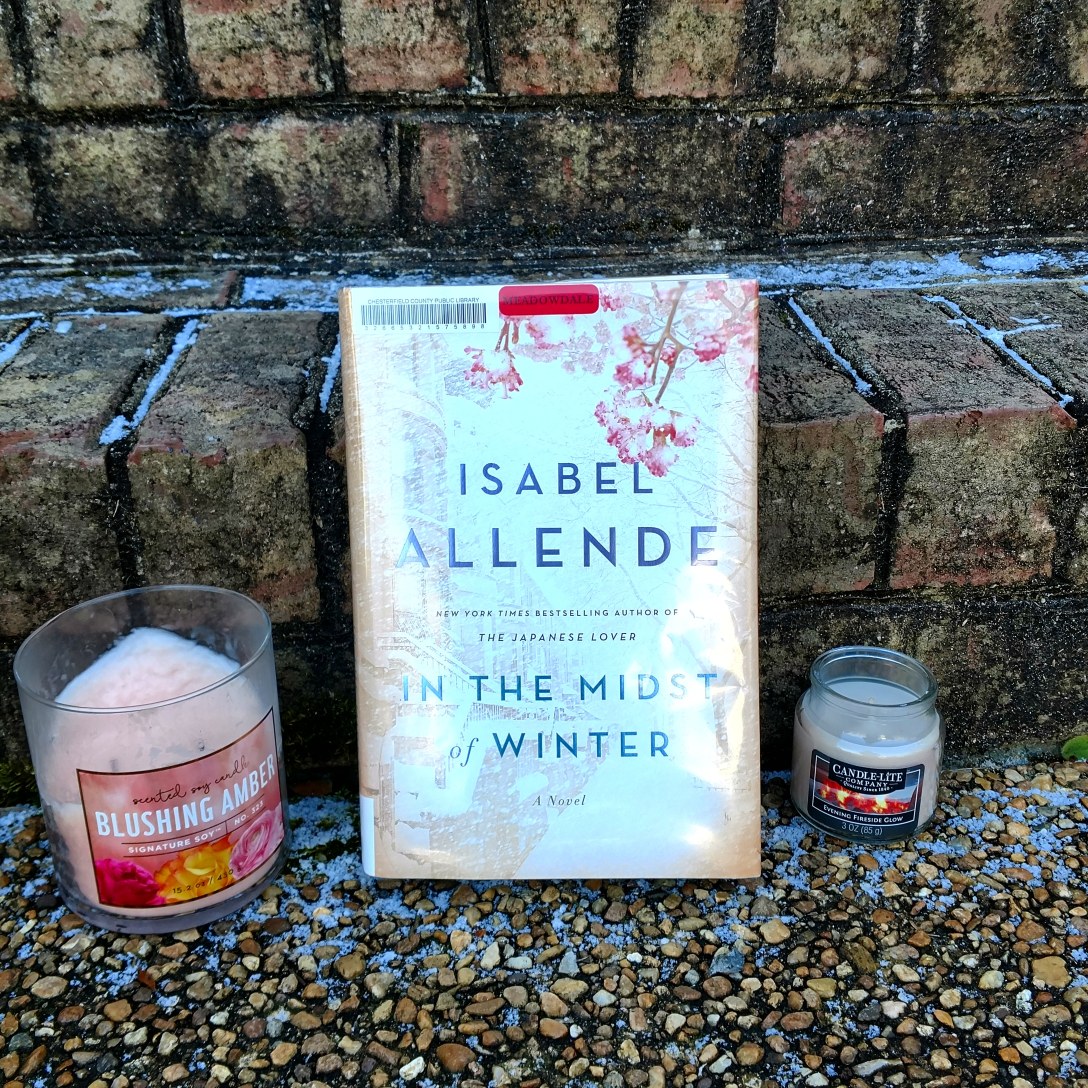
Review: In the Midst of Winter by Isabel Allende

Alexis: Read 2/1/19

In the Midst of Winter is a story of grief, guilt, and love. The book focuses on three main characters: Lucia, a lecturer from Chile; Richard, a professor; and Evelyn, a caregiver from Guatemala. Half of the book is set in 2016, explaining how the three characters meet and become involved in each other’s lives, while the other half explores their complicated, and often depressing, pasts.

I adored the first half of the book, which opens on Lucia’s life in New York City during a snowstorm. It’s such a promising premise. As the reader, you are immediately thrown into the minds of Lucia and Richard, and I enjoyed reading about their contrasting personalities. I love that Lucia has a bug-eyed old Chihuahua, while Richard has four cats that he simply calls one through four in Portuguese. Though I found Evelyn’s life and story interesting, I felt like her dedicated chapters didn’t reveal her character or thoughts as well as Lucia’s and Richard’s.

As usual with Allende’s writing, I love her descriptions in this book and I think they serve the story and the characters well. I also enjoyed reading about the tumultuous histories of Chile and Guatemala, as well as Richard’s time in Brazil.

This book went in a different direction than I expected, however. The morbid reason the three characters go on a journey together works at first, but I found that it didn’t work the further I got in the story. I correctly guessed the twist towards the end. When I finished the book, I was left underwhelmed. It addresses such deep and interesting histories and emotions, yet it ends on an almost “oh, well!” and weirdly cheery note, which dragged down my review.

VERDICT: 3 ½ out of 5 books