
Alexis:
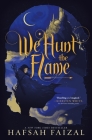
We Hunt the Flame is a set in an Arabic-inspired fantasy world. It follows two main characters: Zafira, also known as the Hunter, who hunts to feed her village; and Nasir, the Prince of Arawiya, who is a trained assassin. This book is very The Hunger Games meets Katara and Zuko from Avatar: The Last Airbender.
What I liked: I loved the world that Faizal created. I liked how she described the clothing, and especially how she described the food.
This book also has a strong undercurrent of feminism which I liked; Zafira’s homeland, Demenhur, is sexist, and would punish Zafira if they knew she was actually a woman huntress. Throughout the book, she has to battle sexism in order to prove herself.
As I mentioned, the book follows both Zafira and Nasir. I enjoyed reading from both of their perspectives, and I appreciated that the book was in third person.
My favorite part was the last quarter of the book and the ending. Faizal had some really awesome plot twists that I didn’t see coming. I feel like the plot really came together at the end of the book, and I have high hopes that the next book in the series will take a step up.
What I disliked: While I loved the setting, this book could have used a glossary. In the beginning, I struggled to understand some of the terms that Faizal used, since I don’t have a background in Arabic. I figured them out through context clues, but a glossary would have been useful.
My least favorite part of the book was actually a character. This character plays a role in the beginning of the book and dies a little later on, and it felt completely out of place for me. The grieving over the character’s death didn’t last nearly long enough, and the character’s role in the story confused me. I felt like it could’ve been cut out completely and the book would have been better for it.
In addition, the story dragged on in the beginning and the middle of the book. Plot wise, it was a little lost. It didn’t really pick up until the end.
There were also some minor things with Faizal’s writing that I took issue with. Some of her phrasing felt off to me. The dialogue in the beginning felt a little stiff and too explanatory. Faizal also writes sentences like, “‘You scared me,’ Zafira exclaimed in a whisper” (112). She also has a tendency to use a poetry-like spacing in order to emphasize a phrase, and while I liked this the first two times, it ended up drawing me out of the story the more she used it.
Sometimes I would have to go back and re-read a section because I thought the characters were doing one thing, only for them to be doing something else. I think Faizal focused a little too much on describing everything. The book almost could’ve started 100 pages in.
And my last note: Nasir was just a little too Zuko, backstory, scar, and all. This book was supposed to explore his character arc by the end, but we already had too many hints of his underlying feelings for it to really pack a punch.
Overall, I wasn’t a huge fan of the beginning of the book, but I really enjoyed the ending!
VERDICT: 3 stars

 takes two to book review