Review: The Light We Lost by Jill Santopolo

Alexis:

I liked the first half of The Light We Lost—not the prologue, but I’m not really a fan of prologues unless they give important historical/background information.

The book is written in first person in the eyes of the main character, Lucy. Throughout the book, she addresses a “you,” which refers to her first love, Gabe. Each chapter ends with Lucy posing a question, or a series of questions, to Gabe. At first, I liked this formatting, but it got repetitive and old fast.

The beginning of the book focuses on their relationship, which lasts just over a year. Their relationship is a classic first love relationship. Lucy and Gabe are infatuated with each other, and their relationship mostly focuses on their physical chemistry. They share their hopes and dreams with each other while living in New York City.

Then they break up. I liked reading about Lucy’s grief and seeing how she deals with her loss. Lucy moves on; Lucy meets another guy. Yet Gabe is ever-present, whether in the back or the front of her mind. Even five, ten years down the road, all Lucy can think about is Gabe, and this begins to feel repetitive and, frankly, annoying.

I kept yelling (metaphorically, of course), “Lucy, you are a grown, married woman! Get a grip and stop only thinking about yourself!”

And, ultimately, this is what I have a problem with in the second half of the book. The characters become self-absorbed and predictable. I simply didn’t care about them anymore. The plot rambles, and most of it deals with Lucy’s feelings of insecurity in her relationship and her life.

Of course. That was my first thought about the ending: of course that’s how it would end. I might have been on board if Lucy finally changed at the end, if she grew up and accepted what wasn’t meant to be, but she didn’t.

VERDICT: 3 out of 5 books

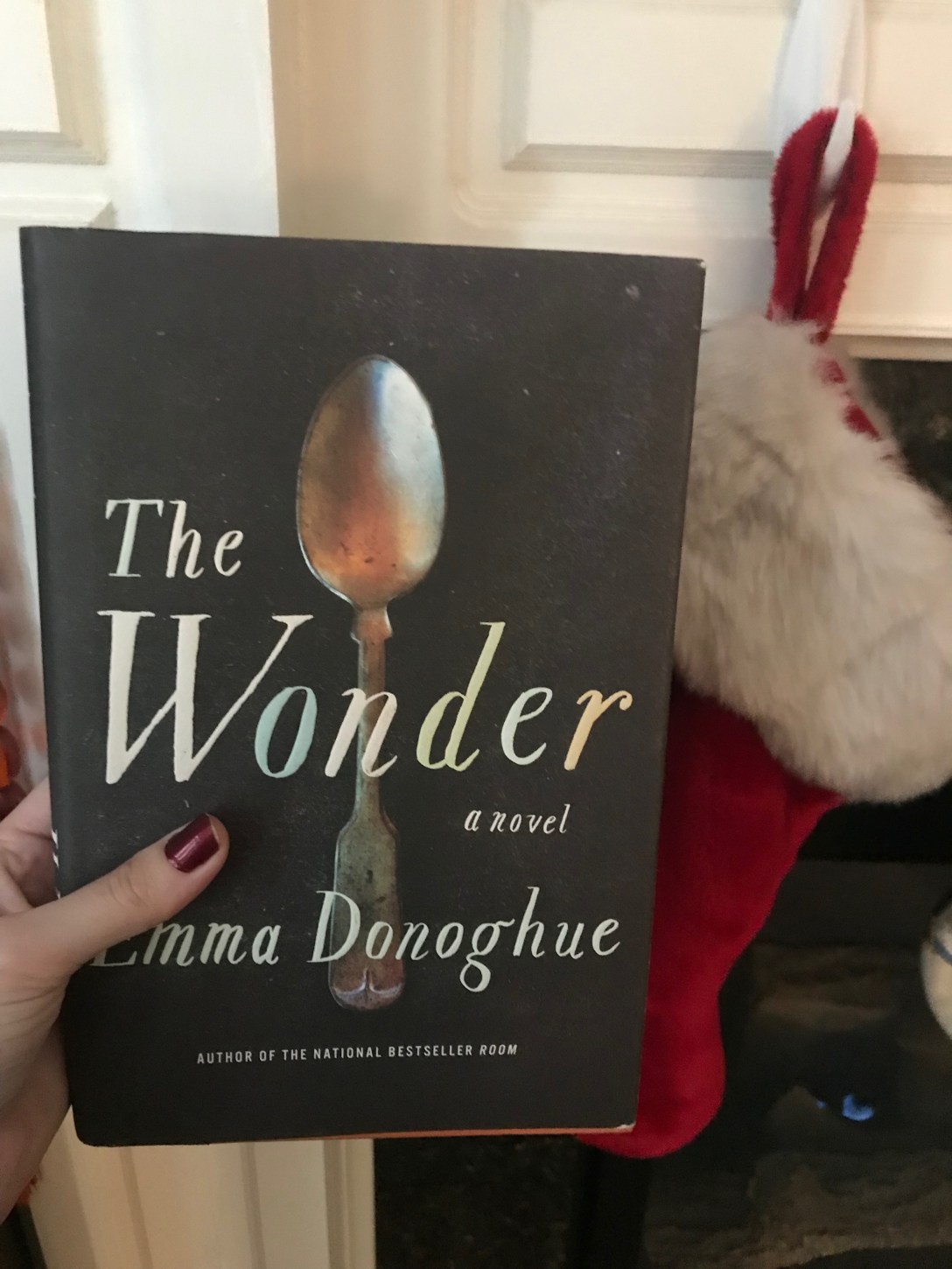
Review: The Wonder by Emma Donoghue

Anna:

This is a spoiler free review!

It’s 1859, and English nurse Lib Wright takes on a mysterious case in rural Ireland. She’s assigned a devout little girl, Anna, who claims to be living without food, under God’s will. Lib’s job is to watch the girl at all hours and report to a committee if she is sneaking food or not. Lib arrives expecting to catch the girl sneaking food within a matter of hours. But as Lib becomes more involved in the girl’s life she begins to see that this religious family is far from what it seems.

I picked this book up in the $1 section of the Strand when I was living in New York. I haven’t read Donoghue’s wildly successful book, Room, but I both love and am horrified by the movie. I found myself picking up the British edition of The Wonder when I was studying publishing in Oxford, England after college. It has one of those semi-vague descriptions that somehow is totally intriguing. I’ve had this book on my radar for a while. I was excited to also read an Irish author for the first time.

I think good historical novels are such an accomplishment, and this one captures religious tension between Catholics and Protestants, as well as the cultural differences and prejudices between the English and Irish. One of the biggest endeavors this book takes on is exposing hypocrisy in religion and and warning against the danger of extremism. The protagonist, Lib, does not identify with any faith or God herself, which alienates her, but also often allows her to act as one of the only characters to think and see clearly. As a nurse, she also represents science and rational thought.

This book doesn’t portray Catholics in good light, to say the least. Anna’s family is devout to the point of desiring sainthood over the health and life of their own daughter. Though Donahue exposes the dangers of religious extremism, she doesn’t completely criticize against religion as a whole. Anna herself becomes a dear friend to Lib, who has never allowed herself intimacy with a patient before. Lib recognizes and admires Anna’s good character and extreme bravery and strength. Lib’s love interest, Byrne, identifies as a deeply religious man, who is still able to see the dire consequences of the family’s extremist behavior. These two good characters prove that Donoghue does not condemn all faith as a whole, which I appreciate.

Donoghue also scrutinizes men in positions of power. Both the town’s head doctor and the priest are exposed as self-serving and using Anna’s publicity for their own means. They both are privy to ghastly and private information concerning Anna’s physical health that they conceal for the sake of town peace.

Another overarching theme is the question of if a mother/parent always has the child’s best interest at heart.

One of the things I love about The Wonder is that it kept me guessing up until the end. I didn’t think Lib’s own backstory is as compelling as it could have been, and it’s also easy to guess from the beginning. This book is so unique, and I would recommend it for a suspenseful, intelligent, and atmospheric read.

VERDICT: 4 out of 5 books

Review: The Pisces by Melissa Broder

Anna:

This book is crazy…but very smart. Following the breakup with her long term boyfriend, Lucy takes up her sister’s offer of living in her beach house in Venice Beach for the summer and house sitting her sister’s beloved dog. There’s only one requirement- she must attend a sex addiction group therapy. But she leaves that all behind when she meets the fantastical and beautiful merman named Theo.

The first thing to know going into this book is that it features lots and lots of sex. Honestly, this book probably has the most explicit sex scenes I’ve ever read. That’s all I’m going to say about that, but I can’t review this without acknowledging that that’s a substantial part of the book.

There are pretty much spoilers throughout the rest of the review.

I hated Lucy from the start and had trouble feeling any sympathy for her throughout. First of all, she’s definitely taking advantage of her graduate program by putting off her book on Sappho that the department is paying for. When she meets Theo she finally starts writing the book again. The department likes the new direction, but pulls her funding and suggests she pursue a trade publisher instead, which I found hilariously karmatic.

From the first chapter, Lucy continually judges and puts down other women based on their appearance. She nicknames two women in her group Butterface and Cickenhorse, and even wishes for her ex’s new girlfriend to have a miscarriage. This made me wonder if Broder is intentionally calling to attention Lucy’s woman-hating behavior or being unfeminist for the sake of being funny.

Dominic the diabetic coonhound is by far the best character in the book, and I loved the descriptions of Lucy bonding with him when she first get to Venice. And then Lucy has to go and kill him. She gives him high doses of tranquilizers so she can have uninterrupted sex with Theo. I automatically dock a point from my rating if a dog dies in a book. I understand that he represents unconditional love, but I’m sick of the dead dog/loss of innocent trope and resented that he had to die.

Okay, okay. Here are some things I did like. I was really impressed by the use of the unexplained specs in Sappho’s work as a parallel to the blankness and emptiness Lucy feels without love and sex in her life. This shift to meditation on classical thinking complicated and difficult to follow, but ultimately succeeded, and there were some beautiful paragraphs about myth, love and emptiness.

I also really liked the dark twist ending with Theo. This worked really well, because the reader is left to wonder if Theo really existed at all, or if he was a symbol for suicide/depression/abuse. And, ultimately she says no to the fantasy of Theo and saves herself.

But kills the dog.

I think the story has merit, but I found some of the details gratuitous and anti-feminist, and the characterization frustrating. I feel like I need to read middle grade or something to cleanse my palate now.

Verdict: 3 out of 5 books

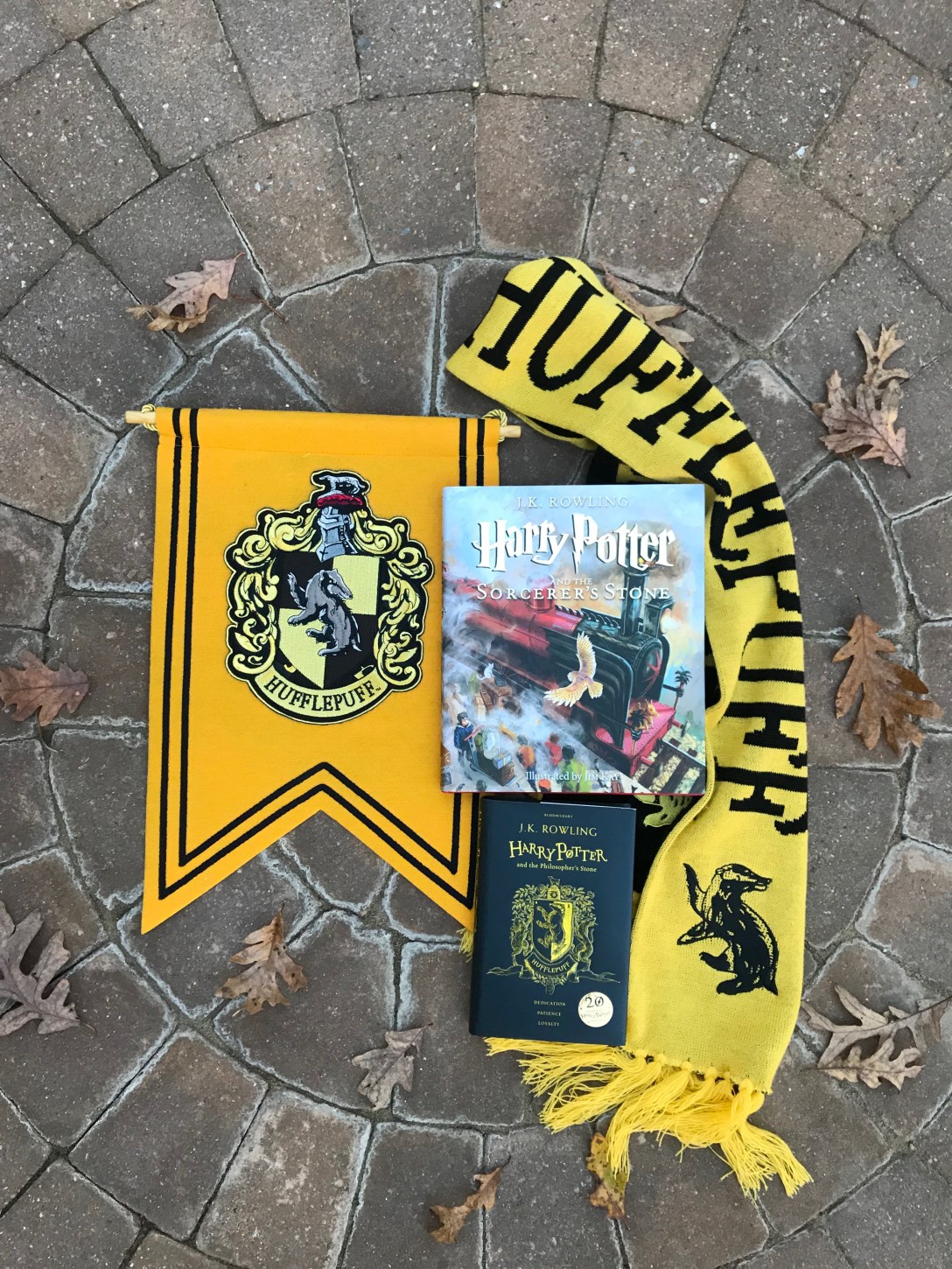
#tbt- Harry Potter

Happy Throwback Thursday!

Anna: Harry Potter ignited my love of reading. I dressed as Hermione at The Deathly Hallows book release party at our local Barnes and Noble, where I was interviewed on TV and predicted that Harry was going to die. My favorite character is (book) Ron. I think this is because I value loyalty in relationships so much, which is why I’m such a strong Hufflepuff.

Alexis: I dressed as Luna at the same book release party, complete with homemade radish earrings. Twelve-year-old me was super excited to stay up after midnight reading. When I was interviewed, I was asked, “How long will it take you to finish this?” My answer: “A couple of hours.” He didn’t believe me. My favorite character is an unpopular opinion: Harry. I’m glad to be a Hufflepuff because my school colors were also black and yellow and I love sunflowers!

Anna: Fun fact: Alexis is the fastest reader I know!

We’d love to hear what you love about Harry Potter!

Review: Conversations with Friends by Sally Rooney

Anna: Read 11/26/18

I couldn’t stop reading this. It’s safe to say that I’m in love with Sally Rooney’s writing style- it’s exactly what I want in literary fiction with a modern setting. I also think it’s an accurate representation of my generation. It’s an accomplishment when a book involves technology without taking away from the quality of writing. Everything about this book feels so real. It captures the ideas and ideals of my generation so well, from fluidity when it comes to sexuality, to how frustrating it can be, as a full-time student, managing finances, friendships, and mental health.

I loved Frances as a character. All of the characterization was rich and complex, but especially the main four- Frances, Bobbi, Nick and Melissa.The relationships were complicated and meticulously fleshed out, and the dialogue felt so realistic. I was impressed by the way Frances and Nick’s arguments were written, even over email. This book is aptly named Conversations with Friends as the complexity, frequency, and realness of these dialogues is something that defines this book. These characters actually have real, interesting conversations, which is something I appreciate. There’s nothing worse than fake, fluffy conversation.

Here are some things I didn’t like.

(Below is where the spoilers live!)

I loved this book all the way through, but it would have had even more of an impact without the last chapter. The fact that it implied that Frances is going to enter into a “relationship” with Nick again takes a way a bit from the chapters before.

Frances’s endometriosis diagnosis was a bit strange. I think reproduction problems are important to talk about in fiction, and too often periods aren’t even mentioned in literature, even in explicitly feminist fiction. Though I really appreciated that aspect, I wasn’t exactly sure of its purpose in the plot. All that comes to mind is that Frances being sick interfered with her fixing things with Bobbi and Nick. It also made her think about youthfulness, womanhood, and pregnancy in a different way, especially since she thought she was having a miscarriage when she first experienced the painful symptoms. I wait to read other people’s full reviews until after I write my own, so I will be looking into other takes on this when I finish writing this.

I thought Bobbi was really annoying. She felt so condescending and controlling over Frances, even at the end when Frances had grown a lot and developed her own “real personality.” I liked how complicated and undefined their relationship was, but I couldn’t get over how preachy and elitist Bobbi is throughout the book.

A huge pet peeve I have is how easy it was for Frances to get published. There is NO WAY that her story would have been published in a prestigious journal AND that she was paid royalties for it. Frances wrote the story in one sitting, sent it in unedited, AND it was the first prose she had ever written in her life. As writers and as someone who has worked in publishing, Alexis and I and are very familiar with the publication process. Maybe it’s easier to get published in a journal in Ireland, but I doubt it.

It was funny reading about Frances interning at a literary agency, because I did that. I can say that part was realistic!

This book does so many great things and I enjoyed reading this so much that I am still considering bumming it up a rating, despite the unsatisfying ending. I can’t wait to read Normal People by Sally Rooney soon!

VERDICT: 4 out of 5 books

Review: The Poppy War by R.F. Kuang

Alexis: Read 11/22/18

Yesterday, I finished The Poppy War by R.F. Kuang.

I loved the first half. It reminded me of a mix between The Hunger Games, Game of Thrones, and Avatar: the Last Airbender. On her website, R.F. Kuang even mentions that ATLA and Game of Thrones were some of her inspirations.

This brutal book deals with every heavy theme you can think of: genocide, addiction, experimentation, rape, death. Despite being a high-fantasy book, I found many aspects of the war in the latter half of the book to be extremely realistic.

This is because Kuang is a genius. She graduated from Georgetown and is now studying at Cambridge. She’s studying Chinese studies, and you can tell. I was amazed at her worldbuilding. Kuang knows everything about the world she’s created. The book describes the hierarchy, the history, the mythology, you name it. She talks about it. She describes it in detail. She fully understands the world she’s created, and I admired that from the very start of the book. I love the way she based the world off of Chinese history. This includes fascinating aspects like martial arts and mythology. But it also includes the dark side of history. And I love a good dark book.

I generally like the main character, Rin. She is established out-right: we know what she wants and how she’s going to get it. We know her motivation. But Jiang is my favorite character. His personality is the most well-defined, and I love all of his quirks. I love a good quirky, underestimated character. To be honest, I didn’t really care about any of the other secondary characters, though Altan annoyed me in the second half of the book.

Something is lacking in the second half. Even though the plot is still well-defined, too many new elements are thrown together too fast. A whole new crew of characters are introduced. Characters from the first half come in and out. And some huge decisions are made. It isn’t rushed; it takes place over a couple hundred pages. Yet for some reason, it feels jumbled. To be fair, the entire second half is war. War is a mess; war is a jumble. This Poppy War is brutal and messy and isn’t for the fair-hearted reader. But the way Rin acts in the second half almost turned me off from her (I mean that was kind of the point, but still). Her actions and way of thinking are justified in the world, but that doesn’t mean I like the direction her character is going. 

Overall, I enjoyed this book. I loved the messy history and the mythology of the world. I will definitely read the rest of the series in the future, but it just wasn’t a 5 star read for me.

VERDICT: 4 out of 5 books


Review: The Child Finder by Rene Denfeld

Nov 13 The Child Seekers

Anna’s review: Read 11/12/18

In The Child Finder by Rene Denfeld, Naomi, a private investigator, specializes in finding lost children. She returns to the snowy landscape of her home state of Oregon to take on the case of a young girl, Madison, who went missing in the forest where her family went to find a Christmas tree. But as Naomi learns what happened to Madison, the events of her own traumatic past begin to come to light.

I’m conflicted by this. There were so many beautiful and harrowing parts of this book. Obviously it deals with difficult themes like abduction, pedophilia, rape, and death, which were all handled respectfully by the author. Denfeld herself is a licensed investigator, and you can tell she knows what she’s writing about.

The biggest problem I had with this book is the huge discrepancy in the quality of writing. Half of the writing style was beautiful and lyrical, especially the scenes from the point of view of the snow girl. I found this sections horrifying but masterfully written. You could feel the coldness creeping into your bones, as well as the desperateness of the child’s situation.

The other half was written so differently that it didn’t even feel like I was reading the same book! For example, there is a line on page 72 that reads, “Her stomach rumbled, reminding her that she soon would be hungry.” There are other lines like this that are so jarring that I kept noticing them as I read and this impacted my overall opinion of it.

I found the romance between Jerome and Naomi particularly cringey. Their dialogue was cheesy, and Jerome’s character is as flat as a pancake. This is where I felt the most distracted by the different writing style, since the rest was so dark.

The other problem I had is Baby Danforth case that Naomi randomly takes on in the middle of the book. Though I know, realistically, a investigator would probably be working on multiple cases at a time, I found this whole case horribly distracting. The only reason I can think to include this is to show that Naomi’s searches can end badly.

Then there’s the characterization of Naomi herself. Naomi is also a “snow child.” She was abducted as a young child and, as a coping mechanism, she has repressed the memories of the traumatic events. As a result, Naomi is reserved and often cold. She left the safety of her foster home, the only place she felt love, because of her fear of closeness and intimacy. Throughout the course of finding out what happened to Madison, Naomi finally remembers the events of her own abduction. I understand that Naomi’s acceptance of Jerome’s love represents part of her healing, but I think I would have enjoyed this book a lot more if the romance hadn’t been included at all. There’s also Ranger Dave, who fell in love with Naomi within days of meeting her, which I found completely random.

Something I really enjoyed was the aspect of fairytale retelling, especially the ones that turned childhood innocence on its head. This dark play with cruelty and innocence is one of the biggest successes of this book. Snowy rural settings are typically my favorite books settings, and The Child Finder was satisfyingly atmospheric.

Ulitmately, I was disappointed by this. I loved the parts with the snow child but was disappointed by some of the rest. This had so many great reviews that I expected to love it. I just can’t look past the discrepancies in the writing and the cheesy romance.

VERDICT: 3 out of 5 books

Alexis: Read 9/2/18

I read this book a couple months ago. I had read one of Denfeld’s books before, The Enchanted, which I had a hard time getting through, but which ended up stuck in my mind. I prepared myself for a dark read with The Child Finder and dug in.

Denfeld’s writing style and descriptions struck me. I even took the time to write down a quote: “Like a leaf that drank from the morning dew, you didn’t question the morning sunrise or the sweet taste on your mouth. You just drank.” Denfeld’s descriptions always surprised me, whether from her word choice or from the contrasting, stilted way she delivered them.

While, like Anna, I found some of her sentences to be a bit off, ultimately the writing style served the purpose of the book. Denfeld was descriptive where she needed to be and off-putting when she needed to be. Three of the main characters deal with life-altering issues, and the writing style reflects their troubled thoughts and feelings.

I agree that Naomi and Jerome’s adult relationship feels forced; however, their relationship as children made sense. But was the distance felt between the two adult characters because of Naomi’s isolationist behavior, or was it because Denfeld’s characterization didn’t step up to the plate?

The chapters from Madison’s point of view, when she’s being held hostage, are brilliant, and I agree with Anna that Denfeld obviously knows what she’s talking about. The realism of the kidnapping, mixed with the almost dream-like quality of the snow child, left an impact on me.

VERDICT: 4 out of 5 books