Review: The Tea Girl of Hummingbird Lane by Lisa See

Alexis: Read 5/11/18

“‘Tea reminds us to slow down and escape the pressures of modern life,’ he says. ”

There are some rare books out there that I just know I’ll love, and this was one of them. Okay, maybe I read it because I love tea and the reviews were good. But what other reasons do I need?

The Tea Girl of Hummingbird Lane ended up being my top book of 2018!

The section part of the book is a fascinating, and sometimes disturbing (let’s just say I’m a twin) detailed exploration of the Akha people and their way of life. The middle is a little slower paced, but it masterfully meshes Li-yan’s Akha culture with the modern way of life in China. The last section explores Li-yan’s new life and Haley’s life in California. Haley’s life is revealed through documents, letters, and essays.

See manages to weave an epic story while also exploring China’s history, the history of tea, and what it means to be Chinese and Chinese American. She handles each of her characters with care (in their characterization, that is; they all go through some incredibly tough situations). The only character that felt out of place was Ci-teh later in the book, though I understand why she turned out the way she did.

Overall, The Tea Girl of Hummingbird Lane is a beautifully written story, the core of which focuses on the relationship between mother and daughter, and the promise of finding one another again.

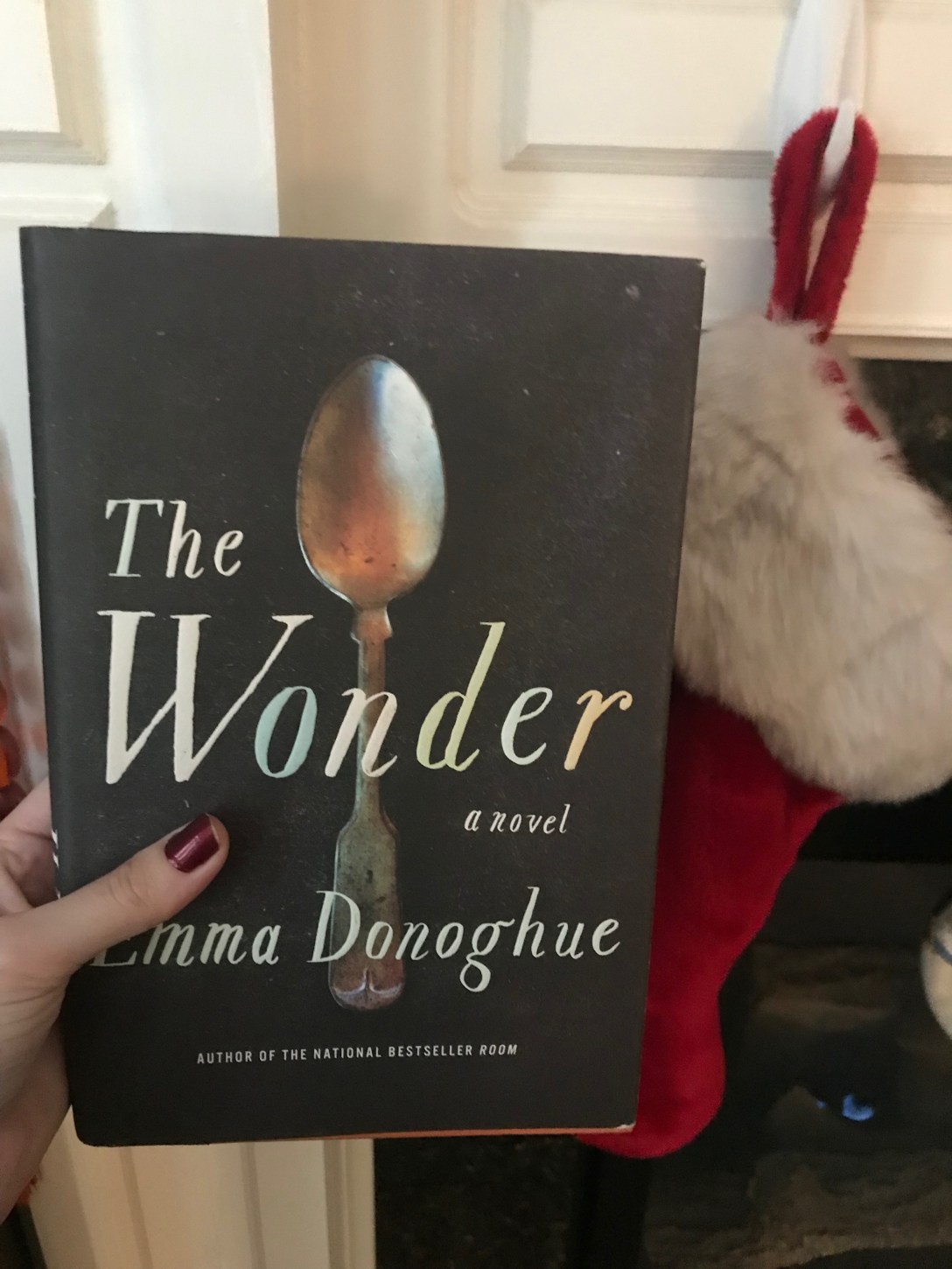
Review: The Wonder by Emma Donoghue

Anna:

This is a spoiler free review!

It’s 1859, and English nurse Lib Wright takes on a mysterious case in rural Ireland. She’s assigned a devout little girl, Anna, who claims to be living without food, under God’s will. Lib’s job is to watch the girl at all hours and report to a committee if she is sneaking food or not. Lib arrives expecting to catch the girl sneaking food within a matter of hours. But as Lib becomes more involved in the girl’s life she begins to see that this religious family is far from what it seems.

I picked this book up in the $1 section of the Strand when I was living in New York. I haven’t read Donoghue’s wildly successful book, Room, but I both love and am horrified by the movie. I found myself picking up the British edition of The Wonder when I was studying publishing in Oxford, England after college. It has one of those semi-vague descriptions that somehow is totally intriguing. I’ve had this book on my radar for a while. I was excited to also read an Irish author for the first time.

I think good historical novels are such an accomplishment, and this one captures religious tension between Catholics and Protestants, as well as the cultural differences and prejudices between the English and Irish. One of the biggest endeavors this book takes on is exposing hypocrisy in religion and and warning against the danger of extremism. The protagonist, Lib, does not identify with any faith or God herself, which alienates her, but also often allows her to act as one of the only characters to think and see clearly. As a nurse, she also represents science and rational thought.

This book doesn’t portray Catholics in good light, to say the least. Anna’s family is devout to the point of desiring sainthood over the health and life of their own daughter. Though Donahue exposes the dangers of religious extremism, she doesn’t completely criticize against religion as a whole. Anna herself becomes a dear friend to Lib, who has never allowed herself intimacy with a patient before. Lib recognizes and admires Anna’s good character and extreme bravery and strength. Lib’s love interest, Byrne, identifies as a deeply religious man, who is still able to see the dire consequences of the family’s extremist behavior. These two good characters prove that Donoghue does not condemn all faith as a whole, which I appreciate.

Donoghue also scrutinizes men in positions of power. Both the town’s head doctor and the priest are exposed as self-serving and using Anna’s publicity for their own means. They both are privy to ghastly and private information concerning Anna’s physical health that they conceal for the sake of town peace.

Another overarching theme is the question of if a mother/parent always has the child’s best interest at heart.

One of the things I love about The Wonder is that it kept me guessing up until the end. I didn’t think Lib’s own backstory is as compelling as it could have been, and it’s also easy to guess from the beginning. This book is so unique, and I would recommend it for a suspenseful, intelligent, and atmospheric read.

VERDICT: 4 out of 5 books
Review: The Poppy War by R.F. Kuang

Alexis: Read 11/22/18

Yesterday, I finished The Poppy War by R.F. Kuang.

I loved the first half. It reminded me of a mix between The Hunger Games, Game of Thrones, and Avatar: the Last Airbender. On her website, R.F. Kuang even mentions that ATLA and Game of Thrones were some of her inspirations.

This brutal book deals with every heavy theme you can think of: genocide, addiction, experimentation, rape, death. Despite being a high-fantasy book, I found many aspects of the war in the latter half of the book to be extremely realistic.

This is because Kuang is a genius. She graduated from Georgetown and is now studying at Cambridge. She’s studying Chinese studies, and you can tell. I was amazed at her worldbuilding. Kuang knows everything about the world she’s created. The book describes the hierarchy, the history, the mythology, you name it. She talks about it. She describes it in detail. She fully understands the world she’s created, and I admired that from the very start of the book. I love the way she based the world off of Chinese history. This includes fascinating aspects like martial arts and mythology. But it also includes the dark side of history. And I love a good dark book.

I generally like the main character, Rin. She is established out-right: we know what she wants and how she’s going to get it. We know her motivation. But Jiang is my favorite character. His personality is the most well-defined, and I love all of his quirks. I love a good quirky, underestimated character. To be honest, I didn’t really care about any of the other secondary characters, though Altan annoyed me in the second half of the book.

Something is lacking in the second half. Even though the plot is still well-defined, too many new elements are thrown together too fast. A whole new crew of characters are introduced. Characters from the first half come in and out. And some huge decisions are made. It isn’t rushed; it takes place over a couple hundred pages. Yet for some reason, it feels jumbled. To be fair, the entire second half is war. War is a mess; war is a jumble. This Poppy War is brutal and messy and isn’t for the fair-hearted reader. But the way Rin acts in the second half almost turned me off from her (I mean that was kind of the point, but still). Her actions and way of thinking are justified in the world, but that doesn’t mean I like the direction her character is going. 

Overall, I enjoyed this book. I loved the messy history and the mythology of the world. I will definitely read the rest of the series in the future, but it just wasn’t a 5 star read for me.

VERDICT: 4 out of 5 books