Review: The Female Persuasion by Meg Wolitzer

Slippered feet standing by three pumpkins a book, The Female Persuasion

VERDICT: 📚 📚 📚 📚 📚 / 5

Anna: I’ve been meaning to read The Female Persuasion for years, and I’m so glad that I finally did! This is a sweeping coming-of-age novel that takes a lot of energy to read but, in my opinion, had a high pay off. 

The book follows Greer as she begins her freshman year of college at Ryland. The child of two stoners, Greer has been studious and high achieving all of her life—perhaps rebelliously—so. She was meant to attend Princeton or Yale alongside her equally brainy high school boyfriend, Cory, had her parents not messed up her financial aid forms. In the beginning of the book, Greer is riotously angry about attending what she sees as a second-rate school.

When the book starts, Greer is infuriatingly naive in a way that unfortunately reminded me of myself when I started college. Her anger at being at Ryland is also frustrating as a reader. But after experiencing a sexual assault that is brushed aside by the school, Greer attends a lecture by a famous feminist, Faith Frank. She subsequently falls quickly into the world of feminism and into an obsession with Faith Frank. Very quickly her righteous anger at going to Ryland redirects to anger at the patriarchy.

As Greer becomes more educated and exposed to women’s issues, her passion for feminism and women’s rights becomes her chief interest and passion. After college, Greer finds a job working for Faith’s foundation. At first, she’s starstruck by Faith and impassioned by the chance to make a difference in women’s lives. She can’t believe her good fortune to work at a job she really believes in, while making an actual difference in women’s lives. Meanwhile, Cory and her best college friend, Z, encounter hardship after hardship in the corporate world. But everything isn’t what it seems, and soon, Greer is forced to confront the hypocrisy of Faith Frank’s breed of white feminism.

This book took me back to some of the hardest years of my life—figuring out what to do with myself after college. Though the book starts in her early years of college, that’s ultimately what this is about. As Greer gets older she becomes more aware of the darker side of the foundation and of Faith. She slowly realizes that everything in her life is controlled and warped by men, including the foundation and the woman she dedicated so many years of her life to. 

I also liked that though Greer was by no means a perfect, she had autonomy and was a driving force in her own story. She didn’t just let things happen to her, which is something that can sometimes frustrate me about the protagonists of coming-of-age stories. I also liked that this book spanned so many years and had a satisfying ending. It was really such a good exploration of the good and the bad of feminism—or any social or political movement—and the importance of standing up for what you really believe in once you’ve figured it out.

Review: Betty by Tiffany McDaniel

Anna: If you’re looking for an emotional coming-of-age story I highly recommend Betty. Set in Appalachian Ohio, Betty and her five siblings live with their mother and Cherokee father in a dilapidated house surrounded by racism, poverty, and family secrets. This is also fiercely feminist novel, which I love. 

Betty is about sisterly love, nature, and cycles of trauma and abuse in families. When she is eleven, Betty discovers a deadly family secret that shapes the course of her life. Despite the difficult themes, this book is beautifully and lyrically written. Betty’s dad, Landon, and his storytelling the love of nature he encourages in his children are a driving force of the novel. Her mom, on the other hand, is violent and unpredictable, a product of years of being the victim of violence herself.

This is also an own-voices story, as Tiffany McDaniel is the descendants of Cherokee ancestors, and the characters in Betty are fictional accounts of real family members

Major trigger warning for sexual violence 

VERDICT: 4.5 stars

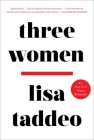
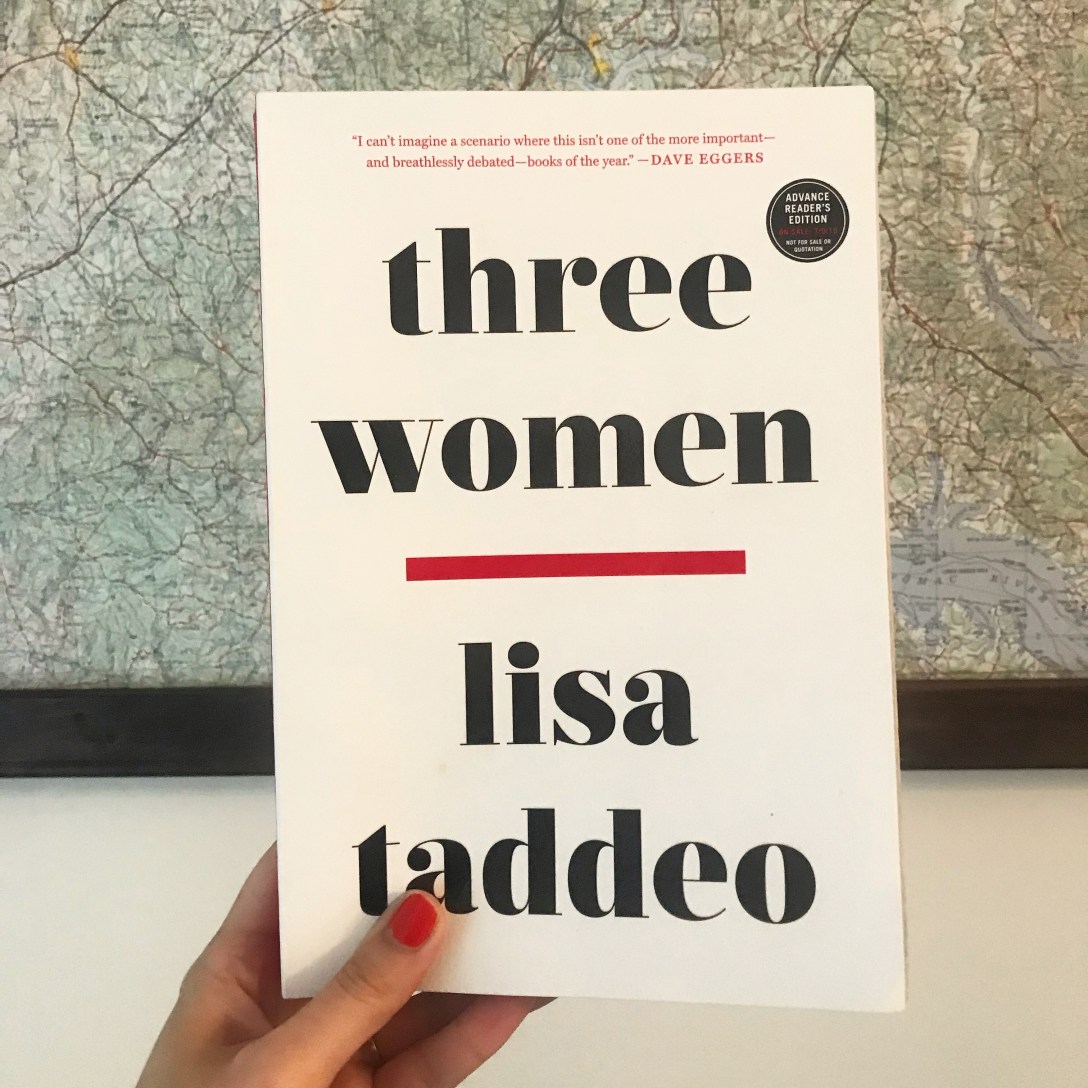
Review: Three Women by Lisa Taddeo

Anna: Three Women is hands-down the most original book I’ve read all year. Inspired by the stories of three real women, Lisa Taddeo explores how women are blamed and othered for showing any kind of sexuality that goes against the norm.

My favorite story to read was Maggie’s, who had an inappropriate relationship with her teacher when she was in high school. Looking back on it years later she realizes that she was taken advantage of, but when she presses charges no one wants to see the truth.

This is a slow but explosive book that shows how women are systematically shamed and repressed. It’s not exactly hopeful, but it’s important, and something I’m going to be thinking about for a long time.

VERDICT: 4 books

Support Independent Bookstores - Visit IndieBound.org

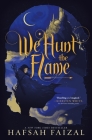
Review: We Hunt the Flame by Hafsah Faizal

Alexis:

We Hunt the Flame is a set in an Arabic-inspired fantasy world. It follows two main characters: Zafira, also known as the Hunter, who hunts to feed her village; and Nasir, the Prince of Arawiya, who is a trained assassin. This book is very The Hunger Games meets Katara and Zuko from Avatar: The Last Airbender.

What I liked: I loved the world that Faizal created. I liked how she described the clothing, and especially how she described the food.

This book also has a strong undercurrent of feminism which I liked; Zafira’s homeland, Demenhur, is sexist, and would punish Zafira if they knew she was actually a woman huntress. Throughout the book, she has to battle sexism in order to prove herself.

As I mentioned, the book follows both Zafira and Nasir. I enjoyed reading from both of their perspectives, and I appreciated that the book was in third person.

My favorite part was the last quarter of the book and the ending. Faizal had some really awesome plot twists that I didn’t see coming. I feel like the plot really came together at the end of the book, and I have high hopes that the next book in the series will take a step up.

What I disliked: While I loved the setting, this book could have used a glossary. In the beginning, I struggled to understand some of the terms that Faizal used, since I don’t have a background in Arabic. I figured them out through context clues, but a glossary would have been useful.

My least favorite part of the book was actually a character. This character plays a role in the beginning of the book and dies a little later on, and it felt completely out of place for me. The grieving over the character’s death didn’t last nearly long enough, and the character’s role in the story confused me. I felt like it could’ve been cut out completely and the book would have been better for it.

In addition, the story dragged on in the beginning and the middle of the book. Plot wise, it was a little lost. It didn’t really pick up until the end.

There were also some minor things with Faizal’s writing that I took issue with. Some of her phrasing felt off to me. The dialogue in the beginning felt a little stiff and too explanatory. Faizal also writes sentences like, “‘You scared me,’ Zafira exclaimed in a whisper” (112). She also has a tendency to use a poetry-like spacing in order to emphasize a phrase, and while I liked this the first two times, it ended up drawing me out of the story the more she used it.

Sometimes I would have to go back and re-read a section because I thought the characters were doing one thing, only for them to be doing something else. I think Faizal focused a little too much on describing everything. The book almost could’ve started 100 pages in.

And my last note: Nasir was just a little too Zuko, backstory, scar, and all. This book was supposed to explore his character arc by the end, but we already had too many hints of his underlying feelings for it to really pack a punch.

Overall, I wasn’t a huge fan of the beginning of the book, but I really enjoyed the ending!

VERDICT: 3 stars

Support Independent Bookstores - Visit IndieBound.org