
You decide: which of these memoirs should I read in May? I’m continuing my 2019 goal of reading at least one memoir a month!
Men We Reaped by Jesmyn Ward
Small Fry by Lisa Brennan-Jobs
My Life with Bob by Pamela Paul
Happy reading!
a bookish blog by twins Anna & Alexis
You decide: which of these memoirs should I read in May? I’m continuing my 2019 goal of reading at least one memoir a month!
Men We Reaped by Jesmyn Ward
Small Fry by Lisa Brennan-Jobs
My Life with Bob by Pamela Paul
Happy reading!

Anna:
I’m here again to gush about this great book. It took me a month to read–partly because it’s dense and partly because I wanted to savor it. I loved My Brilliant Friend, but it took me a year to get to book two. I’m going to make it a priority to finish the series in 2019!
VERDICT: 5 Stars
This is the second book in the Neopolitan Novels by Elena Ferrante, translated by Ann Goldstein. I’m not going to get into much of the plot, because I don’t want to spoil anything. While My Brilliant Friend told of Elena and Lila’s childhood together growing up in a poor working-class village in Naples, My Brilliant Friend follows them as Elena goes to university, and Lila navigates her new marriage. This book deals with the the effects of education, wealth, and marriage on people and their relationships. What I love about these books is that above all they’re about the complicated but unbreakable bonds of female friendship, and two friends who won’t let sexism and poverty dictate their lives.

Alexis:
The Book of Dreams is a thought-provoking and profound read. It follows four different characters from three different perspectives; Henri, a man who feels he is undeserving of love, who saves a girl from drowning but gets hit by a car and slips into a coma; Sam, his teenage son, who he’s unwillingly never met; Eddie, Henri’s ex-girlfriend and the love of his life; and Madelyn, a twelve-year-old coma patient who we see through the eyes of the other characters.
Though this isn’t classified as magical realism, aspects of it feel very magical realism. The book blurs the line between dream and reality. I won’t explain it any further than that, because I feel it’s best to read this book with fresh eyes.
George explores the cyclicality of life and death, and what it means to straddle the not-so-straight line between the two. She explores love, grief, and regret. Sometimes translations don’t do a book justice, but I found that Simon Pare did a beautiful job. The writing flows really well and George’s descriptions are beautiful and unique.
This is a very character-driven story. It focuses on the experiences, relationships, and emotions of its three main characters as they navigate life around Henri’s coma. I loved all of the characters and was interested in all of their lives.
Another aspect I love about this book is Sam’s synesthesia: he sees color for numbers, emotions, etc. I loved his character and found his synesthesia added a lot of color (ha) to the story, though I felt like it could’ve been cranked up a notch because I found it so fascinating!
I think the ending of this book is polarizing, but I thought the ending worked well for the book as a whole; George even mentions in her afterword that this book was not intended to be “market friendly.” But I found this book deep, moving, and true to itself.
If you’re looking for a beautifully written book that intensely focuses on its characters and explores the boundaries between life and death, then I highly recommend it.
VERDICT: 5 stars
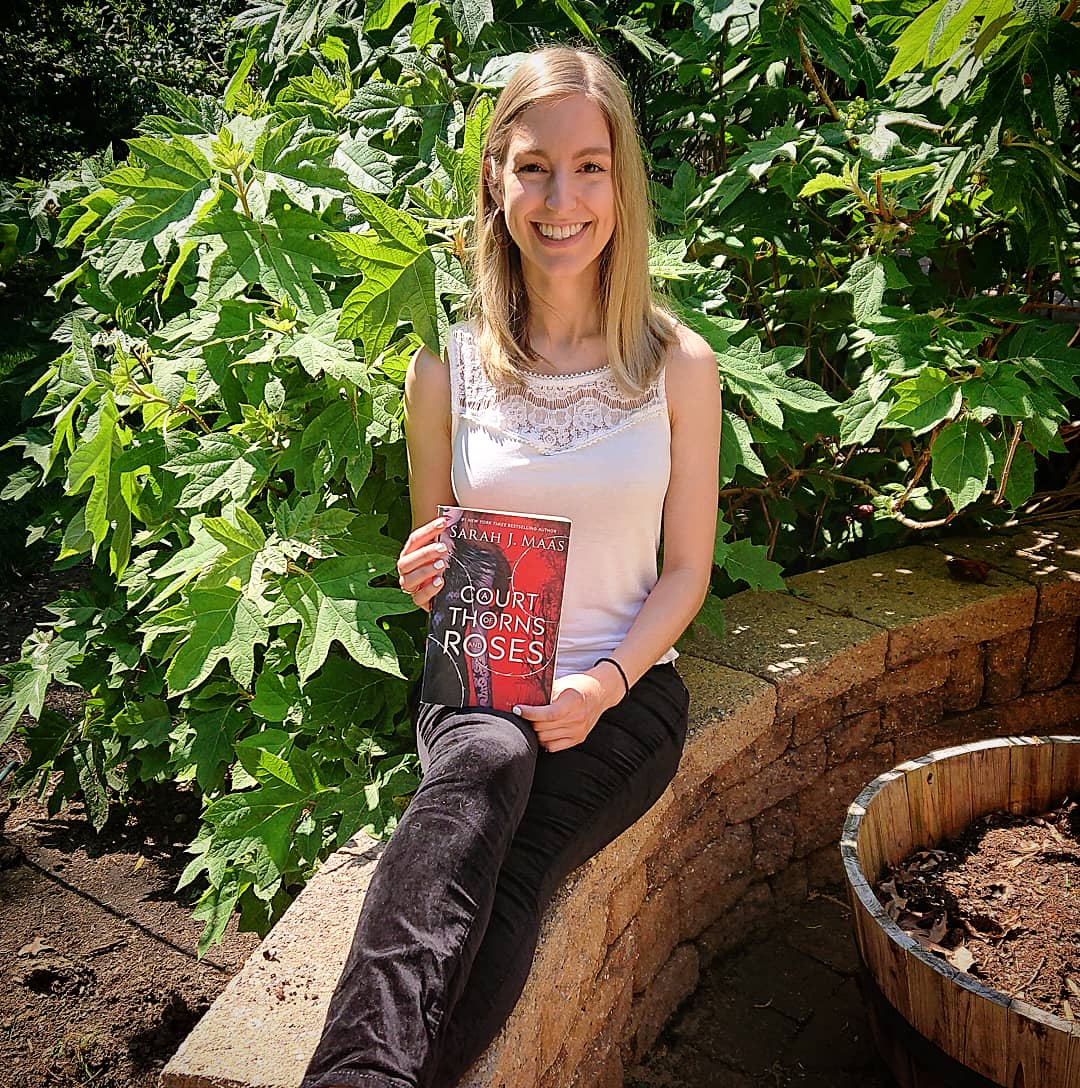
Alexis: Read 4/27/19
Spoilers Below!
While I have some mixed feelings about A Court of Thorns and Roses, overall, it was a 4 star read for me.
So, here’s the book in a nutshell: It starts out as The Hunger Games, then turns into Beauty and the Beast, and finally turns into Twilight.
I’ll start with what I loved about the book. While Maas writes the occasional cheesy and cringey line, I enjoyed her writing style overall. I love the way she describes color, and I was impressed by the landscape she painted in the beginning of the book. I related to Feyre in the beginning of the book the way I related to Katniss: she’s a girl turned hard from trying to survive, and I sympathized with her.
I found Tamlin an interesting character because of his role as a host and protector of his manor and land, because of his drive and sense of honor. His shapeshifting was written well. And I liked Lucien the most; he had the most vibrant personality of all the characters.
Once the plot picked up, I enjoyed the action-packed third section of the book. I think Maas’ writing shines the most when she writes action scenes. I also enjoyed (finally) learning about the political and historical backstories of the world.
I also liked the romance. The middle section of the book was very slow-paced, so Feyre and Tamlin’s budding romance didn’t feel too rushed or insta-love.
As for what I didn’t love about the book, my biggest issue was that most of the important backstory/plot points weren’t revealed until 250 pages in. Yep. 250 pages. Even the synopsis of the book includes the curse, which Feyre doesn’t know about until, again, 250 pages in. Here’s the thing: everyone knows the basis of Beauty and The Beast. So the main, mysterious plot of the most of the book wasn’t so mysterious, because this is a Beauty and the Beast retelling. If Maas had switched it up a little more, the reveals would have been more interesting.
I also had issue with some of the characters. I didn’t have any issue with Feyre, though I found her name annoying because I had to remind myself how to pronounce it. I’m also not a fan of Tamlin’s name; it just sounds like the name of a modern five-year-old boy. But that’s just personal preference. I wanted Tamlin to have more of a stand-out personality, especially since he doesn’t have much of a role in the latter half of the book. Rhysand has more personality than Tamlin, and unfortunately, I have a feeling a love-triangle is going to make an appearance in the next book.
As for the ending, I guessed it about halfway through the book. There were too many similarities to Twilight, and I knew human-Feyre wouldn’t make it too much further in the series.
Overall, this was a fun and engaging read. Though the middle was a little slow, it allowed time to get to know the characters better. I enjoyed the final section of the book the best, despite the Twilighty ending. I’m definitely going to continue the series, as I tend to like the first book in a series the least!
VERDICT: 4 stars

Normal People by Sally Rooney is a book that one hundred percent deserves all the hype! I read Conversations with Friends last year, and it was one of my favorite books of 2018. I couldn’t wait for this one to come out, and I preordered my copy from a local independent bookstore.
Normal People lived up to all my expectations and maybe even exceeded them. Sally Rooney has such a literary talent, and I love her writing style. Her characters are unique but–dare I say it–original. Set in Ireland, this novel captures the joy, anxieties and difficulties of college life perfectly.
This follows Marianne and Connell’s relationship over many years, beginning in the Irish equivalent of high school and continuing through the end of college or university. Marianne and Connell have an intense and complicated relationship that began in secret because Connell was popular in high school and Marianne was not. This dynamic shifted when they went to university, creating an undertone of shame, jealousy, and insecurity that they must continually grapple with.
A prevailing theme in Rooney’s writing is the role that miscommunication plays in relationships. She also frequently writes about how differences in social class, the presence of mental illness, and time abroad and apart affect and change relationships. It’s difficult to describe what happens in this book, because it’s kind of about everything. I love how Rooney writes about everyday life so simply but beautifully, and I loved, loved, loved these two quirky central characters.
I cannot wait until her next book!
VERDICT: 5 books

Alexis: Happy Earth Day, everyone! But good luck avoiding all the pollen.
I’m currently reading Gingerbread by Helen Oyeyemi (while Indy searches for bunnies) and thinking about summer. I can’t wait to go to the beach!

Today I’m introducing a new favorite book! Check out my full spoiler-free review on our blog (link in bio!) My mom read this years ago and tried to get me to read it at the beach, but The Goldfinch is so incredibly detail-heavy that I couldn’t get into it. After reading The Secret History last year, I decided to give The Goldfinch another try.
I’m glad I did! This book is quite a feat to get through, but it’s worth the journey a hundred times over (and it made me miss New York so much!) If you like long and sweeping coming-of-age stories, this is the book for you. Like The Secret History, The Goldfinch is especially drug-heavy and most certainly not any easy read. I knew vaguely it was about art history when I started, but I never imagined the twists and turns this would take, or the impression it would leave!
What I love most about The Goldfinch is our protagonist, Theodore (Theo) Decker. Struck by tragedy in the first chapter (and then again, and again) some would say that he has an incredibly unlucky life. He makes someone bad choices that oftentimes you want to hit him over the head and scream, “What are you doing?” It’s his own difficult life and the messy relationships with the other characters–especially Boris, Pippa, Hobie, and even Popper–that give this book such a spark of life. When it was over, I’d spent so much time getting to know the characters that I didn’t want it to end!
The Goldfinch explores fate, grief and loss, the complexities of friendship, loyalty, and morality, the price of freedom, and the importance of fine art and historical objects of meaning. By the end I felt exhausted, but in the best way.
However, this book is A BRICK, which is why I found it easier to listen to on audio. The narrator did an incredible job making each character sound unique. I never would have been able to imagine Boris’s accent if I’d read this on my own.
VERDICT: 5 books!
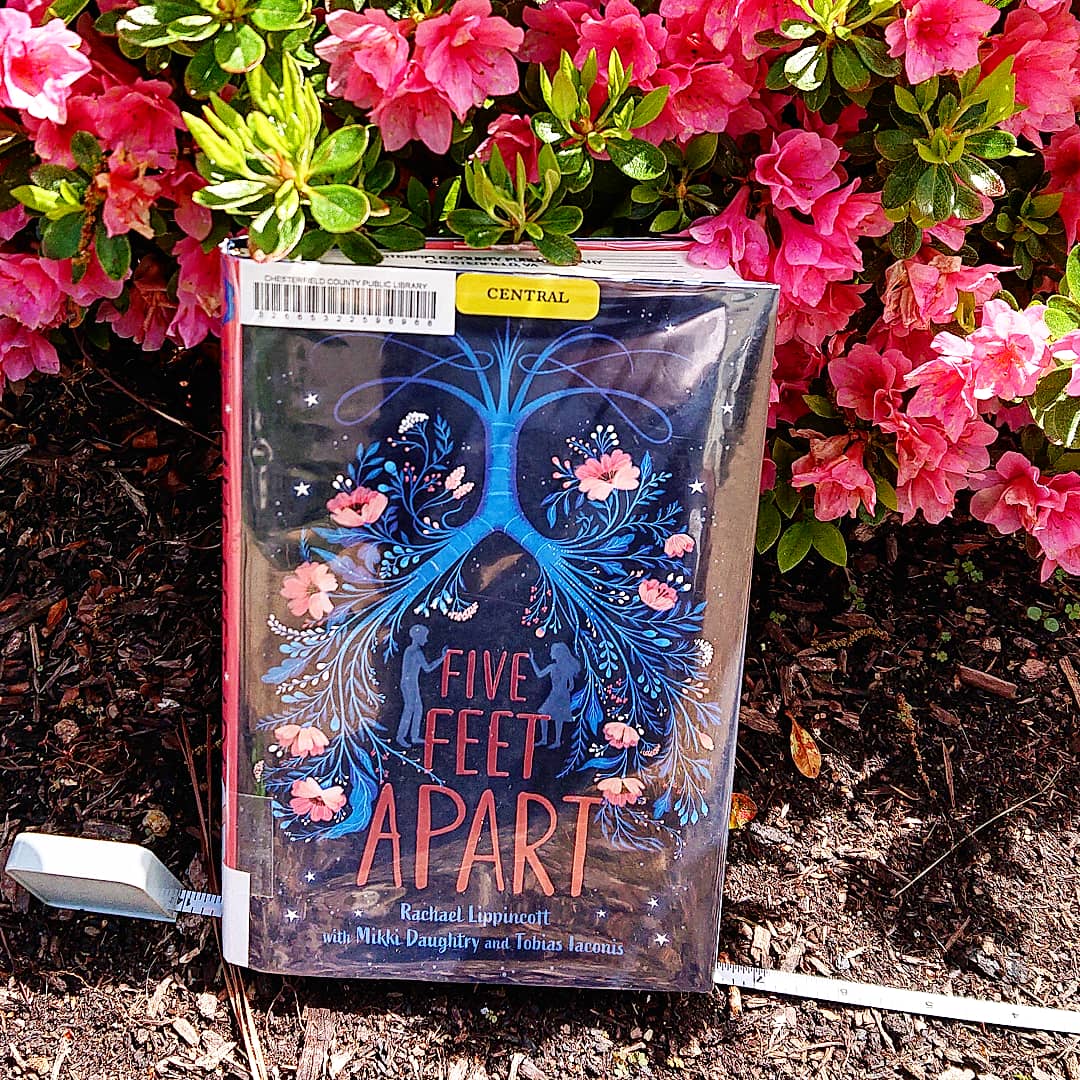
Alexis: Read 4/18/19
I was hesitant to read this. I put it on hold at the library so I would have time to think about it for a while, and a month later, I got an email that I could pick it up. And I decided, you know what? Why not!
For those of you who don’t know, last year, my lung spontaneously partially collapsed twice, a couple months apart. After the second one, I had surgery to adhere my lung to my chest wall so that it won’t ever happen again. But because of this, Five Feet Apart was super relatable for me. I found myself knowing how horrible it is not to be able to breathe, to literally feel your lung keep you from taking a deep breath as it fills your body with pain.
That being said, I do not have cystic fibrosis, and I can’t begin to know what it feels like to have a terminal illness. But this book brought back a lot of memories and feelings, and I identified with parts of Stella and Will’s ordeal.
Now, onto the review. I don’t have much to stay about the book other than well done. This is definitely this generation’s The Fault In Our Stars. The story is told from two different perspectives: Stella’s and Will’s. I love alternating POV’s and I found it worked really well for the story. And while I wasn’t a huge fan of Stella or Will’s characters at the beginning, I really enjoyed their journeys and their full character arcs by the end.
The writing style is very conversational. I enjoyed how the authors had the characters use so much modern technology because it felt very true to people/teenagers in real life. I will say that yes, parts of this book are cheesy, and yes, I guessed the ending halfway through. But Stella and Will’s relationship moves at an appropriate pace. I liked all of the characters’ backstories and motivations.
All in all, I think this is a solid YA read that achieves awareness of cystic fibrosis while telling a good story. I’m excited to watch the movie!
VERDICT: 4 ½ stars

Anna: Welcome to my April memoir review! This month my memoir of choice was Lab Girl by Hope Jahren. I thought this called for feet and green tea.
I’m really enjoying the challenge I’ve seemed to have given myself in 2019 of reading a memoir a month! I’m finding memoirs particularly enjoyable to listen to on audiobook, because I can easily listen to them at work. I listened to Lab Girl this way!
I found Hope’s life fascinating. Her love of science is so beautifully described—she thinks and writes so differently than I’m used too. There are breathtaking descriptions of trees and plants, which I found peaceful (although sometimes they made me a little sleepy!) I also liked how Jahren framed the narrative events of her life around chapters of release plant studies. My reading taste however, craves narrative, and I think what I enjoyed most were the scenes of Hope and Bill’s quirky friendship and the descriptions of her Scandinavian family.
Something that bothered me was Jahren’s use of dialogue tags that weren’t “said.” “Said” is, in my opinion, the only necessary dialogue tag 90 percent of the time, and I find other tags endlessly distracting, and this was especially the case in this book. All the “replies” “answered” “sighed” etc. in this really stuck out to me! This is quite the pet peeve, I know, but this is something I couldn’t avoid noticing on audio.
As a person who studied English and works in book publishing, the value of scientific research is something I take for granted. I read memoirs about writers all the time, something I never really realized until this book. Lab Girl reminded me of the importance of science in our world. Something Jahren repeatedly talks about is the fact that scientists don’t receive enough funding to carry out expensive and necessary research. This is something I knew but honestly never think about. Lab Girl helped me realize the importance of scientific funding and has even made me look at trees differently.
VERDICT: 3.5/5 trees

I’m horrible at continuing series, when when I really love the first book! Here’s an example of one I’ve neglected far too long, even though I read and loved My Brilliant Friend in 2017, I’m just getting around to reading book two, The Story of a New Name.
I love Elena Ferrante’s writing. Her characters are wonderfully complex, as are their relationships with each other. I’m about halfway through and can’t wait to (hopefully) pick up the next two soon.
What’s your favorite series?
 takes two to book review