Reflecting on 2018: Our Favorite Books of the Year!

Happy New Year’s Day! On the first official day of 2019, we reflect back on our 2018 year of reading. We read so much this year; Anna read 85 books and Alexis read 46.

Alexis's Top 10

Alexis: Here’s the list of my top 10 reads of 2018!

1) The Tea Girl of Hummingbird Lane
2) Tin Man
3) A Face Like Glass
4) Crooked Kingdom
5) Six of Crows
6) Educated
7) Station Eleven
8) Kindred
9) Circe
10) The House of Broken Angels

Anna's Top 10

Anna: Excuse my lopsided stack; we had to run out and take this in the pouring rain!

1. Sing Unburied Sing
2. The Heart’s Invisible Furies (not pictured)
3. Educated
4. History of Wolves
5. Conversations With Friends
6. Marlena
7. Idaho
8. Red Clocks
9. Circe
10. Fates and Furies

What were some of your top reads? We would love to know!

Review: The Crowns of Croswald by D.E. Night

Hi all! We’re excited to kick off 2019 with a review of a book that we were kindly sent (two copies, too!)

Alexis: Read 12/29/18

The Crowns of Croswald is a fast-paced, solid middle-grade fantasy read. The fantasy world is well-developed and detailed. It’s very Harry Potter-esque, in a good way: the world has creative and alliterative names, a castle-school full of magical students, and fantastic beasts. I enjoyed learning about the history of the world and the crowns.

I found Ivy to be a likable and interesting main character. This is the first book in a series, and I’m interested to see how her relationships with Rebecca and Fyn continue to grow. Besides Ivy, my favorite character was Humboldt.  

I only have a couple of criticisms. The plot is pretty predictable; however, this is middle-grade and it was still a fun read, so it wasn’t a deal breaker. I’m a harsh critic of dialogue, and I found the dialogue to be weak at times. I also wasn’t a fan of Night’s use of exclamation points and question marks together (?!).

All in all, this was a fun read that I definitely recommend for middle-grade readers who love Harry Potter.

VERDICT: 4 out of 5 books


Anna: Read 12/27/18

The Crowns of Croswald made me remember how good middle grade can be! I loved the worldbuilding in this. Alexis is right; it is slightly reminiscent of Harry Potter. I thought Professor Fenix a thinly-veiled Flitwick, and Woodley Butterlove. But I know it’s difficult to write anything fantasy without being compared to Harry Potter.

I loved the little details that made Ivy’s new world so magical and creative. Ivy’s allergen-ridden porcupine and her dim hairies are adorable, and they added to her overall scrappiness. There are also some hilarious scenes that made me literally laugh out loud, and I haven’t had that reaction to a book in a while.

Like Alexis, I guessed beginning, which is pretty standard for middle grade. I thought the beginning, when Ivy works as a squaldron maid, was a little rushed, and we don’t quite get to see much of Ivy’s unhappy situation before her world is changed and she goes to The Halls of Ivy. But we get the idea.

I’m confused by Ivy’s age. She is supposed to be fifteen, but reads as much younger. I think the intended audience would also be significantly younger than fifteen, so I don’t know why she wouldn’t be younger.

Overall I enjoyed this. It had all the elements of magic, innocence, and creativity of middle-grade fantasy that I didn’t realize I was missing.

VERDICT: 4 out of 5 books


Thank you to Stories Untold Press for sending each of us a copy to review!

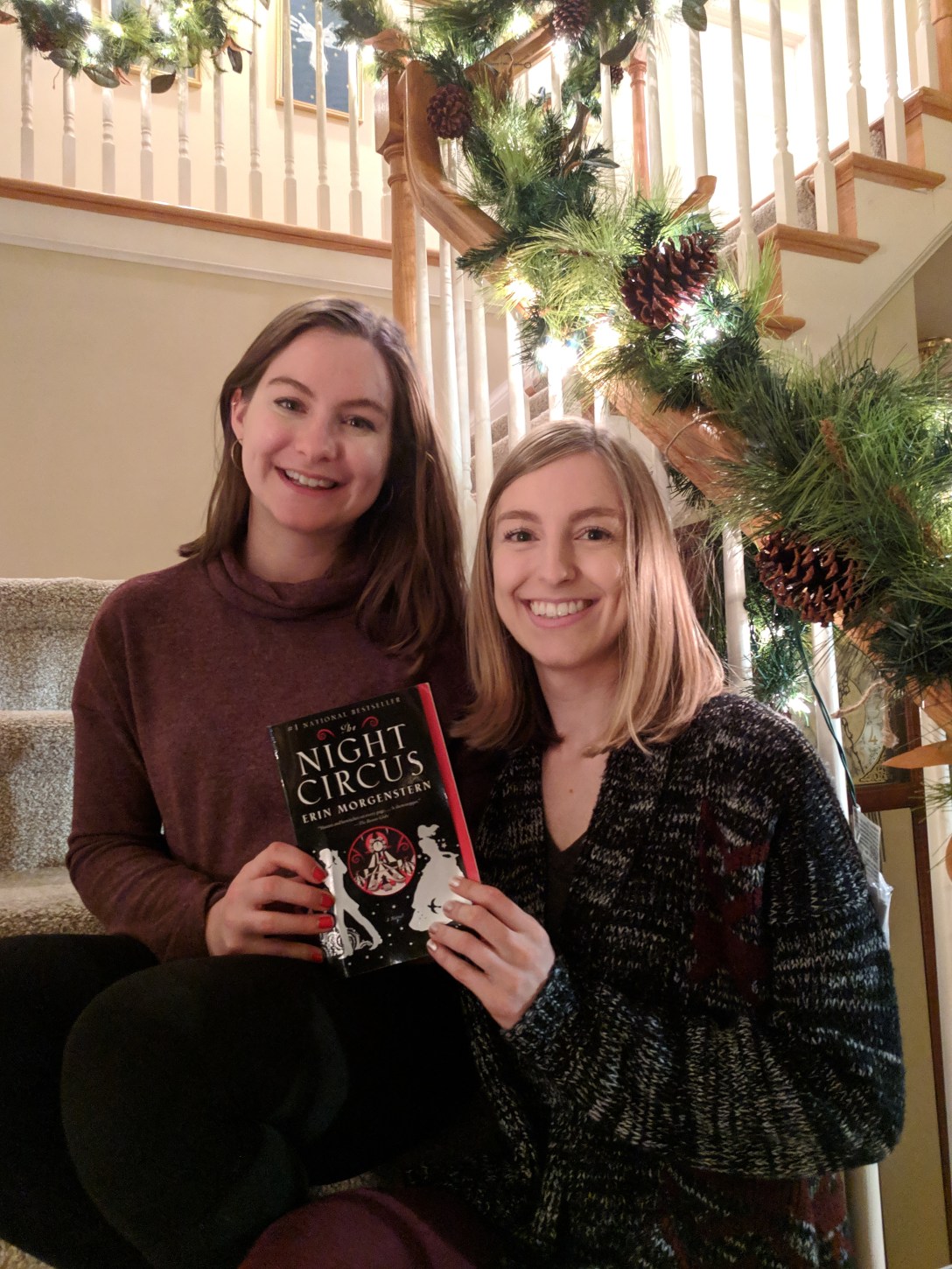
Review: The Night Circus by Erin Morgenstern

Alexis: Read 12/16/18

I feel like I’ve been saying this a lot lately, but this is a really hard book for me to rate. Is it 3 ½ stars? 4? 4 and ½? I had a hard time deciding. I will confess, I skimmed a lot of Goodreads reviews and was relieved to find that a lot of other people felt the same way.

I loved aspects of this book; I was confused by aspects of this book; I disliked aspects of this book. I understand the major hype surrounding it, and maybe I went in with too-high expectations.

Morgenstern’s writing is beautiful and lyrical. The best part of this book is how her descriptions of the circus launch you into a wonderful, atmospheric world. She uses all four senses to describe the circus, and I loved the recurring descriptions of how the circus smelled: like popcorn, caramel, and bonfire smoke. I loved the black and white theme of the circus, the intricate clock, and the minute details Morgenstern includes about each tent.

The circus itself is almost the main character as much as it is the setting, which actually fits perfectly when you reach the ending.

As for the characters, both Celia and Marco’s characters start out strong, but seem to flatline as the book progresses. It doesn’t help that the book switches perspectives every chapter. This creates a snapshot effect. Each chapter almost feels like a character study, interspersed with short circus-character studies. Not only does the book jump back and forth in perspectives, but it jumps back and forth in time. Because of this, the first hundred pages or so were a bit of a drag for me. Not much is revealed, and the book’s plot progresses slowly.

In fact, I would go so far as to say that this book doesn’t have much of a plot. Whenever the perspective deviates from Celia and Marco, I found myself feeling annoyed. I wanted them to be more present characters than they were, and I wanted them to do more actions than they did. I found myself gravitating more towards Bailey, Poppet, and Widgets’ storylines, as their characters felt more lively and real.

Despite the skimpy plot, my other issue with the book is the romance. I’m not a fan of the love at first sight storyline unless it serves a good purpose. It would make sense that Celia and Marco would have an outright connection, due to their similarities. However, for a 500 page book, there was definitely room for more of a romantic build up so the reader could actually see them falling in love instead of just being told that they fell in love. Their relationship didn’t feel as deep and real as I wanted it to, and a certain speech by Marco (on pages 419 and 420) didn’t help; Marco and Celia’s dialogue with each other often felt too flat.

Thankfully, I was pleased with the direction the ending went, and I’m glad that it tied up some of the many loose knots tied throughout the book. I just wished there was more of a plot. 

VERDICT: 3 ½ out of 5 books


Anna: Read 12/25/18

Like Alexis, this book was so hyped that I expected a lot of it. Also like Alexis, I loved the descriptions of the circus and its different tents and inhabitants. I was also intrigued by the magic in the beginning, as well as the mystery of the circus, and the competition, and think I lost some interest as more of the rules of the competition are revealed (even though the reader never really gets a fully satisfactory explanation of the competition, which frustrated me.)

Honestly, I would have rated this four stars if not for the love story, which I found both cliche and tedious. Though the romance between Marco and Celia added more tension to the competition, I felt that there are more interesting and imaginative ways to raise the stakes. There is also the troubling fact that Marco and Celia’s relationship is shallow, which makes it hard to root for or even believe. I enjoyed reading from Bailey’s perspective more so that any of the others, and I liked that his storyline grounded the circus in reality. I also agree with Alexis that there are WAY too many unnecessary perspectives in this, which bogs down the pace. Perhaps with the perspectives Morgenstern is trying to show that there are many moving parts to the circus, but I think she relayed this with the sheer amount of characters.

Can I also point out that the way that Marco treats Isobel is that of a misogynist pig? I had a big problem with that.

The melodramatic romance automatically knocked it down one star, as did the resolution of the competition, which I found wishy-washy. Despite the fantastic and magical circus scenes, I’m honestly disappointed!

VERDICT: 3 out of 5 books


Hopefully in future dual reviews we have more varied opinions from each other!
Review: Everything Under by Daisy Johnson

This is a DUAL Review!

“I’d always understood that the past did not die just because we wanted it to. The past signed to us: clicks and cracks in the night, misspelled words, the jargon of adverts, the bodies that attracted us or did not that, the sounds that reminded us of this or that. The past was not a trailing behind us but an anchor.” -Daisy Johnson, Everything Under

Anna: Read: 12/17/18

I like lots of things about this book. l love Daisy Johnson’s writing style and enjoyed reading about Gretel’s complicated relationship with her mother. I love character driven “what happened” narratives, and this one intrigued me from the start.

This is a very ambitious book that tackles mother and daughter relationships, dementia, sexuality, adoption, abandonment, and homelessness. I was left with the the feeling that there was too much going on. There’s lots of good tension throughout the book with what happened to Marcus, and with the Bonak.

I really enjoyed the parts with Gretel’s mother and I wasn’t sure the point of making it the retelling of a certain myth that you figure out later in the book. The modern retelling didn’t enhance the story in any way. Coincidence is definitely a theme here that is a big part of classical myth, but I’m not sure I entirely bought the ending. It was beautiful writing all the way through, but it just felt too random and jarring.

Alexis: Read 12/22/18

I’m mostly going to agree with Anna here. Johnson’s writing style is lyrical and ethereal, made more so by the lack of quotation marks and her plentiful metaphorical descriptions. As for the genre, I would describe this as a modern magical realism book. Half the time, I wasn’t sure if what Gretel and her mother see and talk about is real or just in their heads.

I liked the emphasis on words, whether Gretel and her mother’s words or the very real words of Gretel’s work as a lexicographer. Overall, I enjoyed learning about Gretel and Sarah’s relationship. Marcus was an interesting character, and he felt more real to me than either Gretel or Sarah, though I’m not sure certain if him being trans worked for the book as a whole. On the other hand, Fiona’s character felt real and raw, and I felt that she was a better representation of a trans character than Marcus. I also wasn’t really a fan of the jumping around in point of views; it interrupted the flow of the book for me.

VERDICT: We both had similar mixed feelings about this book, and give it a solid 3 out of 5 books.   

Review: Warlight by Michael Ondaatje

Anna: Read 12/13/18

I have mixed feelings about this book. I really enjoyed the beginning, which follows siblings Rachel and Nathaniel after their parents mysteriously leave them in the care of a guardian. I love a good coming-of-age story. The beginning is also when the relationship between the characters had the most tension and intrigue.

I then struggled through the second half of the book, which focuses on Nathaniel uncovering his mother Rose’s backstory. This is where I lost interest, as the narrative completely lacked the suspense of the first half. The complete lack of characterization of Rose, coupled with the lack of empathy we feel for her as a reader in the first half when she leaves her children without explanation, made me uninterested in her life and career.

Something that surprised me about this book, and something that I liked, is the fact that it is set in the near-immediate aftermath of World War II. Going into reading this, I had assumed it was set during the war. I enjoy World War II fiction, but feel that this is an important and overlooked time period, especially since none of the characters were soldiers so it featured no war scenes.

Perhaps I would have enjoyed this more if the second half mimicked the dark and atmospheric half of the first. I just didn’t connect with any of the characters, besides Nathaniel. I just couldn’t, no matter how hard I tried, feel any connection to their lives. And I particularly disliked the twist about the Darter near the end. The story also left a couple loose ends, which felt like an attempt at depth; however, it just further highlighted how undeveloped the characters felt to me.

VERDICT: 3 out of 5 books

Review: The Tattooist of Auschwitz by Heather Morris

Alexis: Read 12/10/18

This is a hard book for me to rate. The story, as are all Holocaust stories, is dark, harrowing, and resonant. This is a story of survival and love. It focuses on Lale and Gita, who manage to fall in love amidst the horrors of Auschwitz.

Parts of the novel hit me hard. It’s impossible to read a book about the Holocaust and not come away emotionally affected by it. The knowledge that this was not only based on a real historical event but also on the lives of two very real people played in the back of my mind as I read. I liked that it was written in present tense, which propels you into the story.

But how do you rate a book like this? The perspective is one of the most interesting parts of the book. Lale, as the Tattooist, has a higher position than most of his fellow prisoners. I was wholly involved in his storyline of using his position in order to barter jewelry for food, help feed other prisoners, and help save other prisoners’ lives. His feelings of revulsion at tattooing his own people conflict with his instinct to do what he must to survive.

Yet chunks of this book still fall flat. The writing style is awkward in places. Half of Lale and Gita’s relationship feels real and raw, and half feels stitled. In the “about the author” section of the book, it’s mentioned that Morris originally wrote this story as a screenplay, and this seems to fit with the style of some sections of the book. Near the end, it’s mentioned that Lale’s way of dealing with the horrors of his imprisonment is emotional detachment. This could be the reason for the stiltedness, as the writing could reflect Lale’s repressed emotions. However, I don’t think this was a purposeful choice on Morris’ part.  

VERDICT: 4 out of 5 stars


Review: The Light We Lost by Jill Santopolo

Alexis:

I liked the first half of The Light We Lost—not the prologue, but I’m not really a fan of prologues unless they give important historical/background information.

The book is written in first person in the eyes of the main character, Lucy. Throughout the book, she addresses a “you,” which refers to her first love, Gabe. Each chapter ends with Lucy posing a question, or a series of questions, to Gabe. At first, I liked this formatting, but it got repetitive and old fast.

The beginning of the book focuses on their relationship, which lasts just over a year. Their relationship is a classic first love relationship. Lucy and Gabe are infatuated with each other, and their relationship mostly focuses on their physical chemistry. They share their hopes and dreams with each other while living in New York City.

Then they break up. I liked reading about Lucy’s grief and seeing how she deals with her loss. Lucy moves on; Lucy meets another guy. Yet Gabe is ever-present, whether in the back or the front of her mind. Even five, ten years down the road, all Lucy can think about is Gabe, and this begins to feel repetitive and, frankly, annoying.

I kept yelling (metaphorically, of course), “Lucy, you are a grown, married woman! Get a grip and stop only thinking about yourself!”

And, ultimately, this is what I have a problem with in the second half of the book. The characters become self-absorbed and predictable. I simply didn’t care about them anymore. The plot rambles, and most of it deals with Lucy’s feelings of insecurity in her relationship and her life.

Of course. That was my first thought about the ending: of course that’s how it would end. I might have been on board if Lucy finally changed at the end, if she grew up and accepted what wasn’t meant to be, but she didn’t.

VERDICT: 3 out of 5 books

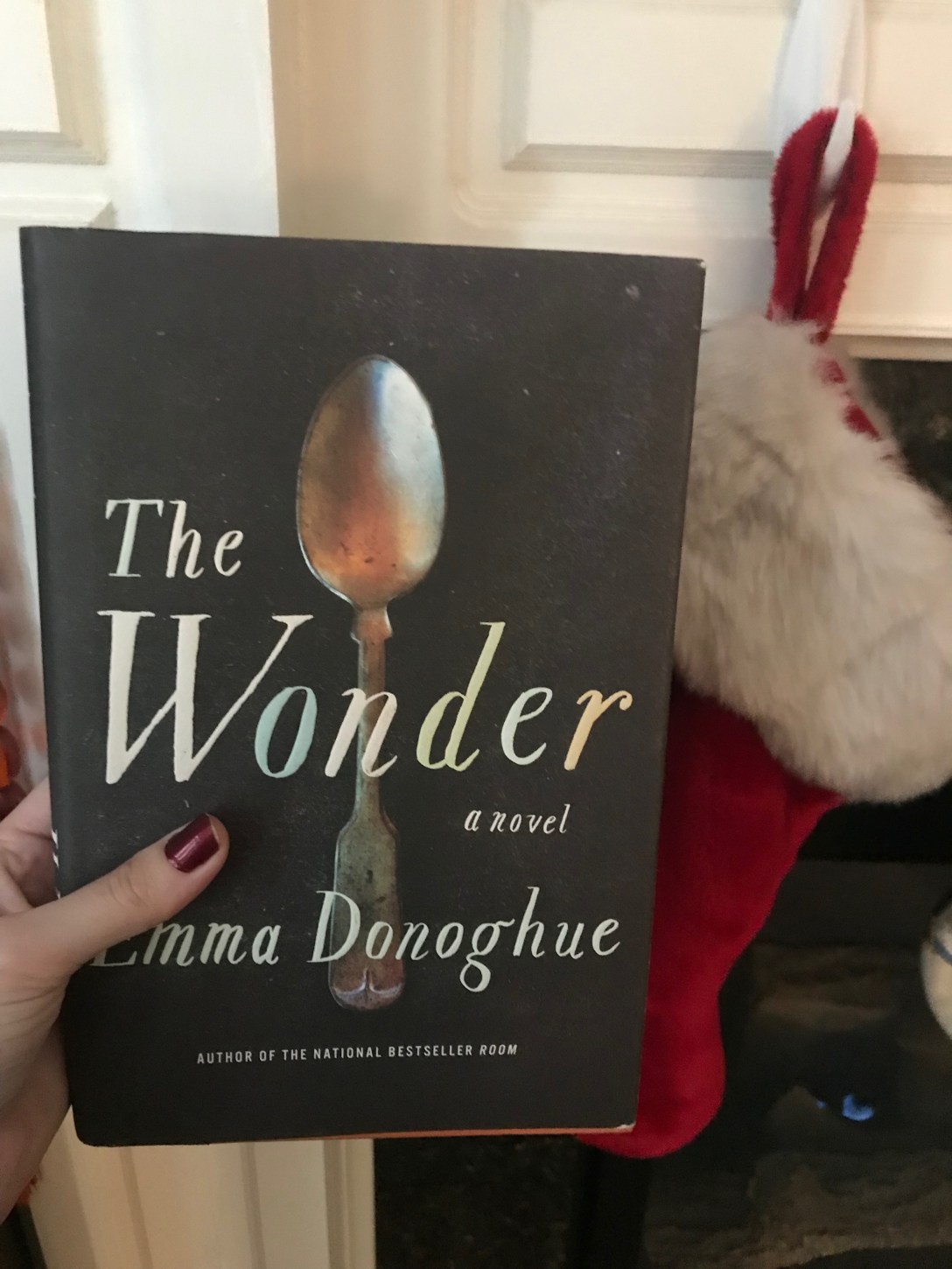
Review: The Wonder by Emma Donoghue

Anna:

This is a spoiler free review!

It’s 1859, and English nurse Lib Wright takes on a mysterious case in rural Ireland. She’s assigned a devout little girl, Anna, who claims to be living without food, under God’s will. Lib’s job is to watch the girl at all hours and report to a committee if she is sneaking food or not. Lib arrives expecting to catch the girl sneaking food within a matter of hours. But as Lib becomes more involved in the girl’s life she begins to see that this religious family is far from what it seems.

I picked this book up in the $1 section of the Strand when I was living in New York. I haven’t read Donoghue’s wildly successful book, Room, but I both love and am horrified by the movie. I found myself picking up the British edition of The Wonder when I was studying publishing in Oxford, England after college. It has one of those semi-vague descriptions that somehow is totally intriguing. I’ve had this book on my radar for a while. I was excited to also read an Irish author for the first time.

I think good historical novels are such an accomplishment, and this one captures religious tension between Catholics and Protestants, as well as the cultural differences and prejudices between the English and Irish. One of the biggest endeavors this book takes on is exposing hypocrisy in religion and and warning against the danger of extremism. The protagonist, Lib, does not identify with any faith or God herself, which alienates her, but also often allows her to act as one of the only characters to think and see clearly. As a nurse, she also represents science and rational thought.

This book doesn’t portray Catholics in good light, to say the least. Anna’s family is devout to the point of desiring sainthood over the health and life of their own daughter. Though Donahue exposes the dangers of religious extremism, she doesn’t completely criticize against religion as a whole. Anna herself becomes a dear friend to Lib, who has never allowed herself intimacy with a patient before. Lib recognizes and admires Anna’s good character and extreme bravery and strength. Lib’s love interest, Byrne, identifies as a deeply religious man, who is still able to see the dire consequences of the family’s extremist behavior. These two good characters prove that Donoghue does not condemn all faith as a whole, which I appreciate.

Donoghue also scrutinizes men in positions of power. Both the town’s head doctor and the priest are exposed as self-serving and using Anna’s publicity for their own means. They both are privy to ghastly and private information concerning Anna’s physical health that they conceal for the sake of town peace.

Another overarching theme is the question of if a mother/parent always has the child’s best interest at heart.

One of the things I love about The Wonder is that it kept me guessing up until the end. I didn’t think Lib’s own backstory is as compelling as it could have been, and it’s also easy to guess from the beginning. This book is so unique, and I would recommend it for a suspenseful, intelligent, and atmospheric read.

VERDICT: 4 out of 5 books

Review: Tin Man by Sarah Winman

Alexis: Read 11/28/18

“I said to him that just because you can’t remember, doesn’t mean the past isn’t out there. All those precious moments are still there somewhere.”

This is a poignant story of love and grief. This is a story of first loves, final loves, and dying loves.

Winman’s writing style is gorgeous. It’s simple yet raw and peppered with beautiful descriptions and lyricism. Throughout the book, her lack of quotation marks echoes Ellis’ silent grief.

I love the recurring motifs of the color yellow and Van Gogh’s Sunflowers. Nora, Ellis’ mother, is impactful and realistic, and she sticks throughout the story in the minds of both Ellis and Michael as a reminder to stay true to themselves.

Both Ellis and Michael are realistic characters. Ellis deals with his emotions by withdrawing and keeping to himself, while Michael deals with them through writing. Without giving too much away, both of them end up being more similar than either of them thought. Tin Man is an aptly named book.

I love that this book addresses the importance of art and writing, as said by Nora: “Painting flowers as a sign of friendship and welcome. Men and boys should be capable of beautiful things.”

My only criticism is that Annie does not feel as vibrant as all the other characters. I loved her introduction scene, but I wanted to understand her relationship with Ellis as deeply as I understood Ellis and Michael’s relationship.

All in all, this was a beautiful and quietly harrowing read that I highly recommend.

VERDICT: 5 stars

Review: The Pisces by Melissa Broder

Anna:

This book is crazy…but very smart. Following the breakup with her long term boyfriend, Lucy takes up her sister’s offer of living in her beach house in Venice Beach for the summer and house sitting her sister’s beloved dog. There’s only one requirement- she must attend a sex addiction group therapy. But she leaves that all behind when she meets the fantastical and beautiful merman named Theo.

The first thing to know going into this book is that it features lots and lots of sex. Honestly, this book probably has the most explicit sex scenes I’ve ever read. That’s all I’m going to say about that, but I can’t review this without acknowledging that that’s a substantial part of the book.

There are pretty much spoilers throughout the rest of the review.

I hated Lucy from the start and had trouble feeling any sympathy for her throughout. First of all, she’s definitely taking advantage of her graduate program by putting off her book on Sappho that the department is paying for. When she meets Theo she finally starts writing the book again. The department likes the new direction, but pulls her funding and suggests she pursue a trade publisher instead, which I found hilariously karmatic.

From the first chapter, Lucy continually judges and puts down other women based on their appearance. She nicknames two women in her group Butterface and Cickenhorse, and even wishes for her ex’s new girlfriend to have a miscarriage. This made me wonder if Broder is intentionally calling to attention Lucy’s woman-hating behavior or being unfeminist for the sake of being funny.

Dominic the diabetic coonhound is by far the best character in the book, and I loved the descriptions of Lucy bonding with him when she first get to Venice. And then Lucy has to go and kill him. She gives him high doses of tranquilizers so she can have uninterrupted sex with Theo. I automatically dock a point from my rating if a dog dies in a book. I understand that he represents unconditional love, but I’m sick of the dead dog/loss of innocent trope and resented that he had to die.

Okay, okay. Here are some things I did like. I was really impressed by the use of the unexplained specs in Sappho’s work as a parallel to the blankness and emptiness Lucy feels without love and sex in her life. This shift to meditation on classical thinking complicated and difficult to follow, but ultimately succeeded, and there were some beautiful paragraphs about myth, love and emptiness.

I also really liked the dark twist ending with Theo. This worked really well, because the reader is left to wonder if Theo really existed at all, or if he was a symbol for suicide/depression/abuse. And, ultimately she says no to the fantasy of Theo and saves herself.

But kills the dog.

I think the story has merit, but I found some of the details gratuitous and anti-feminist, and the characterization frustrating. I feel like I need to read middle grade or something to cleanse my palate now.

Verdict: 3 out of 5 books